RSS

Category Archives: Troublesome pairs

Bimonthly or semimonthly / semi-monthly? Biweekly or semiweekly / semi-weekly?

I covered biennial or biannually quite a while ago now, but Guy K Haas commented on my index to all of these Troublesome Pairs that I should cover bimonthly or semimonthly, and biweekly or semiweekly. And so I shall.

However, one caveat before we begin: Try not to use these. There is so much confusion about words like these, that it is almost always so much better to write “Every two weeks” or “Twice a week” rather than using the more complex term. After all, these terms are usually used when one is scheduling something, and you don’t want your scheduling to go awry, do you!

Bimonthly actually means, in the dictionary (all of them), taking place or appearing twice a month … or every two months. So that’s no use, is it!

We find the same issue with biweekly – it can mean either (both) taking place or appearing twice a week … or every two weeks. Useless, again!

Moving on, semi-monthly and semi-weekly do mean occurring or appearing twice a month / twice a week (and notice that hyphen: that’s a bit annoying in itself, isn’t it!).

So, my recommendation: leave these well alone. State the exact times the whatever it is will be doing whatever it does. “My magazine is going to come out every two months” – “Oh, mine’s coming out twice a month, or every two weeks”. Job done.

You can find more troublesome pairs here and the index to them all so far is here.
 
2 Comments

Posted by on February 10, 2014 in Errors, Language use, Troublesome pairs, Writing


Tags: , , ,

Slight or sleight?

This one was suggested by Matthew, Mr Libro. I’ve got to the point where I can’t remember whether I’ve covered a particular confusing word pair or not (see the link at the bottom of this post for the index to them all) but it is indeed a new one …

Slight is an adjective meaning not very sturdy or strong, or inconsiderable, small: “The rider was so slight that they feared he could not control the larger horse”; “There is a slight problem with your use of their and there, have a look at Liz’s Troublesome Pairs posts”. A slight (noun) is a kind of insult which is based around not showing someone the appropriate level of respect or attention: “He never bothered to read her blog posts, and she felt this slight keenly”.

Sleight is only actually ever found as part of the phrase ‘sleight of hand‘. This means manual dexterity, usually in the context of someone doing magic/conjuring tricks. By extension, it has also come to mean skilful deception of any kind, as more of a metaphor.

“He gained a slight advantage by employing sleight of hand and misleading the other runners as to the direction to take. However, as it was only a slight advantage, they soon caught up and beat him”.

You can find more troublesome pairs here and the index to them all so far is here.

 
2 Comments

Posted by on February 3, 2014 in Errors, Language use, Troublesome pairs, Writing


Tags: , , ,

Procrastinate or prevaricate?

Welcome back to the Troublesome Pairs after a long break full of posts on business and Word. People have been asking about them, so I’ve started writing up a few more. Let me know if you’re pleased that I’ve done this, or if you’ve been helped by a particular Pair, won’t you!

This one came up in the cafe one Sunday afternoon, as my friend Gill and I were sipping our coffees, looking things up on the Internet via our phones, talking about all sorts … and putting off venturing out into the rain. Is there a difference between these two? Do you know what it is? Really? Because we thought that we did and … well … I’m glad that I always look it up to check!

To procrastinate means to put off doing something. For example, we were procrastinating when we sat in the cafe chatting about this and that rather than going out into the pouring rain.

To prevaricate means to speak or act in an evasive way. For example, when asked whether it was going to carry on raining, a weather forecaster might waffle on about climate change and average daily rainfall in order to avoid telling the truth for as long as possible.

“He prevaricated over paying the bill yet again, claiming that he’d lost his wallet before finally getting it out and paying. So I procrastinated when it was time to ask him out for dinner again, coming up with all sorts of activities that I must do immediately, before getting around to calling him.”

You can find more troublesome pairs here and the index to them all so far is here.

 
4 Comments

Posted by on January 27, 2014 in Errors, Language use, Troublesome pairs, Writing


Tags: , , ,

Register office or registry office?

If you have anything whatsoever to do with yourself or anyone else getting married in the standard, official, council-run place, you will have been driven mad by the register office / registry office thing. Right? “It’s register office!”, you may or may not have bellowed, several times.
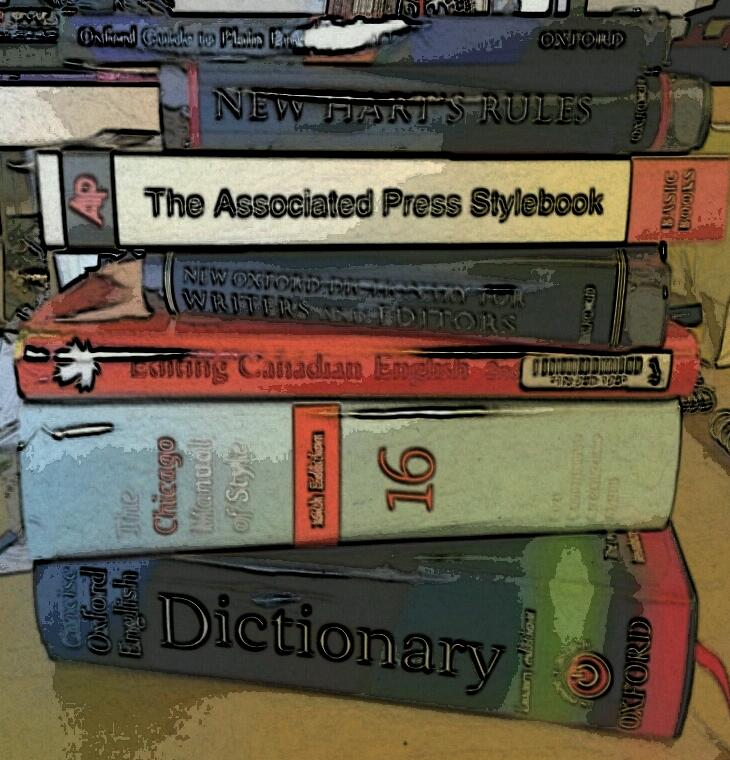
Well, when putting this post together, I, naturally, consulted the dictionary. And the dictionary backed me up in terms of register office: A register office, in the UK, is the place where births, marriages and deaths are recorded and civil marriage ceremonies are conducted. Phew.

However, it does allow that registry office is the “form which dominates” in informal use. Nooo! A registry is also the place where registers are kept, and it’s the noun formed from registration. So if you have a gift register, it will be kept in the gift registry.

But I’m sticking to the formal, official usage. An example, of course: “We’re getting married at the register office in April 2014. We won’t be placing a wedding list in any gift registry, as we have all that we need for the house, having been together for 12 years”.

You can find more troublesome pairs here and the index to them all so far is here.

 
11 Comments

Posted by on November 29, 2013 in Errors, Language use, Troublesome pairs, Writing


Tags: , , ,

Have you got a Troublesome Pair?

DictionariesIs there a troublesome pair of words in your life that you constantly mix up, or have you encountered a terrible twosome?

Suggest a brand new pair for me to write about that I haven’t already covered (do see the index for the ones I’ve done so far) and I’ll include your name (and a link, if you’d like*) on the post when it’s published.

I’m looking forward to hearing about your favourites … pop a comment on here and do share, too!

Index to the Troublesome Pairs so far.

—————————————–

* inclusion of links is at my discretion: if I find the link you give me is to a fake goods sales site or pharmaceuticals etc., I reserve the right to remove it from your comment and not post it in the article)

 
9 Comments

Posted by on October 3, 2013 in Troublesome pairs


Tags:

Ferment or foment?

I can’t remember where I came across this one now, but it’s an interesting pair that I thought got confused in certain circumstances regarding the stirring up of unrest. But wouldn’t you know it – a different picture emerges when I look into it more deeply, and this joins the select ranks of words such as decimated or gunnel that I am not really allowed to be as picky about as I’d like to be!).

To ferment as a verb means to undergo the process of fermentation (“His beer was fermenting nicely and would be ready to drink in a few weeks”) or to stir up disorder. A ferment (as a noun) means social unrest and agitation.

To foment, as a verb, means to instigate or stir up something like strife or revolution – i.e. the same as the secondary meaning of ferment as a verb. What a shame! I think we should still use this for revolutions and ferment for beer, myself (to foment has a nice archaic meaning of bathing a part of the body with a warm or medicated lotion, or fomentation. I doubt any of us will ever use that, but it’s quite jolly, in my opinion).

You can find more troublesome pairs here and the index to them all so far is here.


Tags: , , ,

Libel or liable?

This one is dedicated to Matt P, who, having posted a not-entirely-positive review of a pub on TripAdvisor, was accused by the pub management of having committed “liable”. This one’s for you, Matt!

Libel is a noun meaning the publication of a false statement that damages someone’s reputation (see libel or slander).

Liable is an adjective which means responsible by law for something – “He is liable for the damages in the case” or likely to do something – “The cat is liable to tread on the keys and insert characters into your document, so it’s best to keep him off the desk”. You can also use liable to in the sense of “likely to experience something” (usually something undesirable) – “This area of low-lying land is liable to flooding”. (Note: I don’t like this last use – I’d be tempted to change it to “liable to flood” but that’s just my personal opinion).

You can combine them, of course – “The newspaper was found liable for all charges in the libel case brought by Mr. Brown regarding his damaged reputation and the lies that the paper had printed”.

You can find more troublesome pairs here and the index to them all so far is here.


Tags: , , ,

Sometime or erstwhile?

I thought of this one when I was writing up my post on some time, sometime or sometimes. The word erstwhile popped into my head, and I thought that I’d better check if it officially meant something different from sometime.

Erstwhile means former as an adjective and formerly as an adverb: “Her erstwhile lover was now a senior politician”.

Sometime as an adjective means former; as an adverb it means at some unknown/unspecified time, with formerly marked as an archaic use in most dictionaries that I checked. In American English, it is also used for occasional.

I like erstwhile. It’s a nice, odd word that’s a bit hard to type. Let’s try to keep it going, even if it does essentially mean the same as sometime!

You can find more troublesome pairs here and the index to them all so far is here.


Tags: , , ,

Some time, sometime or sometimes?

Remember my post on any more or anymore? This one came up in the same conversation, but of course, English being as it is, the answer is slightly different.

The question: is it some time or sometime?

Sometime is only used as an adjective or adverb – i.e. a word describing the attributes of a noun or one that modifies the meaning of a verb, adjective or other adverb. So “Her sometime adversary, Bettina, had moved away and was no longer part of the Scrabble club”. But do look at my post on erstwhile or sometime for more detail here.

Some time is used in all other cases – “Jerry spent some time choosing the word to place on the board”.

Sometimes is an adverb meaning occasionally. “Sometimes he went to the cinema in the city; sometimes he preferred the local one”. Compare “My sometime friend, Bettina” with “My sometimes friend, Bettina” – the former implies that they were once friends, the latter that they were friends and weren’t friends at different times.

To use them both together “Her sometime very closest friend spent some time in Arizona before she got back in touch”.

You can find more troublesome pairs here and the index to them all so far is here. And I look at sometime or ertswhile here!


Tags: , , ,

Any more or anymore

A friend was asking about this on Facebook the other day and I had to (check and) wade in to help. She wasn’t sure any more how this word was supposed to be used – was it one word or two?

I did check, just to make sure, because I know I have used it … and – phew – that’s because I work in both US and UK English.

Any more is the UK English use of the word(s) – “I am not in a state of confusion over this any more”.

Anymore is the US English version – “I am not in a state of confusion over this anymore.” (Yup – felt compelled to put in American-style punctuation around the quotation marks.)

You can find more troublesome pairs here and the index to them all so far is here.


Tags: , , ,