RSS

Tag Archives: writing

Confound or confuse?

I’ve been working my way through the last of Gill’s massive list and this is one of the final ones … I have had some more suggestions here and there, though, so the supply won’t run out just yet!

So, today we have confound and confuse.

To confuse someone is to make them bewildered or perplexed – “He confused her with his rapier wit until she would agree to anything”.”1% fat or 99% fat-free? I’m confused”. In a linked way, it also means to make something less easy to understand – “He confused all the issues with each other until it was impossible to understand his arguments”. And it also means to identify wrongly – “Is that Busted? Oh – I’ve confused them with McFly.”

Now, confound does carry a meaning of to surprise or confuse,  but it’s more used in the sense of proving something wrong or causing it not to work, defeating a plan, a hope or an aim “Her hopes of living off her savings were confounded by the low interest rates”; “Ha! With my intelligence and wit, I have confounded your dastardly plot!” A useful and flexible word, it can also mean to mix up with something else: “in his formula, x is confounded with y, and that makes it come out wrong”.

Special bonus word: to confute – is to prove to be wrong (shall we do confute and refute next time?)

So, a simple rule – confuse if you want to perplex or mix up; confound if you want to ruin the dastardly plans. Got that?

“She was confused by the bright lights, and he confounded her plan for escape by tripping her up.”

That’s probably the last troublesome pair for 2011 – will anybody be on the internet reading blogs next Friday?

You can find more troublesome pairs here and the index to them all so far is here.


Tags: , , ,

That, Which or Who?

That, which or who? This is a set of words that I see used incorrectly all the time, especially using “that” instead of “who” (although there are a few debates, it’s normally quite clear). I’ve also been asked for help on that/which a number of times, and I have to admit that I wouldn’t have been able to reel off the rules without checking it. Of course, I do check all of these, even when I think I know the answer, just to make sure I’m giving you the correct information!

So, to start off, you can use that OR which if you are introducing clauses that define or identify something (the fancy name for these is “restrictive relative clauses”) and it doesn’t seem to matter which – it’s a question of style preferences or what feels better in the sentence (wouldn’t you know: another one without a proper rule!) So: “A book which aims to explain all human life”, “a book that aims to explain all human life”.

Which is officially used (instead of that) if the clause gives additional information. “The book, which costs £15, has sold 1000 copies”.

Although it’s not officially specified in my reference books, I would therefore use them like this:

– If you’re just saying what the book (or whatever) does in general, use that: “these are the books that will tell you about the stars”.

– If you’re explaining something in comparison with something else, use which: “This is the book which explains all human life, unlike this other one, which just explains about men”.  The way to remember this? “Which is which?”

Moving on to who, we use who when we’re talking about a person or something that’s personified such as a group of people or a named animal. “The man who said yes”, “The proofreaders, who were all a bit pernickity”, “Felix the cat, who was very naughty” (and possibly, “the cat, who was very naughty”, if it’s a specific cat, but “the cats that lived in the barn”, “the cat that I saw on my way to work, which was white with a grey tail … “).

Things do get a bit confusing when you get to a group of people, as a group is non-personified, but the people are – you can do it either way but someone will argue with you, whichever path you take (“The group of men who were going to the ball”, “The group of men that was going to the ball” – I prefer the former, personally. Remember to make the verb agree when you do this – it depends whether you’re referring to the singular group or the plural members of the group).

You can find more troublesome pairs here and the index to them all so far is here.

 
4 Comments

Posted by on December 16, 2011 in Errors, Language use, Troublesome pairs, Writing


Tags: , , ,

Till, ’til or until?

Another troublesome pair from my friend Gill’s enormous holiday list – if you have any more you’d like me to look at, do let me know …

Today we’re looking at till (or more properly, ’til, although the Oxford Dictionaries no longer include a listing for ’til) and until, which I do see being used interchangeably by both native and non-native English speakers (this is quite rare, actually: most of the pairs I’ve been talking about are usually only found in native English speakers, in my experience. Non-native English speakers have all sorts of other common issues, but  not these.) (That gives me an idea for a new series of posts!).

Anyway: till and until. I have consulted the dictionaries and reference books and … they are the same. They mean up to a particular point in time or an event that is being mentioned (“He wasn’t able to take any holiday days until Christmas”), but in a sense that’s more concentrated on that particular date or event, as opposed to a word such as by which is more about the period itself. (“He was told to take all of his holiday by Christmas but he didn’t manage to do it until the gap between Christmas Day and New Year’s Eve”; “You can’t play on the Playstation until you’ve finished your homework”).

Until is considered to be more formal, occurring more often in written English. Till is, wouldn’t you know it, more informal, and occurs more in spoken English. Till is also used as a noun (a cash register or a glacial deposit) or a somewhat archaic agricultural verb to do with preparing the soil before planting a crop.

However, there is one important distinction: you always use until when starting a sentence.

“She gave him the pills till he felt better” or “She gave him the pills until he felt better” but always: “Until he felt better, she continued to give him the pills”.

You can find more troublesome pairs here and the index to them all so far is here.

 
6 Comments

Posted by on December 9, 2011 in Errors, Language use, Troublesome pairs, Writing


Tags: , , ,

What I’ve been up to in November

November is traditionally another quieter month, but actually I stayed pretty busy through the month and brought in more income than I did in October.  I had quite a varied month workwise, ending up doing the following …

Proofread some chapters of various PhDs and full Master’s dissertations, as well as a couple of articles which needed their bibliographies put into the format the journals required (which took longer than proofreading the text)

Copyedited a large number of documents for a client’s important project – sometimes working at very short notice and getting up very early in the morning (and getting lots of thanks and a lovely quotation for my references page, I’m happy to report!)

Did a substantive copyedit on a non-fiction/humour book – I really tore it apart, re-ordering sections and deleting chunks. There’s always the temptation to include everything you’ve researched when it’s your own book; I have no such compulsions and will rip it out if it doesn’t fit perfectly! Anyway, the author’s now going through the new version and adding references where needed, before I convert it into Kindle format and we put it up on Amazon.

Re-wrote some web text and letters for a client I “met” on Twitter.

Polished some articles for a client whose first language is French – she writes up articles about HR issues in English and I go over them for her and smooth them out into more natural English – as I do speak French, it’s useful sometimes to know what word she would have used in that language in order to express it correctly in English, so it’s a bit like translating in some respects.

Edited a Terms and Conditions document and wrote an article on overseas procurement for my retail display client.

Edited and proofread the usual Yacht Club and Moseley magazines – very different publications but with surprisingly similar issues in their layout and text!

Coached a postgraduate student who needs to get his PhD written up – we have a weekly arrangement to make sure he keeps going with it and sends me something to look at every week.

Transcribed two journalist interviews, three webinars and a corporate panel discussion – a lot of transcription this month, and a lot of keeping the heater on in my study so my fingers were warm enough to type fast!

Launched the first edition of my new Libro Newsletter; recipients told me they enjoyed it!

Attended a Social Media Cafe, where I chatted to friends old and new …

And last but not least, resigned from my part-time Library job – so I’ll be taking Libro full-time from December 13. I have started a new blog in which I’ll record what it feels like to do this – do pop along and have a read if you haven’t seen it already!

Coming up …

December is usually quiet, but I’ve got some transcribing and editing booked in already, plus I’ll be doing some work on my Iris Murdoch project. Oh, and having a rest. January sees me officially full-time with no other means of support, but I have Jury Service in the first two weeks! I’m adjusting my pricing too, and will be blogging about that in another post.

Libro offers copyediting, copy writing, proofreading, transcription, typing and localisation services to other small businesses, individuals and corporations. Click on the links to find out more!


Tags: , , , , , ,

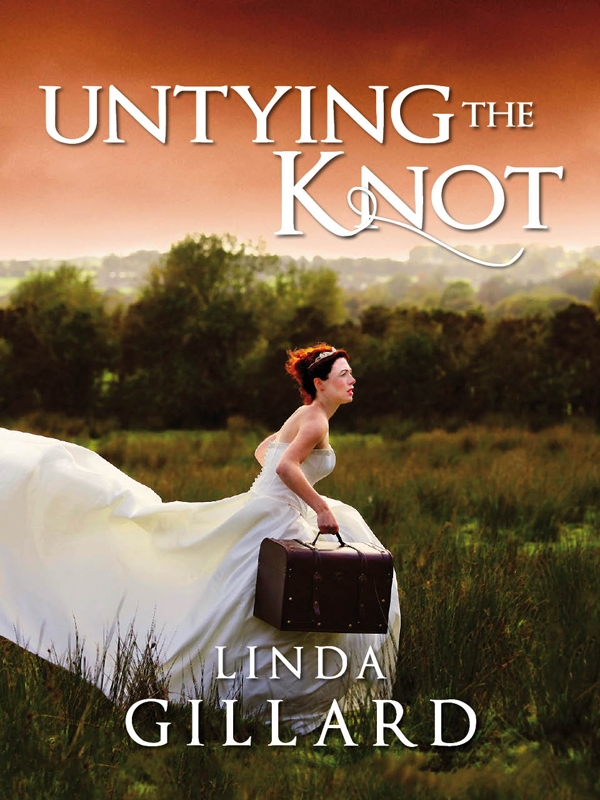
The Right Time To Write – a guest post by Linda Gillard

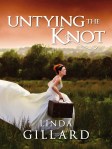
Friend of Libro (and of Liz), Linda Gillard has been an actress, journalist and teacher and is the author of five novels, including STAR GAZING, short-listed in 2009 for Romantic Novel of the Year and the Robin Jenkins Literary Award (for writing that promotes the Scottish landscape). Her most recent novels, HOUSE OF SILENCE and UNTYING THE KNOT are Kindle bestsellers. To find out more about Linda and her work, do visit www.lindagillard.co.uk

Linda is passionate about helping other people to write; she has regularly offered masterclasses at BookCrossing Unconventions and is Writer in Residence for Durham University’s “Celebrating Science” initiative.

November saw NaNoWriMo (National Novel Writing Month), a  hugely popular highlight in the writing year – and a lot of people will have “won” by getting the requisite number of words down. And that’s great – well done! But what if you didn’t – does that mean you should give up. Let’s hear what Linda has to say, in a special guest blog post she’s written for Libro.

The Right Time To Write

Do you have writer’s cramp? Or typist’s tremor? Did you enter the annual November writing marathon that is NaNoWriMo? (National Novel Writing Month). And if you did, did you finish, or did you give up exhausted half-way through the month?

I’m a professional writer with five published novels on my CV and I’m about to finish a sixth. I write full-time, so I’m not your typical WriMo-er but, encouraged by the buzz and some enthusiastic writing friends, I attempted NaNoWriMo for the first (and probably last) time in 2010.

It was an illuminating experience and taught me a lot about how I write. I gave up half-way through the month with a word count of 26,000. I didn’t abandon my novel, I simply stopped beating myself up about speed and resumed my normal writing pace and methods. I’d discovered that NaNoWriMo was not for me. I’m about to finish that novel which means, like most of my books, it’s taken me a bit more than a year to write.

I made a good start even though I’d not done lot of planning. (I don’t plan my novels very much anyway, so this wasn’t raising the bar for me.) Producing quantities of words isn’t difficult for me, but writing at NaNo speed confirmed for me what I’ve always thought about novel-writing: finding time to write a novel isn’t nearly as difficult as finding time to think a novel.

And that’s what was missing from my NaNo experience. Time to think. I wasn’t day-dreaming, hypothesizing, re-thinking or revising – all those processes that, for me, are what novel-writing is about. I was just producing an impressive daily word count.

My set-up was promising. The writing was competent. Then at 18,000 words things started to get tough. Artistic decisions had to be made and I wanted to slow down and reflect on what I’d produced so far. I knew I needed to get to know my characters better. In short, I wanted my novel-in-progress to develop and mature. But that’s not what NaNoWriMo is about. It’s about “getting all your ideas down”, that and the big confidence boost of actually finishing a draft.

It’s my view that anyone with a love of writing, a vivid imagination, some spare time and some determination can produce a quarter of a novel. Many novels – even those begun by seasoned professionals – are abandoned around the 25,000-word mark. Writers hit a wall. I think it’s because by then, we’ve finished setting up, we’ve created the characters and their environment. What comes next is the hard part: the development and careful structuring of the story so it moves towards the necessary climaxes and resolution. I believe writers only move beyond this point if they really, really want to tell their story (or if they’re contracted to tell it and have a deadline.)

The Canadian novelist Robertson Davies said, “There is no point in sitting down to write a book unless you feel that you must write that book, or else go mad, or die.” I don’t think I’d go so far as to say there’s no point, but I will say, if you aren’t being paid to write, you’re unlikely to finish your novel unless you feel this way.

NaNoWriMo is brilliant as an inspiring, sociable and creative exercise. It’s great for producing a very rough draft of the novel you’ve been brewing up for months or years. But it worries me the way NaNo has “failure” built in for so many participants – and not just failure to achieve the 50,000 word count. Last year during NaNo month I read many complaints on Facebook from writers suffering RSI-related pain, yet their well-meaning fellow participants encouraged them to push on through the pain, thereby risking the possibility of serious damage to the delicate tendons of the hand. This isn’t writing, it’s masochism! Producing a novel is a test of stamina. It shouldn’t be a test of endurance.

I question the wisdom of producing fiction in a state of caffeine-fuelled exhaustion and pain. It might be possible to write like this, but it’s unlikely to produce your best work.(It certainly didn’t produce mine and despite a great deal of editing, I still have reservations about the early chapters of my NaNo novel.)

I’m not trying to knock NaNoWriMo, I’m just making a plea for balance. I’d like to challenge the idea that churning out verbiage for an entire month has to be good. I’d like to extol the virtues of a more thoughtful approach, especially to those who withdrew defeated from the NaNo marathon and to them I’d like to say, there’s a reason why professional novelists don’t produce a book in a month.

Last year when I was struggling to stay in the NaNo game, I wearied of people claiming on FB that “everything can be fixed once you have a draft”. I don’t believe it can. The prolific Nora Roberts said, “I can fix a bad page. I can’t fix a blank page.” It is important to get your ideas down on paper and drafts are there to be edited into something better. What worries me about NaNoWriMo is not the fast writing it requires, but the fast thinking, the decision-making that story-telling requires. Quick thinking can lead to the quick-fix and the quick-fix can lead to predictability, stereotype and cliché.

When my children were young and asked to watch films and TV programmes that I thought might frighten them, I refused and warned them that once you’ve seen something, you can never un-see it (which they discovered to their cost when they had months of nightmares inspired by RETURN TO OZ.) I believe it can be the same with writing. You can of course un-write stuff, but you can’t un-think it or un-hear it. Writing is decision-making, word by painstaking word. If you’re concerned about the quality of your fiction and not just the quantity, I think there’s a lot to be said for remaining alert, receptive and poised for that moment of inspiration, the right time to write. If you ask me, that’s the really hard part about novel-writing: the waiting. Waiting until you’re ready to write. Knowing when you’re ready.

If you didn’t finish NaNo this year, don’t be too despondent and please don’t think you “failed”. Maybe you weren’t ready to write. Writing is the end product of a process of thinking and feeling. Maybe you had more thinking to do. Maybe you just aren’t a fast writer. I’m a professional and I failed to produce 50,000 words in thirty days – or rather, I decided that to do so would be counter-creative, because for me it’s not about the word count, it’s about how much my words count.
 
7 Comments

Posted by on December 6, 2011 in Guest posts, Writing


Tags: ,

On Route or En Route?

I think this mix up, another one that’s not a classic troublesome pair, in that one is correct and one is incorrect, comes from people writing down what they think they’ve heard. This has come up with Here! Here! vs. Hear! Hear! and would of vs. would have, too. I’ve started noticing this one a lot on Twitter, too, so it might be that people just stick down what they think it might be when typing in a hurry.

Incorrect: on route. Correct: en route

The incorrect usage does make sense in a funny kind of way, and it sounds the same too, but, it really isn’t!

So, as we probably know, it means “on the way” to or from somewhere. It comes from the French – 18th Century French, so it’s been around for long enough that it’s stuck and isn’t likely to be that pliable. You can use on route, but only in a very specific sense, when talking about named roads in places like America. And then there’ll be a capital in the middle, and you’re not using it in precisely the same way. So, “On Route 66 I found a lovely motel” – fine.  But in all other cases: “I was en route to Chicago when I happened upon a charming hotel” – also fine.

This also applies to phrases like en masse. If there’s an “on” sound and the other word looks like it might be French, check it!

You can find more troublesome pairs here and the index to them all so far is here.

 
28 Comments

Posted by on December 5, 2011 in Errors, Language use, Troublesome pairs, Writing


Tags: ,

Biennial or biannual?

This is a perennial (ha, ha – see what I did there?!) mix-up and it’s worth just setting these words down for everyone – but I would maybe even advise that you don’t use them yourself, limiting yourself to using the explanation rather than the word. Then no one will be confused, and no one will turn up for a biennial party that they think is biannual!

Biennial means occurring every other year.  So a biennial event might happen in 2010, 2012 and 2014. It won’t happen more than once in a year, and it won’t happen in the years in between.

Biannual means occuring twice a year. Usually regularly – so you might have a biannual event taking place in February and August every year, for example, six months apart. So a biannual event will happen twice a year, every year, so in our above example, twice in 2010, twice in 2011 … twice in 2014, etc.

There are more of these words floating around too – for example, bimonthly.  The dictionaries and other reference materials do actually suggest avoiding these, in order to avoid mistakes, and to use “every two months” instead, and as I mentioned above, I think this is a good precept by which to go. So that biennial event can become an event that happens every two years – then we all know where we stand.

You can find more troublesome pairs here and the index to them all so far is here.


Tags: , , ,

Me or I?

When do we use me and when do we use I, in a sentence where we’re talking about ourselves and another person? “Ali and me went for a walk”, or “Ali and I went for a walk”? “Gill gave presents to Matthew and I” or “… Matthew and me”?

I have to admit here that this is one I get wrong, I’m not sure whether I somehow learned it wrong, it’s sheer sloppiness, or that I get all psychologically discombobulated when I’m coming up to it (Don’t drop that! Don’t think of an elephant! have the same effect on people).

Anyway, there is a trick, as there so often is, and the trick is: Take the other name out of the sentence, and which of the words would you use?

“I went to the pub”, “He handed a glass to me”, “George said I was lucky to get a glass”.

Put the other person back in, and you get the correct versions.

“George and I went to the pub”, “He handed glasses to George and me” / “He handed me and George glasses”, “George said he and I were lucky to get glasses”.

So, do get it right in future. I’m looking at you, Liz

You can find more troublesome pairs here and the index to them all so far is here.


2 Comments

Posted by on November 28, 2011 in Errors, Language use, Troublesome pairs, Writing


Tags: ,

Lend or borrow?

Welcome to another Troublesome Pair – I wonder if I can keep these going indefinitely. I’m almost sure I am – but I do appreciate when people take the time to suggest pairs for me to write about, so do drop me a line and let me know about any you need explaining, or any you see around you and think need explaining to people in general.

Apparently these two, lend and borrow, do get mixed up often. I can’t say I’ve seen it that much, but the person who suggested it isn’t the only one to have confirmed they’ve noticed it.

It should be quite simple. When you lend something, you are allowing someone to use it, on the understanding that it will be returned will be returned.  So Max lends Jim some money that Max has, and Jim needs. The library lends out books.

To borrow, on the other hand, is to be on the other side of the bargain and to be the recipient of the loaned item. Jim is borrowing Max’s money, and you borrow books from the library. You borrow money from a mortgage lender, for example.

The slight problem with lend is that it does tend to get used in the “wrong” way in colloquial speech and regional dialects, which means it’s floating around more, gets heard more, and the hearers can become inclined to think it’s the correct usage.  We’ve probably all heard “can I have a lend of your pen?” and, while the use might be regional and the sense can be perceived, it would be best if people whose regional dialect it is not part of, especially people learning and speaking English as a second or additional language, refrain from using it like this.

So – I have a book. You don’t have a book. I lend you my book. You borrow it. Now you have the book – but you will be giving it back (otherwise I’ve given it to you).

You can find more troublesome pairs here and the index to them all so far is here.

 
7 Comments

Posted by on November 25, 2011 in Errors, Language use, Troublesome pairs, Writing


Tags: , , ,

Be careful! Unique

I’ve heard a lot of comments about unique since I originally wrote this post, and most people think it should be used as I originally thought it should be used. So hopefully this post will clear things up and stop people getting annoyed about an “incorrect” usage that actually turns out to be allowable!

The word I’m talking about here is unique. Unique, according to the dictionary, means “being the only one of its kind” and “unlike anything else”.  So if it’s the only one of its kind, something can’t be more unique than something else, can it? Or very unique. Or a bit more unique, or less unique. Can it? Many people feel this usage is creeping in and diluting the “original” meaning of the word.

However: It also means “special or unusual“! The Oxford Concise English Dictionary says that the less precise sense of “special or unusual” is a valid one and that means it CAN be modified! So, next time you see something described as being more unique than something else … save your irritation for some of the other Be Careful! words I write about!

Be careful! is a series of posts about words that are misused commonly – but really shouldn’t be. It’s not a new variant of meaning, it’s an error that gets duplicated as people see the word misused and copy it. Contact me via email or via my contact form.

 
1 Comment

Posted by on November 21, 2011 in Be careful, Errors, Language use, Writing


Tags: ,