RSS

Tag Archives: writing

Valuable or invaluable?

Remember Gill and her Libro Holiday?  Well, I’m still working through the word pair suggestions she sent me after that!

Today, we’re going to have a look at valuable and invaluable. You might be thinking that this might be another pair like flammable and inflammable, that mean exactly the same thing. Well, not quite, this time.

Valuable means either worth a great deal of money or extremely useful or important.  “Meryl’s contribution to the meeting was valuable; she provided tea and coffee and took the minutes”.

Invaluable means extremely useful; indispensable – very valuable, if you will. “Valerie made an invaluable contribution to our awayday when she single-handedly saved our MD from drowning.”

So in this case, the in- prefix does its usual job of multiplying the meaning to become, well, more so.

You can find more troublesome pairs here and the index to them all so far is here.


Tags: , , ,

Here! Here! or Hear! Hear!

This isn’t quite a classic Troublesome Pair, in that one of them is definitely correct, and one of them is definitely incorrect – as a result, you only tend to them mixed up in one direction. Well, I’ve never seen them mixed up in the other direction, but I bet someone has!

The phrase I’m talking about is Hear! Hear! What do we see used instead? Here! Here!

The only time you should use Here! Here! is when you’re playing a team sport and want the ball to come over to you, or perhaps if you’re at a lecture and you want someone to notice your hand waving in the air so you can ask your incisive and apt question and make the lecturer feel all upset and silly.  And even then it’s a bit rude to shout out too, if you ask me.

If you’re agreeing with someone and supporting their statement, it’s Hear! Hear! That’s what the MPs are saying in the Houses of Parliament! I know it sounds like Here! Here!, but it isn’t.  I suppose it stands for “I hear you! I hear you!” and maybe that makes it a bit easier to remember.

Contact me via email or via my contact form.

 
7 Comments

Posted by on November 14, 2011 in Errors, Language use, Troublesome pairs


Tags: ,

Rain, rein or reign?

Today we have three very different words, spelled differently and with different meanings.  I think most people, if they stop and think, could define each one individually.  But where I see people constantly coming unstuck, even venerable institutions that should know better, like authors with several books published, newspapers and the like, is with the phrases in which these words are commonly used.

Some definitions first.

Rain is precipitation of non-frozen nature – water that falls out of clouds.

A rein is a leather strap attached to a bridle, with which you guide a horse’s direction, either from on its back (usually reins) or walking by its side (a lead rein) or standing in the middle of a paddock with the horse going in a circle around you (a lunge rein).

A reign is the period of time during which a monarch (or, by extension, any high-up leader) rules over their people (or, in the extended version, their social group, organisation, etc.)

So far so good. So, those tricky phrases. In fact, you can work out quite easily which one should be used where, by considering the literal meaning.

“Don’t rain on my parade” – don’t ruin my fun (I’m having a parade up the main street of town, if it rains it’ll get all soggy and ruined and everyone will go home – no one’s ruling anyone (reign) and there are no leather straps involved (rein)).

“We’ll have to rein him in” – he’s out of control and we need to limit what he’s able to do and bring him back under control (we need to have a little pull on the reins and stop the horse running too fast – we’re going to rule him but not in the sense that we’re a monarch and he’s one of our subjects (reign), and he’s not going to get wet (rain))

“A reign of terror” – something or someone is making things rather uncomfortable for everyone else (they are reigning over something that they are able to rule and control – no one is getting wet (rain) and we’re not frightening any horses (rein))

So that should be all clear now, right?

You can find more troublesome pairs here and the index to them all so far is here.

 
5 Comments

Posted by on November 11, 2011 in Errors, Language use, Troublesome pairs, Writing


Tags: , , ,

Your short cuts: my short cuts

Whether you’re using office software for work, fun, creative writing, or studying, it’s very common to not worry about learning how to do things properly, but just to launch in and start typing. How hard can it be?  That’s fine, if you’re just typing a document or making a very simple spreadsheet.  But when things get more complicated, documents need more formatting, and the right way to do things isn’t immediately obvious, it’s very tempting to fudge something together and hope it’ll work out in the long run.

Your short cut: don’t learn how to do it properly; just make up your own solutions.

You would not believe how many documents I’ve been sent where the writers have done this.  In fact, it’s so common that I usually send clients a note to congratulate them when they’ve done something the right way.

This is not just me being over-picky or trying to persuade people to pay out for my services. I once spent seven hours – that’s SEVEN HOURS (remembering my rates vary from £10 per hour upwards) sorting out the formatting and contents page of a PhD that someone had got in a mess with.  What took up most of those seven hours? Stripping out the attempts to do it right that the author had flailed around with, before calling me in.

I’m going to share some of my short cuts. They involve knowing how to do something (I’m not blowing my own trumpet here: people pay me to know how to do this stuff) and doing it properly, to save yourself time and, indeed, money.

I’m going to look at various tasks your documents need to perform (we’re mainly going to be looking at Microsoft Word here, although other wordprocessing programmes will have similar features and capabilities), how you tend to do it, so you recognise what you’re doing even if you don’t use the same words to describe the task, and then show you how to do it “properly”, i.e. the way that is most suited to the software you’re using; the way that will make it easier for you.

I might even go all daring and post some video! Not sure yet …

So, the kinds of issue I’m going to cover will include

– making a new section start on a new page

– using tabs and margins

– using heading hierarchies and creating an automatic Table of Contents

– counting particular instances in Excel

– page numbering

– saving time typing and coping with words you regularly misspell

All quite simple stuff, but you’d be truly amazed at the muddles people can get into …

I’m also planning to do a series of posts that go into more detail, for those of you who really want to know about the nuts and bolts of how to do these things. Please do get in touch if you have any issues you’ve been wrestling with that you’d like me to cover, especially any short cuts of your own that you know aren’t quite right!

Contact me via email or via my contact form.


Tags: , , ,

Be careful! Enormity

The word enormity is used an awful lot more than it should be.  In most cases, instead of its correct usage, to describe something bad of extreme seriousness – something like a tsunami, an earthquake, a deadly virus sweeping the world. Instead, it’s just used for something, well, enormous.  Enormousness, even.  The thing, is, we have a word for enormousness already. The beauty of the English language is in its variety and scope – so we have ranges of words for very precise shades of meaning.

It’s like your Mum used to say as she threaded those mittens on a string down your winter coat sleeves: don’t put your coat on indoors or you won’t get the benefit.  Over-use enormity and you’ll be stuck for a word to use when something REALLY big and bad happens.

Be careful! is a series of posts about words that are misused commonly – but really shouldn’t be. It’s not a new variant of meaning, it’s an error that gets duplicated as people see the word misused and copy it.

Contact me via email or via my contact form.

 
Leave a comment

Posted by on November 7, 2011 in Be careful, Language use


Tags: ,

What to do if your comment boxes go tiny in Word

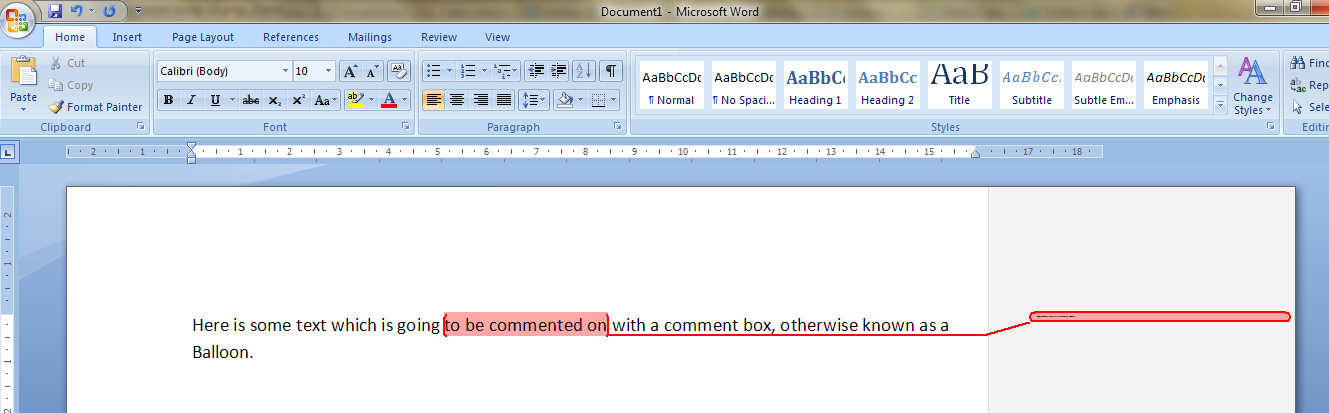
I had been editing a document for a client.  I added some comments in the margin, as always – but when my client opened it and when I re-opened it, to my horror and his, all of the text boxes containing the comments had gone TINY and unreadable. It looked like this:

It apparently happens if you’re working with a document originally created in an older version of Word which doesn’t have the requisite Styles set up for comment boxes.  You then work on it in Word 2007 or Word 2010 (this solution works for both!) and the horror happens …

It took me and Matthew longer than it should have to work out what to do, as there didn’t seem to be an easily found solution if you searched for one online – so as an aide memoire for me, for next time it happens, and as a public service for anyone else trying to work out what to do … here’s what you do (now edited to add screen shots).

Note for experts: if you’re already familiar with Styles, note that you need to change the Balloon Text.

What to do if your comment boxes go tiny in Word documents:

Let’s look at what the full horror looks like first of all:

First of all: don’t panic! The comments will have typically gone into Times at 1 point. But there is a way to make them readable again.

Open the document. Don’t highlight anything. Don’t put the cursor into a comment box.

Now you can do one of two things. Either hit Control + Alt + Shift + s all at the same time, or make sure you’re in the Home tab and click on the little tiny arrow at the bottom right of the Styles menu – this will bring up the full Styles dialogue box.

Using either of these methods, you will bring up the Styles dialogue box.

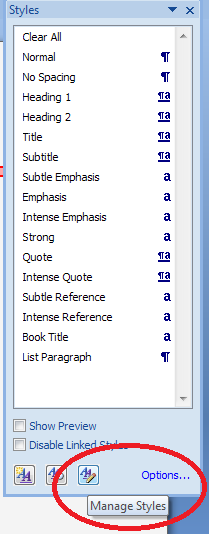
This looks like a very useful dialogue box, but for our purposes you need to ignore all of it except the three buttons at the bottom. Click on the rightmost button: Manage Styles to bring up yet another dialogue box.
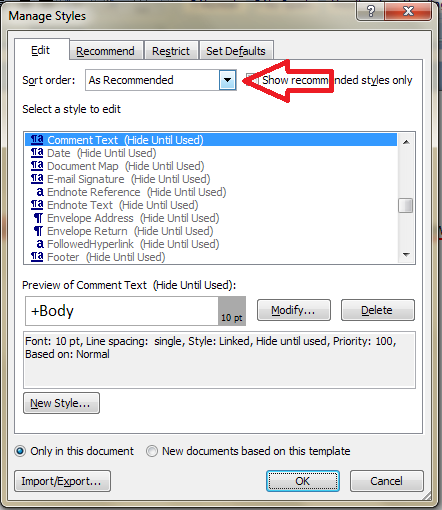
We’re not there yet: the sort order shows as Recommended – but you need to click on the down arrow to change it to Alphabetical:
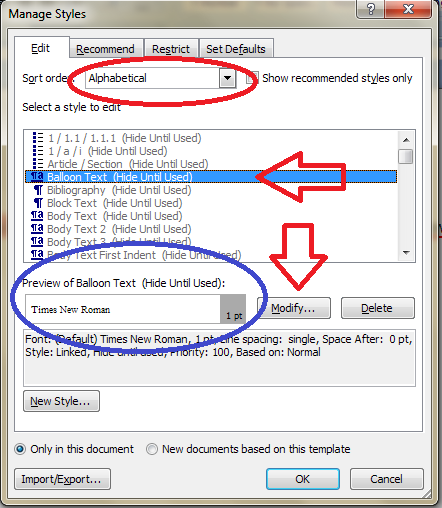
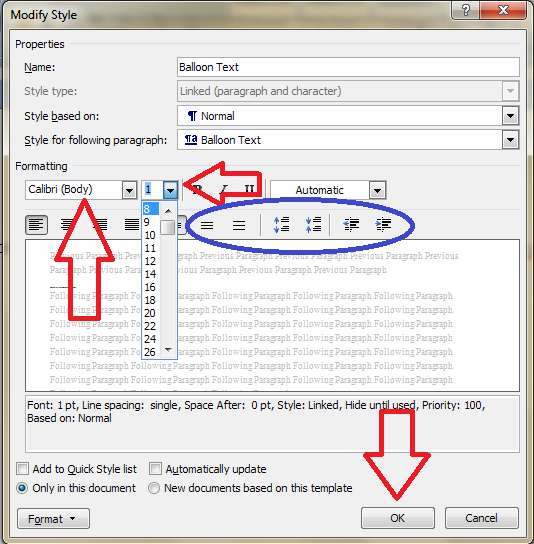
Once it’s in alphabetical order, it’s relatively easy to find Balloon Text (note: not Comment text) and you will see that it then confirms how you have your text set up (blue circle). Click the Modify button

Now you can change your font (which will probably have defaulted to Times) and font size (which will probably have defaulted to 1). You’ll notice lots of other options (blue circle) to change the spacing, etc. – I don’t usually worry about changing those, but this is where they are if you want them – and of course you use this menu to change the styles on headings, normal text, etc., too. Press the OK button, and carry on pressing OK buttons until you get back to your document.

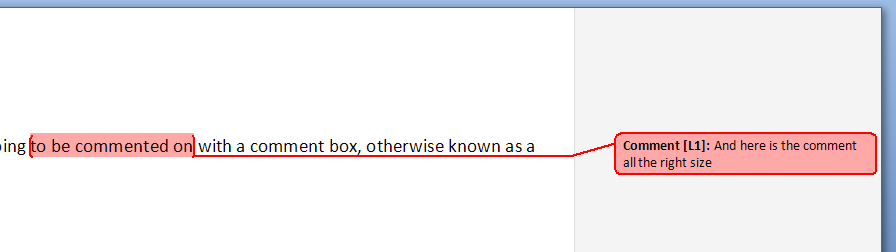
And there it is, all changed:
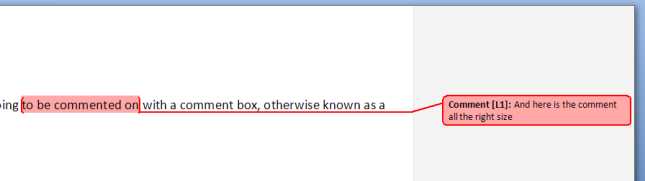
Save document

Want even more information on customising your comment boxes? Read this article full of everything you would ever want to know!

Related topics: What to do if your comment boxes start running from right to left

Changing the language in your comment balloons

Note that these tips are primarily for Word 2007, 2010 and 2013 for PC. Most of them will work for Word for Mac, although you may find some menus in different places. This is part of my series on how to avoid time-consuming “short cuts” and use Word in the right way to maximise your time and improve the look of your documents. Find all the short cuts here

Do let me know if this has helped you, saved your bacon, etc. – and do share with the buttons at the bottom of this article.
 
343 Comments

Posted by on November 6, 2011 in Copyediting, New skills, Students, Word, Writing


Tags: , , , ,

Yours or your’s, your or you’re?

Yours or your’s?  Here’s a clue. It’s never one of them.

Yours, theirs and its don’t take an apostrophe when they’re describing something that belongs to someone. Just like hers and his don’t.  So, it’s George’s book; the book is his. It’s your book; the book is yours. It’s their book; the book is theirs. It’s the book belonging to the club; it’s its book. No apostrophes.  The only apostrophe that comes along with yours, theirs, his, hers or its, is when it’s stands for “it is”.

So it’s never your’s – it’s always yours. If it belongs to you, it’s yours. Not your’s.  Not their’s.  Not it’s.

You’re means “you are”, like they’re means “they are” – your means “belonging to you”.

If the widget belongs to you, it’s your widget. No apostrophe.

“You’re improving your health, running regularly. Is that your sweatband? Are those trainers yours?”

Short but sweet. Now you won’t forget, will you?

More on apostrophes here.

You can find more troublesome pairs here and the index to them all so far is here.

 
1 Comment

Posted by on November 4, 2011 in Errors, Language use, Troublesome pairs, Writing


Tags: , , ,

What I’ve been up to in October

October is traditionally a quieter month after the student Master’s dissertation rush of August and September, and I have certainly seen a slight drop-off in workflow, although it’s still kept ticking along. I’ve …

Edited some PhD theses – some ongoing, some in their entirety; some large documents and a PowerPoint presentation for one ongoing client (discovering that, even if you can’t Track Changes, you can stick sticky notes all over the slides); quite a few blog posts for a new ongoing client who is not a native English speaker (picking up a lovely reference along the way); and all sorts of business and academic writing for my translator client.

Edited and proofread my usual American magazine’s quarterly publication and the MoseleyB13 local magazine.

Edited two articles for publication, ensuring they conformed to the journal’s style guide.

Set up a coaching relationship with one PhD student, where we talk via email every week about the new work he’s completed in an effort to get his thesis written up this year.

Transcribed interviews for my journalist client, who’s got some cover stories in women’s magazines as well as the usual music magazine pieces, and a new client who presents teleseminars and interviews on writing and marketing your work (learning a lot as I go along!).

And I also …

Ran my fourth Birmingham Half Marathon, with a personal best time!

Wrote some blog posts on starting your own business, including starting a proofreading business, pre-launched my new Libro Newsletter by telling people about it and inviting them to sign up, and placed some more guest posts.

Attended a Social Media Cafe, where I talked through a business problem with my peers – very useful.  I attended the Kings Heath Business Association AGM and will hopefully be helping out on their committee in the New Year, and I went along to the Entrepreneur meetup and met some more lovely, enthusiastic people with great business ideas.

Phew! I’ve also received the 22nd questionnaire response for my Iris Murdoch research project, and this month/December I will be applying to present a paper on it at the next Iris Murdoch Conference and writing up some results!

Coming up …

The Big Decision is coming up now: when to take Libro full-time. Working part-time while running the business is getting tiring, and where I haven’t had to turn any work away, I have had to turn down a few opportunities for networking and other events which could potentially drive some new business my way. I also want to be able to be more flexible for my clients as to when I can do their work, and have time for my partner and my friends! So … it’s decision time this month!

Libro offers copyediting, copy writing, proofreading, transcription, typing and localisation services to other small businesses, individuals and corporations. Click on the links to find out more!


Tags: , , , , , ,

Be careful! Literally

I was watching one of those antique hunt programmes while I was in the gym the other day, and I heard one of the experts say, “These table legs are literally on fire”. But of course, they weren’t; they were just sitting there, being table legs. In the same way, you didn’t literally sleep all day, and you’re probably not literally dead on your feet. But if you have a friend who’s a Harlem Globetrotter and he’s on his own at a party, yes, he’s literally the tallest person there. Keep literally for when it means ‘in a literal sense’. If you don’t mean it in a literal sense, don’t use the word.


1 Comment

Posted by on October 31, 2011 in Be careful, Errors, Language use


Tags: ,

Bare or bear?

I think I’ve seen “just bare with us” while we fix this site, reprint our menus, etc., etc., one too many times – but of course it is a troublesome pair, and not really one you’d want to mix up!  If the company or person asking you to bare with them knew that they were asking you to get naked alongside them, would they be so keen to say it?

As well as being a large, dangerous mammal in its noun form, to bear means to carry, to convey, to support (a weight) and, in the form in which we are encountering it here, to bear means to manage to tolerate (with the negative: “I can’t bear that colour!”) and to bear with someone or something means to be patient or tolerant with. “Please bear with us while we fix this website; in the meantime, here’s a picture of a puppy to look at.”

To bare means, in the language of the dictionary, to uncover a part of the body and expose it to view. We’re bare when we’re unclothed, we might bare our legs in the summer, and we can bare our teeth, which means to show one’s teeth, typically when one is angry. Like when one reads “please bare with us”.

Well, actually, we all know by now that I try to bear with people who make these mistakes, understanding that not everyone’s good at English, or can write well, or spell, or has English as their first language. I don’t ever mean to mock. And I certainly won’t start taking my clothes off next time I read “please bare with us”. Not unless the person behind the sign does it first, of course!

You can find more troublesome pairs here and the index to them all so far is here.

 
3 Comments

Posted by on October 28, 2011 in Errors, Language use, Troublesome pairs, Writing


Tags: , , ,