RSS

Author Archives: Liz Dexter

Unknown's avatar

About Liz Dexter

Book blog is at http://www.librofulltime.wordpress.com Writer, proofreader, editor, transcriber. Also runner, gym-goer, volunteer and BookCrosser! My married name is Liz Dexter but my maiden name and the name on the books I write is Liz Broomfield.

The curious incident of the stats on the WordPress blogs – and what WordPress said about it

The curious incident of the stats on the WordPress blogs – and what WordPress said about it

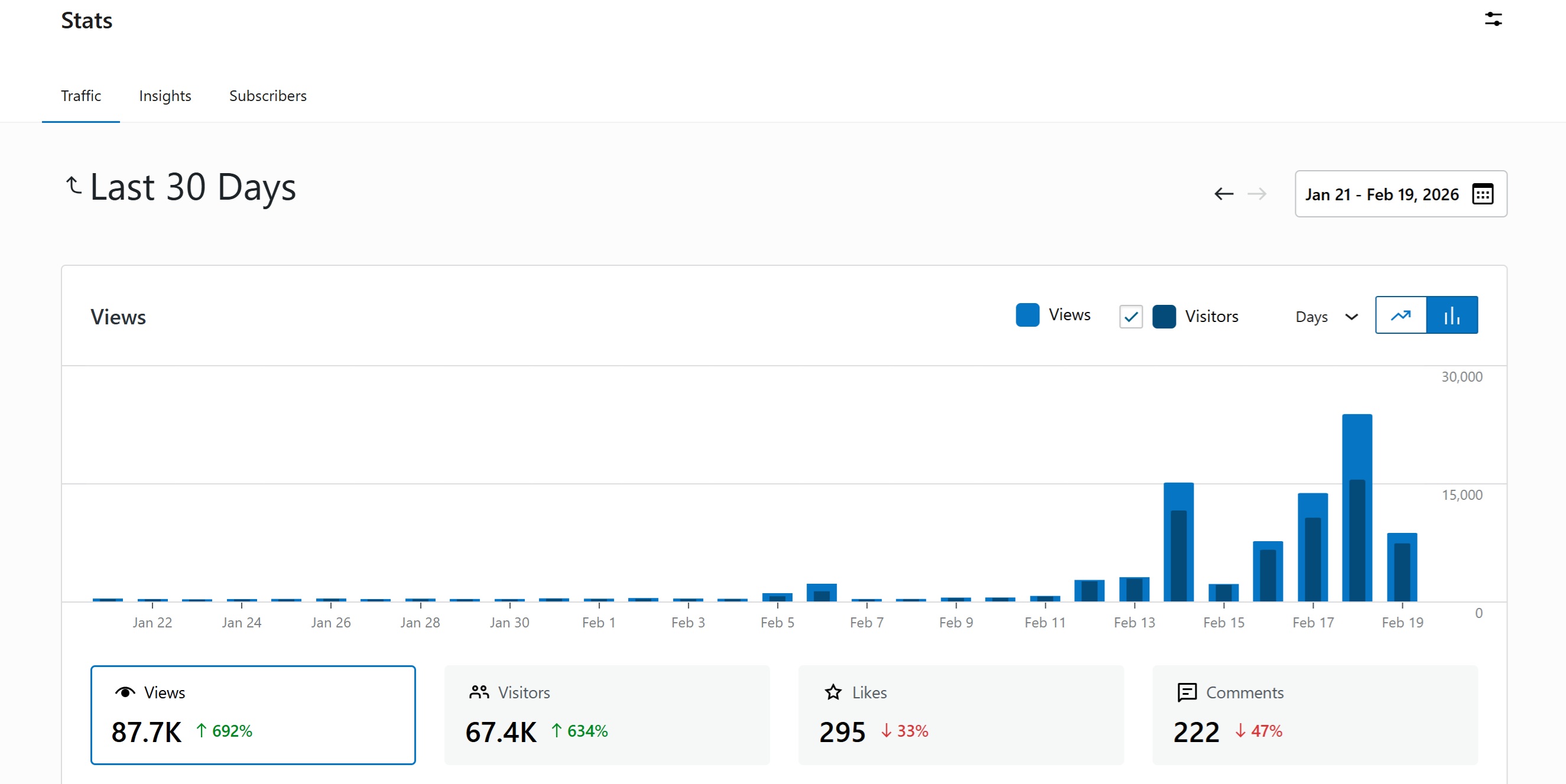
An number of my book blogging friends have been getting weird, inflated stats on our blogs over the last few months. I’ve had the odd one, but then it got sustained on my book blog (stats pictured above) and, as I pay for that one, I was able to engage with a “Happiness Engineer” (probably a real person using AI-generated or standard text). Edited to add: To be clear, I did some research and found the Happiness Engineers, who WordPress do claim to be human, are human, but use AI-assisted content in their chats. You’ll see that the timestamps aren’t very quick a lot of the time, indicating that it is a person who is juggling several conversations at the same time; an actual bot wouldn’t wait as long to reply (unless they were being very sophisticated in pretending it was a person, which I don’t think they’d bother to do).

I was worried my content was being stolen or bots were trying to do something, perhaps a Denial of Service attack. WordPress claim this is down to re-indexing. Anyway, I asked if it was OK to share our conversation and they said it was. So here goes:


YouTue, Feb 17, 11:56 AM
My pro account (librofulltime.wordpress.com) is experiencing higher than normal traffic and I believe it’s being scraped by bots. Mainly North America. This has happened to my free account, too. What is WordPress doing to stop this, as I’m concerned about denial of service attacks and my content being stolen?

WordPress.comTue, Feb 17, 11:58 AM
Hello! You are now connected to a Happiness Engineer. I’m here to help. Please wait a moment while I review your conversation and check your account.

YouTue, Feb 17, 12:00 PM
Thanks!

WordPress.comTue, Feb 17, 12:02 PM
Thank you for sharing your concerns about the increased traffic and potential bot scraping on your Pro account, librofulltime.wordpress.com, as well as your free account. It’s important to keep your site secure and your content protected.

WordPress.com proactively employs multiple systems to detect and mitigate malicious traffic, including bots and potential denial of service attacks. Some of these measures include:

– Automated traffic filtering and rate limiting to prevent abuse
– Use of security monitoring and firewalls at the server level
– Blocking IP addresses identified as sources of suspicious activity
– Ongoing updates to security policies and tools to adapt to new threats

For your specific situation, here are a few steps you can take to further enhance protection:

1. Enable two-factor authentication on your account to secure login access.
2. Review and restrict user roles and permissions if you have multiple contributors.
3. Use plugins or built-in WordPress.com tools that help monitor suspicious activity and block unwanted bots.

YouTue, Feb 17, 12:03 PM
Thank you. I already do 1 and I am the only contributor. What tools can I access from wordpress.com that will help monitor and block unwanted bots, please?

WordPress.comTue, Feb 17, 12:07 PM
Thank you for letting me know that two-factor authentication is enabled and that you are the sole contributor to your site. That definitely helps with securing access.

Regarding tools available on WordPress.com to monitor and block unwanted bots, here are some options you can explore:

– Site Stats and Traffic Insights: Your WordPress.com dashboard includes traffic analytics that can help you identify unusual spikes or traffic from suspicious sources. These insights can be a first clue to bot activity.

– Jetpack Security Features: Since WordPress.com includes Jetpack features, you benefit from Jetpack’s security modules, such as brute force attack protection and downtime monitoring. These help protect your site from malicious bot traffic and attacks.

YouTue, Feb 17, 12:08 PM
I already look at my traffic analytics as that’s how I know I have a spike and the country it’s coming from. How do I initiate Jetpack’s security modules, please?

WordPress.comTue, Feb 17, 12:10 PM
It’s great that you are already monitoring your traffic analytics closely—it’s a key step in spotting unusual activity.

Regarding Jetpack’s security features on WordPress.com, the good news is that many of these protections, such as brute force attack protection and downtime monitoring, are automatically active for all WordPress.com sites, including your Pro plan. There is no need for a separate setup or activation; these modules work in the background to help safeguard your site from malicious activity.

WordPress.comTue, Feb 17, 12:10 PM
It’s great that you are already monitoring your traffic analytics closely—it’s a key step in spotting unusual activity.

Regarding Jetpack’s security features on WordPress.com, the good news is that many of these protections, such as brute force attack protection and downtime monitoring, are automatically active for all WordPress.com sites, including your Pro plan. There is no need for a separate setup or activation; these modules work in the background to help safeguard your site from malicious activity.

YouTue, Feb 17, 12:12 PM
So is there nothing else I can do to protect my site? My stats are rendered useless now, which is a shame.

YouTue, Feb 17, 12:14 PM
and I’m worried my site is in danger or my content being stolen.

WordPress.comTue, Feb 17, 12:18 PM
As I mentioned previously, WordPress.com has built-in protections in place to handle high traffic and automated bot activity. Our platform is protected by network-level firewalls, rate limiting, and DDoS mitigation systems that automatically detect and block abusive or malicious traffic, including scraping attempts and denial-of-service attacks.

Because these protections operate at the infrastructure level, most bot traffic is filtered before it ever reaches your site, and it won’t affect your site’s availability or performance.

Regarding content scraping, WordPress.com actively monitors abusive behavior and blocks known bad actors. While it’s not possible to prevent all automated access on the open web, our systems are designed to significantly reduce harmful scraping and protect your content.

If you’re seeing unusual traffic patterns in your stats or have specific IP ranges or examples you’re worried about, feel free to share them and we can take a closer look.

YouTue, Feb 17, 12:19 PM
That’s what I started off by telling you! I have had unusual patterns on my paid account librofulltime.wordpress.com

YouTue, Feb 17, 12:20 PM
I usually get about 450 hits per day maximum. From 12 Feb I’ve had over 2,700 per day, 15,000 on 14 Feb.

YouTue, Feb 17, 12:21 PM
I have also had a spike of 19,400 on my libroediting.com free site on 13 Feb.

YouTue, Feb 17, 12:21 PM
That usually gets similar numbers. I was getting a lot of Chinese hits from it a month or so ago but these are US.

WordPress.comTue, Feb 17, 12:24 PM
Thank you for sharing this. As the next step, I recommend checking Referrers in Your Stats: Look at the referral sources in your WordPress.com stats dashboard to see if any unusual external sites or bots are sending traffic.

YouTue, Feb 17, 12:25 PM
Yes, I keep an eye on that – it’s majority Search Engines but for example on 14 Feb there were only 265 from there, one each from other sources.

YouTue, Feb 17, 12:25 PM
Referrers

Views
Search Engines 265
WordPress.com Reader 8
perplexity.ai 1
zurefy.com 1
gemini.google.com 1
Facebook 1
bookjotter.com 1

YouTue, Feb 17, 12:26 PM
or would one of the ones with 1 then spread out across the site from there? I know bookjotter and gemini but not the others. Is it gemini mining the site for its LLM?

WordPress.comTue, Feb 17, 12:30 PM
Great question — what you’re seeing there is normal and not an indication of a coordinated scrape or attack.

When stats show a referrer with “1 view”, that usually means a single page request, not a crawler spreading across the entire site. If a bot or scraper were systematically crawling your content, you’d see hundreds or thousands of hits, often without meaningful referrer data, or a sudden spike across many pages.

Regarding the specific sources:

  • Search Engines (265) → standard indexing activity (Google, Bing, etc.).
  • gemini.google.com (1) → this is typically a preview or fetch request associated with Google services. It does not indicate full-site mining or training activity.
  • perplexity.ai (1) → usually a user-generated lookup or preview, not bulk crawling.
  • zurefy.com / bookjotter.com (1) → likely a single referral click or automated preview; these are not behaving like aggressive scrapers based on the data shown.

WordPress.com already blocks known abusive crawlers and large-scale scraping at the network level. If Gemini, Perplexity, or similar services were crawling your site at scale, it would appear as significantly higher, sustained traffic, which isn’t happening here.
So in short:

  • No evidence of an LLM scraping your site
  • No indication of a denial-of-service risk
  • No spreading crawl from those single referrers

YouTue, Feb 17, 12:35 PM
OK, thank you. So why have I got so many hits on that day? It’s not organic, I know that, I’ve had these two sites for years and years and I’ve had organic growth on librofulltime slowly.

YouTue, Feb 17, 12:35 PM
And the days around it.

YouTue, Feb 17, 12:36 PM
This is the top ones from that day – most of those posts are ones that are not particularly popular normally.

The Iris Murdoch Society Conference 2024 137
State of the TBR – October 2023 106
A rare DNF half-way through! 92
I’ve not disappeared! 87
Book review – Candice Carty-Williams – “Queenie” plus Book Confessions #amreading #bookconfessions 84
State of the TBR – April 2022 82
Book review – Anne Tyler – “The Accidental Tourist” #AnneTyler2021 79
Book review – Barbara Kingsolver – “Demon Copperhead” 78
Book review – Gertrude Bell – “The Desert and the Sown” 78

YouTue, Feb 17, 12:37 PM
to be clear, and to quote you, this is what I’m getting: “you’d see hundreds or thousands of hits, often without meaningful referrer data, or a sudden spike across many pages.”

YouTue, Feb 17, 12:38 PM
e.g. the top one Iris Murdoch Society Conference I got a few hundred hits the days after I published it, then 6 or 7 per month until this day.

YouTue, Feb 17, 12:39 PM
A Rare DNF half-way through typically gets 1 or 0 hits per month, now 253 this month.

YouTue, Feb 17, 12:40 PM
Nothing in the referrals to back up or explain these high hits. Feb 14 I have 1.31 views per user on average, if that helps.

WordPress.comTue, Feb 17, 12:41 PM
Thanks — that helps clarify it. This pattern fits search engine re-indexing, not scraping or an attack. Older posts that normally get very low traffic can briefly spike when search engines re-evaluate them, which is why you’re seeing activity on posts that are usually quiet.
The key indicators here are:

  • Traffic attributed to Search Engines, with no suspicious referrers
  • Views spread across many different posts, not one URL being hammered
  • A short-term spike rather than sustained growth
  • An average of ~1.3 views per visitor, which is typical of crawler behaviour (humans usually view more pages)

If this were scraping or LLM harvesting, you’d see persistent, repetitive hits, higher volumes per page, or missing referrer data. Based on what we’re seeing, this is benign indexing activity, and nothing harmful is happening.

YouTue, Feb 17, 12:42 PM
OK, thank you, that is reassuring.

WordPress.comTue, Feb 17, 12:44 PM
You’re very welcome — I’m glad I could help reassure you 😊

YouTue, Feb 17, 12:46 PM
If it’s OK, I will copy this and share on my blog as I have a few friends who have had similar issues recently.

WordPress.comTue, Feb 17, 12:47 PM
Thank you for asking! You’re absolutely welcome to share the information from our conversation on your blog. It’s great to hear you want to help others who might be experiencing similar issues.

If you or your friends have any further questions or need assistance with anything else on WordPress.com, please don’t hesitate to reach out. It’s always a pleasure to support your site and your community!


Well, I’m not sure I am convinced or reassured. I should have told them that 99% of the hits are coming from desktops rather than tablets or phones, though not sure what that would have done. I’m sharing this to spare someone else the long task of having this conversation, and also wondering if anyone else has had this conversation and the same or different results!
 
20 Comments

Posted by on February 19, 2026 in Blogging, WordPress


Tags: ,

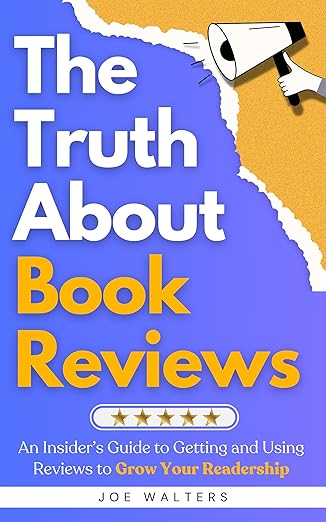
Book review – Joe Walters – “The Truth About Book Reviews”

Book review – Joe Walters – “The Truth About Book Reviews”

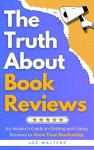
Over on my book review blog today, you can read my review of this book industry read, “The Truth About Book Reviews”:

In an easy to read and chatty style, Walters takes indie authors and those publishing through small presses through the stages of obtaining book reviews in three categories (blurbs/editorial reviews, media and trade reviews, and customer reviews, the second incorporating book blogs like mine, the third being Amazon, Goodreads, etc.). He includes timelines, plans, why and how you can obtain book reviews (including submissions to sites and services both free and paid, with explanations of the advantages of both) and what to do with them when you get them …

(read more)

 
Leave a comment

Posted by on November 29, 2025 in Business, Writing


Tags: ,

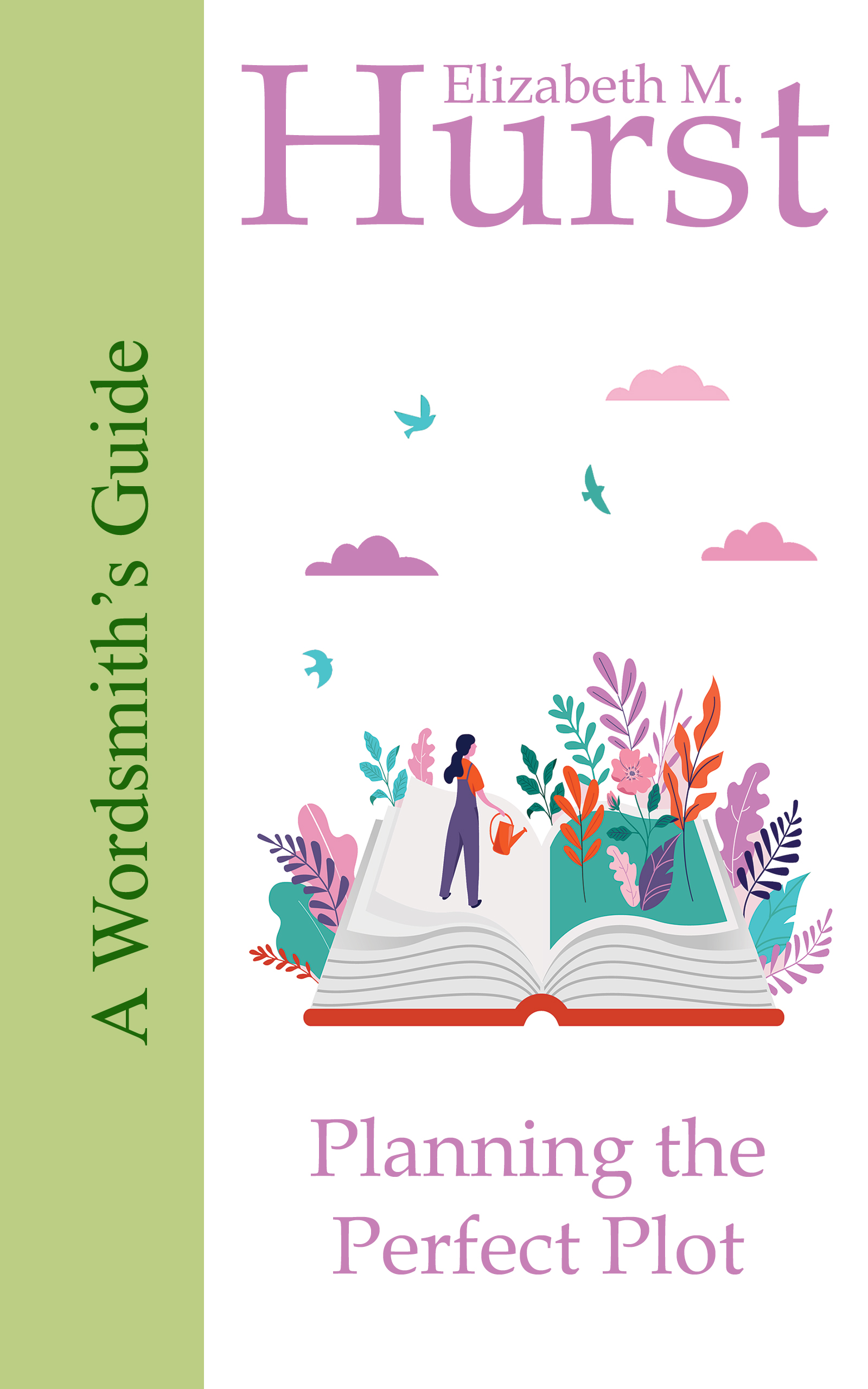
A book for fiction writers – Elizabeth M. Hurst – “The Wordsmith’s Guide to Planning the Perfect Plot”

Over on my book review blog today I’ve reviewed this book, which is a great choice for any fiction writers who are keen to find out new ways to do plotting and planning. While I myself only edit nonfiction these days, I know a lot of fiction writers find this website, so this one’s for you! Read all about it here (with thanks to Elizabeth M. Hurst and Rachel’s Random Resources)

 
Leave a comment

Posted by on October 18, 2025 in Writing


Tags: , ,

Editing resource review – QuickStyle Customizable Editorial Style Sheet

Editing resource review – QuickStyle Customizable Editorial Style Sheet

As an editor and proof-reader of many years standing, I use style sheets as a matter of course (if you’re not an editor or you’re new to the business, you can refresh your memory on using a style sheet for proofreaders and editors and for writers). I have a very simple template which I use as a basic style sheet for, say, self-publishers who haven’t created one of their own, or I use a journal, publisher or university’s one. What I didn’t realise I needed until Hazel Bird of Wordstitch Editorial (coincidentally the same age as my own business) got in touch was a customisable style sheet that I can tweak to any requirements I wish!

What did I receive?

I received a copy of the style sheet in read-only format (to keep, and save-as to create my own customised versions) and a very useful PDF guide. I work on a PC but the download included the Mac versions, too. It comes in a .zip file so it’s not too big to send and receive.

What does it look like and what does it do?

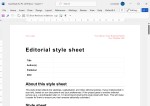
When you open the Word template document, you can immediately see that you can add your own business name and logo, making it entirely yours:

Screenshot of the top of the style sheet showing where you can add your logo and details

Obviously, you can add your branding then save a copy that’s “yours”. The bit of text at the top is spot-on already, but you can amend that, too.

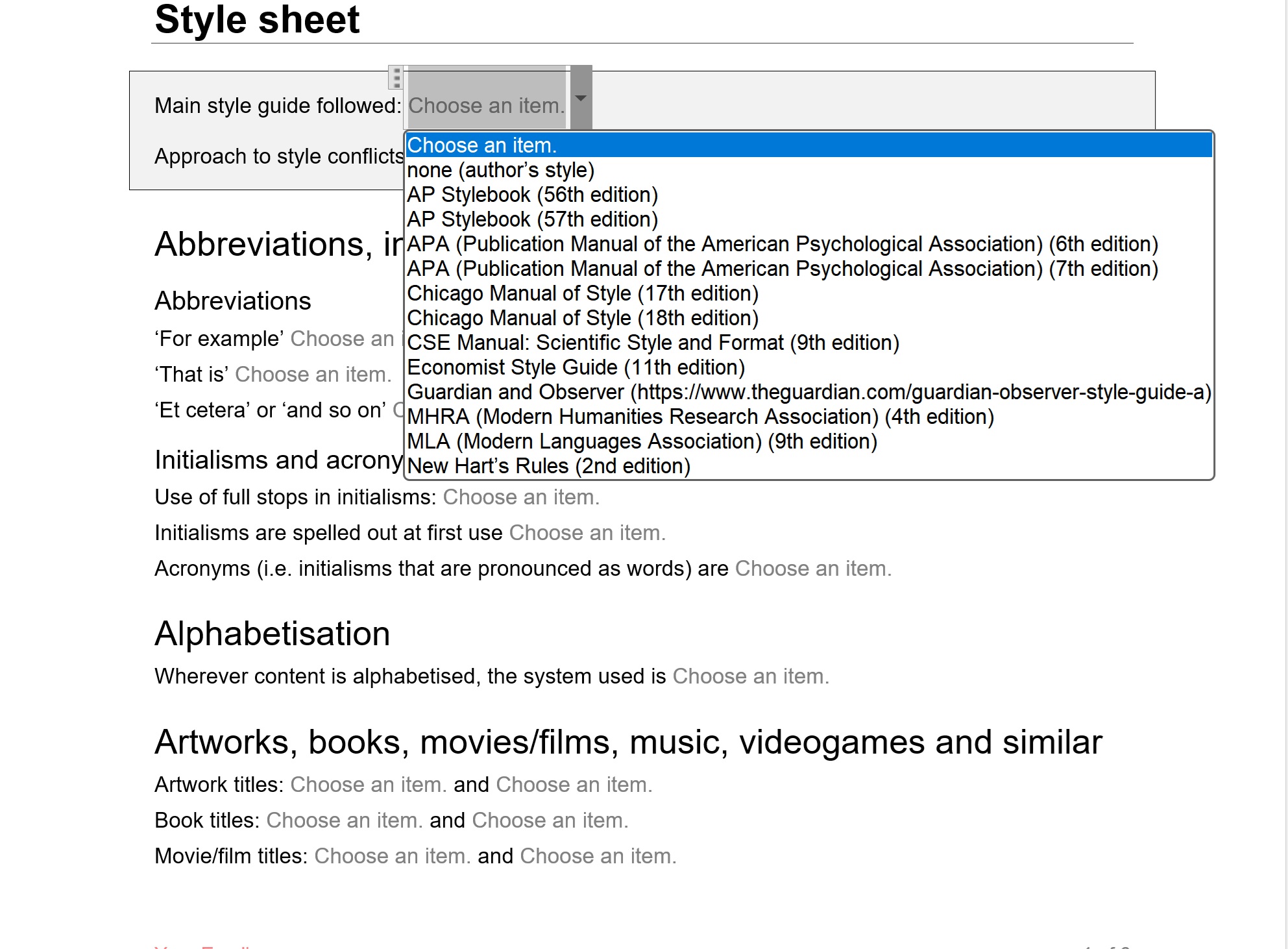
Then we get to the nuts and bolts: first of all, you can state the style guide you’re being led by:

Screenshot showing how you can choose a style guide to follow

It’s worth noting here that there is even an “Approach to style conflicts” box so you can record whether the chosen style guide is the law set in stone or whether the client’s different uses trump the style guide.

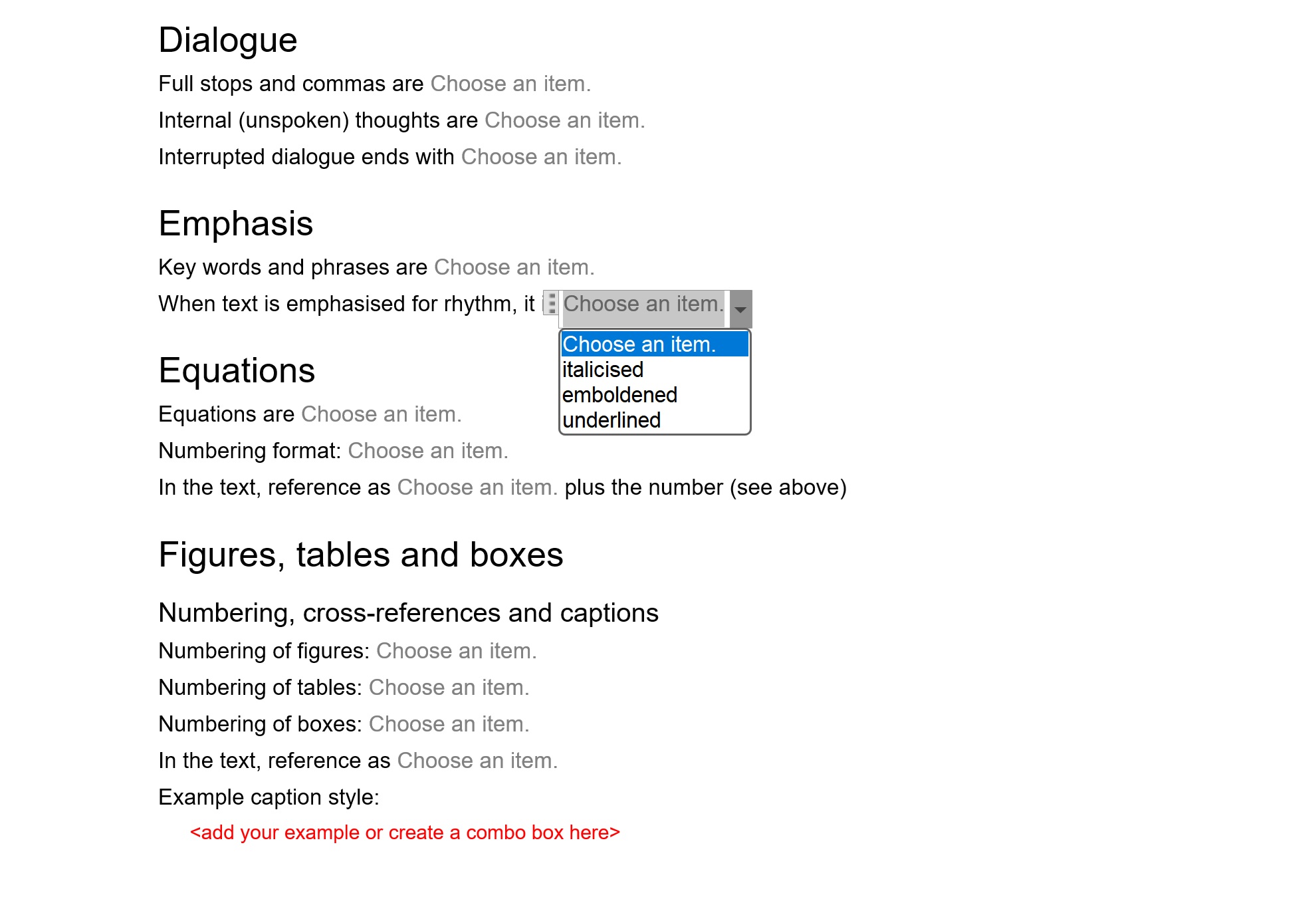
The template then goes on, in alphabetical order, to let you choose the options for everything from abbreviations onwards.

Examples of areas you might define rules for with one drop-down open

There are so many choices, which is great: I couldn’t find anything missing and you can always add any special ones to the list.

What about help?

The style sheet comes with a very useful manual in PDF which covers everything you need to know, written clearly and helpfully:

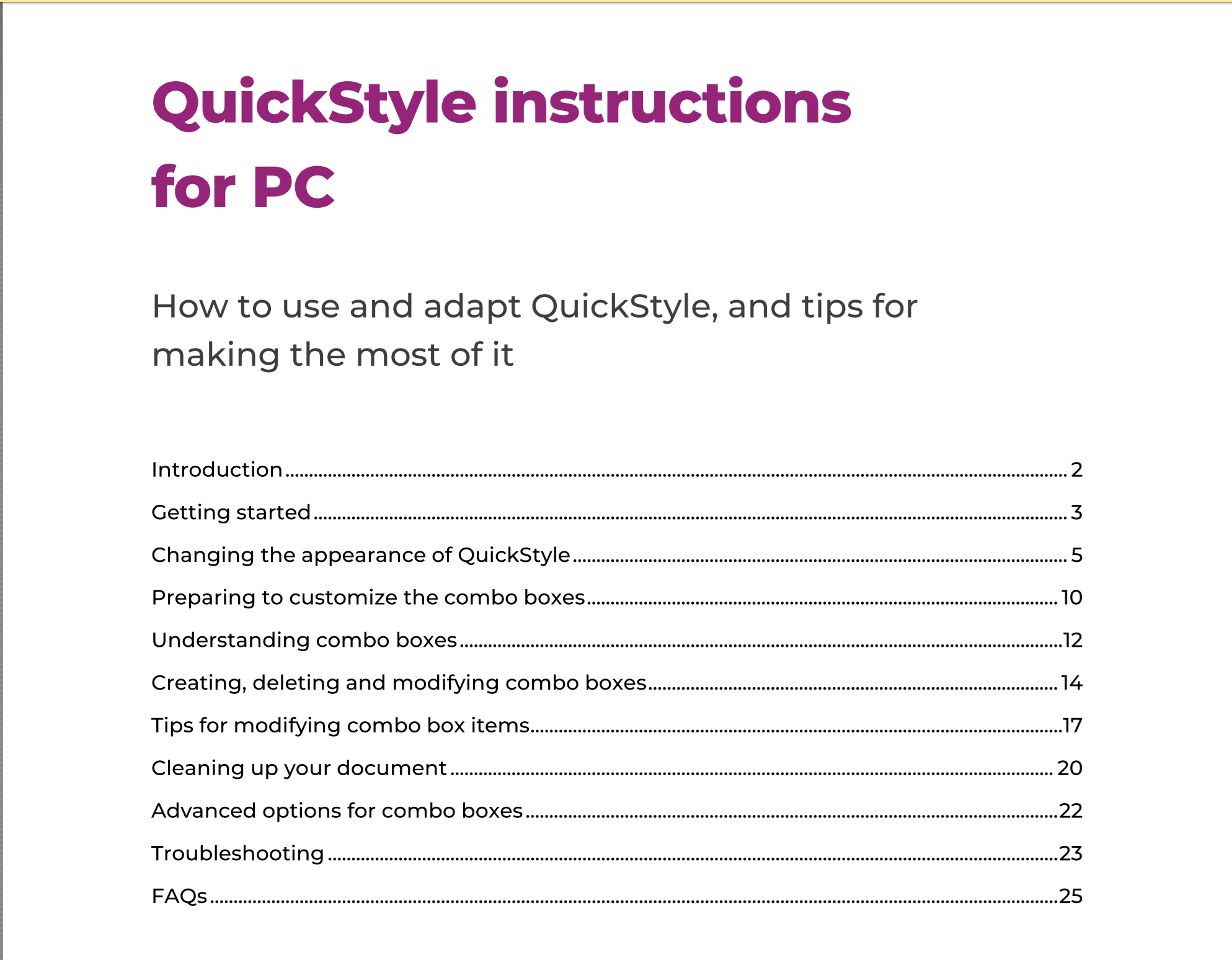
Menu for the PC manual

And I can lock the style sheet down so my client can’t alter it, right?

This was my main question: can I remove the choices so my client just sees what I’ve chosen for them (or my writers and editors if I’m a journal or book publisher). And the answer, of course is yes: you can create a standard-looking style guide your client can’t amend by mistake or on purpose!

Who is QuickStyle Editorial Style Sheet useful for?

  • Editors and proof-readers will find it invaluable
    • There is a LOT of information on the full template, however it’s easy to delete sections, so if you want to keep it simple, you can just keep to various basics, but if you need all the detail, it’s all there for you.
  • Writers who are producing more than one book and want to keep their style consistent could use it and pass it on to their editor and/or proof-reader
  • Journal editors and publishers can use it to provide guidance to their writers, editors and proof-readers

How do I buy QuickStyle Customizable Editorial Style Sheet?

You can download the style sheet from Hazel’s website here. She has provided the following information about contents and prices:

  • It’s available for PC and Mac (both versions will be included in all purchases, so users have access to whichever is relevant to them).
  • The price will be £45 inclusive of any applicable taxes.
  • There will be a 15% early-bird discount on all purchases at launch (13 August) until Friday 12 September.

Thank you to Hazel Bird for providing a review copy of QuickStyle Customizable Editorial Style Sheet in return for an honest review. It’s launch day today, 13 August 2025, and I do recommend it.


Tags: , ,

Can I still access Chicago Manual of Style 17th edition online?

Can I still access Chicago Manual of Style 17th edition online?

Writing in June 2025, I’m in the slightly odd position of having two editing jobs to hand that require Chicago Manual of Style 17th edition (CMOS 17), even though CMOS 18 has been out for almost a year (published in September 2024). I have an online subscription to CMOS 17 and, fortunately, I thought, print copies of both books.

I was busy leafing through my CMOS 17 while editing, reminding myself of the two major changes between the two that affect me here (CMOS 18 drops the requirement for a place of publication in the bibliography, and three or more authors (not four or more) are represented by first-author, et al.)

But look:

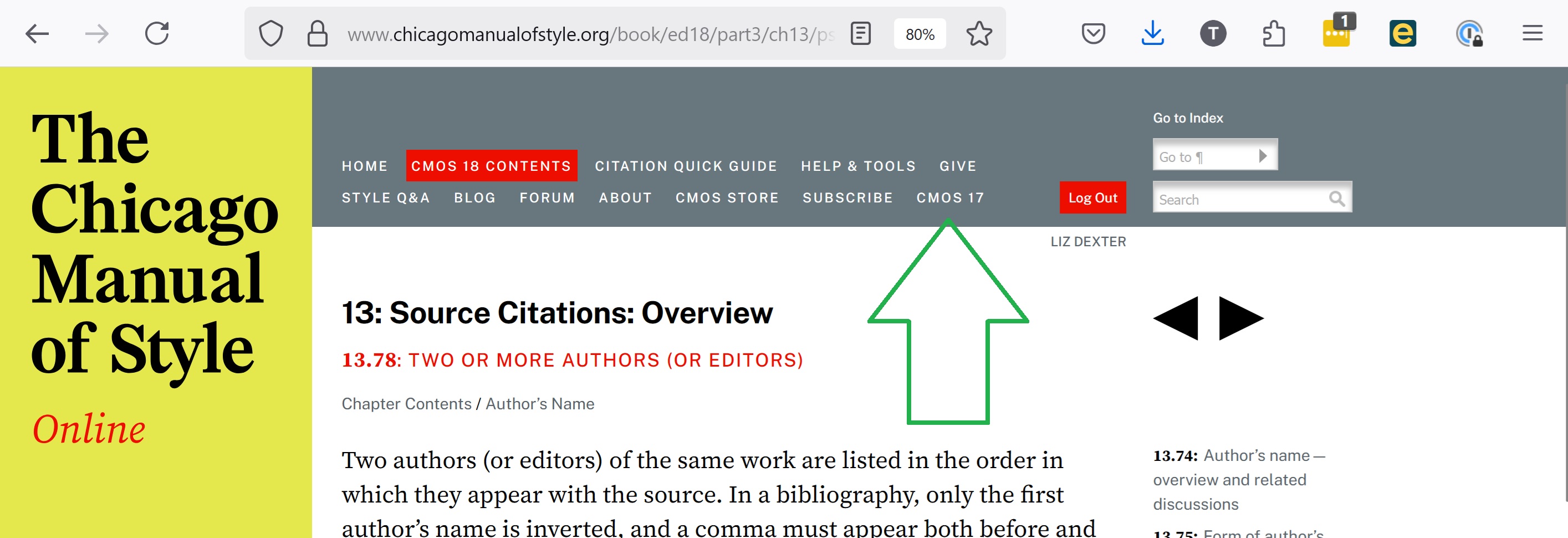
When you are in CMOS 18 online, there is a menu option for CMOS 17, and you can flip into that (or open it in a new tab), and it’s fully searchable, just like CMOS 18 online.

And I’ve written this both to remind myself and to let anyone else know who hadn’t realise. Thank you, Chicago Manual of Style people!

This post has shared that you can still access Chicago Manual of Style 17th edition online, even though the 18th edition is now the current one.

 
1 Comment

Posted by on June 28, 2025 in Copyediting, Reference materials


Tags:

Help – my Word Navigation Panel font has gone tiny

Help – my Word Navigation Panel font has gone tiny

You’re using Microsoft Word and suddenly the font size in your Navigation Pane has gone tiny. Here’s what to do.

Funnily enough, a similar situation inspired my very first post on this blog – What to do if your comment boxes go tiny in Word. Now we have the same situation with the Navigation Pane and its text becoming very small.

What is the navigation pane?

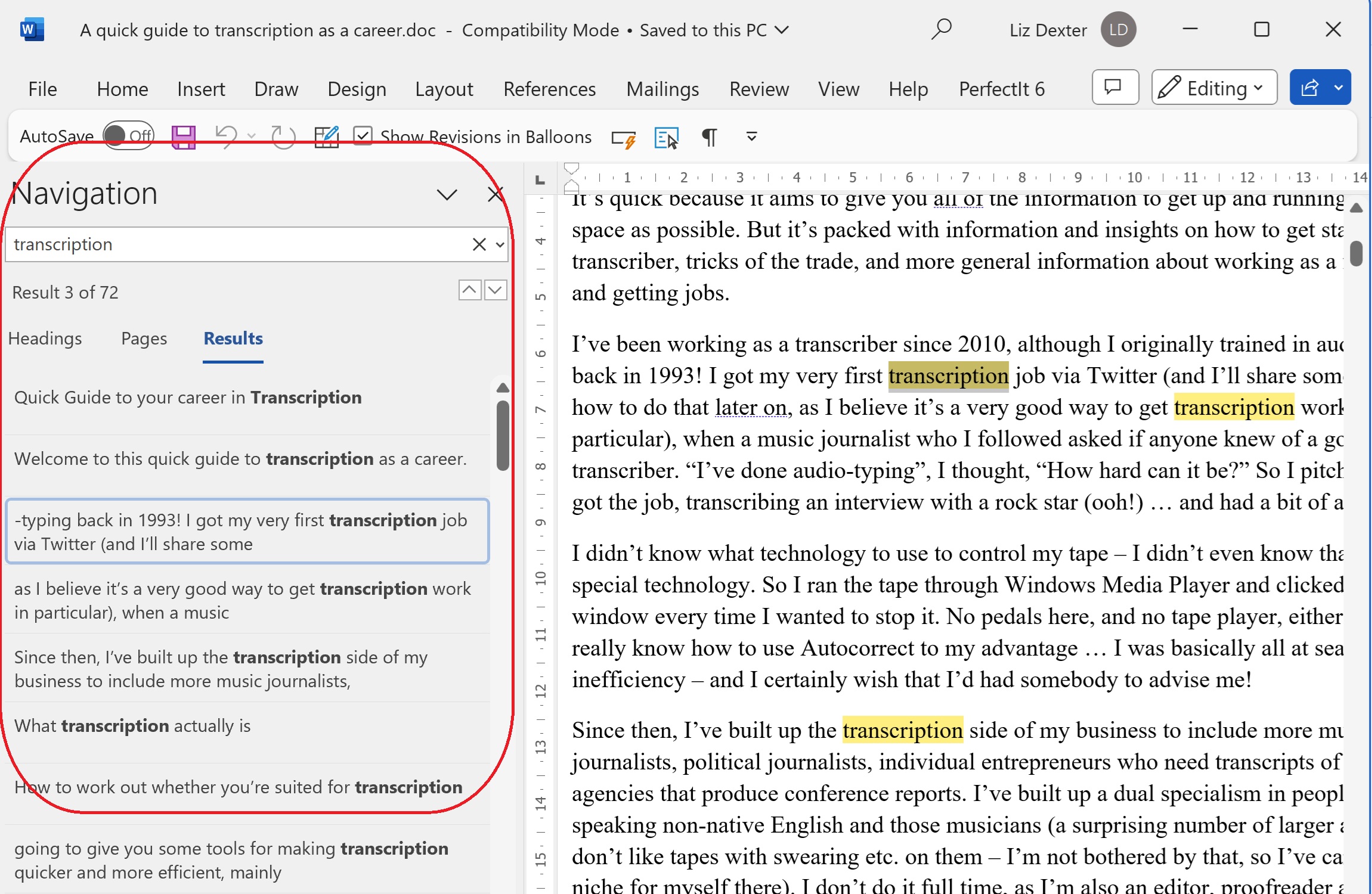
The navigation pane (or document map) is that area to the left (usually) of your Word document which gives you the option to view the headings and layout of your document, the pages, or search results for a term you’ve looked up. It normally looks like this:

but the problem arises when, often for no reason, sometimes when you’ve got a new monitor with a higher resolution, suddenly all the text in that Navigation Pane area is in a tiny font size. How do you change that font size? The answer lies in the Styles.

How to find the Styles menu

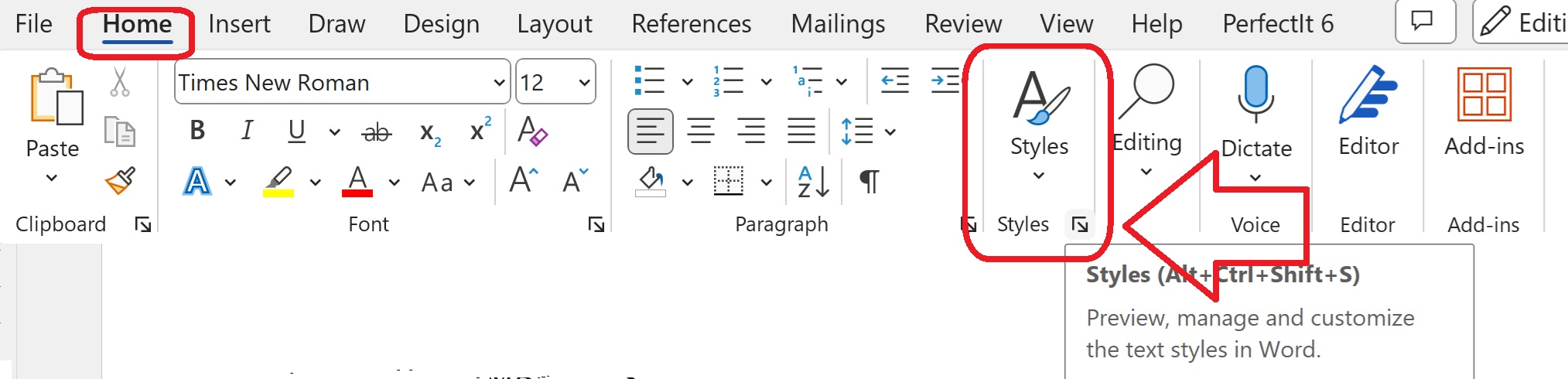
The Styles menu is in the Home tab. You might need to widen out your Word window to find it.

Once you’ve found Styles, click on the little arrow at the bottom right.

How to see all the styles, not just some

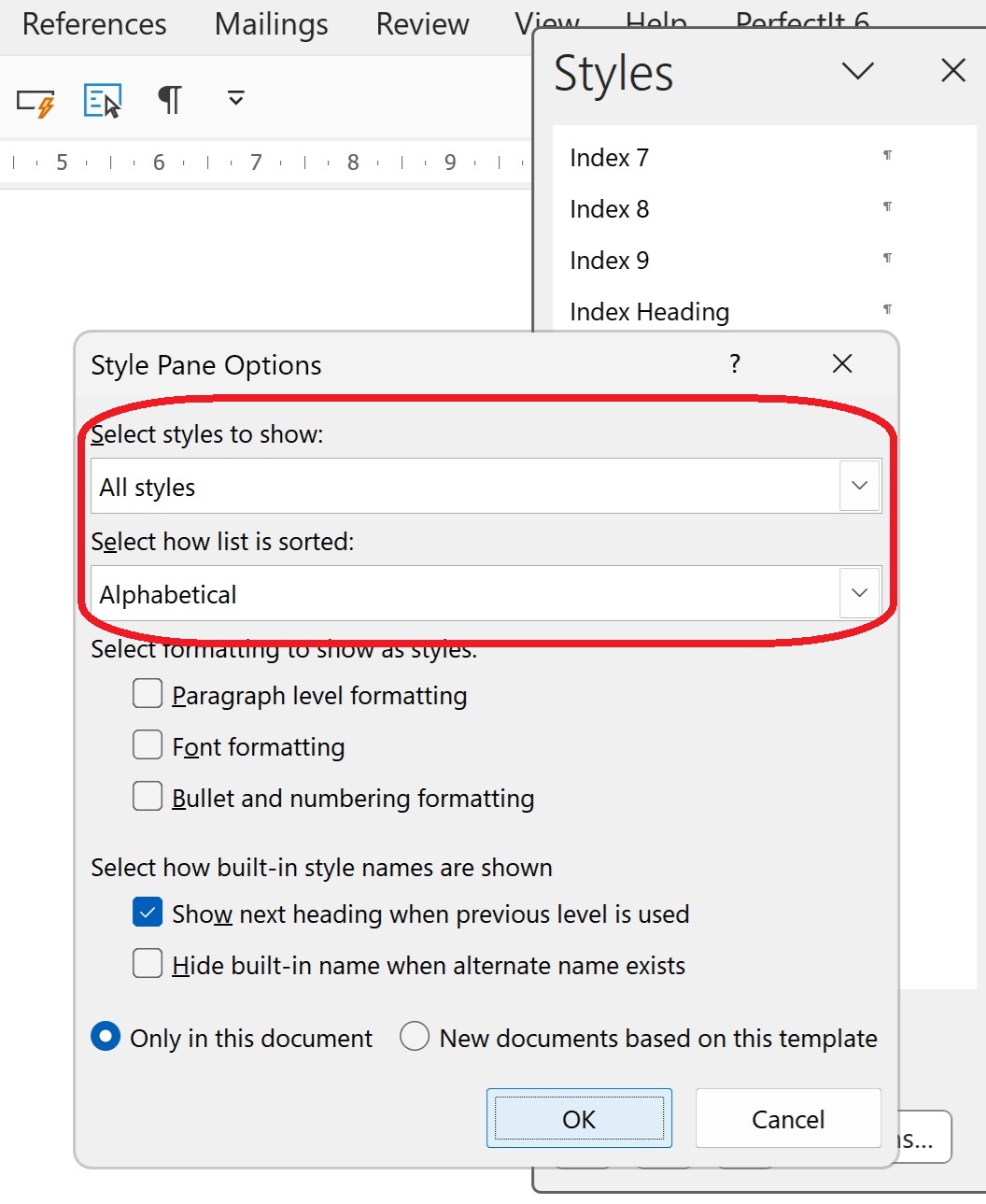
By default, Word will show you the styles it thinks you might need. Of course the one you want is never in the list. To see All the styles and edit the one you want …

Click on “Options” at the bottom of the window.

Then change the drop downs to “Select styles to show”: All styles and “Select how list is sorted”: Alphabetical.

Then click OK.

How to change the Navigation Pane style using Document Map

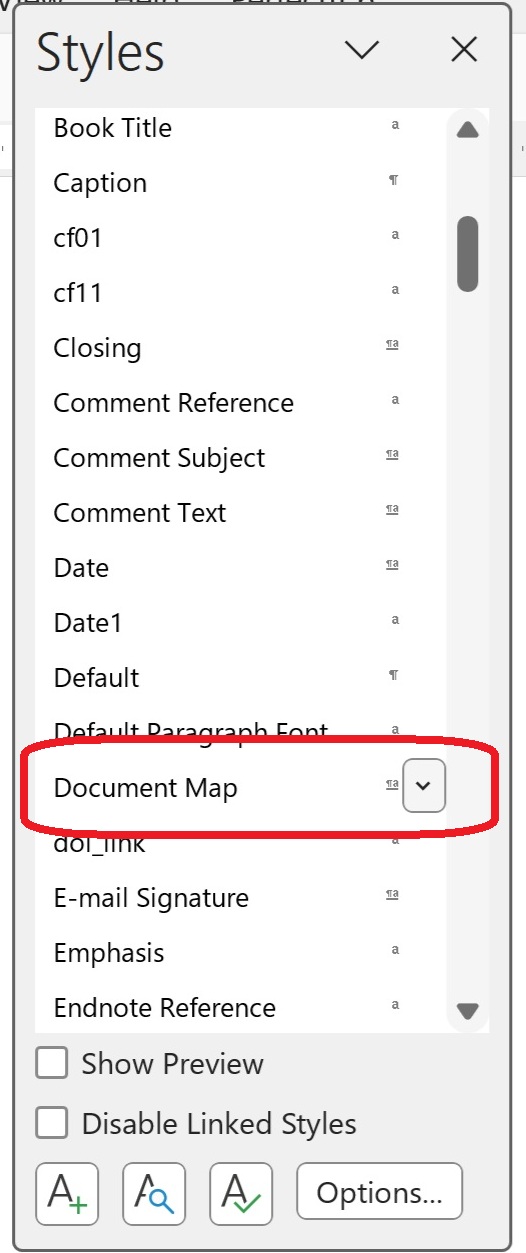
The style that controls the Navigation Pane is called “Document Map”. I can only assume that it was once ONLY the document map, as that is still included in the Navigation Pane. Scroll down to find it …

… and click on the little arrow to the right-hand side.

How to modify the Document Map / Navigation Pane style

Click on “Modify” so you can change the font size of the Navigation Pane.

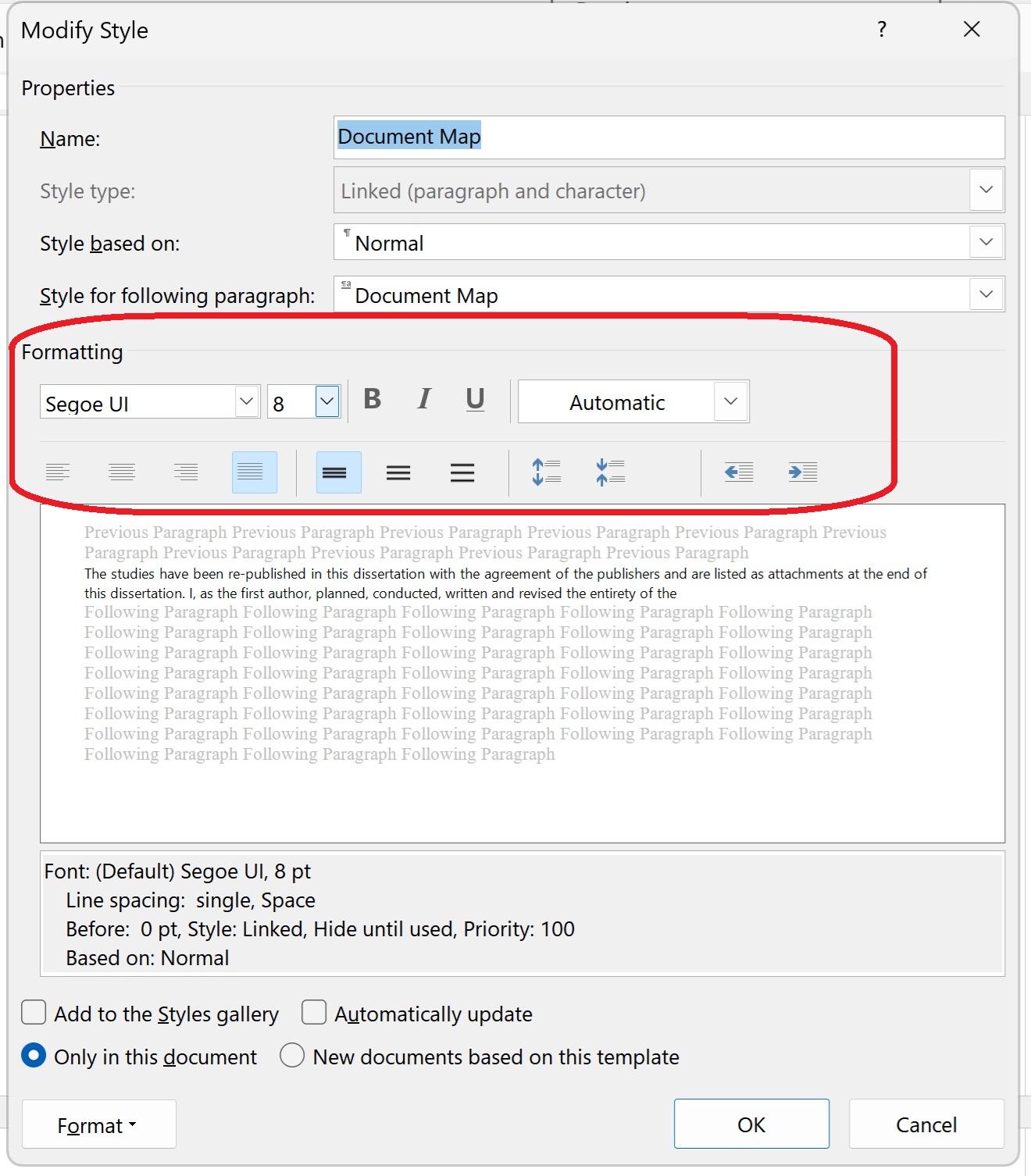
Now the Modify Style window will appear. Here you can see the style is set to be an odd-named font with a very small font size. Here you can just change the font and size to whatever you want:

Once you’ve changed the font, and decided whether you want to add this style to the gallery (hopefully not, as you’ll never need to change it again!) and whether you only want this change for this document or all new documents based on the same template (not so useful if you only work on documents originating with other people), press “OK”.

Does this fix always work?

You may need to close and re-open your document to see the font size in the Navigation Pane change to one you can read. And it might not work, especially if you’re working with a corrupted document that has been through a lot of versions. But it should do.

Summary

In this post we have learned what to do if your Navigation Pane font size in Word suddenly becomes tiny (or, indeed, enormous)

Please note that these tips are primarily for Word 2010 and onwards, including Microsoft Office Subscription for PC. Most of them will work for Word for Mac, although you may find some menus in different places and I can’t guarantee it. This is part of my series on how to avoid time-consuming “short cuts” and use Word in the right way to maximise your time and improve the look of your documents. Find all the short cuts here

Do let me know if this has helped you, saved your document, etc. – and do share with the buttons at the bottom of this article.

Related articles

How do I view my Navigation Pane?

How do I move text and headings using the Navigation Pane?

 
8 Comments

Posted by on May 16, 2025 in Copyediting, Errors, Short cuts, Word


Tags: ,

Book review – Vivek Kumar (ed.) – “Discover the Editor in You”

My editing colleague Vivek Kumar shared last year that on behalf of the Indian Copyeditors Forum, he had curated a volume designed for the new editor or person considering a career in editing, so of course I rushed to buy it, and then of course it’s been over a year until I’ve got it read (but this is also fortuitous: see below).

In that time, I have to say, the development of Artificial Intelligence has leapt forward and I do worry that many of the processes of our profession are going to disappear as human processes, but for the time being you can get a good grounding in the career from this book.

Incidentally, talking about careers, I am publishing this review on the 15th anniversary of my issuing my first invoice, the basic start of my copyediting, proofreading and (slightly later) transcribing career!

Vivek Kumar (ed.) – “Discover the Editor in You: Copyediting as a Career”

(27 July 2023)

This is a great resource for new-career editors or those considering a career in the profession – or, indeed, in related professions.

In shortish articles written by a great collection of editing colleagues from India, the US and the UK, professional editors (etc.) share their lessons and recommendations, covering the skills and mind-set needed, gaining training and credentials and the nuts and bolts of editing in different niches (academic, school textbooks, fiction, newspapers and magazines and technical documents).

The Techniques and Craft section digs deep into clear writing, style guides, querying authors and fact-checking, and a fourth section on Allied Services gives a good flavour of the associated careers of proofreading, alt-text writing and indexing. Appendices offer a list of courses and a useful glossary.

There is some India-centricity, as befits a book written by the Indian Copyeditors Forum, but also has an international reach, covering associations, practices and training across the world.

A really good resource that I’m sure will help many develop the skills and confidence to work in this field professionally.


Tags: , ,

Why should editors be thinking about and using conscious language? [shared post]

Why should editors be thinking about and using conscious language? [shared post]

Today I’m sharing what is the best explanation I’ve seen of the need for editors to be aware of conscious language. I’m a non-fiction editor and Louise Harnby edits fiction but the principles remain the same.

In her article, Louise Harnby covers:

  • What is ‘conscious language’?
  • ‘But I’m not part of the “woke” brigade’
  • The foundations of editing
  • Are you part of the professional editing brigade?
  • Why conscious language is also about successful authoring
  • Why conscious language is about consideration rather than prescription
  • A case study
  • Helping our clients
  • Tools that help with conscious language

Read the rest of the article here.

This is such an important topic. I’ve been using “singular they” for a long time, and other aspects I’ve covered in my editing include not gendering people when they’re mentioned as examples in texts, working to eliminate terms in networking which are now outdated and pejorative and suggesting different terms for ones which are now considered pejorative in an ablist context.

As Louise mentions, as professional editors, we’re aiming to help our authors reach as wide an audience as possible, and if they risk alienating portions of that audience through the use of language that can be avoided, it’s our job to help them not do so.


Tags: , ,

Book review – Ebonye Gussine Wilkins – “Respectful Querying with NUANCE”

Book review – Ebonye Gussine Wilkins – “Respectful Querying with NUANCE”

This book is published by the Editorial Freelancers Association, who are based in America, and I ordered it direct from them. My attention had been drawn to it by a couple of fellow-editors and I thought it would be useful to read and then share about here.

What it says on the back of the book

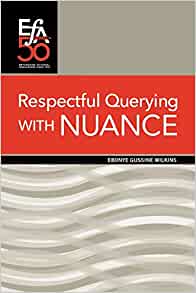
The blurb on the back summarises the book perfectly:

Editors working with writers of color or marginalized writers have dictated editorial changes that have misrepresented the writers’ voices for far too long. Writers receiving assistance from editors who don’t share their cultural backgrounds or experiences often don’t get the appropriate editorial support because of misunderstandings. Respectful Querying with NUANCE offers a framework that allows editors to continue to provide the necessary guidance while still respecting the author’s voice and encouraging the author to make the manuscript’s final editorial decisions.

Ebonye Gussine Wilkins herself is “a social justice writer, editor, and media activist shaping media through the lens of inclusion” (p. 29) and as such is ideally placed to guide other editors through this process.

What you get in the book

The introduction sets out the author’s stall as someone who is not a gatekeeper or rule-imposer but just wants to “help the writer put forth the best version of their manuscript” (p. v). She moves on to talk about how writers of colour or writers from marginalised communities outnumber editors of colour and from marginalised communities, so there are likely to be occasions when there’s a mismatch between the cultures of the writer and the editor. The editor in this case needs to be extra careful to let the author’s voice shine through and to not seek to suppress evidence of the author’s culture or background in their editing work – especially through their queries.

A query is where the editor puts a comment in the text because they’re not sure what the author intended to put across or needs to make a suggestion. For example, I have used queries recently to check what word someone intended to use when I suspected their voice-to-text software had inserted something a bit odd and, in a sort of backwards version of what this book is talking about, to suggest an author used singular they instead of he/she to avoid gender binary issues in the text. What Wilkins wants editors to do, entirely appropriately, is to take special care when doing this to pay attention to the author’s culture, and not to, for example, smooth out specific cultural terms into more ‘mainstream’ ones they might know and accept more readily themselves, certainly not without thinking about it. The main thing is to empower the author to make decisions on what’s in their own text, and to make sure that the editor’s culture, especially if it’s the dominant culture in the society in which they’re working, doesn’t dominate the author’s own voice.

Wilkins offers a handy framework to do this, based around NUANCE (Notice – Underscore – Accept – Narrow – Consult – Empower). I won’t go into all the details because then I’ll just be parroting the book. If you’re an established editor used to working supportively with writers of different groups to your own, you will probably do this intuitively. If you’re a new editor, or someone who’s feeling a bit challenged by working with someone’s manuscript that is different from your own more commonly held experiences, you’ll find this framework very useful.

My thoughts

I think this is a really good resource, especially for new editors or those needing to come to terms with working with texts that approach issues from or are written from other than their own cultural or personal characteristics. I’ve worked with all sorts of authors for years, and it encouraged and reassured me that I’m on the right tracks with the way I work with clients who are different to me in their backgrounds and lived experiences. The worked examples were useful, and the emphasis on looking things up and checking them with other external sources before assuming they’re incorrect was written in a way that was useful and supportive to the editor. In addition, with more lists and directories available of editors with different cultures and characteristics, I would – and have – directed authors who come to me with very specifically culturally rooted texts to approach an ‘own voices’ editor to work with them, something which may well be more comfortable for both, if they choose to. If they choose to work with me, I’m more confident after reading this short book that I will be able to support and empower them, working with them to make their text represent them and their thoughts as well as it can.


Tags:

Gendered language and language change

Today I’m sharing an excellent paper, “The State of Gendered Language“, written by experienced and highly respected editor Sarah Grey.

Gendered language is language that takes account of gender and gender-related terms in a marked way, for example using “female doctor” or “male nurse” to point out ‘deviations’ from some shared ‘norm’, using the pronoun he for unnamed examples of bosses, and she for unnamed examples of secretaries, or promoting the gender binary by using he/she or his/hers when there are plenty of folk who exist along a continuum that’s not just binary.

As writers, it’s important to be inclusive – mainly for social and ethical reasons but also, why limit our audience? This article is likely to help writers understand the background of the changes they might be asked to make by editors, agents or readers.

As editors, many of us try to introduce these concepts to authors who might not have encountered them. This article gives us a great resource to back up what we’re saying with some solid and professional facts and references.

Sarah Grey’s article “The State of Gendered Language” appears on the Chartered Institute of Editors and Proofreaders’ website. Thank you to my colleague Katherine O’Moore-Klopf for drawing my attention to it.

Other related articles on this website

Medalling, podiuming and singular they

 
Leave a comment

Posted by on December 6, 2021 in Copyediting, Ethics, Language use, Writing


Tags: , ,