RSS

Category Archives: Business

Are you guilty of presenteeism?

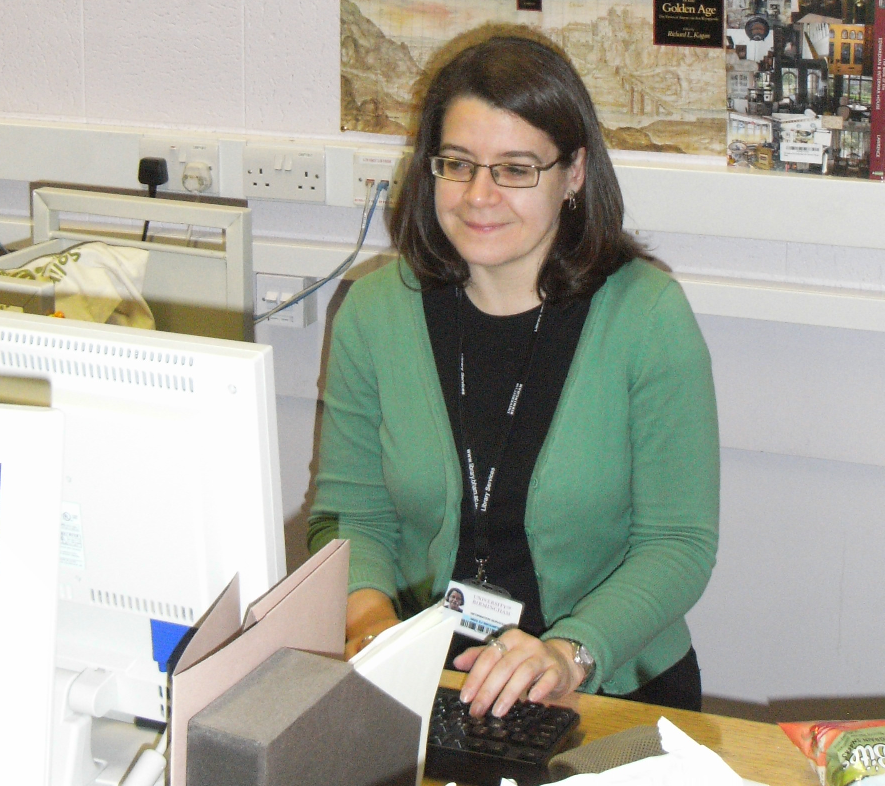
This is not my current desk

Having inadvertently given my friends and family the impression I work all day and every day, I started to think about whether the cult of “Presenteeism” is as strong in the self-employed community as it is among employees. Surely it shouldn’t be … and if it is, what can we do about it?

What is presenteeism?

We’ve all heard of absenteeism, or the practice of regularly removing oneself from the working environment for no good reason. Presenteeism is the opposite. It’s in the Oxford Concise Dictionary, and here’s how they define it:

The practice of being present at work for longer than required, especially as a manifestation of insecurity about one’s job,

This manifests itself in that classic competition over who can stay latest in the office (or, more importantly, who can be seen to be staying latest in the office. Or being in earliest. Or both. We’ve all sent an email to the boss when we’ve got in particularly early, haven’t we?

Now, that’s all well and good when you have a boss to impress. But what if you work on your own?  And I’m admitting doing this myself, here – although inadvertently. It’s easy to send that Tweet or Facebook status at the end of a long day …

Phew – done 10 hours at the desk today – big project!!!!

but is it so easy to say

Good day, did a couple of hours of work, all caught up so I lay around reading for a few hours

Well, is it?

Why do we have to engage in presenteeism?

I’d be interested to work out why we do this. Are we so busy trying to combat that insidious view of freelancers as people who sit around in their pyjamas watching daytime telly? Surely our friends and family know we don’t do that by now?

If you work in an office, you will tend to have set start and finish times, a proper lunch break, and weekends off (or a set working pattern) and holidays. How many freelancers take the full holiday entitlement they would be given as an employee? I know I probably don’t.

So when it’s quiet, we’re up to date and we skip off merrily to the cafe, or the gym, or just lounge in the garden for an hour or so, is that really a crime?

And isn’t it better for our friends and family to know we’re happy. whole, balanced and relaxed than working every hour there is on a hideous treadmill of work? Didn’t at least some of us go freelance  to avoid that hideous treadmill of work?

Celebrate balance, not overwork

I’m not suggesting we stop working when we need to be working. Everyone has to pull one of those 11 hour shifts sometimes. But let’s all be honest about how we live, celebrate the downtime as well as the busy times, and acknowledge that, yes, we do do this in order to have balance and flexibility in our lives, and we do have work patterns which are different, but balanced over the grand scheme of things.

I’m going to talk about this in public – I dare you to too!

Inspiration for this post came from one I published on my other blog about what I do all day. I have tried, since publishing that, to note when I have some time off …

 
14 Comments

Posted by on June 20, 2012 in Business, Ethics


Tags:

Sian Edwards

Welcome to Saturday Business chatToday I have the great pleasure of introducing Sian Edwards, a friend and fellow home-worker who lives locally to me. If you do work from home, it’s great to have local people around who you can meet for a coffee and a chat when work and time permit. Sian also told me about proz.com, which is a great resource if you’re a translator or, like me, you do localisation, as it puts you in touch with customers all over the world.

It always makes me happy to see how much my interviewees love their work, and here’s another person who does! Let’s meet Sian …

What’s your business called? When did you set it up?

I trade under my own name and have been a freelance translator since 2006. I worked in various roles at three different translation agencies before taking the plunge.

What made you decide to set up your own business?

I wanted the flexibility to fit my work around my family life.

What made you decide to go into this particular business area?

I have always enjoyed translation, ever since I was a student. I enjoy it so much that it hardly feels like work! So it was an obvious step for me.

Had you run your own business before?
No.

How did you do it? Did you launch full-time, start off with a part-time or full-time job to keep you going … ?

I jumped in at the deep end. I’ve been a full-time freelancer from the start. But I did have a lot of work from my former colleagues already lined up.

What do you wish someone had told you before you started?

Don’t rely on just one or two clients. I lost my major client after a few months and, although I was able to replace them fairly quickly, I could have done without the panic!

What would you go back and tell your newly entrepreneurial self?

Get some business cards printed, go out and network! Don’t sit in front of the computer by yourself all day. It will be good for your state of mind and you might even get some work out of it.

What do you wish you’d done differently?

I wish I’d made the effort to find out more about accounting and tax when I started. Some kind of course or workshop would have been a good idea. The transition to paying six months of income tax in advance came as a particular shock.

What are you glad you did?

I’m glad I was bold. It’s not in my nature at all, as I’m quite a shy, introverted person, so approaching people I knew in the industry in the hope that they would send me work felt a bit cheeky. But it worked and gave me a much-needed boost at the start.

What’s your top business tip?

Don’t be afraid to say no. If you don’t have the time to do a good job, it’s better that you don’t do it at all.

How has it gone since you started? Have you grown, diversified or stayed the same?

The amount of work offered to me has gone up and up. At the same time the type of work I do has become more specialised.

Where do you see yourself and your business in a year’s time?

The same, but with a tidier office!

Ah, yes: the double tax thing (which I blogged about when it hit me). I found it so helpful to do my course at the beginning of my freelance life (see my post about setting up your own business for links) and don’t know how I’d have coped without it. Good luck with that tidy office, Sian!

Sian can be contacted via her profile on www.proz.com. She does German to English translation.

If you’ve enjoyed this interview, please see more freelancer chat, the index to all the interviewees, and information on how you can have your business featured.

 
1 Comment

Posted by on June 16, 2012 in Business, New skills, Small Business Chat


Tags: , ,

Tammy Ditmore

Welcome to Saturday Business chat.Today’s Freelancer is Tammy Ditmore from eDitmore Editorial Services, who I know through a network of editorial professionals we both belong to. Tammy’s one of our newer businesses, having been going for around 18 months (this time round), and is one of our freelancers based in the US – but as you can see, we all have similar issues and learning curves, wherever in the world we might be!

Tammy has some interesting things to say about the difference between being a freelancer and running a business, and also about the resources that are out there for both business people in general and editors in particular.

What’s your business called?

eDitmore Editorial Services.

When did you set it up?

January 2011.

What made you decide to set up your own business?

I had been working as the managing editor of an academic journal for more than five years, but the situation had become very stagnant and I wanted something different. I wanted to edit more and manage less. I applied for several editing and/or writing jobs in my area and got nowhere—I couldn’t even get an interview. I finally decided it was time to return to freelance editing, which I had done before I started at the journal. But when I freelanced before, I never thought of it as a business; I just took whatever work happened to come my way. This time I wanted to be more official. So I established a name, created a website, and set myself up legally as a “sole proprietorship”.

What made you decide to go into this particular business area?

I have been involved in editing in one way or another for about 30 years. I graduated from college with a journalism degree and spent more than 10 years in various editor roles at several daily newspapers. I left newspapers when my oldest son was a baby and wound up working from home as a freelance editor, proofreader and writer while my kids were young. Then I took the academic journal position, and learned more about running a business. By the time I started my business, I had editing or writing experience in a number of styles and publications.

Had you run your own business before?

Although I had worked as a freelance editor for a number of years, I had not thought of myself during those years as running a business. I did not have a business name; I did not market or advertise; and I never thought of myself as a businesswoman. When I decided to leave my position with the academic journal, I knew I needed to do things differently. I wanted to see my work—and I wanted other people to see this—as my business, not just something I was doing until I could get a real job.

How did you do it? Did you launch full-time, start off with a part-time or full-time job to keep you going … ?

While I was still at the journal, I made my business plans and did the preliminary work, like getting a logo and a website. By the time I left that job, I had one contract that I knew would keep me very busy for a few weeks and would provide some steady work throughout the year. I was lucky; I could take some risks because my husband’s job was very safe and I didn’t have to worry about insurance benefits since our family was insured through him. That made it less risky for me to step away from the steady paycheck.

What do you wish someone had told you before you started?

I wish I had known how many resources were available to help get me started, such as editing classes and training, list-serves and discussion groups, online invoicing, etc. I did not need to reinvent so many things—it was all out there but I didn’t know where to look for it.

What would you go back and tell your newly entrepreneurial self?

“You don’t have to go it alone,” and, “You know more than you think you do”.

What do you wish you’d done differently?

I wish I had taken more time off between finishing my journal job and really plunging into work on my own. I think it would have been good to take some editing classes and just spend some time thinking about what I wanted to do and how. I expected to have slow spells in my first few months where I could focus on such things, but I never really did.

What are you glad you did?

I’m glad that I paid to have a logo designed around my business name and that I was able to get a professional to design my website. Both turned out better than I had envisioned and are definitely memorable.

What’s your top business tip?

It’s not a very original one—I would say you should network. Join professional organizations in your field; volunteer for specific roles; and tell everyone you know about your business. Some of my best and most unexpected business has come from very unlikely places.

How has it gone since you started? Have you grown, diversified or stayed the same?

Much better than I had expected. I almost doubled the income goal I had set for myself for the first year, and I have turned away work on several occasions. Even more important to me, I have been able to work on a wide variety of publications and manuscripts for a variety of publishers, authors, and students. In a little more than a year, I have worked on books and articles about Puritan theology, international counter-terrorism tactics, Christian ethics, Facebook advertising, the original Saint Nicholas, and successful car dealers, and I have just started editing my first novel. Also, I am truly enjoying learning more about today’s rapidly changing publishing world and how to market and run my business. I have started to think more like a businesswoman in addition to thinking like an editor.

Where do you see yourself and your business in a year’s time?

I am considering some steps now to raise my business profile and visibility, so I hope that by this time next year more people will know about eDitmore Editorial Services.

I know what Tammy means about expecting a slow spell between finishing the day job and launching the business – I thought that about Jan/Feb 2012, but went straight into full-time busy-ness. Still, it’s good to be busy! And I wish Tammy all success through this next important year for her business. Read her 2013 update here.

Tammy’s website is at www.editmore.com and you can of course contact her by email. She’s based in Califormia.

If you’ve enjoyed this interview, please see more freelancer chat, the index to all the interviewees, and information on how you can have your business featured.


Tags: , ,

Is it actually worth the stress?

I was chatting to a business associate the other day. He’s enjoying his high-powered, high-stress and, let’s be honest, high-earning position, managing all sorts of change, rushing around here, there and everywhere … or he thinks he is.

Actually, he’s plagued by all sorts of niggling illnesses, that have become worse. Nothing that’s putting him in hospital, but things that are affecting his quality of life, outside work more than inside, and can’t be ignored.

So, is it worth the stress?

Downsizing your life, downsizing your stress levels

I can claim to be a bit of an expert on this, from personal experience. Having been doing a management-level, fairly demanding job in London, when we moved to the Midlands I was determined to have “a job”. In fact, we both agreed we would indulge ourselves for a year, M going back to post-graduate study and me looking for a basic level library job.

I had a bit of trouble, as a qualified librarian, getting a basic entry level job, but I did in the end. Lots of people said I would get bored; my managers tried to encourage me to apply for promotions I didn’t really want. I’d been up the corporate ladder, and I knew that it suited me at the time to have “a job” rather than “a career”, something that would pay the bills but allow me the resources and energy to enjoy my new life in a new city.

So that’s what I did, and I was perfectly content for a good few years. In fact, having that lower-stress, lower-responsibility job allowed me to start up Libro and develop my own business.

Different career paths for different life stages

Now, I could have quite easily chosen to progress through the corporate ranks again, gone for those management jobs, gone for the higher salary, which is always a consideration, isn’t it. But I decided to go this alternative route, and set up the business.

But I did that in as stress-free and risk-free a way as I could (see my article on not taking risks for more information). I’d decided it wasn’t worth the fear of going full-time at the beginning, the stress of having to scrape around for money to live on, etc. Instead, I lived very frugally, scraped together money to live on in advance, and launched Libro full time in January 2012.

Now I have a satisfying job, where I’m responsible to myself and my clients, no bosses, no employees. I earn more than I’ve earned in any of my corporate jobs, and, having identified during my career that I like to work in this way, that I don’t like office politics, being a manager, etc., I can honestly say that, even running my own business where every sick day means income and jobs lost, where I do sometimes put in an 11 hour day, but where I can claim what I know makes me happy:

  • responsibility for myself and my clients
  • no employees
  • no office politics
  • flexibility to juggle my day to fit in friends and exercise

I am as stress-free as I can be. And I have no stress dermatitis, no IBS, I’m fit and healthy and enjoying life.

I’m not boasting about this: it’s taken time to know myself and know what I want, and it’s taken hard work to get here, which hasn’t always been the most fun I’ve ever had. But I’m in my own space now, not trying to jam myself into an inappropriate role, and I’m very much happier as a result.

Know yourself and make the change

The photo at the top of this post? That’s butterflies emerging from their chrysalises. Whether what’s confining you is stress or something else, such as lack of the confidence to break free, surely it’s worth trying to achieve your potential and seeing what you can do … if you just break out of the chrysalis.

My advice to you, if you think you’re stressed, or you don’t think you’re stressed but your body does …

  • Think about what you REALLY want. Is the money worth it? Yes, we all need money to live on, yes, economic times are perilous, but if you can save anything ahead of changing your lifestyle, do it.
  • Think about what you enjoy, what you need, and work towards claiming it.
  • Talk to close friends or colleagues. How do they see your stress levels? What solutions can they offer?
  • Talk to a reputable life coach or careers counsellor. What ideas do they have?
  • Mind-map, brainstorm, go walking for a week, whatever it takes to give you space to think this through.
  • Seek mentors and role models. People have told me my blog posts have helped them on their path to self-employment (hooray!) – look around for people doing what you might fancy doing, and drill down into how they did it.
  • Think laterally. Do you really want to be an architect, or do you want to work for a housing association? Do you really want to be a social worker, or do you want to train as a counsellor? Could you work part time while you pursue your aims?

My “career path”, from corporate ladder-climber to “just a library assistant” to successful small business owner shows that you can step down, sideways, whatever. I’m not a risk-taker, I’m not particularly well-off, and it hasn’t always been easy. But it can be done.

Good luck!

 
17 Comments

Posted by on May 16, 2012 in Business, New skills, Organisation


Tags: , ,

Tone Hitchcock

Welcome to Saturday Business chat. In a first for the series, we’ve got a brother-sister combination! Last week I featured Annabelle Beckwith, and now it’s the turn of her equally talented brother, Tone Hitchcock, of Anthony Hitchcock Art & Design. I met Tone at about the time I met Anna, so he would have been 16 or so at the time. I heard about his work through Anna over the years, went to an opening night of some wonderful paintings he had exhibited, and met up with him a few months ago when he came to “visit” the fibreglass gorilla he’d made that was on display in Digbeth Coach Station. Models he’s made appear on the TV and in films, and it’s great to watch the inventive and marvellous things he produces. Let’s find out how he got started …

What’s your business called? When did you set it up?

Anthony Hitchcock Art & Design. I know, it’s not the snappiest of titles, but it does what it says on the tin. I’ve been doing this since 1997, sometimes part-time, now mostly full time. Unofficially, it’s “Purveyor of Props, Paintings and Peculiarities”.

What made you decide to set up your own business?

I decided to set up for myself as I’d spent most of my time at Uni doing artwork and playing in various bands anyway, rather than concentrating on my English degree. Pretty much the only person I could find willing to employ me when I graduated was me, so it seemed like a good idea.

What made you decide to go into this particular business area?

Art has always been my first love; I’ve been selling paintings since I was 14. I started commercially by doing illustrations and caricatures; it snowballed from there.

Had you run your own business before?

A friend of mine and I at school had run a t-shirt printing business from our study, if that counts … [Liz: yes, of course it does!]

How did you do it? Did you launch full-time, start off with a part-time or full-time job to keep you going … ?

I’ve had a couple of full-time stints at this, and, as I said, I am now pretty much full-time again, but for a long time, I had various part-time jobs as well to keep me ticking over. I’ve worked in a few different shops, done kitchen and bathroom design, worked in a warehouse, done stock control for the Roman Baths shops; whatever it took, really!

What do you wish someone had told you before you started?

I wish someone had told me to concentrate on prop and modelmaking 15 years ago!

What would you go back and tell your newly entrepreneurial self?

I would like to go back and tell myself not to lose faith; it’s never easy trying to make a living artistically, but when it does start to come together, it makes the hard times fade away, and it all becomes worthwhile.

What do you wish you’d done differently?

I took a sculpting course in late ’97, whereas before I’d mainly concentrated on 2D artwork. It felt really natural to me, but I was already committed to trying to make a go of it with paintings. I remember wondering if I should make the switch to 3D work instead, but I decided against it. I don’t generally dwell on “what if?” contemplation, but still … in this case, it might have got me further along sooner.

What are you glad you did?

To be honest, even all the rubbishy part-time roles I’ve had have given me something useful, even if it was just experience. Heck, even my wasted youth making Lightsabers out of old bits of Hoover tube has come in useful, as it gave me the perfect skillbase for making the collapsible armature for my latest commission!

What’s your top business tip?

DON’T GIVE UP! And also, tailor what you do to the market. As an artist, it is quite tempting to throw a bit of a hissy fit, and go “But this is my muse! People must appreciate it and buy my work!”

Well, I love melancholy landscapes and bleak atmospheres, but apparently the general art-buying public isn’t keen enough on them to pay for my living. Talent doesn’t guarantee you a career – the old adage about success coming from 10% inspiration and 90% perspiration is true.

How has it gone since you started? Have you grown, diversified or stayed the same?

Following on nicely from the last question, my success rate increased exponentially as soon as I started being less precious about what I do, and started listening more to what other people advised (particularly my wife, but don’t tell her that or she’ll become insufferable).

I’ve always made models as a bit of a sideline, hence the lightsabers, but I’d never really taken it seriously. Three years ago, I made a Wookiee mask for a friend’s birthday, and everyone that saw it asked why I wasn’t doing prop and modelwork all the time. As the only answer I could come up with was a rather sheepish “errr…”, I started scouting around for that kind of work, which lead me on to freelancing at Codsteaks Prop and Model Workshop in Bristol. It’s gone on from there.

Where do you see yourself and your business in a year’s time?

This time next year, Rodders, we’ll be miwionaires … or at least, doing model and prop work more consistently so that Bryony, my wife, can lessen the amount of hours she works.

What a talented pair of siblings Anna and Tone are. And what a lot of different areas of inspiration they offer to other freelancers and entrepreneurs. Never give up, learn from your mistakes, do what you have to in order to sustain your business idea … things we can all learn, whether we train people or make eels for a living! Oh, look – I’ve interviewed their cousin, Sam, too!

Tone’s 2013 update is here!

This is one website that you MUST go and look at, for all sorts of weird and wonderful creatures and beautiful paintings: find Anthony Hitchcock Art & Design at www.tonyhitchcock.co.uk. You can, of course, email Tone or call him on 07929 272 513, especially if you’d like to commission a painting or sculpture. Or an eel.

If you’ve enjoyed this interview, please see more freelancer chat, the index to all the interviewees, and information on how you can have your business featured.


Tags: , ,

Businesses: be careful when marketing around the Olympics!

No Olympic logos here!

If you’re a business operating in the UK, it’s so tempting to think you can pin some of your marketing and advertising on certain summer sporting events. But be careful – the Games’ Marks are very carefully protected, and you can run into big trouble if you break the rules!

It may seem a bit harsh, but events do need to protect the investment of their sponsors, and this includes making sure that companies that haven’t paid for sponsorship don’t profit as much as those who have.

Thinking about it on more local terms, if you’ve bought kit for your local football team, and you go along to the match to see your company logo all over their kit, you’d be really annoyed to find a rival company at the gate, giving away merchandise with their information plastered all over it, but without any official status or paying for the privilege. Well, it’s really the same here.

There’s lots of information on this official website so I won’t repeat it. What I will repeat is: be careful. Just as you wouldn’t infringe other copyright, “borrowing” the typeface or logos of the market leader in your sector to confuse potential clients and drive them to buy your products, so you need to keep away from pushing the Olympic angle, unless, of course, you are an official sponsor or partner. Keep aware of the Games’ Marks and be careful, and you’ll be fine. Try to muscle in on the action, and you might find yourself with a hefty punishment.

*Note: I’m not trying to cash in myself with this post! I have had to mention this issue to a couple of my clients recently, so it seemed worth summarising it all in a more public place.

 
Leave a comment

Posted by on May 4, 2012 in Be careful, Business, Ethics


Tags: , ,

What I got up to in April

Welcome to my April round up of what I’ve been getting up to. Do you find these round-up posts interesting? Would this series be better on my Libro Full-Time Blog? Do leave a comment, click on the share buttons or share my notifications on various social media locations!

Being self-employed full time

I was pretty busy for most of April and had to abandon a few attempts to get to networking events, but I did manage to make it to the Elizabeth Taylor Day in Reading and the BookCrossing meetup in town. I’m also much better at not worrying if it’s a quiet week. If it is quiet, I make sure I get some rest, catch up with my reading or work on my research project, rather than fretting.

Editing, writing, transcribing and proofreading

I’ve been busy with a variety of projects throughout April.

I started off the month finishing a batch of transcriptions for the international organisation I work for regularly. I also helped to recruit a few more transcribers for them, as I’m ideally placed to tell people EXACTLY what it’s like and make sure their expectations are set (“so, you’re going to be typing like a maniac for 8 hours a day, listening to non-native speakers of English talking about international affairs and taking their presentations down in a way that turns them into native English …”)

I did more work with my Master’s students including some pretty intense work to get their essays finished off for the beginning of the summer term, as well as proofreading other essays and dissertations for the student proofreading company I work for. In fact, looking back, it’s been a lot about the students this month!

I didn’t do a lot of writing for clients this month, but I did manage to finish writing my e-book (How I Conquered High Cholesterol) which is now in beta-testing and will shortly be available via Amazon.

I did a fair bit of US to UK English localisation for a couple of my clients, including working on a technical manual for some medical equipment, which was unusual and interesting! I do like the intellectual challenge of working out what “we” would say in a given situation, although I have to go off and refocus my mind when swapping between the two languages!

I’ve helped one regular client start to shape some blog posts into book form by editing them for consistency and taking out all the redundant bits, and I’ll be doing more editing for her in the coming month or so.

I’ve worked with the usual translators, too, of course – most of my clients are ongoing regulars now, which I like a lot!

Blogging and tax

I would be amazed if anyone didn’t know that I’d done my tax return in April (but here’s why, including the full horror of Going On To Payment On Account). Anyway, I know where I stand and what I’ve got to pay in tax this year, that’s all set aside and I’ve given myself the balance, so all set for a slightly less constrained year.

I’ve continued adding to my series of articles about using Word and my series of interviews with fellow small businesses , and I decided to put together a resource guide to the information to be found on my blog for businesses, students and Word users.

I published another five-sentence monthly newsletter – do sign up here for a quick read!

In more sociable news, I helped at the city centre Social Media Surgery session, and attended Social Media Cafe as usual (I wouldn’t miss that for the world). Finally, over on the Libro full-time blog I’ve added a few new resolutions to my list for Home Workers!

Coming up – transcription madness

I’m booked in for more transcription from late May into June, so I’ll turn into a hermit then (but I can’t wait to find out what happens to all the ongoing projects the organisation is working on!). Until then, I’m currently working on a rather technical geology text as well as the usual ongoing student, translator and editing bits and bobs.

Libro offers copyediting, copy writing, proofreading, transcription, typing and localisation services to other small businesses, individuals and corporations. Click on the links to find out more!


Tags: , , , , , ,

New ways to navigate the resources on the Libro blog

I’ve built up loads of information on all sorts of topics on this blog over the past few years, so I thought it was time to put together a resource to help you find what’s most useful for you. I ran a poll, people said yes, so I did it!

I put this new guide together about a week ago, and it’s proved popular so I thought I’d let you know about it quickly.

I’ve put together one simple resource guide with three main sections:

  • Resources for business – these include posts on how to set up a small business, things to do to grow your business, hints on networking, motivation, etc.; then some information about tax and finally an additional link to my small business interviews (note that business formation and tax posts are relevant to the UK although the rest of it will translate anywhere)
  • Resources for students – how to write an essay or dissertation, plagiarism and quoting sources, and lots more to come
  • Resources for Word users – all sorts of tips and hints to make your documents more consistent and easy to write, change and navigate, including tabs, margins, headings, contents pages and more obscure matters like how to put text in alphabetical order. Also includes a few notes on PowerPoint and other applications,

The whole resource guide offers a good way to find out what you need to know – do have a look and a play around, and let me know if you’ve found anything particularly useful!  I’ll be adding both resources and entries to the resource guide as I go along, of course. Watch this space …

And of course, we still have the index to the Troublesome Pairs and index to all the Saturday Small Business Chat posts.

I hope you enjoy the resource guide and indexes, and the resources they guide you to!


Tags: , , , , , , , , ,

Why I do my tax return in April

Many people I know who are self-employed or run small businesses submit their tax returns – and find out what they owe – AND pay what they owe – at the end of January each year.

I have just done mine this morning. Not to be smug, I promise, although I am feeling a little smug about it right now, but because a) I have all the information ready, and b) I want to know what I owe the taxman, especially as this is the year I will have to start paying my tax on account (AKA “The double tax year”). You can read all about that in my guest post with Emily Coltman.

And, I am pleased to say, I had a nice surprise. I went a bit wrong and wildly overestimated when I worked out what I thought I was going to owe. But even if it had been a nasty surprise, I’d still rather know what was going on and what I owed: wouldn’t you?

What did I do wrong when working out my tax?

I really thought that, given the Payment on Account thing, I was going to give back around 65% of my income from Libro. This was based on the following fallacies:

  1. I thought I’d earned my personal allowance at my library job and that was that – actually I overpaid tax on that job, and I thought it would be refunded to me personally, whereas actually it just (sensibly)   came off the total tax amount I owed
  2. You know when you are employed and the general rule is that if you knock 25% off your gross pay you’ll pretty well come up with what you’ll end up with after tax? Well I was working on that assumption, forgetting that includes National Insurance payments that I don’t pay now (don’t worry: I do pay others!)
  3. I thought that NIC 4 National Insurance payments, which I have to pay now I’m earning a certain amount, a) were 12% and b) applied to my full profit. Actually they are a) 9% and b) apply to all profit over a certain threshold

Basically, I have ended up needing to give the tax man about 49% of my Libro income, rather than 65%. Which is quite a difference.

Why do my tax return in April?

So I can put aside my tax and know I’ve got it there when I need to pay it. As I said, the main reason is that I want to know what I owe and make sure I put it aside. I’m not going to PAY it until it’s due (in January 2012 and July 2013), but it’s put safely aside, as of this morning, in an account that pays interest.

To release funds to live on. I could also do with some more money to live on for the year. Now I know what the tax bill is, I can happily withdraw the rest of the money in my Libro account to my personal account (NOTE: this is because I’m a Sole Trader: it’s a bit different if you’re a Limited Company), and I now know what I’ve got to live on until next April. Sure, I could take money out as I go along, and lots of people do that, but personally I like to know exactly what I can take – especially in this slightly confusing double tax year.

Because I could. I’m lucky in that I have a simple business model and I do my accounts as I go along, and I’m not VAT registered. So I could finalise my end of year accounts quite easily, and just had to wait for my statements of interest from my banks to come through (you have to state all interest earned from bank accounts on your tax return, even though they are already taxed. The HMRC takes this into account when it tots it all up). Other years, I’ve had to wait for my P60 to come from the library, but this time I had a nice P45 from December and copied the numbers from that. Next year, I won’t even have to worry about that!

How the Payment on Account has worked out

I was really pleased and relieved to have a screen come up at the end of submitting the figures, which states very clearly:

  • my tax burden for 2011-12 and how much I have to pay by 31 Jan 2013
  • the half of my Payment On Account amount for 2012-13 that is also due by 31 Jan 2013
  • the half of my Payment On Account amount for 2012-13 that is due by 31 Jul 2013

It’s all very clearly set out, which was something I was wondering about.

So that’s it: done. Minimal fuss.

My suggestions for you

If you run your own business (and surely you won’t have read this far if you don’t??!!), I strongly suggest you …

  1. Register to complete your self-assessment online if you haven’t done so already
  2. Finalise your 2011-2012 accounts
  3. Order your Statements of Interest from your banks (some will print these off, some need to send one for each account through the post) and get together any other documentation you need
  4. When you’ve received your letter confirming your online registration, complete your self assessment online
  5. Set aside the amount of tax you now know you will need to pay
  6. Relax, knowing what you’ve earned and what you owe
  7. Avoid the frenzy in January 2013 because YOU’VE ALREADY DONE IT!

Note: I am not your tax advisor. I am not an accountant. This information is for personal illustrative purposes only. Please consult an accountant or tax advisor or the HMRC if you have any questions, worries, queries or complications. I am not responsible for anything you do with your tax return or tax affairs.

 
10 Comments

Posted by on April 15, 2012 in Business


Tags:

Income tax payment on account

Special guest Emily Coltman

Business is booming for me and Libro – and my friends and family are probably expecting me to start splashing around some of that hard-earned cash now I’m full time and earning well, after those lean start-up years. But wait! No – just when you’d think I’ll be booking that round-the-world cruise (we can only dream), in fact I’ll be giving the tax man over half of my income from Libro over the coming year. Edited to add: this is what actually happened when I submitted this year’s tax return.

It’s something called “Payment on Account”. I’m lucky: I already knew about it and so I have been saving up so I have enough money to live on. But if your business is doing well (and you only have to have a tax bill of £1000 to get into this situation, so not even THAT well), you need to be aware of this issue and make sure you have the money to hand.

I thought I’d better get someone official to explain all this, and the lovely Emily Coltman has obliged. Emily is Chief Accountant to award-winning software provider FreeAgent.com. Read on to find out all about tax payment on account.

Payments on account

Did you know that if you’re a sole trader, or in partnership, you sometimes have to pay one and a half year’s worth of income tax and class 4 National Insurance all at once?

This is because if your tax and NI bill is more than £1,000, and less than 80% of your income is taxed at source (like employment income, where tax is taken off before the money is paid to you), you have to make “payments on account” to HM Revenue & Customs (HMRC).

Calculating payments on account

Maria is a self-employed beauty therapist.  Her tax and NI bill for the year to 5th April 2012 (the tax year 2011/12) is £1,200.  This was her first year in business.

That £1,200 will be payable to HMRC by 31st January 2013.

But that’s not the end of the story.  Because Maria’s tax and NI bill is over £1,000 and none of her income was taxed at source, she must make payments on account for the tax year 2012/13.  These each amount to half of her bill for 2011/12, and will be payable by 31st January 2013 and 31st July 2013.

So by 31st January 2013, Maria must pay £1,200 for her 2011/12 tax bill, and £600 on account for 2012/13.  That means she has a whopping £1,800 to pay in total – one and a half times her tax bill for 2011/12.

Maria must also pay another £600 by 31st July 2013.

When the actual tax and NI due is known

What happens when Maria works out her actual tax bill for 2012/13?

If she’s overpaid, HMRC will give her a refund, but if she’s not paid enough yet, she must make a balancing payment.

Let’s look at that.

Refund

If Maria’s tax and NI bill for 2012/13 was actually £1,100, she’s already paid £1,200 on account towards that, £600 in January 2013 and £600 in July 2013.  That means she’s overpaid £100 which HMRC will refund her.

She must then make her payments on account for 2013/14, which will be £550 each (half of £1,100) and will be due by 31st January 2014 and 31st July 2014.

Balancing payment

But if Maria’s tax and NI bill for 2012/13 turned out to be £1,500, she’s already paid £1,200 towards that but still has another £300 to pay.  This is called the balancing payment and is due by 31st January 2014.

That means that on 31st January 2014 she must pay £1,050 (£300 balancing payment, plus her first payment on account for 2013/14, which is £1,500 / 2 = £750).

Can payments on account be reduced?

If you’re reasonably certain that your tax and NI bill for the following year will be less than the payments on account you’d make, you can apply to HMRC to reduce your payments on account.

Be warned, though, that if you reduce them too far, HMRC can charge you interest for late payment of tax.

HMRC should send you a statement of account explaining what you have to pay and when, but if you’re not sure whether this is correct, always check with them or with your accountant.

Emily Coltman, Chief Accountant to award-winning online accounting software provider FreeAgent, is a very unusual Chartered Accountant – she is fluent in plain English! Emily has been working with small business owners for twelve years and is passionate about helping them to escape their fear of “the numbers”.  She believes that equipped with the right tools anyone can learn to look after the finances of a small business. She is also a keen advocate of tax simplification, especially in the case of VAT.
Emily is author of two e-books, Finance for Small Business and Micro Multinationals. Web: www.freeagent.com
Twitter: @dialm4accounts
Mobile: 07857 162104
Office: 0131 447 0011


Tags: , ,