RSS

Tag Archives: business

Facebook for business – starting out

This post takes you through the basics of setting up a Facebook page. You may have found this page from a link in one of my e-books, if so, welcome to this extra free resource!

You can set up a page for your business on Facebook as long as you’ve got a personal page.

The slight issue with Facebook business pages is that Facebook wants you to pay for adverts and to have your posts and page promoted to other people. So do be prepared to receive lots of suggestions to pay for ads and promotion, and not a lot of interaction from other users.

How to set up a Facebook business page

You will need to be logged in to Facebook

Go to www.facebook/pages/create or click on Create a page when you’re in any other Facebook page …
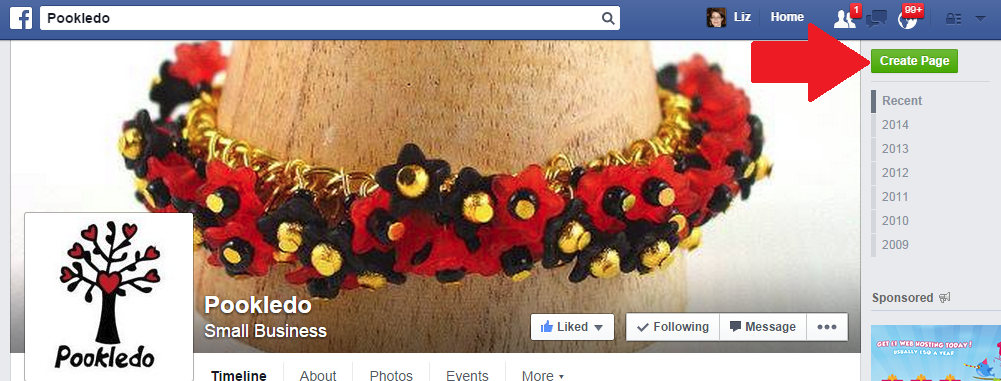
Facebook create a page button

and choose a category of page to create:
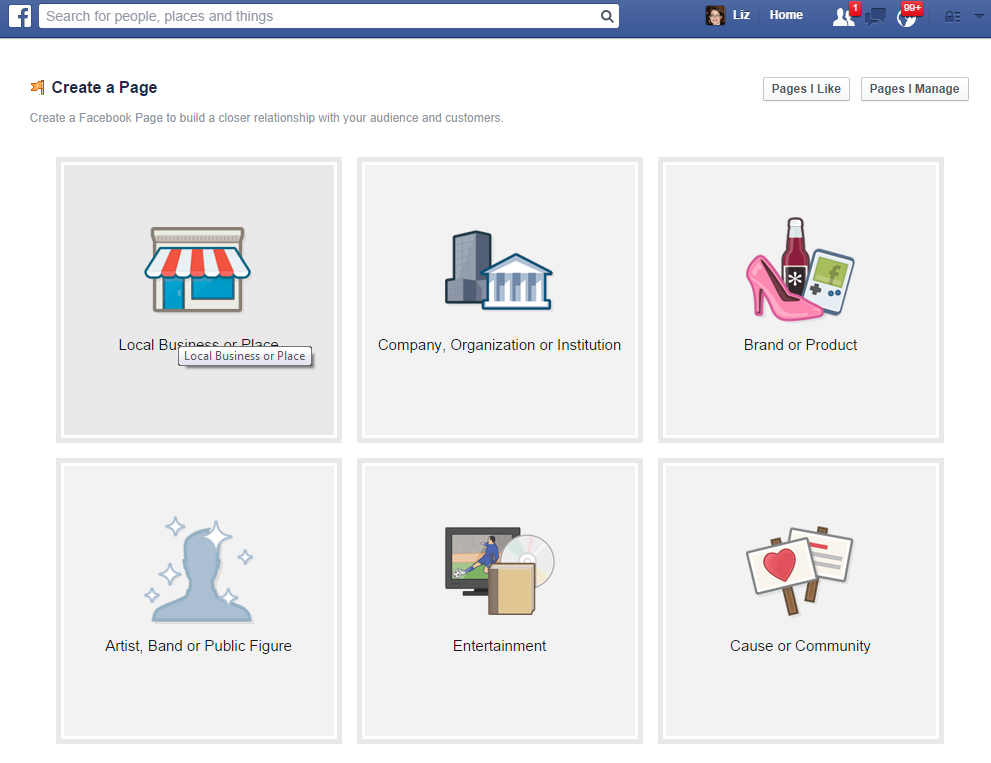
Facebook type of page

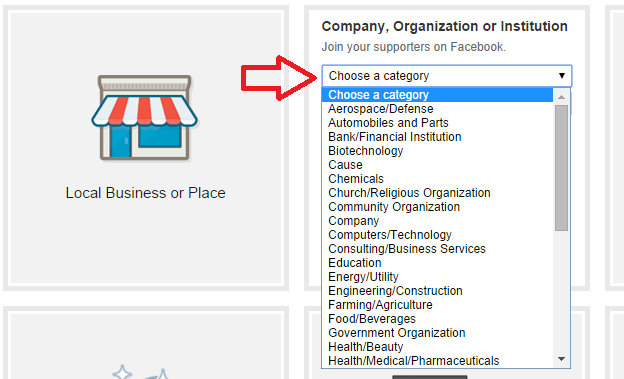
If, for example, you choose Local Business of Place or Company, Organization or Institution, you then need to choose your category, and it’s worth noting that you get different categories for Local Businesses …
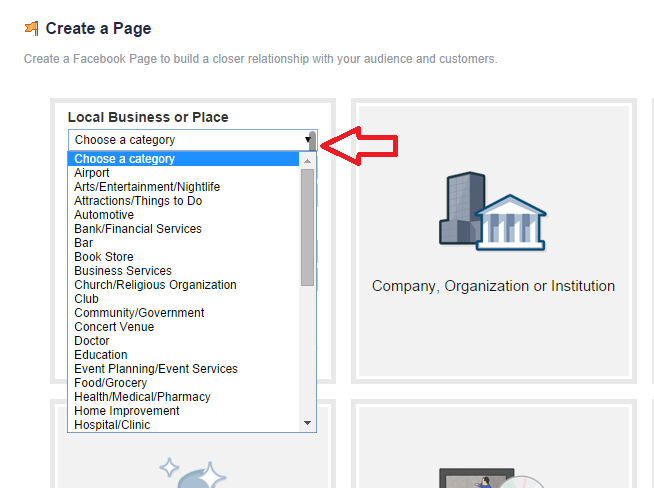
Facebook create local business page

… and Companies:

Facebook create company page

and give your page a name. If you choose local business or place, you’re given space to enter your address – good if you have a shop or need people to find you, not really recommended if you operate from your home office and don’t want all and sundry to know your address. I’m choosing Company, Organization or Institution:
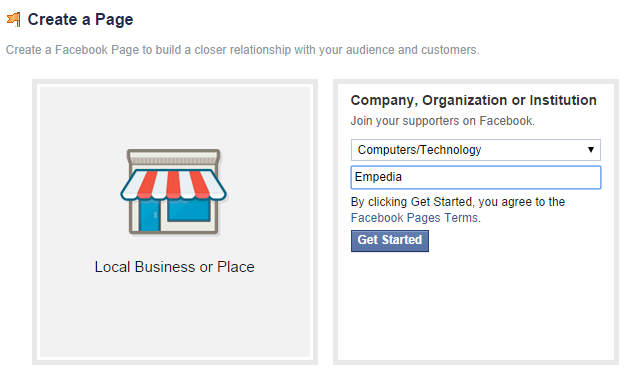
Create business page

Whatever type of page you set up, you will be asked to tick that you accept Facebook’s Page terms and conditions. These include a host of stipulations about promotions, advertising, tagging and other issues. Note that Facebook can remove admin rights and shut down your page if you don’t abide by these rules. This is why I would never suggest limiting your web presence to only a Facebook page – make sure that you have your own website, too.

Now it’s time to set up the basic details of your page – Facebook walks you through this:
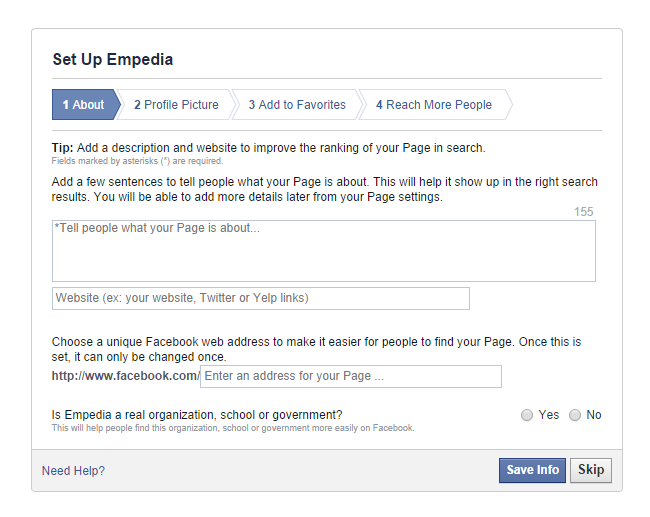
Facebook set up pageNote here that you used to have to have a certain number of Likes before you could choose a unique Facebook web address; now you can do it right away. Here’s this first screen with the info filled in. Note that once you’ve said that it’s a real organisation, you’ll get a second option to confirm that you represent the company:
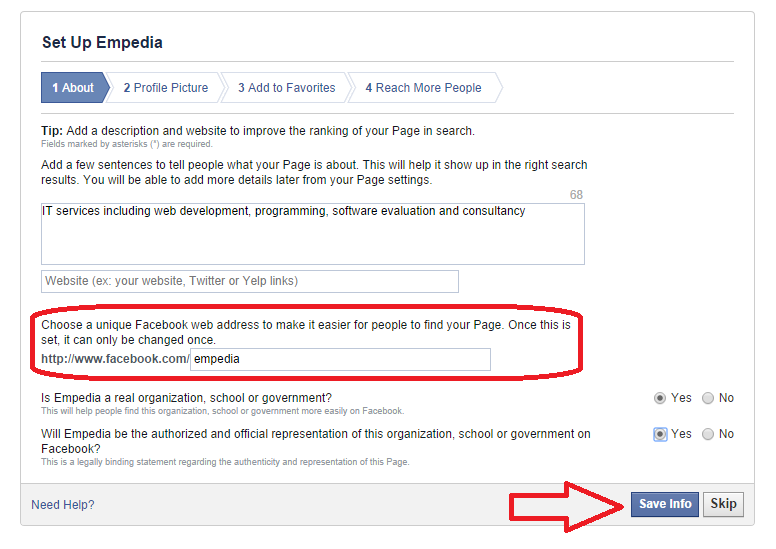
Facebook page set up filled in

This is the point at which Facebook checks that the URL you’ve chosen is available. In our case, it isn’t (I checked, and the URL belongs to an individual with the surname Empedia), so I’ve added to the URL to try again:
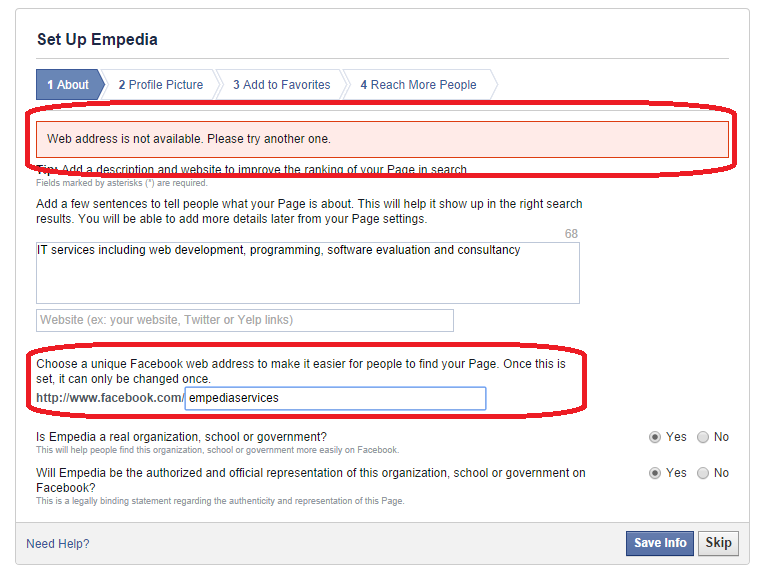
Facebook url not availableOnce you’ve saved this information, you can add a profile photo:
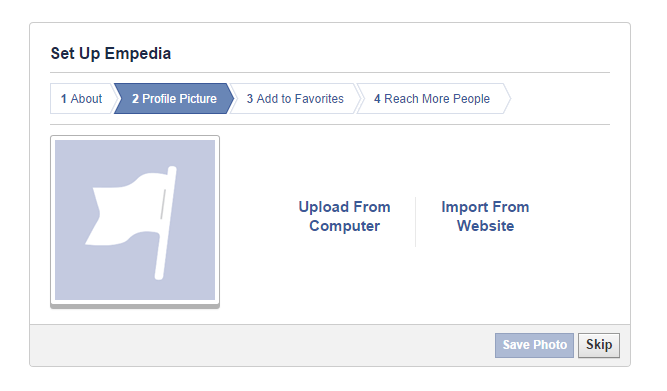
Facebook page add profile photoIf you choose Upload From Computer, you’ll be taken to your computer’s folders to find the photo you want:
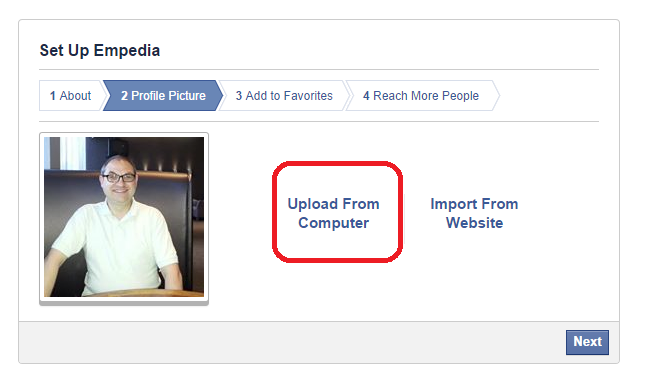
Facebook page add profile pictureYou will also be prompted to add the page to your favourites – this means that you’ll see when you (or someone else) posts to it and you will also see it in your left-hand side panel:
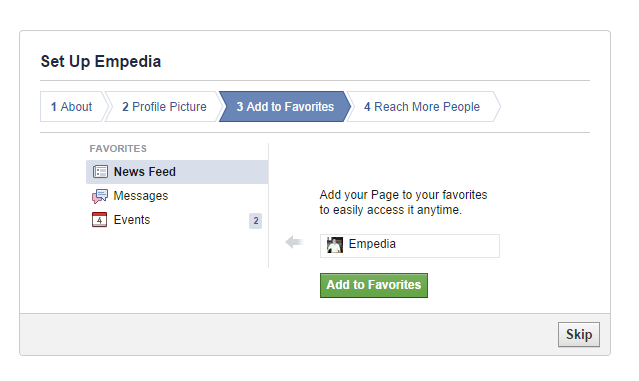
Facebook page add to favouritesThen you get a bit of hard sell with the Reach More People section:
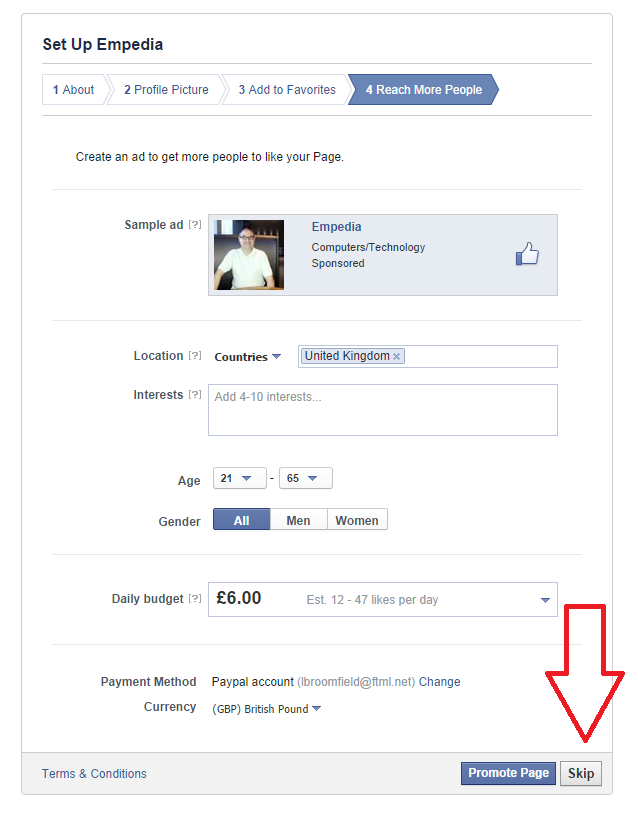
Facebook page reach more people I would certainly advise pressing the Skip button at this point, as anyone directed by an ad to Like a page that has no Likes or activity is not going to be compelled to do so!

And now you have your page!
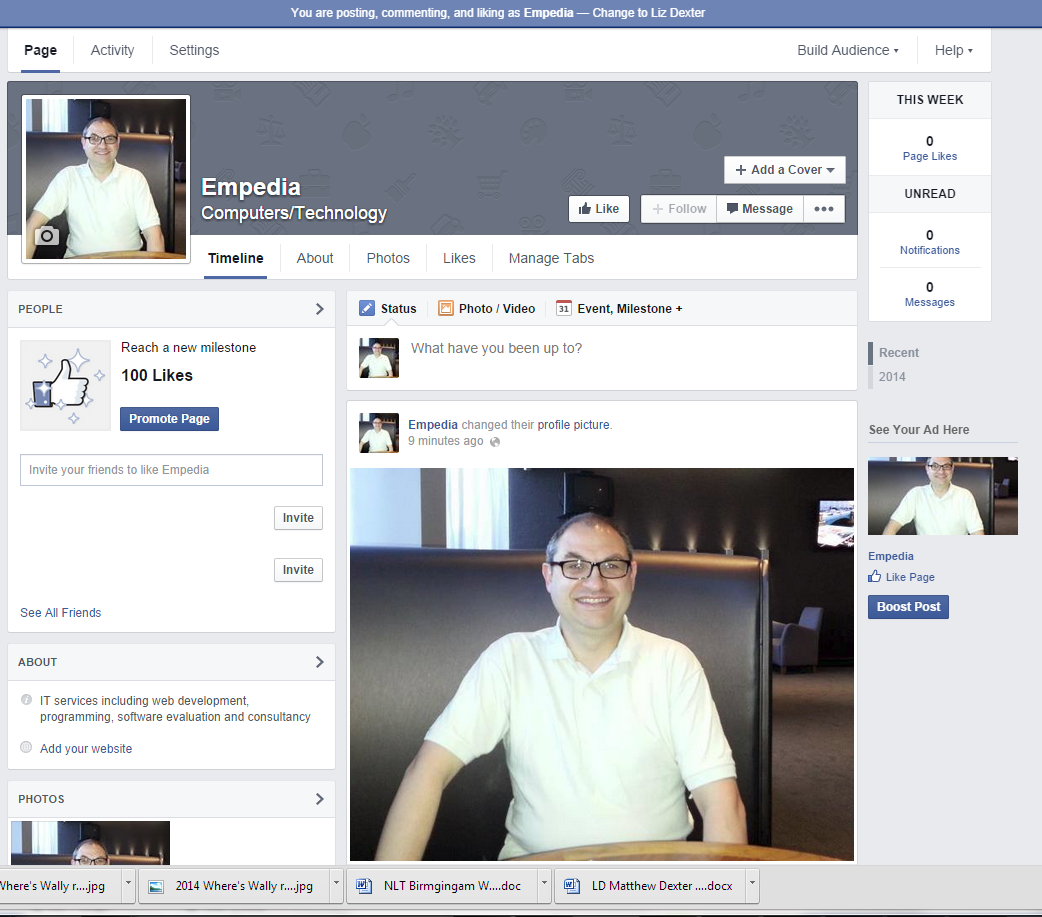
Facebook page

Once you’ve set up your basic page, you can set up a cover image for your page. There are all sorts of rules about what you can have here, but they change frequently, so refer to the current terms and conditions.
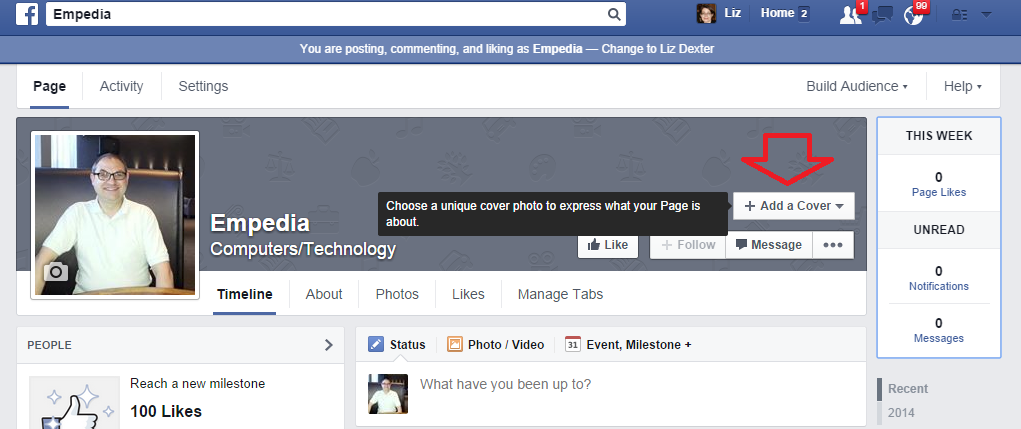
Facebook page add a cover

You can choose a photo from your albums or upload one from your own folders on your computer:
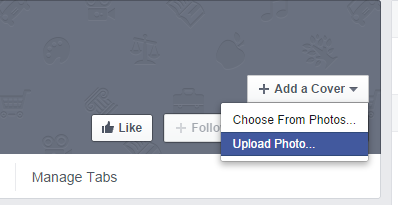
Facebook add cover

Once you have uploaded the photo, you can move it around until it’s in the right place, then Save Changes:
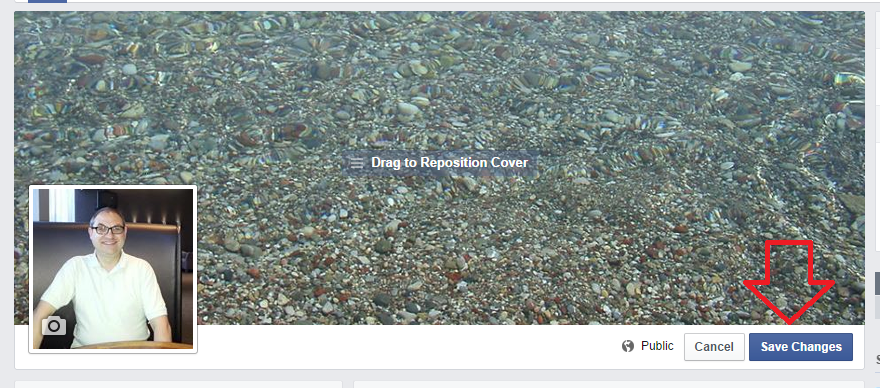
Facebook page cover

You can change these two pictures by hovering over them, at which point a button will appear offering you the opportunity to do so.

Facebook page change profile pic

When you’ve created your basic page, you can also add information and details as you wish. Use the Settings button to access these options:
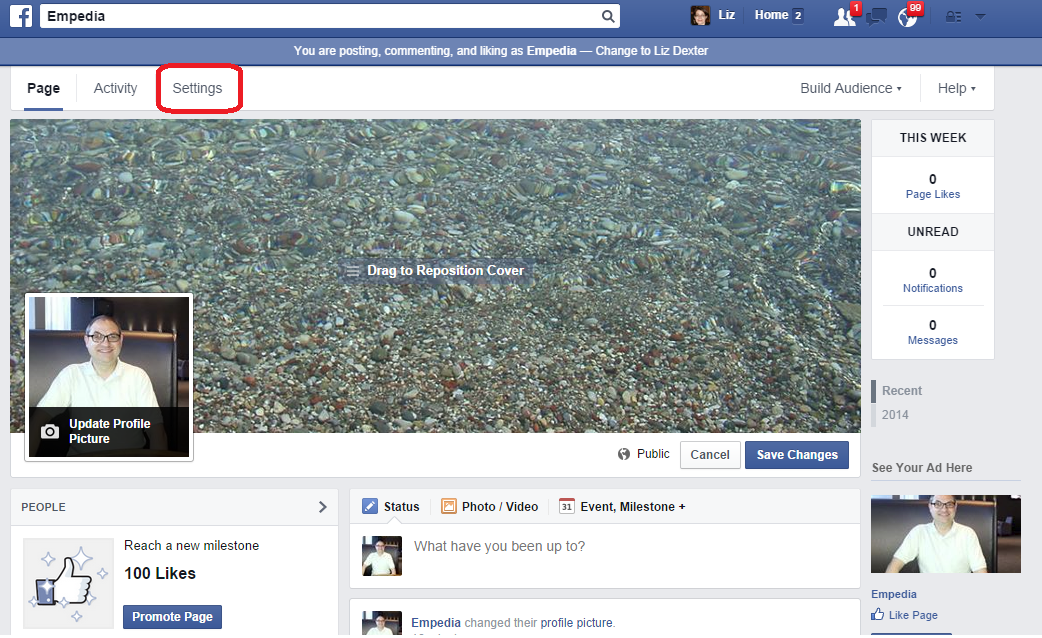
Facebook page settings

The Settings pages allow you to describe your business and add hours of operation, etc. You don’t have to fill in everything, but it is useful to add your website’s URL, for example. You can change this information at any time.
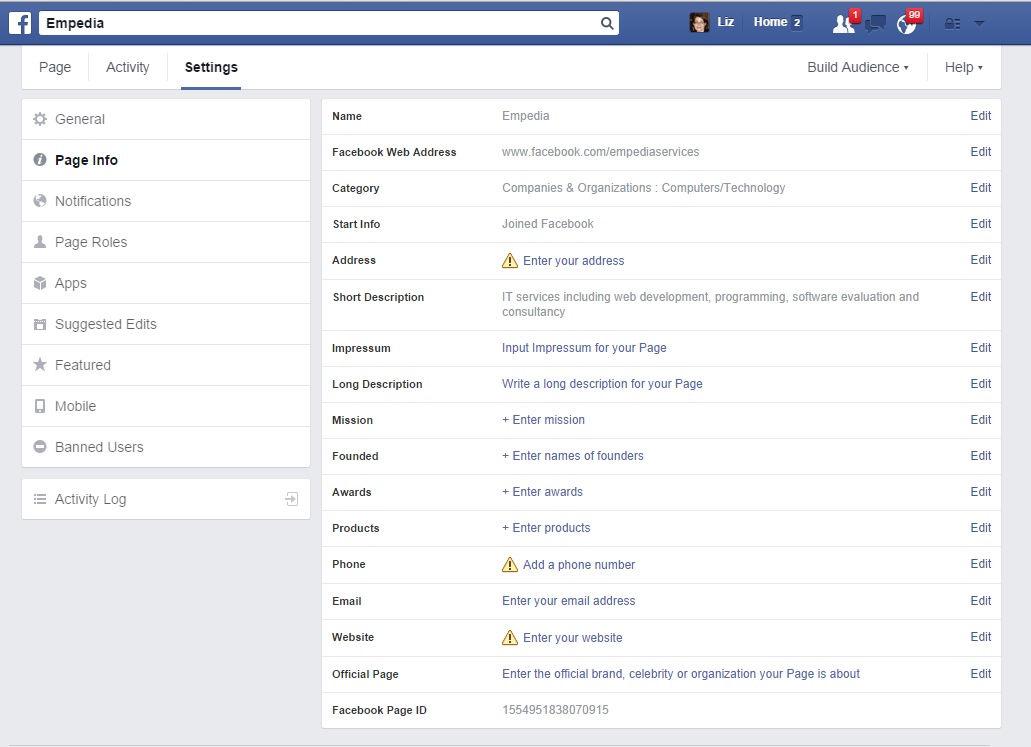
Facebook Page Info settings

General also allow you to set out who can post on the page and other features. This is useful if you have people putting spam comments, etc., on the page – you can set it so that only you can post. However, I do like to let people post and comment to foster a sense of community.  It’s worth looking at this area frequently, as what you can and can’t do does change over time.

Page roles allows you to add other people who can administrate the page – useful if you’ve set up the page but you have someone in your company who’s a social media expert. I’ve already written about this here.

You’ll see a Page button at the top of the screen which allows you to return to the page at any time.

The Activity tab lets you know how often your posts have been seen and the viewing figures. Note that these are likely to be distressingly small – see the section on paying for promotion below.

Interacting with people on your page

You can post updates on your page, including photos and notes, just like you can on your personal Facebook timeline. I send my blog post notifications to this page – but then I share them to my personal timeline, too, where they have more chance of being seen.

When you Like a page belonging to someone else, you can click on the down-arrow by Message and Like as your page – this will appear in their timeline and can lead to some nice, friendly interaction.

If you have set your page up to accept comments by others, do pop by the page to respond to these – a) it’s polite to reply to comments and b) you need to watch out for spam and complaints, and address them accordingly.

Stopping spam and dealing with complaints

It is possible to delete comments that other people make on your Facebook page. Just be aware that if you delete complaints, the complainer is liable to share the fact that you’ve done that – a bit of polite damage limitation on the page itself is often more appropriate.

If someone spams my page, I usually reply politely the first time, in case they’ve made a mistake, if someone’s just posted a link to their page and it’s vaguely relevant, otherwise they get deleted.

I will be writing a longer article about dealing with spam and blocking users – watch this space!

If you’re considering paying for promotion on Facebook …

Whenever I get tempted to advertise on Facebook, which they do promise can be targeted to your selected audience, I think about the random / odd / offensive / inappropriate adverts that I see on my Facebook timeline, and that makes me think that it’s perhaps not worth it.

If you do decide to pay for advertising, go for one of the pay per click options where you can limit how much you pay out per day. Observe how it goes very carefully, and try to assess how much business you’re actually getting for what you pay for (have a look at the articles in the Investing in Your Business section above).

The golden rule of Facebook business pages

There’s a golden rule that applies to all social media and that’s Be Yourself. Allow your own personal self to appear on those pages. Have a picture of you on the profile, and comment and respond as appropriate.

It’s also worth noting that your friends do not want to feel spammed by your business. I share my business page posts once at most onto my personal timeline. I don’t leap in to every personal conversation with “Oh, I can proofread that” or “need some transcription, just call me”. It isn’t appropriate, none of us like having that done to us, and it’s a good way to annoy those very people who might otherwise be spreading the word about your business. By all means, mix business with pleasure, but make your business page pleasurable to read and keep your personal page personal as well as businesslike.

Other useful posts on this blog

How to add an admin or moderator to your Facebook page

How to delete posts and block users from your Facebook page

Thank you to my husband, Matthew, for allowing me to set up a Facebook page on his behalf to harvest screenshots!

If you’ve enjoyed this post or found it useful, please click one of the sharing buttons below! Thank you!

 
12 Comments

Posted by on October 8, 2014 in Business, Social media


Tags: , , ,

How Video Can Help Your Blog or Website

Today we have a guest blog post from Markus Wilson of Phink Video Productions, who talks about the added value that video can bring to your blog or website. A lot of people do have video content on their blogs now, and it’s something I’ve been considering doing myself for a while – maybe this will be the impetus that I need to look at it in a bit more detail …

This article is about how you can use video content to help your website or blog as part of a digital marketing strategy. No matter how big or small your websites audience maybe, video is a powerful tool to up your profile and reach a wider fanbase.

It’s a fact that our brains respond more effectively to communication that combines visual and audio stimuli. Therefore improving the retention of information we are trying to divulge. While it’s interesting to know that YouTube is the world’s second largest search engine online. It has been found that 60% of online users prefer video than text, and having video content on your website or blog increases the likelihood of first page Google ranking by 53%. Not only that, but people that reach your site are likely to spend at least two minutes longer browsing a site with video on it.

As we know today more and more people are using online video to learn about products, services, and tutorials. What’s great about online videos is that so many people are creating and watching them nowadays. Whether they are evaluating products, showing us how Coca-Cola can clean the rust off your car or just checking out the best supplier for a job. Video really is a great way to engage your audience. Another great feature about online video is that it can help you stand out in the search results! As long as your video listed is marked up with the appropriate title, tags and descriptions Google will always value video content over written.

One of the best ways to utilise online video for your website or blog is to create an explainer video. Explainer videos are great if you have something very complicated to get across, as you always have to fight for every second of your web users attention.

Another great use of video for businesses or service providers is to incorporate Testimonials from your former or current clients. Testimonials direct from the horse’s mouth and not just a quotation at the bottom of a webpage are a great way to gain that much needed social proof about you and your service.

A third good use of video for your website or blog is to create a ‘Frequently Asked Questions’ piece. This can be yourself presenting to camera or just something simple involving text and music. If you always come up against the same questions from your potential customers, by you anticipating the question, its an efficient and easy way for them to be reassured that your are the right person for the job!

Online video use continues to grow with 81% of marketers using video in their digital marketing activity and 76% planning to increase online video spend. At the current rate 69% of all internet traffic will be purely video by 2017.

So what will your story be?

Markus Wilson is Co-Founder of London-based video production company Phink TV. Markus has been in marketing for the past 8 years, first with data processing company Pumasource and starting up Phink TV in 2009. Since then he has produced video content for the likes of Coca-Cola, Unilever and Sony Music.

 
1 Comment

Posted by on October 1, 2014 in Business, Guest posts, Skillset


Tags: , ,

How to avoid two common mistakes when using MailChimp

Mailchimp is a very popular program for sending newsletters – mainly because it’s free to use to send newsletters and other messages to up to 12,000 emails per month to up to 2,000 subscribers. I use it myself, as do the people who write quite a few of the newsletters I subscribe to. If you use MailChimp yourself, this post helps you to avoid two common mistakes that I see occurring very frequently (and if you don’t use it yourself, I bet you see at least one of these in the newsletters you subscribe to – feel free to share this post with their creators!).

What am I talking about?

Well, this is what you might see in your email box when you receive a newsletter:

MailChimp newsletter email with errors

Ignore the “[Test]” – that’s me sending test copies of my newsletter to myself for demonstration purposes. So, with email on preview mode, and then when you open the email:

Full MailChimp email with errors

… what can we see here?

  1. The email subject is simply “Newsletter”. Not that inviting.
  2. This is the biggie – there’s an odd bit of text in the preview that reads “Use this area to offer a short preview of your email’s content.”

How often have you seen the second point and been confused or even tutted slightly to yourself? (Note: as a kind editor, I avoid tutting. But I do smile wryly every time I see it and think, “I really MUST write a blog post about that one”).

How do these MailChimp mistakes come about?

I’m going to assume here that you know how to set up and send a MailChimp newsletter campaign, and just concentrate on eliminating these errors. If you need a step-by-step MailChimp walkthrough, let me know in the comments and I’ll put one together for you if enough people want it.

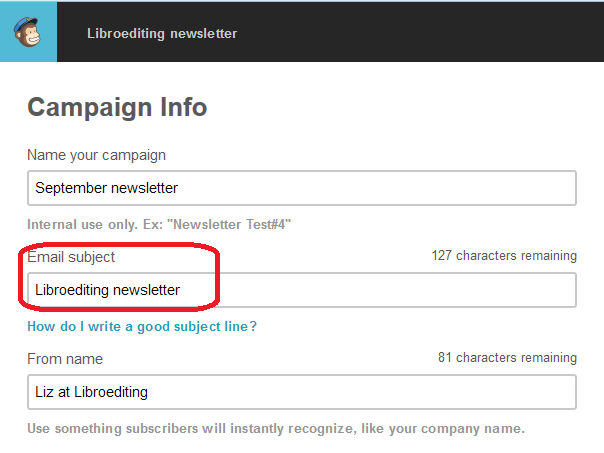
The boring email title error comes on the Campaign Info page:

MailChimp campaign info pageIf you set up your very first campaign with a title like this, it will carry on sending it like that forever, but this is editable. I’m not going to go into ideas for good subject lines here – first off, MailChimp obviously provides a link to some further information, as you can see from the screenshot, but I’d like to take a moment here to mention my client Nathan Littleton’s book, “Delivered“, which has masses of information on creating a good email marketing campaign, including lots of advice on subject lines (he’s not sponsoring this post: I edited this book and I got loads of ideas from it which I’ve implemented in my own newsletter, to good effect).

So, first things first: change that Email subject field to a good, interesting phrase and I’d like to bet that you’ll stop boring your subscriber list and get more opens.

The second one is the dreaded “Use this area … ” text. How does it get there?

Well, when you get to the Design screen in your campaign creation process, bits of helpful text automatically appear in your template to tell you what to do. And one of the bits of helpful text that always appears is this one, right in the top of the screen, and in ever such a small font so that you’re very likely not to see it:

Sample teaser text in MailChimp

And that’s where that text pulls from that displays in your recipients’ emails.

Whatever the design, it’s always up there. Your eye is of course drawn to the main body of the email – the nice picture, the lovingly crafted text you’re going to place into the template.

What do you need to do here? Simply click on that teaser text, just like you would to edit the main body of the newsletter, and you can enter whatever text you want to.

What should it look like?

Once you’ve given your newsletter a more dynamic subject line and eradicated that bit of pesky sample text, this is what your email recipients will see:

MailChimp errors corrected

I think you’ll agree that you’d be more likely to open that one .. and so will your newsletter recipients!

In this article I’ve shared how to avoid two common MailChimp newsletter errors. Please do use the sharing buttons below to share this with anyone who you think might find it useful – thank you!

 
48 Comments

Posted by on September 10, 2014 in Business, Errors, Social media


Tags: , ,

Infographic – social media etiquette

Today I have a guest post with a difference – an infographic, for the first time on this blog. It’s from writer and infographic specialist Ivan Serrano, and talks about many different kinds of social media and how to interact with them. It acts as a complement to my more detailed social media posts.

What do you think? Should I have more infographics on this blog? Do comment below with any thoughts …

——————————————————————————-

“Have you seen what (insert important person or business here) posted on (insert social network here)?” seems to be a question that people hear quite often nowadays. Depending on how you word your message and conduct yourself on social media, it can go viral and your business can get brand recognition, or, on the flip side, it can go viral for all the wrong reasons.

That’s why it’s important for businesses to conduct themselves properly on social media. In addition to following general social media etiquette, certain social media networks have their own rules of etiquette as well. Businesses must remember that they have a reputation to consider—one inappropriate tweet or post could leave your reputation reeling, and that may take quite a while to recover from depending on how well you handle it. The infographic below gives you a guide on how to present yourself on the numerous social media networks.

social media etiquette infographic

Ivan Serrano is a writer and infographic specialist from Northern California. Ivan covers topics ranging from global business to tech and social media. He is an avid “Bay Area” sports fan and tries to attend as many games as possible.

 
7 Comments

Posted by on August 13, 2014 in Business, Social media


Tags: , , , , , , ,

How to leverage your social capital

handshakeHow to leverage your social capital, eh? What a lot of jargon! I thought you didn’t like jargon, Liz? – Well, I don’t, and that’s why I’m going to take a few minutes to explain what this little chunk of jargon means.

Social capital is a fancy term for the people you know and, to be blunt, the favours they owe you. You build it up through networking, doing things for other people, being a linking person, an information provider, a helpful person. You build it through knowing people, through having worked with people, through keeping in touch with people. Then, when you need it, something like karma springs into action, and the work you’ve put in comes back to you in bucketloads.

Now I’m sounding cynical as well as jargon-filled! Goodness me! Let’s break it down with some heavily disguised but based-on-reality examples, to show you that leveraging your social capital isn’t really the cynical and shallow procedure you might imagine, but a new way for an old process that is made easier to build and use through social media and our networked society.

Social capital gets leveraged, everyone goes away happy

Here are some examples of people leveraging their social capital to gain freelance jobs and repeat clients. Note that in NONE of these cases does Person A directly ask for something. Instead, the connections they’ve built up do it all for them.

Example 1: Person A, Bob, ‘meets’ Person B, John, online via a mutual interest group that’s applicable to the industry they’re both in. Bob is about to go full-time with his freelance career but doesn’t have many clients. John is a full-time freelancer of a few more years’ experience. He’s looking for people to recommend enquirers on to when he can’t fit them in. He’s also keen to get some holiday cover set up so he can go and play golf without worrying about his graphic design clients. They make friends and build trust – they even start to meet up to play golf together. When John gets yet another enquiry about leaflet design, it’s easy for him to recommend Bob. Bob worries sometimes that all of his jobs come through John’s recommendations, but soon he has his own string of client referrals because he does a good job. And when Bob goes on holiday, he passes John a big project that he hasn’t got time for – from a client originally recommended by John!

Who benefits: both of them. Bob gets new clients and builds his customer base. John has people he can refer clients on to and that all-important holiday cover.

Bonus social capital leverage: When Bob, now nice and busy himself, finds out that a friend he’s made at a networking event is looking for clients, not only can he recommend his own overflow to Tony, but he can advise John to, as well!

Example 2: Person A, Millie, used to work with Jeremy before they both left and went their separate ways. But they’ve kept in touch via Facebook and chat online every month or so. Jeremy moves between jobs and continents, so knows lots of people. When he hears from Simon, an ex-colleague in Australia that they’re looking for someone with the skillset Millie possesses, and that they don’t need someone on the spot, Jeremy puts Millie in touch with Simon, and they work on the project together.

Who benefits: both of them. Millie gets a job out of it, and Jeremy maintains contact with an ex-colleague and does them a favour, which could well be repaid in the future.

Example 3: Person A, Tim, meets person B, Shona, at a local networking event. They’re not in the same line of work at all, but they have a good chat and get on well. They say hello at a few other monthly events. One day, Tim is contacted by Sean, who wants to use him for a major new contract; he’s been recommended by Shona, even though she has no direct experience of his work (of course, Sean has checked out Tim’s website and references before contacting him). Not only does Tim get the job, but Sean recommends him on his website and to other clients of his.

Who benefits: In this case, it looks like it’s mainly Tim, however, he is so grateful to Shona that he goes out of his way to retweet and share messages Shona sends out on social media, and to introduce her to useful people at the networking events they attend.

How to build social capital

So, how do you build this social capital? Note that it’s not social MEDIA capital, although social media makes it easier to do. But you can build social capital through networking and more old-fashioned face-to-face contact, too. In both Examples 2 and 3, the initial contact was in person, and social media only comes into play to make the contacts between the people who want the work doing and lucky old Person A.

Building social capital shouldn’t be a cynical process, but a natural one that involves making a bit of effort. Ways you can increase your social capital include:

  • Getting out there – the more people you meet, the more people can help you
  • Telling people what you’re looking for – whether it’s announcing to your Facebook friends that your violin-making business is looking for commissions or joining a networking group and explaining what services or products you’re promoting
  • Making yourself memorable – whether you’re the “good hair lady” (true example) or the person who always brings cakes to the meetup, make yourself memorable in a good way
  • Making yourself easy to explain – this comes down to your elevator pitch. Do people know you as “the man who makes violins on commission” or “that music chap”? The more precise your description, the more likely you are to have people sent your way who you can actually work with
  • Being gracious – if someone is introduced to you who you can’t help (or with whom you’re not interested in working), see if you can recommend them on, or have a chat anyway. You need to leave a positive impression on everyone you meet if you possibly can
  • Do things for other people – this should go without saying, but I’m going to say it. More below on this one

It’s cynical to say that someone “owes you one”, and it can be far more complex than that, but it can’t be ignored: the more you help other people, the more they will help you in return. How can you do things for other people?

  • If they’re in the same business as you, see if you can pass overflow work to them
  • If they’re in a closely related business to you, mention them to your clients as someone who can help them – e.g. the violin maker might know a musicians’ agent who they can recommend to their clients
  • If they’re in a fairly different business to you, bear them in mind and mention them – e.g. the violin maker might be chatting to a musician and mention that he knows an event organiser who’s looking for entertainment for a summer party
  • If they’re in a completely different business to you, still bear them in mind and suggest them – e.g. the violin maker is chatting to a musician whose wife needs a web page to be designed
  • You could create a Links page on your website with links to known and trusted contacts in your field and others
  • You could put a poster for their event in your shop window or volunteer at an event they run
  • You could introduce a friend with a different kind of business to one of the networking events you go to
  • You could share tweets and Facebook posts by your contacts with your audience (you should be doing this anyway)
  • You could cross-guest-post on each other’s blogs

 What has worked for you?

Knowing and trusting people + getting out and about and meeting them face to face or online x helping people out yourself = increased social capital

Have you got good examples of your contacts creating opportunities for you with third parties? I’d love to hear about your successes and how they came about …

Further reading on this blog:

Reciprocity and social media

Networking and social media marketing

Networking for newbies

If you’ve enjoyed this post and found it useful, please comment below or use the sharing buttons to share it with your network. If you’re considering setting up a new business or have recently done so, why not take a look at my books, all available now, in print and e-book formats, from a variety of sources.


Leave a comment

Posted by on August 6, 2014 in Business, Social media


Tags: , ,

Happy fifth birthday, Libro!

Libro birthday cartoonI started working for myself (very much part time) in August 2009 – so now it’s Libro’s fifth birthday!

What am I doing to celebrate? Well …

I’m having a little party today over on the Libro Facebook page … including a draw to win a free Kiva loan

I’m making some loans to Kiva (see below) and donating one to someone else

I’m celebrating the relaunch of my two main business books, with their new titles and covers …

… And I’m launching my new website devoted entirely to the books I write, where people can find info, links, reviews and news in one place

I hope you’ll join me in celebrating Libro’s birthday by popping over to say hello on the Facebook page or by doing a Kiva loan yourselves.

Happy Birthday to me!

Quick update: the Kiva competition in now CLOSED. Alison Mead won the free loan and was sent a voucher. I started new loans to a man selling spare parts in Benin, a travelling salesman in Paraguay and a food stall in Bolivia. These were all people who friends of mine had already lent to.

Kiva is an organisation that facilitates loans to small businesses around the world, who traditionally find it hard to raise capital. You commit from $25 upwards, and you can choose by gender, country, industry sector and individuals within those areas. They then pay the loan back to you in small increments – you get an update email on repayments once a month and sometimes updates on the individual or group you’ve loaned to, if the organisation handling the loan provides them. Once the money’s paid back, you can reinvest it or withdraw it if you want to. I love helping people to help themselves in this way; it feels like I’m helping to make a difference to another small business somewhere far away from me.

 
19 Comments

Posted by on August 1, 2014 in Business, Celebration, Ebooks


Tags: , ,

Using Twitter for your business

Using Twitter for your business

Twitter is an absolutely brilliant tool for business owners – if you use it in the right way. If you use in the wrong way, it can be a nightmare, as bad (or embarrassing) news travels very fast in the Twitter universe!

I personally got a lot out of Twitter in the early days, actually securing clients through using it – and long-term clients who recommended me on to more clients, too. I’d go as far as to say that it’s my number four source of work, after repeat business, personal recommendations and the Proz website. My clients still recommend me to other clients via Twitter, even several years on (the other month, a music journalist tweeted that she was looking for a transcriber. FIVE of my current clients tweeted her with my name!).

Benefits of Twitter: it’s quick and easy to use. Disadvantage: it can be a time-sink. Most important thing to remember: People only tend to see a snapshot of their tweets every day. I only know one person who reads ALL of the tweets in his timeline. This means that your tweeting strategy should be a bit different from your other social media posting strategies.

Setting up your Twitter profile

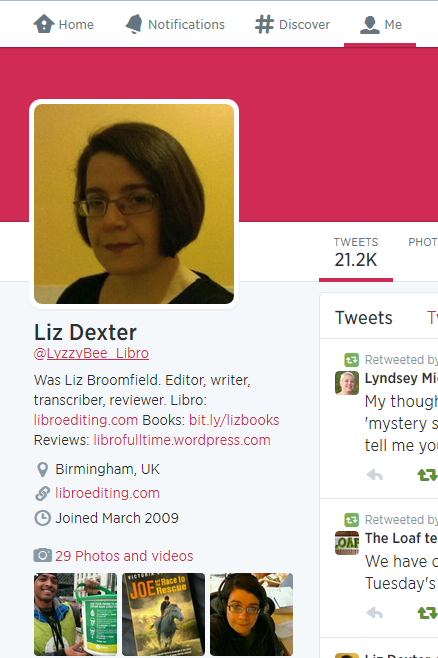
When you join Twitter, it’s very quick and easy to set up your profile. Your profile is a quick guide to who you are. Anyone clicking on it or searching for it needs to know that they’ve found the right Liz Broomfield / Libro (or whatever) and to see easily what you do.

Twitter profile

I would recommend including the following on your profile, and I’ve seen plenty of other people recommend this, too:

  • Your real name when you log in, as well as your company name for your Twitter ID
  • Your photograph on your profile, rather than your company logo (you can add that to your background)
  • Your company URL in the field where you can provide that
  • Use your 140 letters of profile to the max, including what you do and any extra URLs

As with any profile, you can change it at any point; just click on your image and choose Settings,  Edit profile of in the Home Screen, click on your Twitter ID and the Edit Profile button.

Following and followers

Once you’ve set up your Twitter account, you can start following a few people. Twitter will suggest ones that you don’t really want, based on who’s popular, but you can find interesting people to follow in a variety of ways:

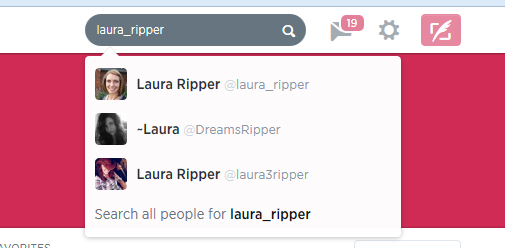
Ask someone for their Twitter ID when you meet them or glean it from their business card or website. Then enter that ID in the search field on Twitter. Or you can search for the person’s name or company name in the search field on Twitter.

Twitter search

Or you can go to http://www.twitter.com/%5BID without an @ sign]:

search using Twitter url

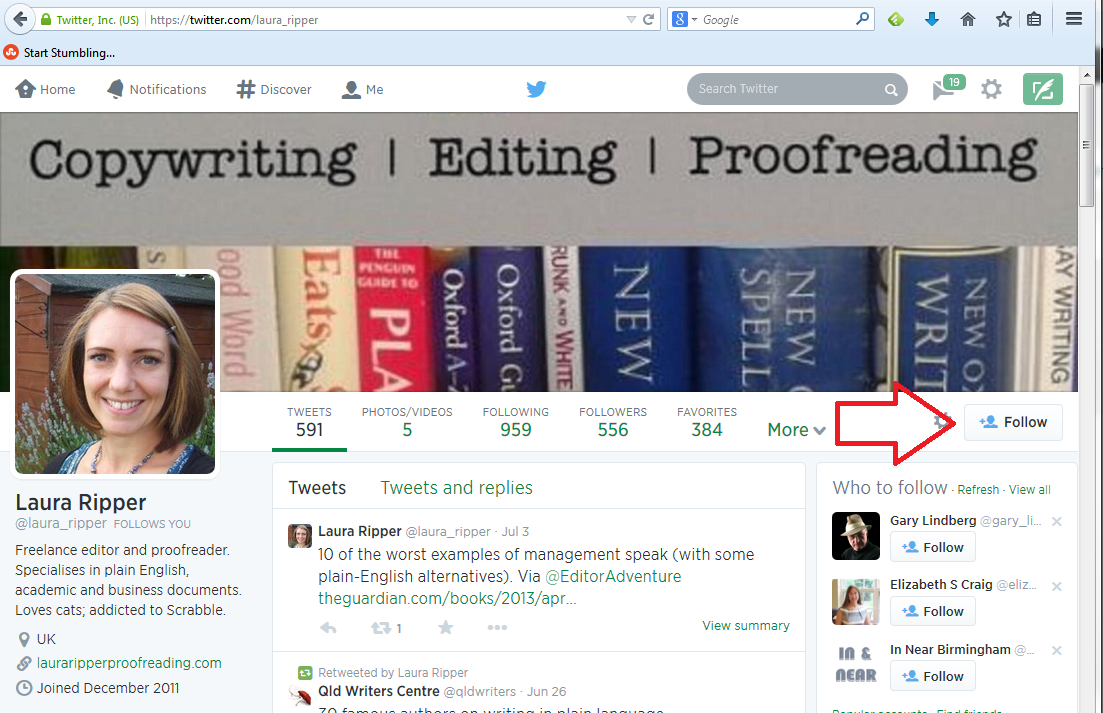
Have a look at their profile to check it’s the correct person, then press the Follow button if it is:

follow on Twitter

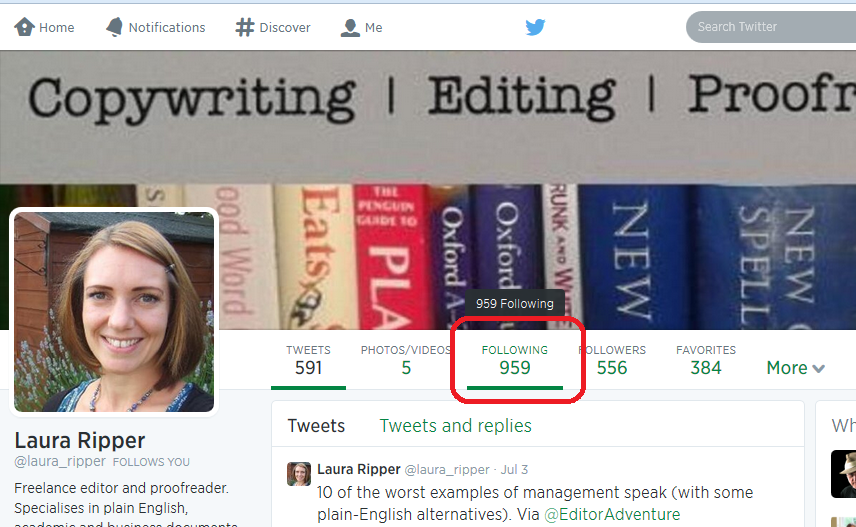
If you’re following someone in an interesting field, have a look at who they’re following. If you click on their profile, you will see links to Tweets, Following and Followers. Click on Following

Following button

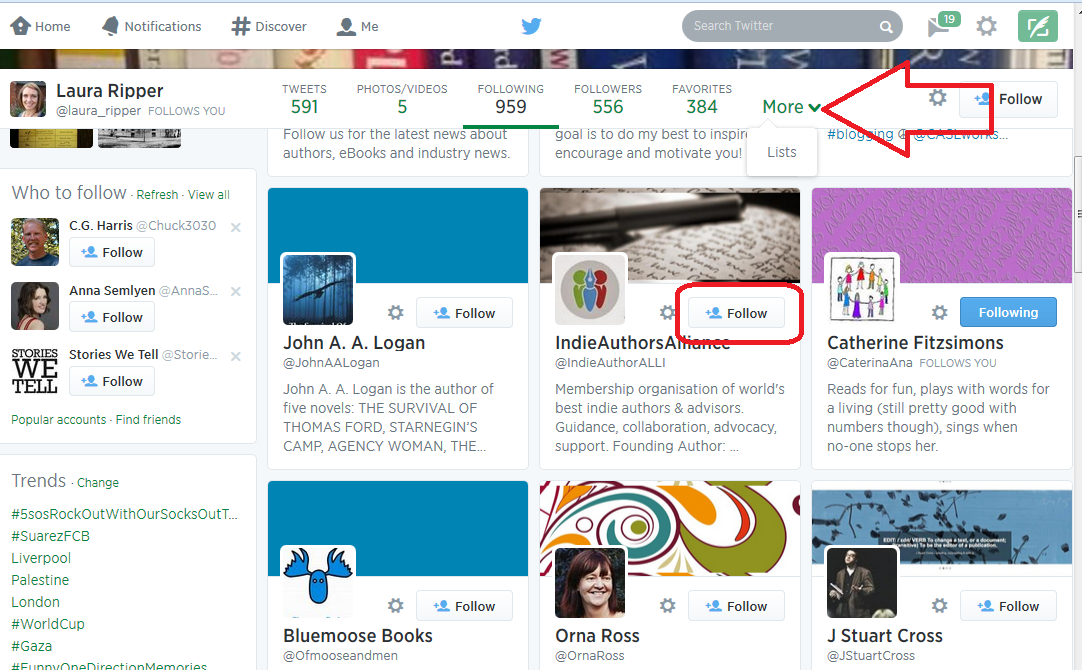
and have a look – there will be a handy Follow button by each name so you can simply follow from there (if you’re already following someone, it will be marked as such). Once you’re viewing who someone is following, you will see a dropdown button marked More which will take you to their Lists.

Who someone is following on Twitter

See more about Lists later on, but you can follow either  an entire list or members of one by clicking on the list, and this is another good way to glean people to follow in a particular area of interest.

How do I choose who to follow?

It’s entirely up to you how many people you follow and whether you organise them in any way. When I’m deciding whether to follow people who I’ve found, or who have followed me (you don’t HAVE to follow everyone who’s followed you, but it’s polite to have a look at least), this is what I do:

  • Check their profile to see whether they’re interesting to me
  • Check their list of tweets to see if they tweet interesting information
  • Check their tweets for the same tweet repeated over and over again – this means a lack of imagination, something akin to spamming or an automated response
  • Check their tweets for regularity and date of tweeting – if someone tweets once a week or hasn’t tweeted for a number of months, unless they’re hugely important to me, I won’t bother to follow them because their tweets will get lost in the general melee

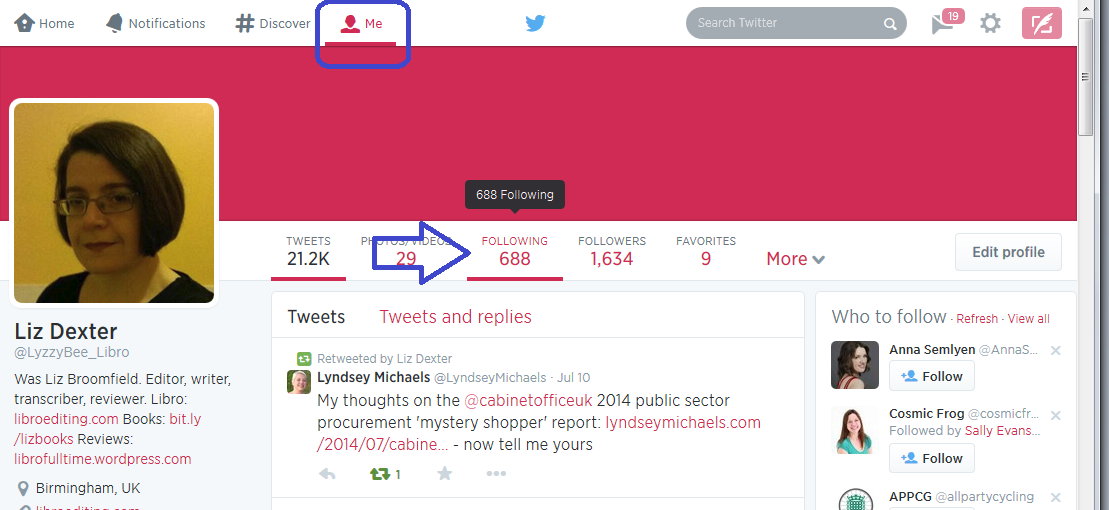
I do also regularly run a check over the people I’m following (click on Home, your own Twitter ID and Following) to make sure they’re still active. If not, I tend to cull. Sorry!

Who am I following?

Lists

Lists are a great way to put the people who you follow into categories or filters that you can look at independently. For example, I have a “Must know” list which includes all of the real-life friends plus some news feeds that I follow, so that if I only have time for a quick dip into Twitter, I can see what’s really important. I also have a “Journos” one so that I can see what my music journalist clients and a few others are up to, for some entertainment.

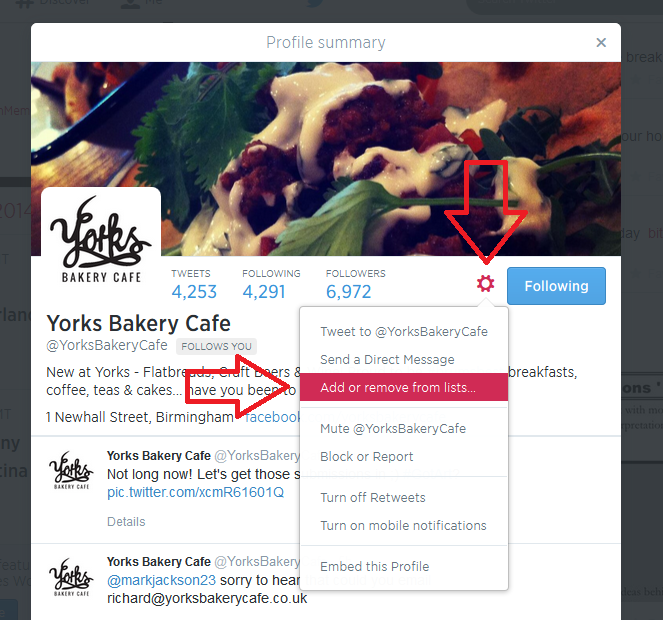
To add someone to a list …

Click on their name in your timeline to view their profile …

Add to list from profile

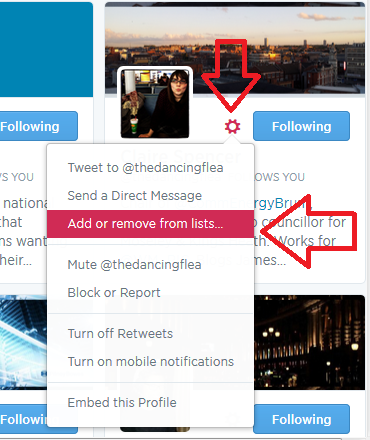
… or go to your list of accounts followed (Me – Following)

add to list from me - following

Click the User Options button (next to Following, it looks like a cog)

Click on Add or Remove From Lists

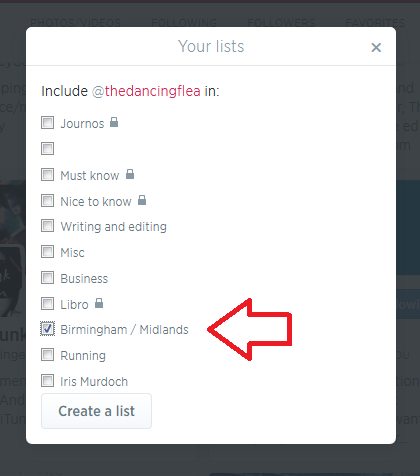
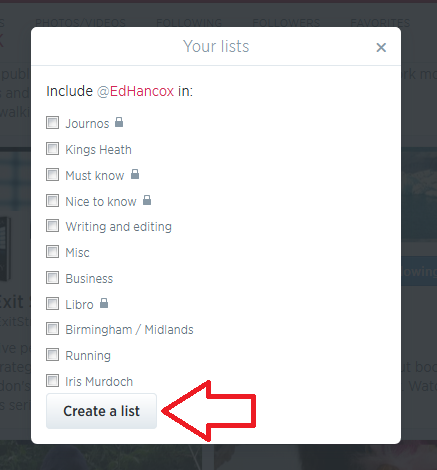
You’ll see a list of all of the lists you’ve already set up (if you have set any up) plus a button, Create a List

Either click on a list name to add that person then press the X in the top right corner to close the dialogue box:

Add to twitter list

or click on Create a List

create a twitter list

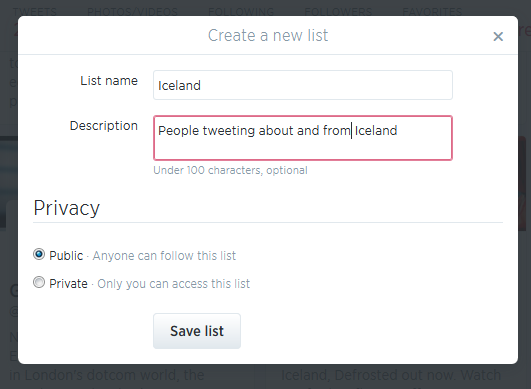
and make up a new list name to add this person to:

create new list

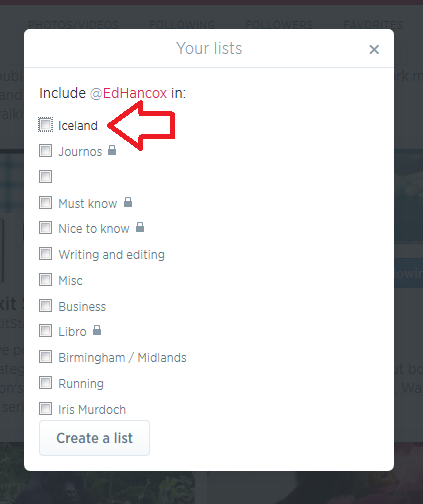
(if you make a list private, only you can see it – you’ll know when a list is private because it will have a padlock symbol next to the list name). Once you hit Save list, you will need to tick the particular list you want to add this person to:

add person to new list

Once you have some lists, you’ll see a Lists entry under More when you click on Me. Ideas for lists include friends, particular interests, your business sector, news feeds, sport – anything you want.

You can follow other people’s lists or mine them for good accounts to follow – just click on a particular person’s Twitter ID and you’ll get their following, followers and lists.

Note – this doesn’t work exactly the same on mobile devices or third-party Twitter management dashboards as it does on the basic web-based Twitter interface. These instructions are for the latter.

How Twitter works – @ and #

One thing that you’ll see a lot of on Twitter is the symbols @ and #

@ is used in front of a Twitter ID to notify the person that you’re talking to them or to point someone else to their account. For example, someone might recommend an account for me to follow:

Megmac: @lyzzybee_libro have a look at @thecreativepenn for a good feed for writers

This makes the message appear in my Connect list (see below) and TheCreativePenn’s Connect list, so I will see the recommendation and she will see that she’s been recommended to me. If she wants, she can then reach out to me, and say thank you to the recommender.

# is used to create clickable links that will pull information on a particular topic together in one view. It’s often used at events and conferences – so, for example, #cbsms is used by people tweeting about the Central Birmingham Social Media Surgery. When you see a hashtag (as this is called) in a tweet, it will be a clickable link. Click on the hashtag and you will see all of the recent tweets with that hashtag, giving you a view of what’s going on and who’s talking about it.

Lyzzbee_libro: Off to the social media surgery to help a few people today #cbsms

It is also used to link tweets on a wider topic, e.g. #amwriting, which writers use to talk about the writing process. You can pop a hashtag on a tweet when you want it to come up in such searches, for example I might tweet about my book on transcription and add #transcription at the end, so that anyone looking at that hashtag will see my tweet.

Your Twitterstream and mentions

Whether you’re viewing Twitter online on a computer or via a phone or a third party dashboard, you will have a twitterstream and then various other views.

Your Home will show you your twitterstream: all the most recent tweets by people / companies / whatever that you’re following.

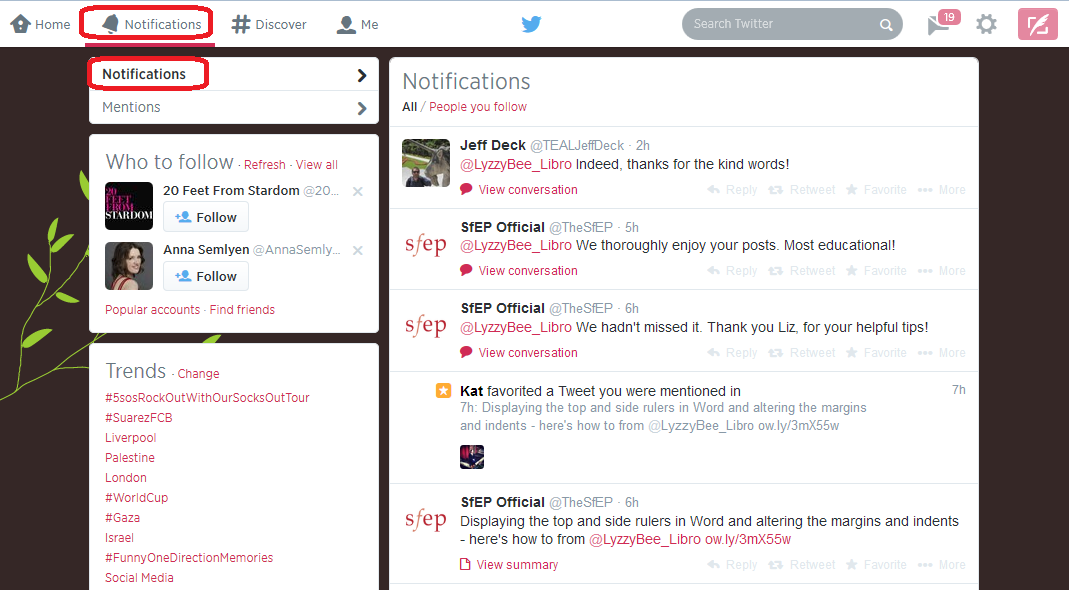
Your Notifications list will show you anything directly concerning your own Twitter account – so messages that have been sent to you with an @[your Twitter ID] as well as people who have followed you. It’s good practice to keep an eye on this so that you can reply to any messages sent to you and say thank you for recommendations and follows. Note here that Notifications gives you information on who’s followed you and favourited your messages, and any messages that start with your name:

Twitter notifications

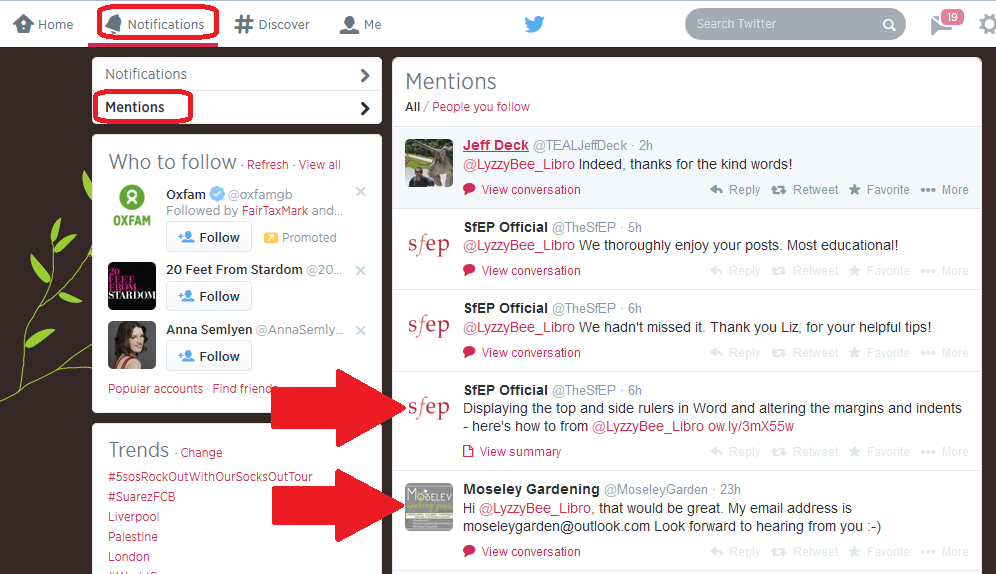
while Mentions will also show you when you’ve been @ mentioned by someone else:

Twitter mentions

Getting rid of spammers

Everyone gets spammed by Twitter accounts, dodgy or otherwise, that are usually either looking for random followers to boost their numbers or clicks to their undesirable links. The ones with links often only have a link in the text – this is a real red flag and you should never click on a link in a tweet, even from a friend, if there’s only a link and no text (your friend could have had their account hacked).

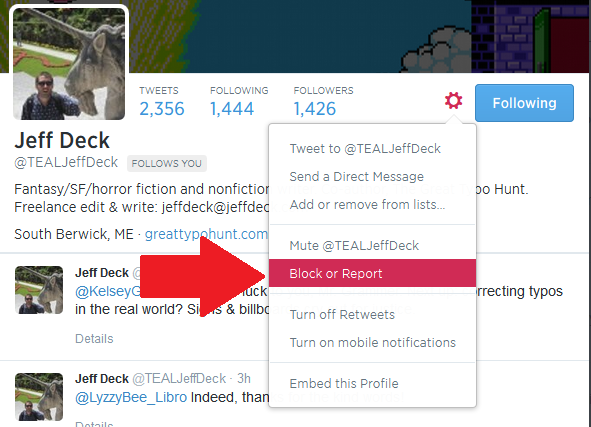
If you receive an odd tweet or one with just a link, click on the photo or name of the sender. You will typically see that they’ve sent the same short message or no message and link to multiple people. Click on the User Actions button on their profile and you have options to Block or Report: [Note: I’m just using this chap as an example, he’s a good guy really!]

Block on twitter

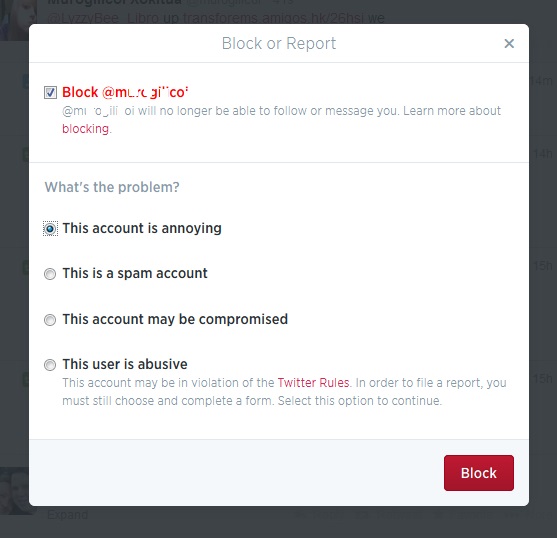
Once you’ve clicked on Block or Report you will see this screen, which allows you to tell Twitter why exactly you are blocking or reporting the person:

Block and report on Twitter

This alerts Twitter that the person is spamming, and will help to save someone not as savvy as you from clicking on a dodgy link and going who knows where in cyberspace!

If you’re just getting annoyed or bored by a Twitter account that you follow, you can click on their photo or name and press the button marked Following – this will change to Unfollow as you hover over it; click it and you’ll unfollow them and no longer see them in your Twitterstream.

Rules for using Twitter effectively

Using Twitter effectively is a matter of knowing how it works and how people view it, and being sensible and polite.

Posting multiple times

The main point about tweeting is that very few people read every single tweet on their timeline. People typically check Twitter on the way to work, at lunchtime, on the way home, and some time in the evening. Once you’re following more than about fifty people, there’s no way that you’re going to see all of their tweets – so think of people as viewing a snapshot of their Twitterstream rather than everything.

This means that it’s fine to tweet a message multiple times, where it would be seen as rude and intrustive to post a Facebook status multiple times in one day.

You also need to be aware of your markets and their time zones – if you have a lot of Australian clients, and you’re in the UK, you will need to tailor your tweets to their time zone, maybe investing in a Twitter dashboard that will allow you to pre-schedule your tweets.

Using a dashboard

It can be very useful to use a dashboard such as Tweetdeck to manage your Twitter accounts. You can view multiple accounts at a time and post as them (handy if you have, say, a personal and a work account) and view your lists in their own feeds. Some of them will also allow you to schedule your tweets to be published at a certain time or on a certain date, which can be very useful (although watch out that you still keep an eye on when these go out, as there have been numerous examples of an auto-tweet posting when it’s really not appropriate, such as after a disaster).

Sharing other people’s material

The other main rule is to be polite and reciprocate and say thank you.

If you retweet other people’s tweets, they are more likely to share your tweets with their network. To retweet, click on the word retweet underneath the tweet, or look for that ‘arrows-in-a-square’ icon which has the same effect. Some people reckon that you should share five other tweets to every one of your own that you post. I’m not that scientific, but I do try to share as much as I post.

Saying thank you and being proactive

If other people retweet or otherwise share your tweets, which you will find out about by reviewing your Connect feed, do drop them a message to say thank you.

If someone recommends your Twitter account or your services to someone else, contact the person to whom you’re being recommended with a polite “how can I help you” and a way to contact you, and say thank you to the recommender.

Not automating too much and not spamming

I’m not a big fan of the automated message when I follow someone’s Twitter account, and many other people find this annoying, too. I like to know that there’s a person behind the account. Similarly, all sales and no sharing, or all automated tweeting and no replying to @ messages will probably get people irritated.

Other useful posts

On this blog: Using Twitter to find jobs

Using LinkedIn for your business

Social media resource guide for this blog

My friend Sandy’s post on Twitter for professional development

 
9 Comments

Posted by on July 16, 2014 in Business, Skillset, Social media


Tags: , ,

Spring cleaning your budget for the new financial year

spring clean your financesToday we have a guest post by Chinny Ogbuagu from Pitney Bowes, who’s going to share with us her tips for spring-cleaning your budget as you submit your tax return and move through the new financial year. It’s always good to get other people’s views on these matters, and it’s timely for me as I sort out my bank statements and records and get them all sent off to my accountant. You don’t leave it until January, do you? Read on for plenty of handy tips and hints … 

Many of us think of spring cleaning as dusting away those cobwebs, sorting out your clothes and tidying up your house. Many business owners don’t often think about the new financial year: here are some top tips on how you can start planning by streamlining your budget for the coming year.

Review Your Budget

Have you ever heard of the saying “in with the new and out with the old”? You may want to spend a day going over your expenditure during the past few months and work out if there is anything you aren’t putting enough money aside for or maybe areas where you are spending too much. Look at areas in which your company can save costs such as business phones or internet providers, and maybe even costs of office rent and stationery. It’s always a good idea to review this on a monthly basis, as it can save you time and money in the long run.

Sort out your paperwork

This is the perfect opportunity to look thorough all of your paperwork and files and shred any documents you no longer need, especially if they contain any personal information such as names, bank details, addresses or phone numbers. You might need to invest in an industrial shredder for this and there are a number of affordable options for you to choose from at a number of office suppliers such as Pitney Bowes. Do take advice from your accountant on what you are allowed to shred and what you must keep for a statutory number of years.

Create Your Own Financial Calendar

Create an online financial calendar. This will help you to set reminders throughout the year to do things such as review policies and outlines tasks you should complete every month. You can even set this up in Gmail and set reminders to your mobile phone, or alternatively invest in an online financial calendar so you don’t forget when something important needs to be paid for or relooked at.

Go Paperless

You know that you have made progress when you clean out your sock drawer and you can finally close it after years or months of storing items you no longer wear.
According to the HMRC, you are advised to hang onto tax records for a particular accounting period for normally six years from the end of that period. For example, if the accounting period ends on 31 December 2012, the records have to be kept until 31 December 2018.

It might be easiest to keep the hard copies of those. But things such as bank and credit card statements, as well as pay stubs, can be scanned and stored in a cloud-based filing provider, such as Dropbox or Google Drive.

An article on Learnvest claims that you should keep your documents for the following before shredding (again, do check with your accountant and note that this can be different for different regions of the world):
Destroy in a few days:
• ATM receipts, once you record the transaction
• Bank deposit slips, once the funds appear in your account

Destroy after 1 month:
• Receipts for things you bought on a credit card, once you get your statement, unless you need it for a return or a warranty
• Credit card statement, unless it has a tax-related expense on it

It’s important for businesses to keep on top of this so that you don’t spend more than you have to:: just like you would with your shopping or household expenses, look at the best value for money. This will help to you keep up with today’s rising costs.

This article was written by Chinny Ogbuagu who works for Pitney Bowes helping small businesses to save time and money with their range of equipment and services. She’s also an avid social media user, following and commenting on industry trends.

 
Leave a comment

Posted by on June 25, 2014 in Business, Guest posts, Organisation


Tags: ,

Developing your Business: Expanding into Regional Offices

Sneak preview of the image from my new bookWelcome to another expert post in my series on growing your business. Today we’re going to take a look at why it makes sense to have a physical presence around the country (or beyond), written for us by Juliet Martin, representing Regus. Linked to this post, you can read about small business owners’ own experience moving out of the home office here, and Sam Barnes’ post about what to consider when planning to move outside the home here. Juliet’s going to share with us the value of renting offices in different places.

Advantages of Renting Corporate Settings around the Country

Today’s ever-growing business world is taking with it the ability for any one enterprise to be localised in a particular place. This means you should at least consider setting up new branches or virtual offices in multiple locations across the nation. Even though you will have to then manage a number of settings, you will gain plenty of benefits in the long run. Adapting to these modern, global times will provide you with the following five corporate advantages.

A commercial building

It pays to have more than one branch for your business Image

1. Access to Local Resources

If you produce any kind of goods, you may find that the various materials and components required are sourced from multiple areas around the country. For example, you may find the following are located in different regions:

• Mines
• Factories
• Ports
• Plantations
• Refineries

By opening up small branches near each of these facilities, you will then give your company greater access to a range of materials and services directly from the source. This means you won’t have to rely on a third party to bring these essentials to you.

2. Lowering Your Monthly Rent

Believe it or not, it may actually be more cost-effective to run a number of bare-bones offices around the country than a fully functional corporate setting in a single location. After you have negotiated to reduce the rent of your many branches, you can then look forward to even more savings thanks to the smaller and more compact premises that your company is now working from. If you can simplify how your work settings are planned out, eliminating excess features and only renting what is necessary, you can streamline your outgoing cash flow and still benefit from a number of corporate environments located around the country.

3. Honing Your Corporate Marketing

One difficulty that any localised business has is that its target audience is fairly limited, being restricted to a single geographical area. You can get around this by working from several different locations across the country. In general, people will wish to work with a business that has a presence in their neighbourhood because:

• It provides a local face to the company
• Contacting the enterprise is much easier
• Delivery times won’t be needlessly long
• Employees will be much more relatable

By branching out across the nation, you can tap into a wider consumer base than ever before, enabling you to find additional customers and boosting your sales to help cover the rental costs of your various corporate locations.

4. Added Convenience for Clients

Another advantage to the consumer is that it is far easier for them to come and visit your workplace if you are found scattered across the country. To cater to all your client’s needs, rent some office space at business centres around the nation. This will give them additional convenience as they can deal with your company in a number of ways thanks to your now local business setting. For example, they should be able to:

• Visit your office without driving for hours
• Post parcels and letters to you cheaply
• Phone without expensive long distance rates

There are times when your clients want some personal attention. In these cases, email won’t suffice. Video conferencing can be difficult to set up properly too. A better solution is just to have a local branch available so they can arrange for an appointment with you or a company representative without having to go through a lot of hassle to get there.

5. Broadening the Talent Pool

Lastly, by making the effort to rent corporate premises around the country, you will then have access to a greater range of skilled workers for your business. The truth is that having the right resources is crucial to helping you identify new talent. In this case, the resources in question are your local offices which can then tap into the growing number of potential candidates found in those local regions. People may not want to relocate to another city to work with your company so having multiple branches will give them a reason to sign on with you even though your main office is found halfway across the nation! In this way, you can increase the sheer talent within your organisation and grow your products and services accordingly.

As a brief recap, we can see that renting workplaces across the country can indeed provide many benefits to any enterprise. These advantages include the following:

1. Ease of access to national resources
2. More cost-effective rental payments
3. Effective locally targeted advertising
4. Increased consumer convenience
5. Wider talent pool for new employees

We would recommend that you get out there and expand your business operations as soon as possible to reap all of the above rewards. By occupying some of the best corporate spaces around the country, your company can grow and your customers will get even better service as a result! To make the process easier, get in touch with a provider such as Regus for assistance on renting suitable spaces at cities or regions you have interests in.

Author Bio: Juliet Martin is from Regus, a global office space solutions provider. Founded in 1989, Regus is a global organisation that aims to provide only the best office spaces and meeting venues to all kinds of businesses.

This post is part of my series on growing your business. Read more here and read about my own business journey in my books.

 
1 Comment

Posted by on June 11, 2014 in Business, Guest posts, Organisation


Tags: , , ,

How to add an admin or moderator to your Facebook business page

In this post we’re going to learn how to add someone as a moderator on your business or organisation’s Facebook page, and also what it looks like when you are added as a moderator of a page. For more basic information about setting up your Facebook page, see my article on Facebook for business.

How do I add someone as an administrator to my Facebook page?

To be added as an administrator of a page, you must Like that page first (or to be added as an administrator of a group, you must be a member of that group)

To add someone as an administrator of a page, they must Like that page first.

To add someone as a moderator, find See Likes on the Admin Panel of your page

1 likes button

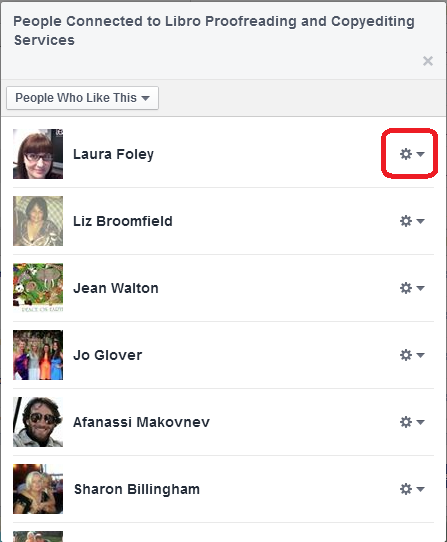
You will see a list of people who have “Liked” your page, each with a little icon to the right.

2 list of likes

Find the person you want to add, click on the icon and choose Make Admin:

3 make admin

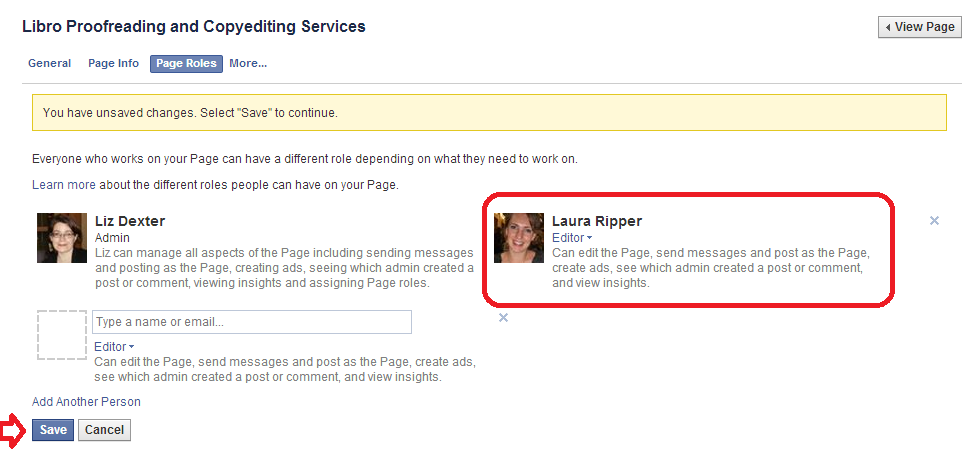
Once you’ve done that, you will get another screen which shows all of the people who are admins of that page:

4 make admin

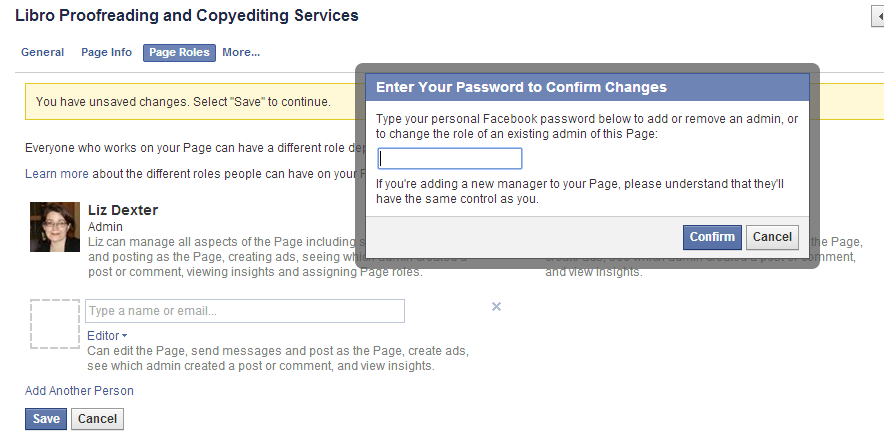
This shows that you’ve added someone to have admin rights. Note the x top right – this can be used to remove them. Press Save … and you’ll be asked for your password (just as a safety measure):

5 make admin

Add your password and there they are, an admin.

How do I access the Page Roles area to change what my moderators can do?

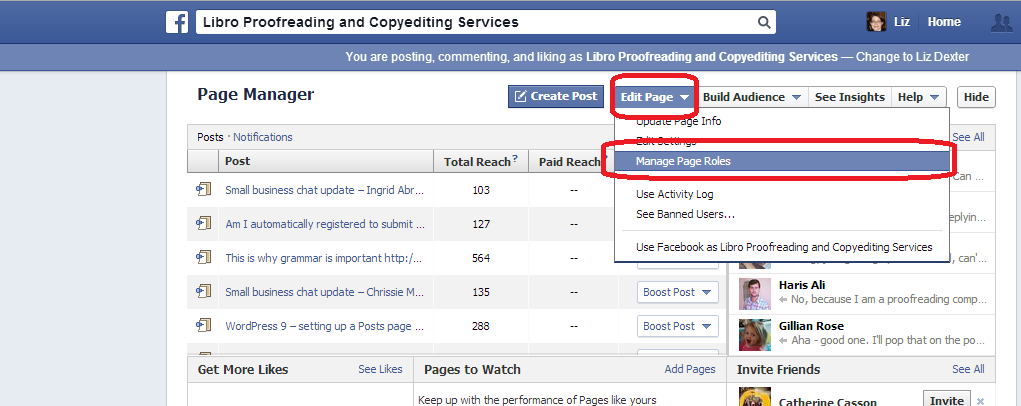
If you want to change the roles that people have in moderating your page, go into the Page roles area by choosing Edit Page in the Admin Panel, then Manage Page Roles:

Facebook page moderator page roles

What are the different Facebook page moderator levels?

You can choose different levels of moderation to give to your admin people. If you want to change these at any time, go into the Page Roles area by choosing Edit Page then Manage Page Roles (see screenshot in the previous section.

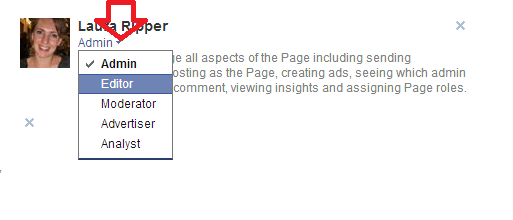
Now, click on the arrow by the role name assigned to your moderator, and you will see a list of choices. The role that the administrator currently has will have a tick next to it. Click on a role to change the privileges that the administrator has.

Facebook page role optionsAn Admin can send messages, post as the page, create ads, see which person has created a post or comment, view insights (stats etc.) and assign page roles

An Editor can do everything that an Admin can do, plus they can edit the page itself.

A Moderator can do everything that an Admin can do, plus they can delete comments on the page

An Advertiser can see who created posts and comments, view insights (stats) and create adverts

An Analyst can see who created posts and comments and view insights

What does it look like when I’m added as an Admin of a Facebook page or group?

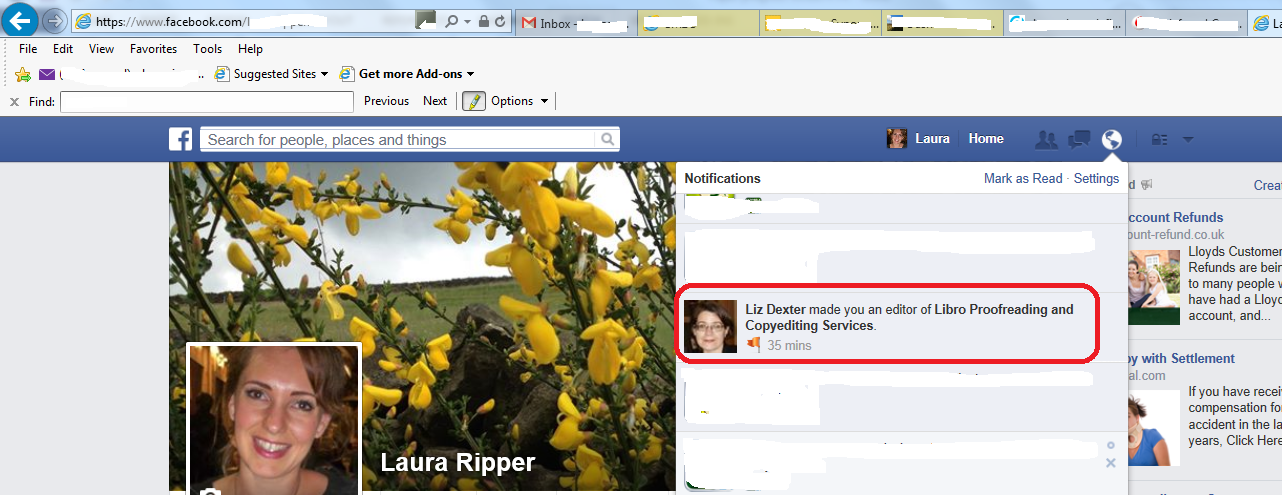
When the moderator of the page adds you as an admin, you will receive a notification. Depending on how you have notifications set up, you may receive an email – there will be a notification in your Facebook Notifications list. Here’s Laura’s which arrived after I’d added her, above:

facebook notification - added as moderator

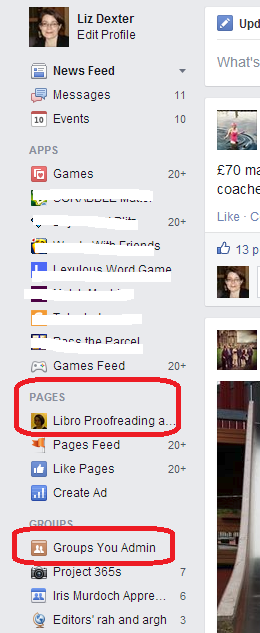
On your own Facebook feed, you will see all of the Pages you administrate under the Pages heading. For groups, there is also a section called Groups You Admin under the Groups heading.

6 groups you admin

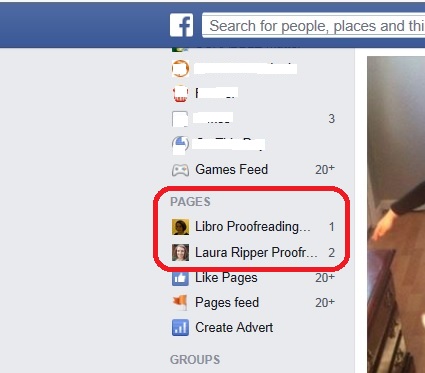
And here’s Laura’s Facebook menu, showing that she’s now administrator of her own page and mine:

List ofFacebook pages for which you are admin

To view the page or group for which you have admin rights, click on the page or group and your view will be that of the administrator, with the Admin panel at the top:

7 admin panel

What does having moderator status for a Facebook page actually mean?

Once you’re a moderator / admin, you can do any or all of the following (see list above for the different roles): see all of the statistics for the page, who likes that page and how the posts on the page are doing; comment under the name of the page (so in my case, Laura can post on the page as if she’s called Libro Proofreading and Copyediting Services) and delete other people’s comments as appropriate; create adverts.

So, if you are the owner of a page and add admins, be careful if you’ve associated a bank account or PayPal account with the page, or make sure you choose the appropriate role level for your moderators and make sure you trust any people to whom you’ve given full roles to not to go booking millions of adverts without your say-so!

To summarise – if someone asks you to be a page administrator / moderator for their or their business’s Facebook page:

  • Make sure you ‘Like’ their page first
  • Ask them to find you in the list of people who ‘Like the page’
  • Ask them to click and make you a moderator
  • You will receive a notification and the page will appear at the top of your page list in the left-hand margin
  • Click on the page name in the left-hand margin and you will have full administrator rights

In this post, we’ve learned how to add someone as a page administrator, and what happens to that person’s view of Facebook once this has been done. Thanks to Laura Ripper for providing screen shots and being a guinea pig page admin! Her Facebook page is here and the Libro one is here.

If you’ve enjoyed this post and found it useful, please share it using the buttons below! Thank you!
You can find more resources on social media in my blog resource guide (link takes you to the social media section) and read about using social media for your business in my book on growing your business.

Related posts on this blog:

Facebook for business

How to delete posts and block users from your Facebook page

 
27 Comments

Posted by on June 4, 2014 in Business, Social media


Tags: , ,