RSS

Tag Archives: writing

Disc or disk?

Disc or disk?

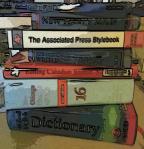
I will have to re-do this picture soon. I now have a new “New Oxford Style Manual”, a new “Concise Oxford English Dictionary” and a new “AP Stylebook” AND my new “Chicago Manual of Style” should be arriving tomorrow. Time for a new photo then, I think.

Anyway, it’s Troublesome Pairs time and I had to check this one just in case the other day when I was doing a transcription – really, we don’t use these words very often now that computers don’t use floppy disks any more, and although vinyl records are a ‘thing’ again, they tend to be referred to as ‘vinyls’ rather than ‘discs’. Oops, I’ve given the game away already, haven’t I!

So, just to spell it all out for future reference …

A disc is a flat round thing (also used metaphorically, for example for the Sun, which is obviously really a sphere) and is the spelling used for the kind of disc that is a record. I think a disc only has to be flatter than it’s round to be a disc, because you get discs of cartilage in your spine which can slip.

A disk is the computer kind of item. It contains a disc on which data can be magnetically or optically stored (the latter including CD-ROMs).

And just to confuse, in the UK you can spell both with a k, and then you have to work out which it is from the context.

The talk of the first kind of disc got me thinking about cylinders. These have straight sides and an oval or circular cross-section, so in effect a disc is a kind of cylinder as long as it has some kind of three dimensional existence.

You can find more troublesome pairs here, and here’s the index to them all!

 
6 Comments

Posted by on September 20, 2017 in Errors, Language use, Troublesome pairs


Tags:

Troublesome words – refusenik

Troublesome words – refusenik

I try not to be an over-prescriptive fuss-pot when it comes to language,* believing the important thing is clarity and accepting things change with them, while obviously, as I do here, trying to share examples where, say, there are two different words that mean subtly different things and thus should be retained and used. I know people get very cross about the use of words like “decimate”, and when I get a little bit cross about things, as with swathe or swath a while ago, I try to remember to make a point of looking them up and finding out whether our big dictionary sources back me up, or not!

Here is a (perhaps more obscure) case in point. I keep hearing the word refusenik being used to describe someone who is actively refusing to do something, usually to prove a point or in some form of protest. School uniform refuseniks and the like. I knew the term in its original meaning, which is the highly specific one describing Jewish people in the former Soviet Union who were refused to be allowed to emigrate to Israel. I kind of expanded this in my mind to incorporate all people whose exit from a place is refused. The emphasis here is on the fact that they are being refused exit – someone else is doing the refusing and they are the passive objects of the refusal (grammatically speaking).

But I checked my sources, and there we are: a refusenik is perfectly able to simultaneously be someone who refuses to do something out of principle and someone who is refused exit.

** Did you notice the at least three rules I have broken in this post to prove my point about not being fussy?


3 Comments

Posted by on August 31, 2017 in Be careful, Language use, Writing


Tags: , ,

irrupt or erupt?

irrupt or erupt?


This one was suggested by my husband, a keen birdwatcher (see below for why that’s relevant) and adder of troublesome pairs to my list.

Erupt is perhaps the better-known of the two. To erupt is to forcefully throw out rocks, lava, gas and ash, if you’re a volcano. The next meaning is to break out suddenly, usually used of something like a fight, and similarly, you can erupt into laughter, meaning it happens suddenly and forcefully. Finally, a spot or rash erupts when it appears suddenly on the skin, and a tooth erupts through a gum when it grows in your mouth and becomes visible.

To irrupt, also a verb, means to burst into somewhere, to enter suddenly or even forcibly. The kind of thing people do when they break down a door. Interestingly, I’ve seen people being described as “erupting” in this sense, but let’s use irrupt here if we can, to preserve those two senses, yes? The second (and husband-relevant) meaning is to migrate into an area in large – that’s abnormally large – numbers, and it’s especially used of birds. So when an awful lot of waxwings descended on some trees with berries in a Birmingham car park, that was them irrupting. Or an irruption.

You can find more troublesome pairs here, and here’s the index to them all!

 
7 Comments

Posted by on August 16, 2017 in Errors, Language use


Tags:

Surfeit or surplus?

Surfeit or surplus?

This Troublesome Pair was suggested to me by my husband. He’s good at coming up with these; I’m not sure how many have been suggested  by him over the years. Both of these words mean an excess, but one just means “more” while the other means “too much!” There are some interesting archaic terms, too. For example, I always ‘knew’ that “King John died of a surfeit of lampreys” but I didn’t know exactly what that word meant, thinking it was standing for just “too much of” rather than a more specific meaning.*

A surplus is the amount that’s left over when you’ve met all your requirements. So if you have a bag of broad beans to cover every week for the next year and you will carry on with your next harvest once those are used up, anything over 52 bags is your surplus. In accounting terms, it means the positive difference between income/assets and expenditure over a period, so if I earn £100 from selling broad beans but spend £30 on bags to sell them in, my surplus is £70. And in even more specific accounting terms, it means the amount by which a company’s assets are worth more than the face value of its stock.

So a surplus doesn’t really carry the idea of TOO MUCH, whereas a surfeit is the “too much” one. It just really means an excess, but it isn’t really used in a positive sense (unless you’ve found examples – do share if you have). And in archaic terms, it was an illness that was caused by excessive drinking or eating – so King John’s “surfeit” wasn’t an excess of lampreys but the illness brought on by having eaten the excess of lampreys. If we go back to our broad beans, although it’s subjective, I’d say that having, for example, 104 bags of broad beans when you only need 52 would count as having a surfeit.

I do love these small distinctions. Interestingly, surfeit and surplus both come from Latin via Middle English (thank you, OED), so it’s not one of those cases where we have one Germanic and one Latinate word for the same thing.

And the obsession with vegetable produce? Blame the people who presumably have allotments and keep leaving courgettes out on walls and the pavement for people to take and runners to trip over / jump.

*Edited to add: Oh, deary me. I have been informed by reader Ian Johnston that “It was Henry I that died from a surfeit of lampreys, John fined the City of Gloucester for failing to deliver him a lamprey pie at Christmas; a dearth not a surfeit of lampreys”. Thank you to Ian for pointing that out and I stand corrected!

You can find more troublesome pairs here, and here’s the index to them all! The index is finally UP TO DATE so go and have a look and tell me which is your favourite so far!
 
6 Comments

Posted by on August 3, 2017 in Errors, Language use


Tags:

Tricky words: What does falsify mean?

I occasionally write about tricky words rather than troublesome pairs on this blog, and here’s one that always makes me feel a little uneasy. When that happens, I look it up (a large part of being a decent editor / proofreader is knowing when to look stuff up), and I find I have had to look this one up a few times.

So, falsify.

The most common meaning for “to falsify”, in my opinion, is the one around making something become false. You might change something to mislead “We falsified the results to make it look like smoking is good for you”. You are effectively changing something, a document or some results, in order to deceive people. Falsification is the noun for the action of falsifying, and a falsifier does it.

But the other meaning is to prove to be false, or to disprove. In this case, it’s the opposite of verify, and is used in, for example, social sciences and economics texts (which is where I tend to find it). It looks odd to me when I read, “We falsified the results”, but here the writer is using it in this second meaning: “We proved the results to be false”.

To be honest, I’d rather move away from possible misinterpretation and use “we proved the results to be false” or “we verified that the hypothesis could not be proved” rather than “we falsified the results” or “we falsified the hypothesis”. However, my editing policy is to tread lightly, and it is an acceptable term, found in all the major dictionaries, so it’s not something I would change lightly (although I might make a note for the author if the text was going into general rather than academic circulation).


If you’ve enjoyed this post, please use the sharing buttons below to share it or like or comment. Thank you!


4 Comments

Posted by on July 27, 2017 in Be careful, Writing


Tags: ,

Sere, seer or sear?

Sere, seer or sear?


This Troublesome Trio was suggested to me by the ever-helpful Linda from Linda Proofreads – thank you! Those among you with good memories will recall that she’s suggested pairs before – they can’t be infinite but I certainly haven’t thought of them all yet.

So three words with very different meanings that are spelled differently but are all pronounced the same.

Sere is an adjective (and a literary one at that) which means “withered” and can also be spelled sear, and I always thought it meant dry and kind of nobly so, so that shows it’s always worth looking things up in a variety of sources before you confidently bung down what you think something means from your vast experience, etc. It’s also a fairly new word (only around 120 years old) for a series of animal or plant communities which have been formed from succession, for example the endless lavender plants that my garden produces, one from the other but still in the same area.

A seer is a person who can see visions of the future, a prophet or the like. Seer can also be used in a very old-fashioned way to describe someone who sees a specific thing, but I would shy away from using it in that sense, to be honest. It’s also an Asian unit of weight. Who knew?

To sear (a verb) means to burn or even scorch something with an intense and sudden heat, and is often used to describe browning meat or other foods at a high temperature. As an extension into a metaphor, something can be seared into your memory of mind, fixed there, the vision of something which you can’t now “unsee”, for example. A searing pain is a strong and sudden burning sensation.

You can find more troublesome pairs here, and here’s the index to them all!

 
6 Comments

Posted by on July 20, 2017 in Errors, Language use


Tags:

Premier or premiere? What about premium?

Premier or premiere? What about premium?

I’m going to admit now, because there are things that all of us editors have to look up (right? Please share! Better to check than be wrong) and this is one of the ones I have had trouble with in the past and have had to commit to memory. Which one means the most important and which one means the first performance?

Premier means the first in importance or order, and this extends to being used for a head of state (in Australia and Canada, it’s the official title for the chief minister of a state or government, everywhere else it can be used to denote the head of state, “The British premier stated that …”).

A premiere is the first showing of a film or the first performance of a musical work or play. So you go to a film premiere, not a film premier.

Premium has several meanings, one of which is superior and usually more expensive – premium cat food, for example (a premium is also the amount you pay for insurance or a sum added to a normal sum in order to get something better).

You can find more troublesome pairs here, and here’s the index to them all!

 
4 Comments

Posted by on May 25, 2017 in Errors, Language use


Tags:

Breach or breech?

Breach or breech?

I was asked about this one by my lovely friend Linda, a good friend and a super editor, too. It’s sometimes hard to think up new troublesome pairs to write about, so I love it when people suggest them to me, often because they’ve encountered someone else confusing them, sometimes for themselves (it’s the former in Linda’s case).

To breach something (the verb) means to make a hole in it OR to break something like an agreement or a law, or simply a code of conduct. A breach (the noun) is the result of someone breaching something: it’s the act of breaking an agreement or a law (a breach of conduct) or a gap or hole in a wall or other barrier. “By wearing jeans in the dining room, he breached the club’s formal dress policy”. It’s often used in a military sense, but in a general one, too.

The breech (noun only) is the part of a cannon, gun or rifle barrel that is behind the bore. The old-fashioned use of the word means a person’s buttocks, but this survives chiefly in the term “a breech birth” which occurs when a baby is turned around in the womb so that its bottom or feet emerge first.

Breeches (which that last sense of breech comes from) are short trousers, ending just below the knee, which are nowadays used in ceremonial or riding dress.

Breaches are multiple gaps in a wall, etc. or multiple infringements of policy and laws.

You can find more troublesome pairs here, and here’s the index to them all!

 
3 Comments

Posted by on May 3, 2017 in Errors, Language use


Tags:

Venal or venial?

Venal or venial?

Another troublesome pair from near the end of the alphabet – and while we’re talking about alphabets, I’ll admit now (and sadly it will probably be true for any future readers, too; you’ll be amazed how many people search for these pairs years after I posted them) that I’m a bit behind with updating the index. However, if you use the Search feature (under menu on a mobile or in the right-hand column on a desktop) you will be able to find all of them.

OK, venal vs. venial.

If you are venal, it means you are susceptible to bribery, for example a corrupt politician or town planner.

Venial is quite different: it is used in a Christian context to describe a sin which is not seen as removing divine grace from the soul. It has therefore also come to mean, by extension, slight or pardonable, although I can’t personally recall seeing it used in this way in a non-religious context (or without any reference to religion) and I would advise using slight or pardonable instead if you want to use it in a secular context unless you’re very sure your audience will understand it.

Additional point: venial sins are contrasted with mortal sins, which are terrible, grave sins which do deprive the soul of divine grace.

You can find more troublesome pairs here, and here’s the index to them all!

 
1 Comment

Posted by on April 26, 2017 in Errors, Language use


Tags:

How to start a new line, paragraph or page or indent a paragraph in Word 2007, 2010, 2013 or 2016

How to start a new line, paragraph or page or indent a paragraph in Word 2007, 2010, 2013 or 2016

This is a quick reference round-up how to and how not to covering how to stat a new line, how to start a new paragraph, how to start a new page and how to indent a paragraph in Word for Windows.

I have covered all of these in detail in various longer articles which I’ll link to as we go along.

Why all the fuss? Why can’t I do it my way?

If you are formatting a document to be used by someone else, edited and changed or, especially, printed, it’s vital that you use the standard ways to lay out your document to prevent it getting into a mess or someone else having to reformat it (which could be expensive if you’re paying them). In addition, certain methods, especially using Enter to start a new line, can make your document messy as soon as you enter extra text before that line break (see the relevant article for details and examples).

How to start a new line in Word

Don’t use the space bar to move the cursor along until it finally gets to the next line

Do use a soft line return or a hard paragraph return:

  • Pressing the shift key and enter key at the same time at the end of your line will move the cursor to the next line without any paragraph breaks, spaces between the lines, etc. (this is very useful if you’re creating two-line captions)
  • Pressing the enter key at the end of your line will move the cursor to the start of the new line (this will give you a space between the two lines if you have your paragraphs set up like that

How to start a new paragraph in Word

Don’t use the space bar to move the cursor to a new line, then create a new line of spaces

Do use a hard paragraph return: hit the Enter key on your keyboard

How to put a space between paragraphs in Word

Don’t use the Enter key to add a line of white space

Do use the Line Space icon in your Home tab or the Paragraph menu to add a space after each paragraph

How to indent a paragraph in Word

Really don’t use the space key to line up the paragraphs

Don’t use the Tab key to indent the paragraph

Do either highlight the whole text and set the rulers at the top of the page OR set the Normal style to have an indent at the start of a paragraph

How to start a new page in Word

Don’t use the Enter key to move the cursor down to the next page

Do use the Enter and Control keys at the same time to force a page break


This article has summarised how to start a new line, paragraph and page and indent a paragraph correctly in Word.

Related articles in this blog

Line space icon

Paragraph menu

Indenting paragraphs

Page breaks


2 Comments

Posted by on April 19, 2017 in Errors, Word, Writing


Tags: , , , , , ,