RSS

Category Archives: Business

When you see businesses being criticised for not being prepared for Brexit, this is why some of us are not prepared for Brexit

So having had lots of emails telling me how to export goods to the EU in the event of a no-deal Brexit, I tried once again to find out what happens to tax arrangements for people who export services. I’m by no means the only UK person in this situation. Please note I do not expect them to have all the answers, however it would be nice to know if this issue has been discussed, what to do if there’s no deal, etc. I think I am right to want to know how to conduct my business after Brexit, especially given the government, etc. reports detailing the horror of companies NOT being prepared! (Financial Times reports, for example)

Here is my somewhat Kafkaesque conversation over live chat with a representative of HMRC (I checked and it is OK to share this, see below).

[Note, I seem rude to start without saying hello but you’re told to enter your question first!]

LIZ DEXTER: Are the reciprocal tax arrangements between the EU and UK going to continue?
Additional detail: I provide services to EU clients. Currently, I only need state I pay self-assessment taxes to HMRC in the UK, or occasionally need to provide my UTR to prove this, in order for companies to pay me my full invoice and not tax me at source. However, some countries insist on further
paperwork (e.g. a client in Lithuania asked me to get an HMRC employee to sign a letter for them stating I paid tax in the UK). Is this situation being
monitored over the time of Brexit and how can I find out what’s happening?

HMRC: Good afternoon

LIZ DEXTER: Note: I have signed up for all the email alerts, but they are solely about companies that export and import goods, not services. There’s nothing I can find having read the WTO rules which we revert to with a no-deal Brexit. And hello.

HMRC: There is no further information I can give you regarding leaving the EU other than what’s available on gov.uk

LIZ DEXTER: There’s no information on gov.uk about this specific situation that I can find. Can you point me towards any information for exporters of services, not goods, please?
The reason I ask this is that the Ease of Doing Business if I have to get an HMRC employee to sign a paper for every client I had will badly adversely affect my business (and the tax I’ll pay in the UK!).

HMRC: Give me a moment whilst a check my guidance.

LIZ DEXTER: OK thank you.

HMRC: I don’t have any guidance I can give you. It just tells me to direct you to guidance published on gov.uk

LIZ DEXTER: Which doesn’t have anything to do with exporting services at all. OK it’s not your fault but can you please feed back that there are so many people in my position, I have EU customers asking me how they’re going to deal with me post-Brexit, whether they can continue to use my services. It’s embarrassing and very stressful. Or HOW they can continue to use my services.

LIZ DEXTER: Is it permissible to share my download of this chat with other self-employed people or my clients?

HMRC: I will feed that back. Sorry but at this time we don’t have the information you require.

HMRC: Yes that’s fine.

LIZ DEXTER:  Thank you. And I appreciate your help and that
you’ve done all you can.

REFERENCE: Record of your HMRC webchat [url redacted, can be provided upon request]

 
7 Comments

Posted by on March 28, 2019 in Brexit, Business


Tags: ,

What happens to your website statistics when you drop the ball with your blogging?

When you have a professional website with a blog attached, what happens to your reader stats if you stop blogging? I did not do this experiment solely for this blog, but I thought it would be interesting to have a look at what happened when I had a blogging hiatus.

I haven’t updated this blog for six months. How did that happen? I’ll explain below. What am I going to do about it? Start blogging again, I hope …

Why did I stop writing blog posts?

Back in the summer, I made the decision to stop working at weekends. Working in this case included both paid editing, proofreading, localisation and transcription work and the additional marketing tasks like blogging, writing articles, responding to blog comments, etc. I did have to make the odd exception when work levels were high or I’d taken time off during the week (or had a holiday) but by and large I’ve stuck to this and am happier, less tired and more balanced as a result. OK, I took up a new hobby as an Endurance (cross-country and road relays) running official and lately a Track and Field official, which has involved weekend training courses and time standing around in muddy fields or boiling hot infields, but that’s a healthy, outdoors hobby.

However, the anticipated drop in paid hours didn’t happen. In fact, in 2018 I have brought in around 12% more revenue than in each of the two previous years, on average, I’ve worked the same number of hours per week, and I’ve in fact had fewer low-paid-hours weeks this year. So what had to give? Blogging.

This was exacerbated by the fact that, while my blog still obviously displays my knowledge of Word, language, business, etc., and channels people to buy my business books (still going just as strong as ever), I have been fortunate enough to have sustained my customer base through a lovely set of regular clients and through their recommendations to others. Added to this, over the nine years I’ve been self-employed, I’ve moved from a model of working with lots and lots of small jobs, editing Master’s thesis for overseas students, etc., to longer-term projects working with regular translator clients and writers / ghost-writers, so work has been more predictable, and I haven’t really needed my blog to funnel customers to me like I once did.

So it slipped. Should I just let it go?

What happens when you stop writing new posts on your blog?

Because December is always a low-traffic month anyway, I’m sharing stats from July 2016 through to the end of October 2018. Although there are peaks and troughs always, with March always being busy with those students and their Master’s dissertations searching how to put bibliographies in alphabetical order, you can see the drop-off in the latter few months of the cycle. That’s when I stopped blogging.

It’s pretty well-known that Google and other search engines like regularly updated content to index. That’s why I and others tell people to keep blogging and/or updating their website regularly. So I knew this, and the stats show it.

What am I going to do with my blog? Should I give up blogging?

Although I don’t feel at the moment that I NEED to write and publish lots of blog posts, I’m going to get back into it. How, I will share below. There are a couple of reasons WHY:

  • Although I have sufficient clients now, especially with lots of them being in Europe and the threat of Brexit looming, I can’t assume that will continue to be the case (small independent sole traders like me have had no advice from the government or HMRC). So it’s good to keep marketing yourself even when you’re busy. I am fortunate enough to have lots of lovely colleagues I can pass work to that I can’t take on at the moment.
  • I enjoy helping people. I get a buzz when I receive a comment saying I sorted out someone’s problem, or one of my Small Business Chats interviewees thanks me for a referral they received from my site. I do my job because I like helping people, and the blog allows me to help more of them while I’m doing other things!
  • I loved finding out what my Small Business Chat interviewees were up to and how they were getting on, and learning from their journeys. I don’t want to lose those connections.

What’s the plan?

I’m going to use my time wisely. Over the festive break, I’m going to add the flesh to the bones of a load of ideas I’ve put in my blog post drafts and get them all ready to schedule through the year (the plan there is to see how many I can get written and then distribute them evenly through the next year, keeping an eye on what’s about to publish as I go through the year in case there’s some awful clash between a light-hearted Troublesome Pair and a horrible news item).

I’m going to get in touch with my January 2018 Small Business Chat people as normal for their updates, but I’m also going to contact all the June-December 2017 ones I never got back to, see if they want to continue to take part and slot them in until I can spread them evenly through the year again. I will point them here and hope they appreciate my honesty and openness and continue to take part.

Over to you …

Have you paused your blog (especially a professional one) and started up again? What did you learn or change? Are you one of my abandoned Small Business Chat folk? Would you like me to continue featuring you again or has that series run its course? Have you enjoyed reading those posts? Have you, well, missed me?

 
21 Comments

Posted by on December 27, 2018 in Blogging, Business, Marketing, Writing


Tags: , , , , , ,

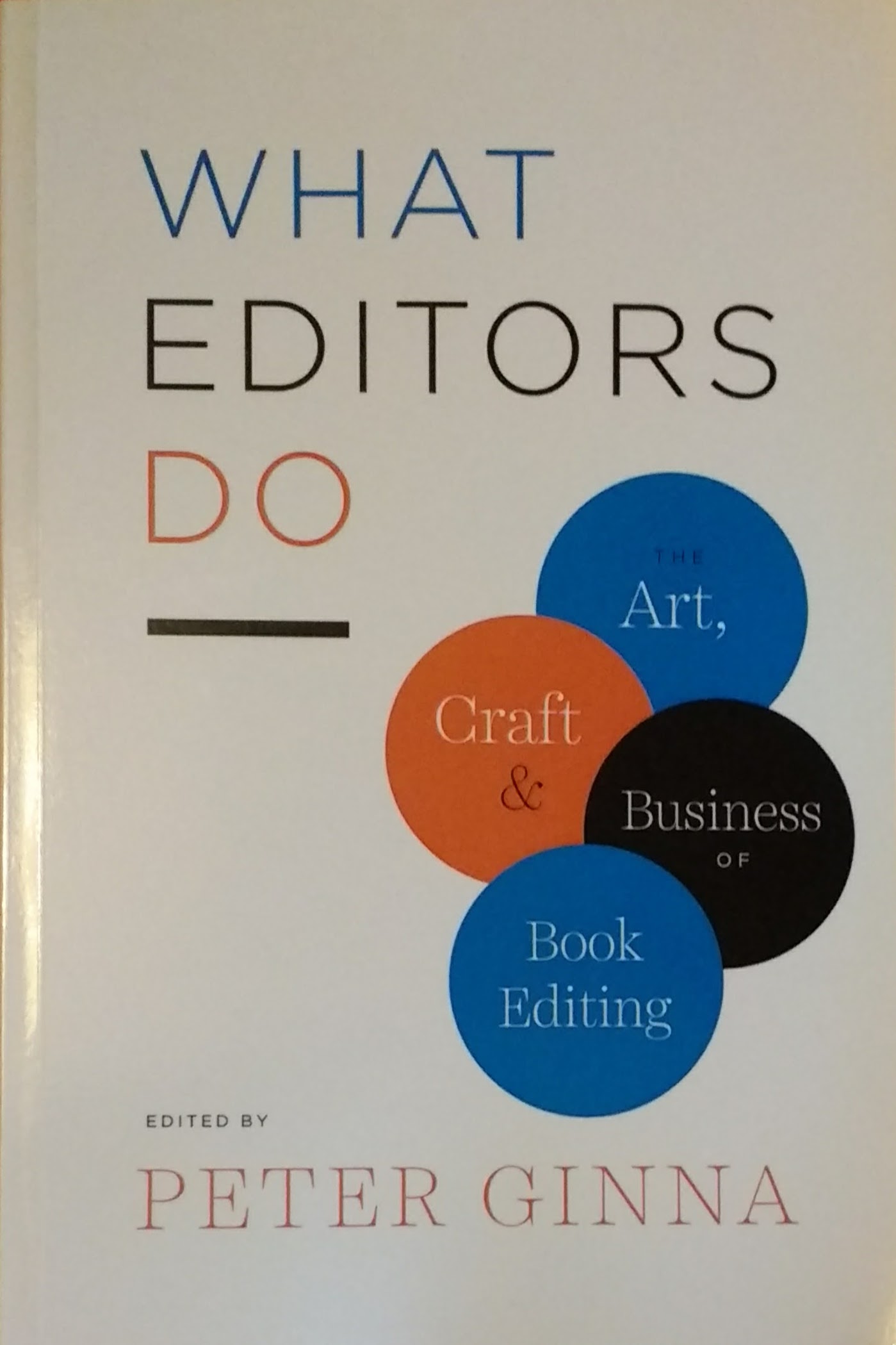
New editing book review – Peter Ginna (ed.) – “What Editors Do”

Fellow editors who follow this blog but maybe not my book review blog might be interested to pop over there and read my review of this excellent book, edited by Peter Ginna, “What Editors Do: The Art, Craft, and Business of Book Editing”.

I would recommend this book to all editors, writers and people generally interested in the process of how books get from ideas to the printed (or electronic) page. The chapters I’ve singled out are by no means the only stand-out ones: it’s of a very good quality and level of interest throughout.

(read more)

 
Leave a comment

Posted by on July 28, 2018 in Business, Reviews


What do I actually do? What do you actually do? Who does an editor or transcriber work for?

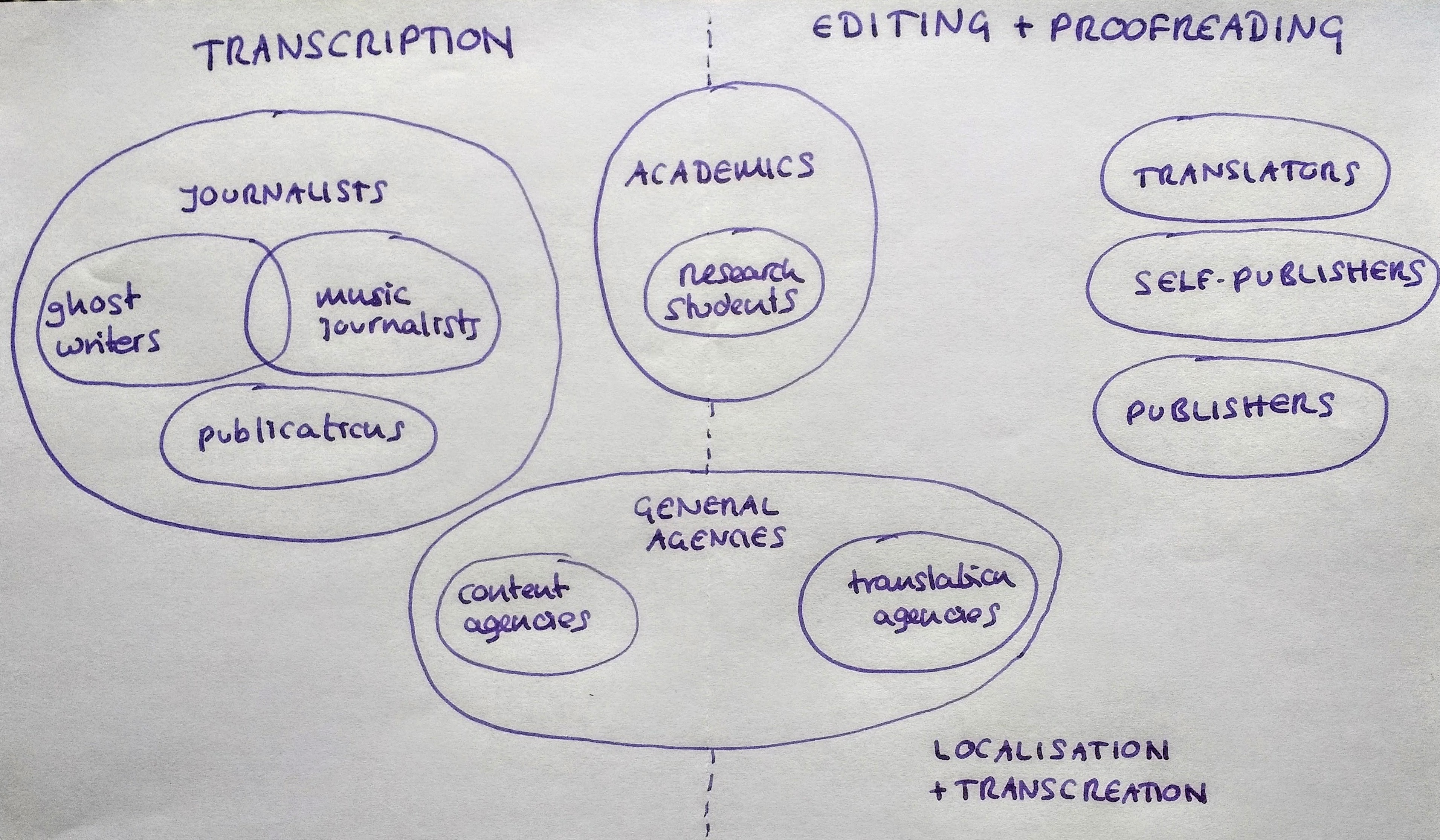
Taking a well-earned coffee break this week, my friend Jen challenged me to draw a Venn Diagram of what I actually do, for whom. I accepted the challenge.

Libroediting services venn diagram

Especially if you have a portfolio business, where you offer more than one service, can you draw out your customer base and services? How many attempts do you have to make (four for me!)? Can you see any patterns?


Tags: , , ,

What should I write in my first blog post?

What should I write in my first blog post?

Over the years on this blog I’ve shared all sorts of advice about how to set up your blog, the advantages of blogging, top tips for newbies at blogging, etc. But a client asked me a very good question recently: “What should I write my first blog post about?”

Now, it’s very tempting to write your first blog post about yourself, introducing yourself and your expertise. You want your readers to trust you, right?

Well, I think more than that, you want your blog posts to help you to be FOUND.

My first blog post on this blog was this one: Introduction (on 14 October 2009). How many hits has that had? Not many. In fact, I didn’t have many hits at all those first few years – because I was just talking about myself and what I did, yes, sharing loads of keywords, but not really talking about what I could do to help people.

On 6 November 2011, I had a terrible problem with a Word document. It was sent to me by someone else and all the comment balloons were teeny-tiny and unreadable. I found out what to do to sort it out and thought, “Hm, I’d better make a note of what I did”. So I created a new blog post, called it What to do if your comment boxes go tiny in Word, and at that point, I just wrote a list of the steps I’d taken. None of the fancy screen shots that festoon this and other posts nowadays.

But what happened? People had always been searching that question, and now they started to find my blog. People STILL find that article and find it helpful today! Just today, at the time of typing this, 41 of the views of my blog  have been of that post. Over 23,000 views in the last 365 days. It’s consistently in the top 10 of viewed posts. Still.

So if you want to start blogging for your business, your recipes, your book reviews, I recommend that you start your blog with an informative, useful post that will help people (buy a greenhouse / cook a nice meal / find a new book to read).

Where should all the stuff saying how trustworthy, knowledgeable and generally amazing you are go? In your About Me page. If someone finds something useful on your blog, they might well click on that, have a look and even get in touch to order services or products from you.


In this article I’ve shared my ideas and experience around what to write in your first blog post. If you’ve found this useful, please share using the buttons below, or leave me a comment!

Other useful articles on this blog

Top tips for newbie bloggers

10 reasons to start a blog

10 reasons NOT to write a blog

Top 10 blogging sins

Scheduling blog posts and keeping going

Five ways to drive and increase engagement with your blog

How to keep people engaged with your blog


13 Comments

Posted by on January 10, 2018 in Blogging, Business


Tags: , ,

What information does my localiser or localizer need?

I’ve written about setting expectations with service providers and I’ve explained what your editor needs to know here, and transcribers here – now it’s the turn of localisation services (or localization providers).

What is localisation / localization?

I have talked about what localisation is in this article, and about careers in the area here.

In brief, localisation involves turning one variant of a language into another variant of that language. For example, text written in Portugal might be localised for Brazilian Portuguese, text published in France localised into Canadian French. In my case, I work from US (or other non-UK) English into UK English.

Some quick characteristics of localisation:

  • It’s not just a question of changing spellings, although that’s obviously important – grammar and particularly punctuation can be very different in US and UK English.
  • While -z- spellings are “allowed” in the Oxford variety of English, I have to be careful not to use this style, as my clients like to see the text “looking British”, even if they’re not expert in what that means, and that means -s- spellings all round!
  • Sometimes quite complicated cultural issues need to be unpicked and changed – for example references to sports that are very common in the US, even in metaphors, often don’t translate well for British readers.
  • These cultural differences can be even more wide-ranging: for example, I have been asked to localise for “all parts of the English-speaking world” and therefore having to use pretty bland and universal terms and references.
  • Sometimes the original text has errors and I might need to alert the client to those.
  • You have to be open to using lots of different systems for this work: I might be presented with a document in Word, Excel, output from a translation tool in weird columns, or translation software.
  • You have to be aware, like translators, that there is sometimes only a small amount of space for the text – the localised text might need to conform to a particular character length or space, and that can be difficult as UK words are often longer than their US counterparts.
  • You have to be aware of what NOT to localise, e.g. the US Department of Defense would be spelled like that, as would the World Health Organization, because those are their official titles.
  • Really, you have to be experienced in the other culture and language as well as your own: I got into this because I used to work for the UK office of an American company, so was used to the differences between the languages and had written business communications in both variants.
  • Like translators, you should never localise out of your mother tongue into the other variant, unless you are truly bilingual.

Who needs localisation?

All of my localisation work comes through third-party agencies rather than directly. These will be translation or editing agencies which have clients around the world. Therefore all the advice I have given about agencies in my original article applies here, too.

Sometimes, localisation is combined with another skill such as editing or keyword insertion for SEO (search engine optimisation) purposes. Clients should expect to pay extra for combined services, as they involve the service provider concentrating on more than one service. Not everyone can offer this, either!

What does your localiser need to know in advance?

Your localization service provider will need to know in advance:

  • How big is the project (word count)?
  • Which language variant is it from / to (this means they can let you know if they don’t offer that language pair)?
  • What format is the work in (Word, Excel, a file to open in a standard translation software programme / in a web-bases proprietary or general programme)?
  • What is the topic (I once worked on a football (soccer) game’s text and spent a lot of time looking things up and asking people questions …)?
  • Is this just localisation or do you need editing services or another service like keyword insertion?
  • Are there special conditions, for example, needing to fit the text to a particular length?
  • The usual information on when the text will be ready and the deadline


If you work for an agency, you also need to provide this information, to be fair on the localiser

  • Is the job a quotation or a guaranteed job?
  • When you will know whether you have succeeded in getting the job

… and then let the localiser know whether or not you have succeeded in getting the job, so they can stop saving space in their schedule for it.

Why does my localizer need all this information?

Your localiser needs this information because without it they can’t give you an accurate and fair price and turnaround quotation.

For example, if you contact me to say you have 10,000 words of localisation to be done and you think it’s in a Word document …

  • If it turns out to be in proprietary software that I need to learn, I will need to put aside a few hours (at least) to learn how to use the software
  • If the text needs to be edited as well as localised, that’s two processes, will take me longer, and will cost more

The more information that you can give your localiser / localizer before they quote for you, the more accurate their quotation will be, and the more likely they are to be able to do the job once they’ve committed to it initially.


In this article, I’ve discussed what information your localiser or localization service needs before they can prepare a quotation and let you know if they can do a job. I’ve also probably annoyed you with my inconsistent spellings – but short of writing two entirely differently worded articles for US and UK searchers, this is what I have to do to be found by people who might find this article useful!

I hope you’ve found this useful – do hit the share buttons or comment if you have!

Other useful articles on this blog

Setting expectations with your service provider

Working with an editor 1: Asking for a quote

Working with an editor 2: Negotiating and booking in

What information does my transcriber need?

What is localisation?

Careers in localisation


2 Comments

Posted by on November 16, 2017 in Business, Localisation


Tags: ,

What information does my transcriber need?

A few weeks ago, I wrote about setting expectations with service providers and how to make sure you’re giving the person who will potentially be working for you the information they need to be able to quote for you and do the work. I promised then to add some detail about particular kinds of work that I do and what I or another person will need in order to quote and book you in. I’ve already covered what your editor needs to know here, so let’s look at transcribers.

What is transcription?

I’ve covered this in more detail in this article, but basically transcription means taking words that have been spoken and recorded on some kind of audio file and turning them into words typed on a page via a word processor. You can use transcription for many things: here are some examples of the kinds of people I’ve worked with.

  • A journalist who has interviewed a celebrity and needs to write an article based on the words on the tape
  • A journalist who has set a tape running while two people talk and wants an exact record of that conversation
  • A student who has interviewed people about their topic and needs it turned into text to study
  • An academic doing a long series of interviews for a book without the time to type them all out
  • A psychology student who has taped some practice therapy sessions and needs to analyse them
  • A student who has taped their lectures and needs to have them in writing
  • A ghostwriter who is producing a book and needs their subject’s voice captured accurately from their interviews in order to write “their” book
  • A member of the public recording their parent’s memories to turn into a printed memoir
  • A blogger who does podcast interviews and wants to produce extra content for their subscribers in the form of transcripts
  • A marketing company who has recorded people being interviewed about a product they’ve tried and needs to provide quotations and feedback to their client
  • A marketing company who has recorded interviews with a client from which to produce content for their marketing materials
  • A financial company that does monthly dial-in phone calls and needs a record of what they and their clients said
  • A translation company hired to produce a printed record of an entire conference

Other common transcription tasks which I don’t provide myself:

  • Medical transcription – typing up dictated letters from consultants, etc.
  • Legal transcription – typing up records of interviews with defendants, etc.

What does your transcriber need to know in advance?

So there are lots of reasons to use a transcriber: what do they need to know before they can give you a quotation (if you’re a new client) or book you in:

  • How long is your audio file (in minutes)? This is really important for setting expectations. It takes me an average of three hours to transcribe one hour of audio. And I’m quite fast. This can change dramatically (I’ve written about that here).
  • Have you got the audio ready to send over to me now?
  • What is your deadline (see the first point. I have to have enough time to a) type it up at approx. three hours per hour of audio b) take rest breaks, eat and sleep. Yes, a nine-hour tape will theoretically take me 27 hours to type up, but I won’t be doing that continuously!)?
  • How many people are speaking on the tape?
  • What is the format of the recorded session (e.g. is it an interview with questions from the audience at the end, a focus group, your own thoughts spoken into a microphone)?
  • What is the general topic of the session (very important if it’s medical or legal, as some people (e.g. me) don’t have the specialist training to work on such topics)?
  • Is there any content that might offend or upset the transcriber (some agencies won’t deal with swear words, apparently; some people don’t like drunk people talking about drugs; I like to be warned of any descriptions of violence or cruelty and might turn extreme content down)
  • Are the speakers native English speakers (I specialise in non-native English speakers; some people don’t have experience working with accents and potentially non-standard English)?
  • What type of transcription do you require – verbatim, tidied, rewritten (see my post about this here)
  • Do you require the transcriber to type the transcription into a template? If so please provide a copy.
  • What time-stamping do you require (see below)?

Time-stamping

This is a big topic as it can really alter the amount of time it takes to complete a transcription. Time-stamping means inserting the time into the document at prescribed intervals. It helps you to find places in the tape or reference particular parts of the tape easily.

If you need a note of the time entered every 10 or 5 minutes, that can be done without interrupting the flow. That’s why I include these options in my basic pricing, for example.

Other options include time-stamping:

  • Every time the interviewer asks a question
  • Every time someone new starts speaking
  • Every few sentences
  • Every time someone starts a new sentence
  • Every time someone starts a new clause or part of a sentence

For the last three, it’s vital to explain what you mean and give examples, so that your transcriber produces exactly what you want. If you want to have this extra level of time-stamping, be aware that this will add a lot of time to the process (it’s hard to do it automatically, especially if there’s a template to enter the information into) and will therefore add to the cost.

I work for an agency and we are doing a quotation for a client

This is often the case and that’s fine: you just need to find out all this information from your client in advance. I will ask you to do that anyway, so if you come fully equipped, that process can be done sooner.

Note that all the extra information I discussed for agencies in my original post apply here.

  • Let me know this is a quotation not a guaranteed job
  • Get the information from your potential client in advance
  • Let me know when you will know whether you have succeeded in getting the job
  • Let me know whether or not you have succeeded in getting the job

I already work with this transcriber: what do they need to know about my project?

You might already work with a transcriber, in which case you will have their pricing and terms already. However, when someone emails me to let me know they have a job for me, I still need to know the basics:

  • How long is the file (in minutes)?
  • Do you have it ready now?
  • When do you need the transcription back from me?
  • Is anything different from usual (tape quality, number of interviewees?)

Why does my transcriber need all this information?

Your transcriber needs this information because without it they can’t give you an accurate and fair price and turnaround quotation.

For example, if you contact me to say you have about an hour of tape that you need time-stamping, I am likely to reserve a three-to-four hour slot in my schedule and quote you my basic price band for a customer of your type.

  • If it turns out to be a legal transcription, I can’t do it.
  • If it turns out to be 90 minutes, that’s an extra 1.5 hours of working time for me
  • If it turns out that you need time-stamping every sentence, that will add about an hour to the time

This is why I ask for all this information up front. The more you give me initially, the more accurately I can let you know a) whether I can do it, b) how much it will cost, c) how long it will take. If you don’t give me this information until a long way down the process, in an extreme case I will have to cancel the job and leave you looking for someone else.


In this article, I’ve discussed what information your transcriber needs before they can prepare a quotation and let you know if they can do a job. Miss out information at this stage, or provide inaccurate information, and you may be disappointed.

I hope you’ve found this useful – do hit the share buttons or comment if you have!

Other useful articles on this blog

Setting expectations with your service provider

Working with an editor 1: Asking for a quote

Working with an editor 2: Negotiating and booking in

How long does transcription take?

What are the types of transcription?

Recording and sending audio files for researchers and journalists


5 Comments

Posted by on November 8, 2017 in Business, Transcription


Tags: ,

How do I set expectations with my professional services provider?

When you’re hiring a professional services provider, you need to set expectations for your project before you even agree the contract. If you don’t agree the terms and conditions and specific requirements upfront, in the worst case, you might find that your project is cancelled before it starts, or you may get a result which doesn’t match your expectations.

In this article, I’ll share a few points to consider and ways to make sure that you have a good start to your relationship with your service provider and a good experience (for both of you) throughout the project.

I’m addressing this issue as a provider of editing, proofreading, transcription and localisation services, but I’d welcome comments from service providers in other fields, too.

In this article, I pay specific attention to people who work at agencies which work as a middle-provider between the client and the professional services provider. All of the points apply to agencies, too – some of them are specific to agencies and I highlight when that is the case.

Think about what you want before you seek a service provider

Before advertising, searching boards or doing a Google search, think very carefully about what you’re looking for and the kind of person you’re looking for. Write down the parameters of what you want, in detail. This can include, but not be limited to:

  • The scale of the work – whether that’s in words to be translated, minutes of tape to be transcribed, number of receipts and invoices to go to a book-keeper. This must be honest and measured, not a guess. Typically, you will underestimate what you need to be done. It’s a good idea to check it.
  • The deadline for the work – both your ultimate deadline and one for your service provider which will enable you to ask questions or make the changes that might arise. For example, I recommend a Master’s student keeps at least 24 hours aside for checking my suggested corrections. Bear in mind that you will need to interact with whatever is provided to you in some way (for example, following up unclear names on a transcription; answering an accountant’s queries on your plastic bag full of receipts). Note, if the deadline is “two weeks from when I finish writing the book” be clear about when you intend to do that!
  • The details of the work – this is one you need to think really carefully about, and not make any assumptions. Does your manuscript have to be in US English or fit a particular journal’s article submission requirements? Do you require your transcription to be time-stamped every minute?
  • Get a sample of the work ready – an extract from your document, part of the tape you want transcribed, a scan of what your receipts are like.
  • If you are working at an agency and preparing to tender for a job for a third-party client, try your best to gather this information from them in advance.

Note: a good service provider will know about this stuff and is likely to ask you about it. But it’s best to be prepared and to provide this information up-front when you’re looking for someone to do the work for you.

Provide potential service providers with full information

However you contact potential service providers, do give them all the information you worked out above. They will need it in order to be able to assess the project, give you a fair quotation and let you know whether they can fit it in. If you give them all the information at the start, it will:

  • Save time as they won’t need to ask for any further information.
  • Lead to a fair price (fair to you and the service provider) because it’s based on the full parameters.
  • Lead to an achievable turnaround time which is not going to slip – if you change the parameters or explain the project in full once the work is underway, it may take the provider longer to do it.

This is such an important point that I’m going to put it in bold: If you’re working at an agency and this is an enquiry to allow you to bid for a project yourselves, please inform the service provider when you make the initial enquiry. Most people will still give you the information you need, but promising a project you haven’t yet got yourself isn’t very kind or transparent, and multiple examples are likely to put people off working with you.

Answer any questions from the service provider as fully as you can

If your potential service provider comes back to you with questions of their own, or with a questionnaire to fill in, make sure that you answer it as fully as possible. Explain your terms in detail. For example:

  • What you call “line-editing” or “proper time stamping” can mean many things to many different people. Explain exactly what you mean.
  • One person’s “flexible deadline” is another person’s “one more job I can’t fit in in the time”. Be clear on dates and times.

If you don’t understand what the service provider is asking you, ask them to explain rather than making an assumption or ignoring the question. We all have jargon we think is clear, and I’m always happy to explain a term a potential client is unfamiliar with.

Set expectations on the process and be fair and transparent

You can find information on booking in an editor and handling the process in this article and my advice here is basically the same:

  • Tell the service provider you’re negotiating with when you expect to make your decision.
  • Don’t play multiple service providers off against each other: examine each offering on its own merits but don’t try to start a bidding war.
  • Tell all of the service providers when you’ve made your decision, even the ones you don’t offer it to.

If you are working for an agency, it’s really important to:

  • Tell the service provider when you expect the client to make their decision.
  • If your agency gets the job, tell the service provider who will be doing the work and inform anyone else you were talking to who you haven’t chosen to work with.
  • If your agency doesn’t get the job, still inform the service provider(s) you’ve been discussing it with.

Typically, your potential service provider(s) will be holding open a slot in their schedule for your project, in case you assign it to them. So it’s only fair to make sure that you tell them when they’ve haven’t got the job, as well as when they have. Otherwise, they may continue holding the spot open, turning down other enquiries in the meantime.

Once the project is confirmed and underway

You may need to do contracts, either from your end or the service provider’s end, at this point.

  • Make sure everything you’ve discussed and agreed matches the contract.
  • Do not change anything once the project is agreed, if you can possibly help it (I do understand that agencies’ clients can add demands; if this happens, consult with the service provider and get back to the client with any changes in deadline).
  • Accept that any changes you do make will affect the deadline.
  • Understand that the service provider has set aside a time slot for you. This means
    • you must deliver the project to the service provider when you said you would.
    • if you increase the parameters of the work, the service provider might not actually be able to complete the job if it goes outside the amount of time they’ve set aside for it.

If you follow these guidelines, I think you will have a higher rate of success in interacting with professional service providers and engaging their services, and everybody will have a fairer and smoother time.


Thank you for reading this article on setting expectations with service providers. Please do share and comment if you have found this useful, or share other hints and tips. I will put together specific guidelines for dealing with transcribers and localisers soon.

Other useful articles from this blog

Working with an editor 1: Asking for a quote

Working with an editor 2: Negotiating and booking in

What does my transcriber need to know?

What information does my localiser need?

 
2 Comments

Posted by on October 26, 2017 in Business, Copyediting


Tags:

How do customers get in touch?

How do customers get in touch?

How do your customers get in touch with you? What should you do to help them get in contact? Where should you be visible and how are people likely to message you? You might be surprised …

Be where your customers are

There’s a good general rule that you should be where your customers are. That means physically as well as virtually.

  • If people buy your type of thing at craft fairs and in shops, go to craft fairs and establish a presence in a few shops (many crafty shops will rent shelf space and/or take a commission. Take advice from other crafters on tips for choosing fairs – I have no idea about this myself)
  • If your clients hang out in Pinterest or Instagram, make sure you have an account there, you use it on-brand and wisely, and you put your contact details on your profile
  • Most people will do a web search when they’re looking for what you sell or provide – make sure you have a website, even if it’s just a landing page with contact, product and service details.
  • I strongly suggest you add a contact form to your website. Most blogging platforms and website services like WordPress will have contact form templates for you to use.
  • Many people will look on Facebook so make sure you have a Facebook page even if you don’t interact with it very much.
  • If you have a Twitter profile, again, get those contact details on it.
  • If you can’t help someone, try to pass them to someone who can.

How do customers contact me?

I’ve been observing how people have contacted me about genuine paid work opportunities over the past few months. Here are the ways they’ve done it:

  • Contact form on my website – this is the main way in which people contact me. It comes straight through to my email, with the person’s email, so I can reply straight back to them
  • Email – my email address is on my website, so I assume people pick it up from there, if they’re not a recommendation who has been given my email address by someone else
  • Twitter – a public @ message – so make sure your Twitter account is open and allows messages
  • Facebook – a question on my business page – make sure you enable alerts so you can see when these come through to you!
  • Facebook – a Facebook Messenger request – these can get lost in “Other” messages – check that folder regularly
  • Twitter – a direct message. This can only be sent by someone you mutually follow on Twitter but they still happen – watch out for alerts
  • Phone – I have a dedicated mobile phone with its number on my website. I receive very few phone calls and because I leave my phone on voicemail most of the time (because I do a lot of work where I really have to concentrate), people who leave messages tend to email me as well anyway.

Other ways people might contact you:

  • At networking events
  • Through any messaging facilities on other social media sites
  • By text message

The golden rules of social media contact

I’ve covered this in depth in an article about reciprocity but in general:

  • Always respond to people who contact you – it’s only polite
  • Take the conversation out of the public eye if it’s about prices and services
  • Always be super-polite, even if it seems like someone is trying to get at you
  • Do set expectations – if you’re not going to work weekends / late nights, maybe don’t reply to messages so quickly at the weekend or late at night, to set an expectation of office hours only (be prepared to make exceptions for a real jewel of a prospect, however!)

Summary: make yourself as available as you can; you never know where that lead will come from

Create yourself a website with a contact form as well as a list of contact details

Establish a presence on the very popular social media sites

Establish a presence on any social media sites that are relevant to your area of work

Always answer queries, taking them privately as soon as you can

Set expectations

If you can’t do a job for someone, try to recommend someone who can


In this article I’ve reminded you to keep as many avenues open as possible for people to contact you, and to follow that up by being responsive.

Other relevant articles on this blog

Reciprocity and social media

Coopetition versus competition


Leave a comment

Posted by on August 9, 2017 in Business, Social media


Tags: ,

How do I deal with spam comments on my blog 3: How do I prevent spam comments from being posted on my blog?

How do I deal with spam comments on my blog 3: How do I prevent spam comments from being posted on my blog?

In this article you’re going to learn some general tips for avoiding getting spam comments on your blog. Hopefully you’ve already read Article 1 in the series and understand what spam comments are and why you should stop them, and you’ve looked at some examples of spam and learned how to tell a spam comment from a real comment in Article 2.

How do I stop spam getting published in my blog comments?

There are two ways to stop spam appearing in your blog comments, and you do need to use them together to be completely effective:

  1. Make sure your blogging software’s spam filter is turned on to its highest level
  2. Make sure you moderate comments before displaying them

There are of course variations within both of these, so I’ll talk about them one by one.

Setting up your spam filter

This is general information, and I don’t have access to all of the blogging platforms, but most platforms (WordPress, Blogger, etc.) will have spam filter in place already. This will stop anything hugely obvious, like millions of links in a comment or keywords that we can all think of that we see a lot in spam emails, etc.

Often, you can set the level of spam filtering or what gets done with the spam comments.

For example, in WordPress.com, I can choose to set these options:

  • Either the worst and most persistent spam is silently discarded OR all spam is put into the spam review folder so I can review it
  • I can list keywords which I want to always make a comment go into spam (I haven’t bothered with this as my spam is very varied!)
  • I can select how many links need to be in a comment before it automatically goes into the spam folder (I allow up to two, allowing people to share information, their own book review, etc. without being penalised

How do I select the spam filter options for my blog?

In WordPress, I find the spam filter options in Settings – Discussion.

All blogging platforms will have some kind of Settings area where you can find this information. If you use another platform than WordPress.com, maybe you’d like to add a comment detailing where to find the spam filters in your platform, and I’ll add that information to this article.

Moderating comments

It’s essential to set up some sort of moderation on comments that people try to place on your blog. Although blogging platforms’ spam filters are pretty good, they won’t catch everything, particularly those cleverer ones disguised as praise with only one (or no) links that we saw last time.

When you decide to moderate comments, it means that when someone types a comment on your blog, you will receive an email with that comment, which you can then accept, delete or mark as spam. You click a link in the email, decide what you want to do with the comment, and your blogging platform will display it, delete it or note that the person is spamming (I use delete for an accidental spam or the odd duplicated comment).

There are options here, too, the most common being:

  • Moderate every single comment that is made on your blog
  • Moderate just the first comment from a particular commenter (usually defined by their email address) – each subsequent comment by someone whose first comment you’ve approved will be approved automatically

I have chosen the second option, because most spam is automated, so there’s little danger that you’ll accept someone’s comment and then find them spamming you all over the place.

I do have all comments emailed to me anyway, to make sure that I see and can respond to them, but moderating just the first one means I don’t have to click through and accept, delete or mark as spam every time I receive a comment from someone who’s commented previously.

How do I choose which comments to moderate?

In WordPress, comment moderation is in the same place as the spam filtering options: Settings – Discussion. In other platforms, look for Discussion or Comments in the Settings (again, please share where this is on your platform if you don’t use WordPress.

How do I check for comments that aren’t spam?

Occasionally, your blogging platform will get all over-excited and mark something as spam that isn’t spam. Maybe it contains a keyword it doesn’t like, or maybe it’s got more than the number of links you usually allow – but for innocent reasons.

Each blogging platform has a place to view comments which will include your spam queue, spam folder, etc. I just pop there and have a look every so often – you can mark a legitimate comment as not spam and it will show on your article.


This article has given some general information about how best to prevent spam comments from making their way onto your blog.


I hope you’ve enjoyed this article. Do post any questions or comments below; your comments may affect the content of my next article!

Other relevant posts on this blog

How do I deal with spam comments on my blog 1: Why do people spam my blog and why should I stop them?

How do I deal with spam comments on my blog 2: How do I tell if a comment is spam?

Reciprocity and Social Media – how to negotiate social media kindly and politely

How to maintain a good online reputation – my hints and tips

10 reasons to start a blog – why you should do it now!

10 reasons NOT to write a blog – and why you should stop and think, at least!

Top 10 blogging sins – avoid these if you can!

Scheduling blog posts and keeping going – scheduling the posts and the writing of them

How do I keep people engaged with my blog? – comments and reciprocity

 
2 Comments

Posted by on July 13, 2017 in Blogging, Business


Tags: , , ,