RSS

Category Archives: Guest posts

New series on expanding your business – looking for contributors

handshakeI’m planning a series of blog posts on how to expand and grow your business, and I’d like to feature guest posts from professionals and case studies from people who have taken the various paths, as they’re not something of which I have direct and personal experience.

Ideally, I’d like to have at least one professional (HR consultant, accountant, estate agent, etc.) and at least one case study for each topic.

I want to write about:

  • Changing from being a Sole Trader into a Limited Company
  • Going into a partnership with another person or company
  • Going VAT registered
  • Moving into premises
  • Employing your first staff members
  • Doing nothing – staying as a Sole Trader

and I want each article to cover:

From the professionals:

  • Why you should do it
  • When you should do it
  • How to do it
  • Potential benefits
  • Potential pitfalls

From the business owners:

  • Why you did it
  • When you did it (i.e. what stage was your business at?)
  • How you did it
  • Benefits gained
  • Pitfalls / disadvantages you experienced or saw coming and managed to avoid
  • Would you recommend it to other businesses? Why / why not?

Note: I am primarily aiming this at the UK market, however if you have useful information about how this stuff works in the US or elsewhere, do feel free to join in, just let me know the region to which your experience/advice applies.

What do you get out of it? Well, in the article where I mention you, I’ll put whatever links you’d like to your website, twitter feed etc at the bottom. I might be looking to put it into my new book, too, again with a full credit and links in the e-book version – let me know when you get in touch whether you’re OK with that. I can also keep you anonymous if you’d like to contribute but not have your name on the piece.

I get around 20,000 hits per month on this website / blog and that’s still building every month, and I have great Search Engine Optimisation so this website / blog shows up well on search engine searches.

If you’d like to take part, please contact me via email or my Contact Form.

These articles will appear on this blog and will be indexed in the Careers section of the blog.


Tags: , , ,

Be careful: icon / iconic

Photo by Sarah

Source: Sarah Gallagher 24.06.13. Street artist unknown, Melbourne

When I posted my last Be Careful! post on the use of decimated, my friend Sarah, New Zealand librarian, asked me if I’d looked at icon/iconic and its overuse. So I invited her to write a post for me, and here is the rather marvellous result!

After vociferously agreeing with a recent blog Liz wrote about the misuse / overuse of the word decimate, I was invited to write a guest blog post about the similarly misused / overused word, icon and the adjective, iconic. We certainly overuse and misuse it in NZ, and hardly surprising, it happens elsewhere to. We have all been doing so for quite sometime. It seems that hardly a day goes by where these words are not used to describe a person, thing or sometimes, a place. In some cases it really has gone well past the point of ridiculousness. Here are a few particularly amusing examples I’ve discovered recently:

Iconic image of pepper sprayed woman becomes icon of resistance
Iconic green caravan … An icon of Tokoroa
Iconic sign gets a makeover
Gene Wilder, icon, and star of iconic Charlie and the chocolate factory film
10 iconic t shirts
The anatomy of an iconic image – I agree, the fashion industry over uses the term. I disagree, Kate Moss is not an icon. Nor is she iconic.
Top 10 political icons

So what do these words actually mean? The OED defines icon as having four meanings, two of which are relevant here: an icon is defined as either, a representation of Christ or a holy figure, or a person or thing regarded as a representative symbol or as worthy of veneration. Meanwhile, iconic refers to something that is representative of an icon, so veneration is applicable here too.
Definition of icon – OED
Definition of iconic – OED

Veneration. Perhaps there is a correlation between the overuse of these words has something to do with our increasing societal secularism. Has anyone considered that? Or maybe it’s aligned with our instinct to hyperbole, or a deficit of other adjectives. It some cases these words have become a device to express the importance or significance of something.

My own understanding of the word icon comes from my background and training as a classicist and specifically as a student of iconography. The study of images, and for my research, specific likenesses, brings with it the need to identity work by style, describing their content, and placing them in a stylistic context. In part this happens by identifying patterns in depiction and symbolism. It’s a world where gestures, colour, pattern, and attributes articulate meaning. In preliterate societies it was these subtleties that allowed artists tell stories, or pass on messages to their audiences, and for the illiterate public to ‘read’ the images (think pictorial shop signs, statues of deities, stained glass windows).

So when I read that someone or something is an “icon” I expect there will be a number of attributes: the object of veneration will represent something of deep meaning to a significant group of people, it will be of sufficient gravitas/ age/ mana (this is a Maori word) to demand respect of even those who do not believe in it themselves. It is something or someone who transcends the ordinary, and is truly representative of e.g., a deity, an explorer, a scientist, an artist, a place of worship, a building, a monument; and who has a belief system, story or legend that is inherent in their being. Iconic seems to have come to mean a symbol or to be representative of. Symbols, logos, emblems and insignia all convey meaning but do they truly, hand on heart, evoke veneration in the way a true icon would?

I’ll close with an example of the Virgin Mary:
Here’s an icon
The modern image that illustrates this piece (see top) is an iconic image
Finally, here is a modern icon

Try this yourself. Run a Google image search on the words icon and iconic and see what results. You might be surprised.

References:

Iconic the adjective of an age
Icon, iconic and other overworked words
Cultural icon
Cultural Icons: A Case Study Analysis of their Formation and Reception

Biography:

Sarah Gallagher is a Medical Librarian based in Dunedin, NZ and holds Masters degrees in Classics and in Library & Information Studies. She’s an early adopter of social media and is interested in how these tools can be used in the GLAM and heath professions. Sarah’s also writing a book about named student flats in Dunedin, an ephemeral print culture.

Sarah’s Tumblr
Sarah on Twitter
Sarah’s official bio page

Read more Be Careful! posts …


Tags: , , ,

A proper author – Victoria Eveleigh and her story

Victoria Everleigh I am delighted to publish this guest post by author, Victoria Eveleigh. I “met” Victoria via Twitter, through a discussion I was having about pony books with a bookseller (who I’m going to feature on the Saturday Small Business Chats soon). Victoria has an interesting story to tell, as she has become a somewhat unlikely author, and has now moved from self-publishing to being published!

You can read all about Victoria’s farm, horses and books on her website. Let’s hear her story …

How I became a Proper Author by Victoria Eveleigh

Nobody was more surprised than me (with the possible exception of my old English teacher) when I became an author.

I grew up in London, but spent as many holidays as possible on my grandmother’s farm on Exmoor. From an early age, my ambition was to marry a farmer and live on Exmoor. Remarkably, I’ve managed both: Chris and I have been farming for over twenty-five years now.

At 240 acres, our farm is fairly small, so we’ve had several other enterprises: a self-catering holiday cottage, horse-drawn tours over Exmoor with Shire horses, Land Rover tours of the farm, organic farming, cream teas, renewable energy and publishing.

Starting to write

The Foot and Mouth crisis of 2001 was partially responsible for my first book. We never got Foot and Mouth on our farm, but it came far too close for comfort. For nearly half a year we closed the self-catering cottage and horse-drawn tour businesses, and our children stayed at home for the whole of the spring term. It was a nerve-wracking year, and our cash flow became a trickle, but in some ways it was a holiday from all our usual commitments. For the first time since we were married, we had time to spare. Chris took up drawing and painting, while I sat down and wrote the book that had been forming in my head for several years: the story of a girl and an Exmoor pony growing up on an Exmoor hill farm together.

Full of optimism, I purchased a copy of The Writers’ And Artists’ Yearbook and started writing to agents. After several months, I’d received polite rejections from some and no communication from others. I felt utterly disheartened, and would have given up completely if a friend hadn’t suggested publishing the story myself. She’d published her own books in the past, and said all I needed to do was register myself as a publisher (I registered as Tortoise Publishing), get someone to design the layout of the book (I asked a good friend who’s a graphic designer), get a printer to print it (our local printer who printed our holiday cottage leaflets obliged) and some people to buy it (um…).

Learning from self-publishing

It was shocking how much space 6,000 books took up when they were delivered to our house by the printers. Too late, I realised I knew nothing about selling and, being typically British, I didn’t feel comfortable promoting myself. However, the prospect of never being able to use the sitting room again spurred me on. I loaded some books and leaflets in the back of the car and went for a drive around the Exmoor area. There weren’t many bookshops but there were gift shops, tourist attractions and tack shops, so I had more outlets than I’d realised. In fact, my best customers turned out to be places which normally didn’t stock books because there was no competition. (I’ve found that the easiest way to get depressed is to go into a large bookshop and see how many different books there are, all vying for attention!)

Probably because of Chris’ illustrations, the first book sold so well that I had to do another print run, and I was encouraged to write a sequel. Now I had stacks of boxes and a bit of money, so we converted Chris’ work shed into a farm office where I could store both the books and the ever-increasing quantity of farm records. At last I had a warm purpose-built room where I could write and deal with the paperwork for the farm and publishing businesses.

We made the Exmoor pony story into a trilogy, wrote and illustrated a colouring book about the farming year for the Exmoor Horn Sheep Breeders’ Society and then published a story set on the island of Lundy.
The amount of effort it took to promote, sell, distribute and account for the books meant I had an ever-decreasing amount of time for writing. Furthermore, while I was trying to build up my publishing business several things happened to the book industry: the economy slowed down, then went into recession; fuel and postage prices went up, squeezing margins because books are typically delivered for free; paper and printing costs increased, and large bookshops and online stores started a price war. Simultaneously, the whole book industry was going electronic, and I couldn’t really get my head around it all.

Never give up …

I’d more or less decided to quit while I was ahead when I received an email from Louise Weir, who runs a website called Lovereading4kids. She’d read my Lundy book and wanted to make it a book of the month on her website and, to cut a long story short, through her I was taken on by Orion Children’s Books just over a year ago.

Since then my life has changed quite a bit. I have to treat writing like a proper job now, and it’s a scary, serious business with deadlines to meet, schools to visit and talks to give. However, I wouldn’t turn back the clock for anything. I love writing and I’m so glad I’ve been given this fantastic opportunity to turn it from a hobby into a whole new career. I’ve re-written my existing stories (which have been published as Katy’s Wild Foal, Katy’s Champion Pony, Katy’s Pony Surprise and A Stallion Called Midnight) and I’m writing a new trilogy for publication in 2013. It will have horses and the countryside at its heart, but it will have a boy as the main character for a change. Chris is still doing the illustrations for my books – so I’m now a proper author and he’s a proper illustrator!

I wish Victoria all the best with her new trilogy, and I’m looking forward to reading the Katy books soon. I should mention that Victoria’s publisher will be sending me a copy of “A Stallion Called Midnight” to review, but I wanted to share her story to encourage my readers who are writers: never give up!

 
3 Comments

Posted by on July 18, 2012 in Guest posts, New skills, Reading, Writing


Tags: , ,

Income tax payment on account

Special guest Emily Coltman

Business is booming for me and Libro – and my friends and family are probably expecting me to start splashing around some of that hard-earned cash now I’m full time and earning well, after those lean start-up years. But wait! No – just when you’d think I’ll be booking that round-the-world cruise (we can only dream), in fact I’ll be giving the tax man over half of my income from Libro over the coming year. Edited to add: this is what actually happened when I submitted this year’s tax return.

It’s something called “Payment on Account”. I’m lucky: I already knew about it and so I have been saving up so I have enough money to live on. But if your business is doing well (and you only have to have a tax bill of £1000 to get into this situation, so not even THAT well), you need to be aware of this issue and make sure you have the money to hand.

I thought I’d better get someone official to explain all this, and the lovely Emily Coltman has obliged. Emily is Chief Accountant to award-winning software provider FreeAgent.com. Read on to find out all about tax payment on account.

Payments on account

Did you know that if you’re a sole trader, or in partnership, you sometimes have to pay one and a half year’s worth of income tax and class 4 National Insurance all at once?

This is because if your tax and NI bill is more than £1,000, and less than 80% of your income is taxed at source (like employment income, where tax is taken off before the money is paid to you), you have to make “payments on account” to HM Revenue & Customs (HMRC).

Calculating payments on account

Maria is a self-employed beauty therapist.  Her tax and NI bill for the year to 5th April 2012 (the tax year 2011/12) is £1,200.  This was her first year in business.

That £1,200 will be payable to HMRC by 31st January 2013.

But that’s not the end of the story.  Because Maria’s tax and NI bill is over £1,000 and none of her income was taxed at source, she must make payments on account for the tax year 2012/13.  These each amount to half of her bill for 2011/12, and will be payable by 31st January 2013 and 31st July 2013.

So by 31st January 2013, Maria must pay £1,200 for her 2011/12 tax bill, and £600 on account for 2012/13.  That means she has a whopping £1,800 to pay in total – one and a half times her tax bill for 2011/12.

Maria must also pay another £600 by 31st July 2013.

When the actual tax and NI due is known

What happens when Maria works out her actual tax bill for 2012/13?

If she’s overpaid, HMRC will give her a refund, but if she’s not paid enough yet, she must make a balancing payment.

Let’s look at that.

Refund

If Maria’s tax and NI bill for 2012/13 was actually £1,100, she’s already paid £1,200 on account towards that, £600 in January 2013 and £600 in July 2013.  That means she’s overpaid £100 which HMRC will refund her.

She must then make her payments on account for 2013/14, which will be £550 each (half of £1,100) and will be due by 31st January 2014 and 31st July 2014.

Balancing payment

But if Maria’s tax and NI bill for 2012/13 turned out to be £1,500, she’s already paid £1,200 towards that but still has another £300 to pay.  This is called the balancing payment and is due by 31st January 2014.

That means that on 31st January 2014 she must pay £1,050 (£300 balancing payment, plus her first payment on account for 2013/14, which is £1,500 / 2 = £750).

Can payments on account be reduced?

If you’re reasonably certain that your tax and NI bill for the following year will be less than the payments on account you’d make, you can apply to HMRC to reduce your payments on account.

Be warned, though, that if you reduce them too far, HMRC can charge you interest for late payment of tax.

HMRC should send you a statement of account explaining what you have to pay and when, but if you’re not sure whether this is correct, always check with them or with your accountant.

Emily Coltman, Chief Accountant to award-winning online accounting software provider FreeAgent, is a very unusual Chartered Accountant – she is fluent in plain English! Emily has been working with small business owners for twelve years and is passionate about helping them to escape their fear of “the numbers”.  She believes that equipped with the right tools anyone can learn to look after the finances of a small business. She is also a keen advocate of tax simplification, especially in the case of VAT.
Emily is author of two e-books, Finance for Small Business and Micro Multinationals. Web: www.freeagent.com
Twitter: @dialm4accounts
Mobile: 07857 162104
Office: 0131 447 0011


Tags: , ,

The Right Time To Write – a guest post by Linda Gillard

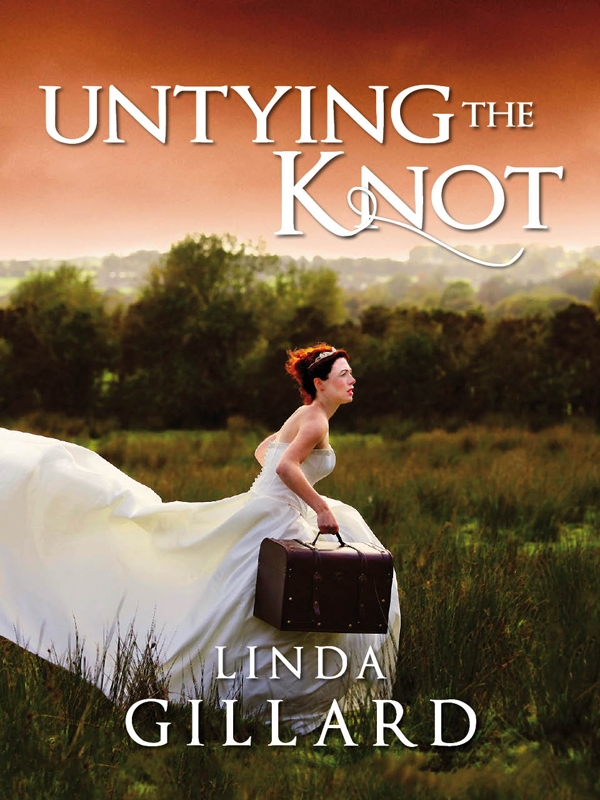
Friend of Libro (and of Liz), Linda Gillard has been an actress, journalist and teacher and is the author of five novels, including STAR GAZING, short-listed in 2009 for Romantic Novel of the Year and the Robin Jenkins Literary Award (for writing that promotes the Scottish landscape). Her most recent novels, HOUSE OF SILENCE and UNTYING THE KNOT are Kindle bestsellers. To find out more about Linda and her work, do visit www.lindagillard.co.uk

Linda is passionate about helping other people to write; she has regularly offered masterclasses at BookCrossing Unconventions and is Writer in Residence for Durham University’s “Celebrating Science” initiative.

November saw NaNoWriMo (National Novel Writing Month), a  hugely popular highlight in the writing year – and a lot of people will have “won” by getting the requisite number of words down. And that’s great – well done! But what if you didn’t – does that mean you should give up. Let’s hear what Linda has to say, in a special guest blog post she’s written for Libro.

The Right Time To Write

Do you have writer’s cramp? Or typist’s tremor? Did you enter the annual November writing marathon that is NaNoWriMo? (National Novel Writing Month). And if you did, did you finish, or did you give up exhausted half-way through the month?

I’m a professional writer with five published novels on my CV and I’m about to finish a sixth. I write full-time, so I’m not your typical WriMo-er but, encouraged by the buzz and some enthusiastic writing friends, I attempted NaNoWriMo for the first (and probably last) time in 2010.

It was an illuminating experience and taught me a lot about how I write. I gave up half-way through the month with a word count of 26,000. I didn’t abandon my novel, I simply stopped beating myself up about speed and resumed my normal writing pace and methods. I’d discovered that NaNoWriMo was not for me. I’m about to finish that novel which means, like most of my books, it’s taken me a bit more than a year to write.

I made a good start even though I’d not done lot of planning. (I don’t plan my novels very much anyway, so this wasn’t raising the bar for me.) Producing quantities of words isn’t difficult for me, but writing at NaNo speed confirmed for me what I’ve always thought about novel-writing: finding time to write a novel isn’t nearly as difficult as finding time to think a novel.

And that’s what was missing from my NaNo experience. Time to think. I wasn’t day-dreaming, hypothesizing, re-thinking or revising – all those processes that, for me, are what novel-writing is about. I was just producing an impressive daily word count.

My set-up was promising. The writing was competent. Then at 18,000 words things started to get tough. Artistic decisions had to be made and I wanted to slow down and reflect on what I’d produced so far. I knew I needed to get to know my characters better. In short, I wanted my novel-in-progress to develop and mature. But that’s not what NaNoWriMo is about. It’s about “getting all your ideas down”, that and the big confidence boost of actually finishing a draft.

It’s my view that anyone with a love of writing, a vivid imagination, some spare time and some determination can produce a quarter of a novel. Many novels – even those begun by seasoned professionals – are abandoned around the 25,000-word mark. Writers hit a wall. I think it’s because by then, we’ve finished setting up, we’ve created the characters and their environment. What comes next is the hard part: the development and careful structuring of the story so it moves towards the necessary climaxes and resolution. I believe writers only move beyond this point if they really, really want to tell their story (or if they’re contracted to tell it and have a deadline.)

The Canadian novelist Robertson Davies said, “There is no point in sitting down to write a book unless you feel that you must write that book, or else go mad, or die.” I don’t think I’d go so far as to say there’s no point, but I will say, if you aren’t being paid to write, you’re unlikely to finish your novel unless you feel this way.

NaNoWriMo is brilliant as an inspiring, sociable and creative exercise. It’s great for producing a very rough draft of the novel you’ve been brewing up for months or years. But it worries me the way NaNo has “failure” built in for so many participants – and not just failure to achieve the 50,000 word count. Last year during NaNo month I read many complaints on Facebook from writers suffering RSI-related pain, yet their well-meaning fellow participants encouraged them to push on through the pain, thereby risking the possibility of serious damage to the delicate tendons of the hand. This isn’t writing, it’s masochism! Producing a novel is a test of stamina. It shouldn’t be a test of endurance.

I question the wisdom of producing fiction in a state of caffeine-fuelled exhaustion and pain. It might be possible to write like this, but it’s unlikely to produce your best work.(It certainly didn’t produce mine and despite a great deal of editing, I still have reservations about the early chapters of my NaNo novel.)

I’m not trying to knock NaNoWriMo, I’m just making a plea for balance. I’d like to challenge the idea that churning out verbiage for an entire month has to be good. I’d like to extol the virtues of a more thoughtful approach, especially to those who withdrew defeated from the NaNo marathon and to them I’d like to say, there’s a reason why professional novelists don’t produce a book in a month.

Last year when I was struggling to stay in the NaNo game, I wearied of people claiming on FB that “everything can be fixed once you have a draft”. I don’t believe it can. The prolific Nora Roberts said, “I can fix a bad page. I can’t fix a blank page.” It is important to get your ideas down on paper and drafts are there to be edited into something better. What worries me about NaNoWriMo is not the fast writing it requires, but the fast thinking, the decision-making that story-telling requires. Quick thinking can lead to the quick-fix and the quick-fix can lead to predictability, stereotype and cliché.

When my children were young and asked to watch films and TV programmes that I thought might frighten them, I refused and warned them that once you’ve seen something, you can never un-see it (which they discovered to their cost when they had months of nightmares inspired by RETURN TO OZ.) I believe it can be the same with writing. You can of course un-write stuff, but you can’t un-think it or un-hear it. Writing is decision-making, word by painstaking word. If you’re concerned about the quality of your fiction and not just the quantity, I think there’s a lot to be said for remaining alert, receptive and poised for that moment of inspiration, the right time to write. If you ask me, that’s the really hard part about novel-writing: the waiting. Waiting until you’re ready to write. Knowing when you’re ready.

If you didn’t finish NaNo this year, don’t be too despondent and please don’t think you “failed”. Maybe you weren’t ready to write. Writing is the end product of a process of thinking and feeling. Maybe you had more thinking to do. Maybe you just aren’t a fast writer. I’m a professional and I failed to produce 50,000 words in thirty days – or rather, I decided that to do so would be counter-creative, because for me it’s not about the word count, it’s about how much my words count.

 
7 Comments

Posted by on December 6, 2011 in Guest posts, Writing


Tags: ,

Academic and creative writing

It’s time for another guest post, and I was pleased to receive this one from Laura Stevens.  I met Laura years ago, via BookCrossing, watched with interest as she took an Archive Studies postgraduate course and enjoyed proofreading the resulting dissertation.  Laura’s also very much into her creative writing, and so she’s well-placed to offer this interesting discussion about the similarities between academic and creative writing. Oh, and I didn’t ask her to put the bit in about spelling and grammar – honest!

I was very pleased to be invited by Liz to write a guest post for her blog. At first, I was not sure what insights I could offer. Currently I am a recovering academic, after handing in my Master’s dissertation last September. In recent years I have returned to a childhood love of creative writing. This lead to becoming a moderator at a writing website called Write in for Writing’s Sake. As I began to think about what I could write about for my blog post, it struck me that academic writing shares a lot of characteristics with its creative cousin.

Let’s take a look at academic writing first. When I was planning this blog post, I jotted down what came to my mind when I thought of  ‘academic writing’:

•    Requires the use of disciple based vocabulary or, to use the vernacular, jargon.
•    Formal style is preferred: using an informal style can be a risk.
•    A set structure is required. For example, you would not put an abstract at the end of a journal article.
•    Lots and lots of research is required before you put pen to paper (or fingers to keyboard).

Looking over this list, I began to realise that a lot of these ideas could be applied to creative writing. Requires the use of jargon or specific vocabulary – check. Choosing the correct style – check. Following a set structure – check. Carrying out research to help your writing – check.

Making this list made me realise that the worlds of academic and creative writing are not so far apart. I began to recognise that I had been applying similar principles in both areas of writing.

1)    Engage your audience: choose the first sentence wisely

The first sentence will either draw your reader in or send them wandering off to seek other material. Academic writing does have a certain advantage in this area. Individuals are going to seek out your writing, especially if you’re looking at a specific topic. Creative writing has to work a little bit harder to draw people in. The first line has to plant a question in the reader’s mind. Let’s use an example from a personal favourite of mine, We Need To Talk About Kevin (Shriver, 2003). The book opens with “I’m unsure why one trifling incident this afternoon has moved me to write to you”. Already questions are being raised. Why is the writer so formal? What happened that made the writer sit down and write a letter, in this age of email and social networking tools? Who are they writing to?

To compare, I have chosen a first sentence from an academic article from Archival Science (Wallace, 1994): “Archivists normatively position themselves as impartial and honest brokering custodians of the past, immune from the pressures and persuasions that conflict the rest of contemporary society”. Impartiality is a consistent hot topic within this professional field which guarantees the author an audience for his article. Questions are raised by his use of ‘normatively’. Is he suggesting that archivists can no longer consider themselves impartial? What about being honest? What does this article have to offer the professional archivist?

By asking questions of your audience, you engage them through the written word. Once you have planted little questions in the reader’s mind, you have them hooked. This brings me onto the next similarity.

2)    Bring a topic or subject you are interested in to life

Any writing project I embark upon always begins with the phrase “I’d like to find out more about that”. If you are bored, then it will show in your writing. The one piece of advice I always give when discussing a writing project is “Choose a topic you will enjoy working on”. Researching and writing a dissertation can take up at least four months of your life. I have been told by professional writers that it takes a minimum of six months to research, write and edit a novel (NaNoWriMo doesn’t count!). It would be awful to spend all that time on a topic you had little interest in.

It’s fine to change your mind halfway through the research process. That’s one of the beauties of academic and creative writing. Sometimes a great idea comes from an article just published in a journal or a tiny marginal note scribbled on an archival document. However it is not a great idea to change your mind during the writing process. Creative writers can have the advantage here. If they change their mind, and don’t have a looming deadline, they can down tools and head off in another direction. I once heard a bestselling author at a lecture say that they have pressed Delete on 50, 000 words of a novel. Gasps of horror echoed around the room as she announced this. The author looked puzzled and said, “There’s no point continuing if I think my writing is rubbish. If I know it’s rubbish, then my reader will know that too”.

So, you’ve chosen your topic, got some of the research done, made sure you’re enjoying the topic and you’re at the stage of writing. The next point is extremely important.

3)    Good use of spelling and grammar

Words are the tools of your trade. Your reader is unlikely to meet you in person; your writing has to do the job of introducing you and your work. Careless spelling and grammar are like turning up to a job interview in dirty jeans and a ripped t-shirt.

I hold my hand up here: I am not the world’s greatest speller or grammar geek. So I have other tools to help me in this area. Liz’s blog posts are a great grammar bulletin and I do refer back to her posts if I’m unsure about the correct use of a word. Dictionary.com has also helped me out of a sticky word conundrum. At university, I lived off style guides produced by academic institutions. Most of them are written in a no-nonsense manner and accessible to even the most reluctant writer. Promoting good grammar skills is part of a university’s business card so you can guarantee the quality of the style guides they produce.

Marking schemes for academic work can include points off for bad grammar. The same goes for creative writing. Bad grammar can be a message to the reader that you stopped caring about your work. The dissertation became more about typing than thinking and writing. It was getting close to the closing date of that short story competition. On a personal note, it drives me mad to see long sentences without a comma. Punctuation helps the reader to breathe and digest your viewpoints. Most markers or editors are not going to read your work more than twice to understand your agenda. Inaccurate grammar can be a barrier for your reader. A well proofread manuscript can make all the difference between a first class award or being thrown onto the slush pile.

This has been a bit of a whistle stop tour through academic and creative writing! I have thoroughly enjoyed writing this blog post. Thank you, Liz, for the invitation to be a guest blogger. And thank you, reader, for taking the time to read this post.

References:

Shriver, Lionel (2003) We Need to Talk About Kevin. London: Serpent’s Tail. p.1

Wallace, David A. (2011) Introduction: memory ethics – or the presence of the past in the present. Archival Science (11: 1-2) pp.1-12.

If you want to read more by Laura, she’s got a blog of her own at Woman With An Opinion (which includes cafe reviews!), and Write In For Writing’s Sake can be found here.

 
1 Comment

Posted by on September 14, 2011 in Blogging, Guest posts, Writing


Tags: , ,

My guest blog posts

I’ve been lucky enough to be invited to contribute guest posts to two well-established and interesting blogs recently – and by chance they’ve both been published this week.  Guest blog posting is a good opportunity to get your writing and subject-matter out there, and to get click-throughs to your own website through the link-backs this provides (this is good for your Google SEO, too) – and it’s always nice to get out and about, even if it’s only your writing that’s doing so. Of course, I also welcome guest blog posts on the Libro blog!

On Monday, an article I’ve written about how to represent yourself accurately and professionally in your writing featured on Annabelle Beckwith’s YaraConsulting blog.

And today, my feature on how to set yourself up as a freelancer, in this case aimed at editors, but also applicable generally, was published on Fiona Cullinan’s SubsStandards blog.

Thank you both for inviting me!

 
3 Comments

Posted by on September 2, 2011 in Blogging, Guest posts, Writing


Tags: , ,

A guest post from Gill

Being rather busy at the moment, I offered some guest blog post spots for people who had something to say about writing, reading, business, etc.  (do feel free to contact me if you have something you’d like to write about that would fit in with the general themes of this blog).  My friend, Gill Rose, has always been a stalwart supporter of Libro, hearing all about the business over a cuppa on Sunday afternoons. I already had it in mind to ask Gill to write something for me as she’s as keen on the English language as I am, so after she told me about her “romantic” break in Evesham which became somewhat … Libro-flavoured, I was thrilled when she wrote up her experiences for me. I suppose this is what happens when you’re friends with a proofreader, editor and blogger about language, although I feel the propensity was already there – Gill was, after all, the inspiration for my “fewer or less” post a while ago! Over to you, Gill!

I have always been a bit of an amateur proofreader.  I’m the one who goes around correcting the grocers’ apostrophes on notices at work (at a university, no less!), and other examples of poor SPAG (spelling, punctuation and grammar) are always picked up in the students’ work.  So Liz and I are kindred spirits.

However, I hadn’t realised how bad it had got until my husband and I went on a short break in a lovely hotel just outside Evesham.  This was courtesy of Groupon, a site which has saved me considerable sums of money recently.  We thought it would be a good chance to talk to each other; not usually easy, given our busy lives.

When we arrived we had afternoon tea, and I mentioned Liz’s ‘troublesome pairs’ project.  I knew John would be interested in this, as he finds the English language fascinating.  Well – this turned out to be great for Liz (lots of pairs to get her teeth into) but not quite so good for me, given my plan to talk about other things.  We spent the whole first evening discussing the project over a bottle of wine, working out suitable pairs to suggest.  John is like a dog with a bone when he’s interested in something, and he was certainly interested in this.  The entire few days were spent returning to this topic – while out walking, while (or do I mean ‘whilst’?) on the bus, while (or would ‘when’ be a better word?) looking around a church and at the breakfast/dinner table.  We went off at tangents, and plumbed the depths of etymology and linguistics.  My brain was buzzing; I certainly hadn’t anticipated this when first bringing up the topic.

It was an enjoyable break overall, but will now always be known in our house as ‘the troublesome pairs holiday’.  Thanks, Liz!

Thanks for sharing your experience, Gill – does anyone else have tales to tell about being the friend of a proofreader (or dare I ask?)

 
5 Comments

Posted by on August 31, 2011 in Copyediting, Guest posts, Troublesome pairs


Tags: ,

Guest blog spots available here!

August and September are traditionally Libro’s busiest months, and this year is no exception – as well as the usual dissertations from students, I’ve been expanding my client base in all sorts of ways.  Of course (of course!) I’m able to support and complete all the projects I’ve taken on, but it struck me that I could take my own advice about outsourcing and share the joy of running this blog …

So, for a limited number of weeks through August and September, I’m offering my Wednesday blog post slot to people who would like to express themselves and talk about anything that fits into the general subjects I blog about already.   I ran some guest posts earlier in the year, and this is an extension of that, but rather than being very sporadic, there will be a series of them, starting the week after next. Get your thinking caps on!

What’s in it for you?

One word: exposure. Let people see how you can write, what you’re passionate about. Share your ideas. And of course, there will be a link to your blog, website, Facebook page, Twitter feed, etc.  I will promote the posts through my usual channels – and I get quite a lot of hits on back issues of the blog from people searching for the topics they’re interested in. And by reading the other posts in the series, you might get some new ideas, too!

What’s in it for me?

I’m looking to fill a gap that I’m a little bit too busy to fill at the moment – but also to share new ideas and new writers with my readers. I’m also hoping, of course, that you’ll blog/tweet/update your Facebook status, etc., about your lovely new guest blog post, bringing more readers to this blog in turn.  I’ve found with my Freelancer Chat interviews that the interviewee and I can really drive a lot of click-throughs between our sites if we both talk about the post to our circles of influence.

What can you blog about?

I don’t want to limit you, so if you’ve got a good idea of a subject to write about, let me know anyway.  The subjects I tend to write about on here are …

  • writing, language and words
  • business matters – especially as they relate to small businesses, startups, freelancers and entrepreneurs
  • personal development – learning experiences
  • social media and marketing
  • what exactly I do in my day-to-day work

How to submit a guest blog post (and the small print)

You can submit your guest blog post via email or via my contact form.

I reserve the right to accept or reject your post.  I also reserve the right to do a little light editing on your post – nothing major, but if some spellings and grammar need a tidy-up, I will tidy them up.  I’m really careful about how I write my posts, so I need to make sure any guest posts I host are as tidy as they can be, too.

I’ll let you know when your post has arrived.  If I think it needs some editing (more words, fewer words, more on a particular subject) or I don’t think it’s suitable, I’ll let you know. And I’ll let you know when I publish it, and send you the URL, so you can talk about it online and show off your work.

 
2 Comments

Posted by on August 5, 2011 in Blogging, Guest posts


Tags:

5 top tips for working from home

This month’s guest post is from Annabelle Beckwith of Yara Consulting and Coach Me Confident. I met Anna on our very first day at University (ahem) years ago, and we’ve been friends ever since. Anna was always the dynamic, arty one, full of ideas and enthusiasm, whereas I was more of a plodder. I don’t think either of us would have thought that, (ahem) years on, we’d both be running our very different businesses! Anna’s company Yara offers innovative and exciting training methods that really work – she’s been doing it longer than me, and working full-time from home, so many of us could benefit from her tips for making a home office work well and smoothly. Over to you, Anna …

Working From Home – 5 top tips

Several years ago, I worked from a rather expensive city centre office, in the mistaken belief that it would impress my clients. Sitting on the crowded commuter train one morning, it occurred to me that working from home would be a far more sensible option, cutting down massively on costs and travel and, well … just making an awful lot more sense.

Working from home, of course, has massive advantages – the flexibility and the comfort factor among them. It does, though need a different mindset. Here are my top 5 tips for anyone thinking of working from home:

1. Get organised!

If, like me, you’re not the world’s tidiest person, you will need to exert some self discipline to keep your work in order. This will range from organising your work space (so you don’t scatter things around the house and end up losing half of it), to ensuring that you have some sort of filing system, to making sure that you keep track of your finances.

It might seem like a bit of a faff to spend time at the beginning setting up a few systems, but believe me, it will be time well invested, and you’ll feel the benefit of it later on!

2. Set your goals

Two big areas for me at the start of my working-from-home career were goal setting and prioritising. The freedom of working from home can be such that it’s easy to end up running round like a headless chicken, doing lots of ‘stuff’ but not actually achieving anything.

Make sure you have clear goals about what you want to achieve, and devise a plan or schedule that will enable you to keep track of it all, and get the work done.

3. Learn to prioritise

Prioritisation is another key area for the home-worker: with no-one else telling you what to do, it’s important that you prioritise the right tasks. Avoid the temptation to do the things you like doing, or can get out of the way quickly and prioritise on the basis of how urgent and/or important something is (Steven Covey). Brian Tracy’s book ‘Eat That Frog’ is a good one on this subject.

4. Find your balance

When I first started working from home, people would say to me, “how do you deal with all the distractions?” as if the lure of daytime TV or endless cups of tea might overwhelm the necessity to actually do some work.

I’m sure that most home-workers will find that the reverse is true: it can actually be difficult to switch off. I often find myself writing blogs or e-mails later in the evening, when my kids are asking me to spend time with them.

Don’t lose sight of the reason for actually working from home in the first place (in my case, to be able to spend more time with my kids). Make sure you strike a healthy balance.

5. Join a network

One of the drawbacks of working from home – particularly if you’re working full time – is that you don’t have the advantage of being able to socialise with colleagues. Join some networks – online ones like LinkedIn are great, but find some that have local meetings and will enable you to make some new contacts and meet other people in the same boat.

Who knows – it may even lead to more business!

If you’ve enjoyed this guest post, you can find more like it, including a great recent series on goal-setting, on the Yara blog.

 
5 Comments

Posted by on April 27, 2011 in Blogging, Business, Guest posts, Organisation


Tags: , ,