RSS

Author Archives: Liz Dexter

Unknown's avatar

About Liz Dexter

Book blog is at http://www.librofulltime.wordpress.com Writer, proofreader, editor, transcriber. Also runner, gym-goer, volunteer and BookCrosser! My married name is Liz Dexter but my maiden name and the name on the books I write is Liz Broomfield.

Ferment or foment?

I can’t remember where I came across this one now, but it’s an interesting pair that I thought got confused in certain circumstances regarding the stirring up of unrest. But wouldn’t you know it – a different picture emerges when I look into it more deeply, and this joins the select ranks of words such as decimated or gunnel that I am not really allowed to be as picky about as I’d like to be!).

To ferment as a verb means to undergo the process of fermentation (“His beer was fermenting nicely and would be ready to drink in a few weeks”) or to stir up disorder. A ferment (as a noun) means social unrest and agitation.

To foment, as a verb, means to instigate or stir up something like strife or revolution – i.e. the same as the secondary meaning of ferment as a verb. What a shame! I think we should still use this for revolutions and ferment for beer, myself (to foment has a nice archaic meaning of bathing a part of the body with a warm or medicated lotion, or fomentation. I doubt any of us will ever use that, but it’s quite jolly, in my opinion).

You can find more troublesome pairs here and the index to them all so far is here.


Tags: , , ,

Section breaks in Word

Today we’re going to be talking about adding section breaks in Word documents.

Why would I want to add a section break?

Section breaks are used if you want to have different formatting in different parts of your document. For example, you might want to …

  • have your page numbering in Roman numerals for part of your document and Arabic numerals in the rest of it
  • have some pages in portrait and some in landscape (for example if you’re including wide tables or images in your document)
  • include watermarks for branding or protection in parts of your document but not other parts
  • have different headers and footers associated with different parts of your document

Basically, if you want to change parts of your headers, footers, background or page layout for parts of your document only, you will need to divide up those parts using Section Breaks.

We’re going to use a document where one page should be in portrait and one in landscape for demonstration purposes.

What happens if you don’t use Section Breaks?

In this example, we want Page 1 to be in portrait and Page 2 to be in landscape orientation.

If you don’t enter any section breaks, even if you have your cursor on Page 2, changing its orientation to landscape …
1 without section break 1

… will change the orientation of Page 1, too:

2 without section break 2

Where is the Section Break menu in Word 2007 and Word 2010?

The good news is that the Section Breaks menu is exactly the same in Word 2007 and 2010.

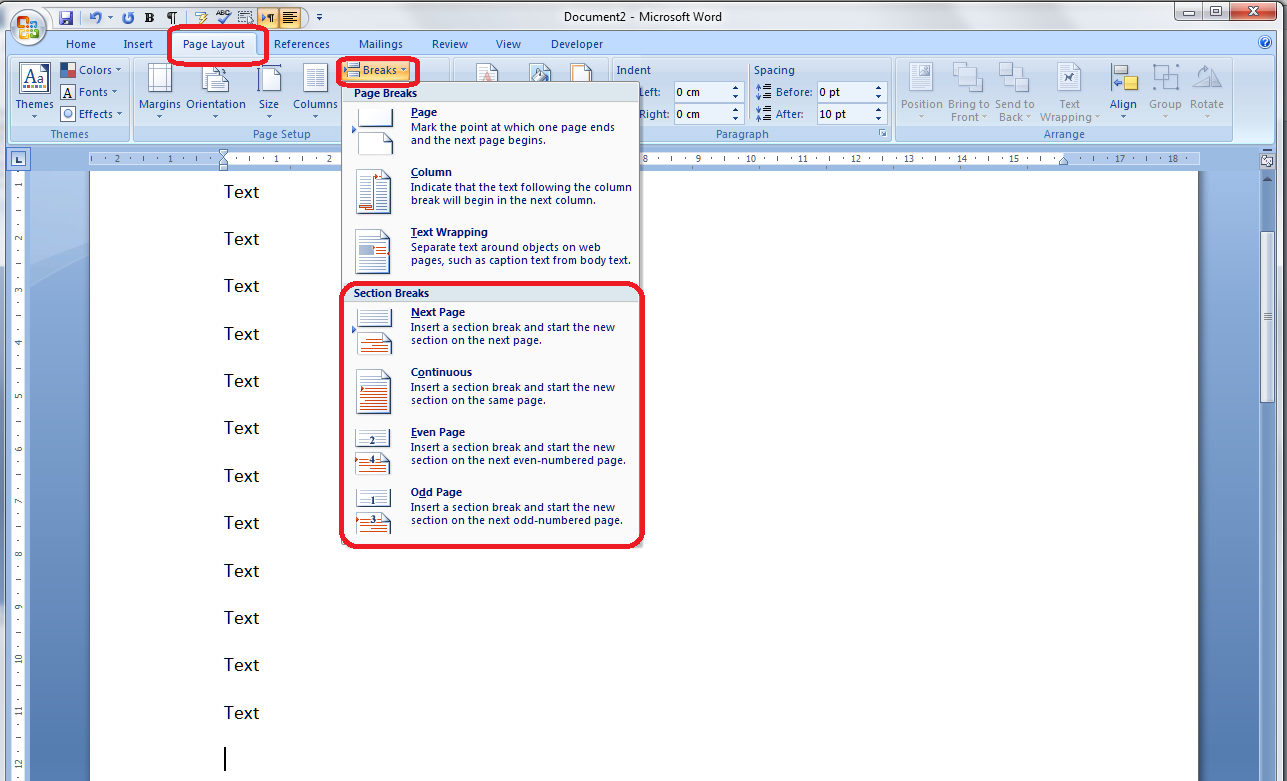
Go into the Page Layout tab, and you will find the Breaks menu in the Page Setup area:

3 section break menu

Note that you can apply Section Breaks to automatically happen continuously and on every odd or even page. I’ve never needed to do that: what I have done many times is insert a section break and start the next section on a new page.

How do I insert a Section Break into my document?

Make sure that your cursor is flashing where you want your Section Break to appear (i.e. at the end of your current section). Then select Section Break – Next Page:

4 section break menu

Once you’ve done this, the section break will have been inserted at the point at which you had your cursor. But you can’t see it – it’s one of those hidden messages that is only displayed if you use the Paragraph Mark button (see this article for further information):

c

Once you’ve pressed the Paragraph Mark button, you will be able to view your section break:

5 section break visible

If you look at your Header and Footer, you will see that they also show that Page 1 is part of Section 1, and Page 2 is part of Section 2:

6 header and footer showing section break

This is a good way to check which parts of the document belong to which section.

What effect does inserting a Section Break have?

Now that your document is divided up into Sections, you can apply different formatting to different sections of the document. Page numbering is covered in this post, and in order to have Section 2 in landscape, all we need to do is make sure that the cursor is in Section 2, and select the landscape option:

1 without section break 1

Now that it has been separated off into Section 2, Page 2 will change to landscape, while Page 1, in Section 1, will stay in portrait orientation:

7 portrait then landscape

How do I add more sections to my document?

There is no limit to the amount of sections you add to a document, however, it’s worth keeping track of them and remembering that your formatting will need to be set individually for each section – if you’ve changed everything in Section 2 into landscape, if you add a new section, it will stay in landscape and you will need to change it back to portrait if that’s how you want it to orientate.

How do I delete a Section Break?

To delete a section break, simply turn on Paragraph Marks so you can see the section breaks (see above), put the cursor next to the break and press the Delete button on your keyboard.

—-

In this article you have learned about Section Breaks, what they are used for, how to apply them, and how to use them to change the page orientation in your document. If you’ve found it useful, please share!

Other useful posts:

Proper page breaks

Page numbering – how to have different page number formats in different parts of your document

Changing between Landscape and Portrait (to come)

Please note, these hints work with versions of Microsoft Word currently in use – Word 2003, Word 2007 and Word 2010, all for PC. Mac compatible versions of Word should have similar options. Always save a copy of your document before manipulating it. I bear no responsibility for any pickles you might get yourself into!

Find all the short cuts here

 
14 Comments

Posted by on August 2, 2013 in Errors, New skills, Short cuts, Word, Writing


Tags: , , , , , , , ,

Reciprocity and social media

handshakeHere’s a guide to how to be polite and maintain reciprocity on social media, including Twitter, Facebook, LinkedIn and your blog, so as to “leverage your social capital”, which actually just means make social media work for you and use sharing and friendliness to help yourself and others.

It’s all about reciprocity. What does that mean?

What is reciprocity?

The dictionary definition of reciprocity – is gaining mutual benefit from exchanging things with other people.

In the case of social media, in which I include blogging, as done well it should be a two-way and mutual activity, this means building strands of connection which can, over time, turn into powerful networks that can help you start, grow or develop your business or other endeavour.

By responding to comments and forging links, sharing and re-tweeting, you make yourself more prominent in other people’s eyes, for the right reasons.

If you are unfailingly polite, share people’s content, always say thank you, share people’s details with other people and act as an ambassador and connector for other people’s personal brands as well as your own, that will come back to you in bucketfuls.

Whether you’re just starting out, embracing a new form of social media, or need a gentle reminder (I know that writing this reminded me to return to sharing more on Twitter), I hope you find these tips useful.

Reciprocity on Twitter

  • Always respond to @ comments that require a reply (i.e. they ask you a question or tell you about something).
  • Always respond to RTs, Follow Friday mentions, etc., with a thank you Tweet.
  • If someone recommends you to someone else, always a) thank the original person, b) make contact with the prospect – don’t wait for them to come to you.
  • Take part in peer-group events like #watercoolermoment etc. to encourage the people who run them and engage with your peers – you are likely to find new, interesting people to follow and talk to.
  • Retweet other people’s content if interesting to you / your followers. People often talk about the 80/20 rule – 8 retweets or shares of other people’s content via the social media sharing buttons on their blog posts to 2 promoting your own words or interests.

Note: Twitter works fast. Many people don’t see their whole stream, just snapshots through the day. If someone has seen your content and contacted you / shared, etc., try to thank them within 12 hours or less.

Use Twitter to forge links, have short conversations, support and encourage others and share content with your followers. People who you retweet will be more likely to retweet your posts. People who you recommend to others will remember the favour.

* not sure what I’m on about with all this talk of @ and RTs and followers and # signs? I’ll be putting together at Twitter 101 post to clear all that up soon!

Reciprocity on Facebook

This applies mainly to people using Facebook for their business, however it helps keep the wheels of general social interaction running smoothly, too!

  • If someone asks a question on your business page or a business-related question on your own timeline, always respond. My business page doesn’t always alert me when I have a new comment – so keep checking yours to make sure you’re not ignoring someone!
  • if someone sends you a Facebook message, always respond if it’s appropriate and meant for you, not spam.
  • Check your “other” messages for messages from people who are not “friends” with you but are making genuine contact, and respond appropriately.
  • If people comment on your status updates, “like” their comments and engage with them.
  • If people share your status updates, “like” the share and say thank you publicly or privately.
  • If people recommend you via Facebook, thank the recommender and contact the prospect as soon as you can
  • Share other people’s content.
  • Like business pages as yourself and as your business (click on cog next to message).
  • If you join groups of peers, people in the same business, people who are also self-employed, etc., join in with the group once you’re there, help other people and don’t either relentlessly self-promote or stay silent.

Facebook works on friendship and commonality. Share your peers’ posts and you’ll build up a network of people who will recommend, help and support you.

Reciprocity on blogs

I’m including blogs in social media because the best blogs that work well for businesses and people who want a “successful” blog are those that engage in two-way conversation, share content and link people together. Sounds like social media to me!

  • On your own blog, mention and link to people who have helped, advised or inspired you.
  • ALWAYS reply to comments. If you don’t have time to reply to each individually, at least put up a thank you and a mention to the most important ones.
  • Keep an eye on your search statistics and respond to what your readers are looking for (e.g. I noticed people were searching for “comment boxes too large” so added new blog post about that).
  • If people like and comment on your blog, pop over to their blog and scatter a few comments and likes if you find their content interesting.
  • Use those social media buttons on other people’s blogs to share their content – and make sure you enable the ones on your blog to allow and encourage people to share.
  • Engage with other bloggers especially in your industry sector or area of interest – comment, share, etc.
  • Offer guest post spots on your blog for other people to contribute content.
  • If you give someone a guest blog spot, make sure that you include all their links as well as a little biography about them. Make it easy for people to find them.
  • If you place a guest post on someone else’s blog, make sure that you give them all of your links to include, and talk about it as much as possible on your other social media channels.

Blogs can be a powerful way to meet people, link with people, learn from people and get your content shared around the world.

Reciprocity on LinkedIn

  • When you link to someone, change the standard message to a personal one, maybe reminding them where you met or making another tailored comment. Some people get quite annoyed with the standard messages and might even ignore then on principle, so it’s worth making that extra effort.
  • Introduce people who you think would be useful to each other.
  • Press that endorse button and give your contact some more stats.
  • Use the recommend feature if you’ve worked with someone to place some feedback on their profile, LinkedIn displays how many recommendations you’ve made, and everyone wants to work with someone who’s generous with feedback and honest praise.
  • If someone endorses or recommends you, or introduces you to a third party, send them a message to say thank you.
  • Join groups and share content kindly and generously.
  • When you join a group, get to know people and comment on other posts and questions before you start self-promoting.
  • if a group seems to be full of spam and self-promotion and no discussion and mutual encouragement, leave it alone – you won’t be able to change it and it’ll just annoy you. But learn what not to do from that!

LinkedIn can be a very powerful tool for IT and other business people, with most recruiters looking for a LinkedIn profile these days. Make sure that your full CV is on there, and a good photo.

Reciprocity on Google+

Google+ works much like Facebook, in that you can +1 posts, make comments etc. The major point about Google+ is that if you share your content and others’ on there, Google will pick up on it that little bit quicker to add it to its search engine. So it’s worth engaging on there even if it isn’t as busy or active as the other networks (or maybe it is in your field?)

Reciprocity on Pinterest, Tumblr, etc.

I’ve talked here about points regarding social media networks that I use. I don’t know much about Pinterest, Tumblr, etc. If you have points like the above to share on these, please pop them in the comments or send them to me via my Contact Form, and I’ll include them in this post (with an attribution of course!).

This article should help you to grasp the conventions of reciprocity in social media. If you’ve enjoyed it or found it useful, and think that other people will, too, please take a moment to share it using the buttons below or by sharing any alert you might see on Twitter, Facebook, LinkedIn or Google+. Thank you!

Related topics

10 top reasons to write a blog

10 top reasons NOT to write a blog

Top 10 blogging sins

Scheduling blog posts and keeping going


Tags: , , ,

Libel or liable?

This one is dedicated to Matt P, who, having posted a not-entirely-positive review of a pub on TripAdvisor, was accused by the pub management of having committed “liable”. This one’s for you, Matt!

Libel is a noun meaning the publication of a false statement that damages someone’s reputation (see libel or slander).

Liable is an adjective which means responsible by law for something – “He is liable for the damages in the case” or likely to do something – “The cat is liable to tread on the keys and insert characters into your document, so it’s best to keep him off the desk”. You can also use liable to in the sense of “likely to experience something” (usually something undesirable) – “This area of low-lying land is liable to flooding”. (Note: I don’t like this last use – I’d be tempted to change it to “liable to flood” but that’s just my personal opinion).

You can combine them, of course – “The newspaper was found liable for all charges in the libel case brought by Mr. Brown regarding his damaged reputation and the lies that the paper had printed”.

You can find more troublesome pairs here and the index to them all so far is here.


Tags: , , ,

How to protect your Word 2007 document

As part of my series on protecting your document, which has looked at Applying Watermarks and Protecting Word 2010 Documents, today we’re going to look at the features for protecting your document offered by Word 2007.

Why would I want to protect a document?

We covered this in more detail in the post on Word 2010, but in summary, it’s useful to be able to protect your documents because …
  • You can stop the wrong people from opening the document (including if you’re sending it via email etc.)
  • You can stop the wrong people from editing the document (protecting what you’ve written and/or changed)

Where is the menu for protecting documents in Word 2007?

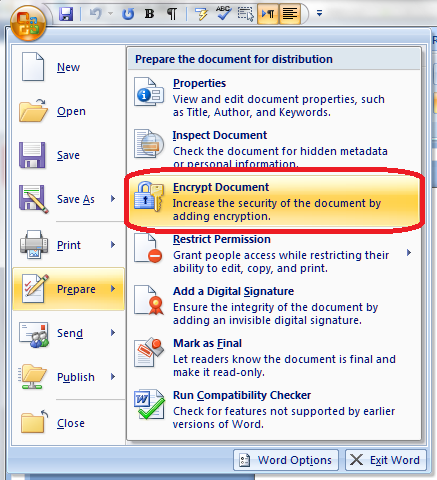
You will find the menu for protecting documents under the Start button at the extreme top left of your screen. Once you’ve clicked on the round button, you will see a menu starting with New, Open …

Click on Prepare and you are given a menu to do with preparing the document to be sent, protecting it, and editing its properties:

Word 2007 1 menu

How do I add a password to a Word 2007 document?

The most simple way to protect a document is to add password protection. This means that no one without the password can open it (so if you email it to someone, it can’t be intercepted and opened, or people who aren’t meant to see confidential information can’t open a confidential document).

Go to the Encrypt Document entry on the menu and click on it:

Word 2007 1 add password

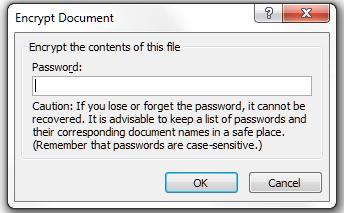
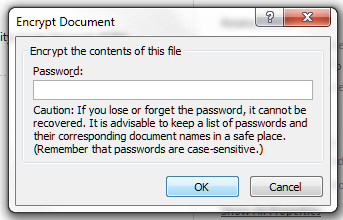
You will then be asked to enter a password (twice). Do remember this, and remember to share it with anyone else who might be permitted to open and read it.

Word 2007 2 add password

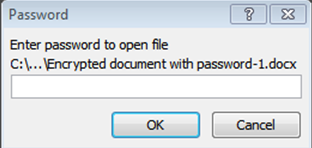
This is what happens when you or anyone else tries to open the file:

Word 2007 2a add password

How do I make a Word 2007 document read-only?

Another way to protect your document from unwanted edits is to make it read-only. Of course, anyone can “save as” the document and make all the changes they want, but your original document, with its file name, is protected, and often people don’t realise that they can save as, anyway.

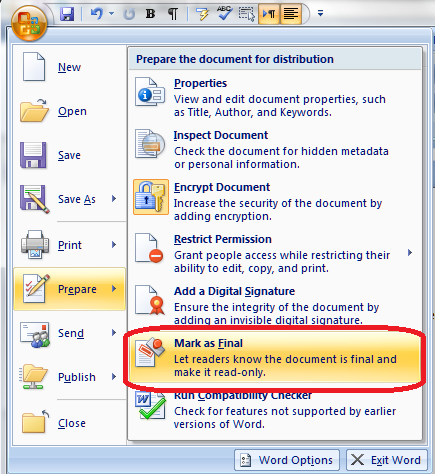
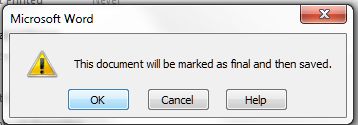
To do this, select the Mark as Final entry from the menu:

Word 2007 7 mark final

Now, when someone opens this document, they will be told that it is read-only and they cannot edit it.

How do I restrict editing in a Word 2007 document?

Another option is to restrict certain types of editing in your document.

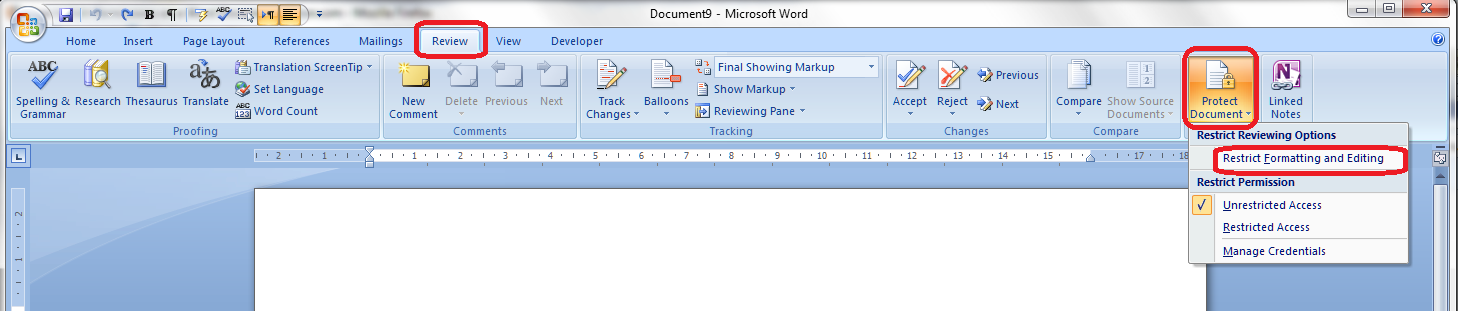
Confusingly, this is in a different area of the menus to the rest of the protection features. You will need to go to the Review tab, then the Protect section, which consists of a single button marked Protect Document. Click on the button itself or, if you must, the little arrow at the bottom right of that button (this has exactly the same effect. Why did they add that little arrow? Who knows!) to bring up the menu:

Word 2007 10 restrict editing

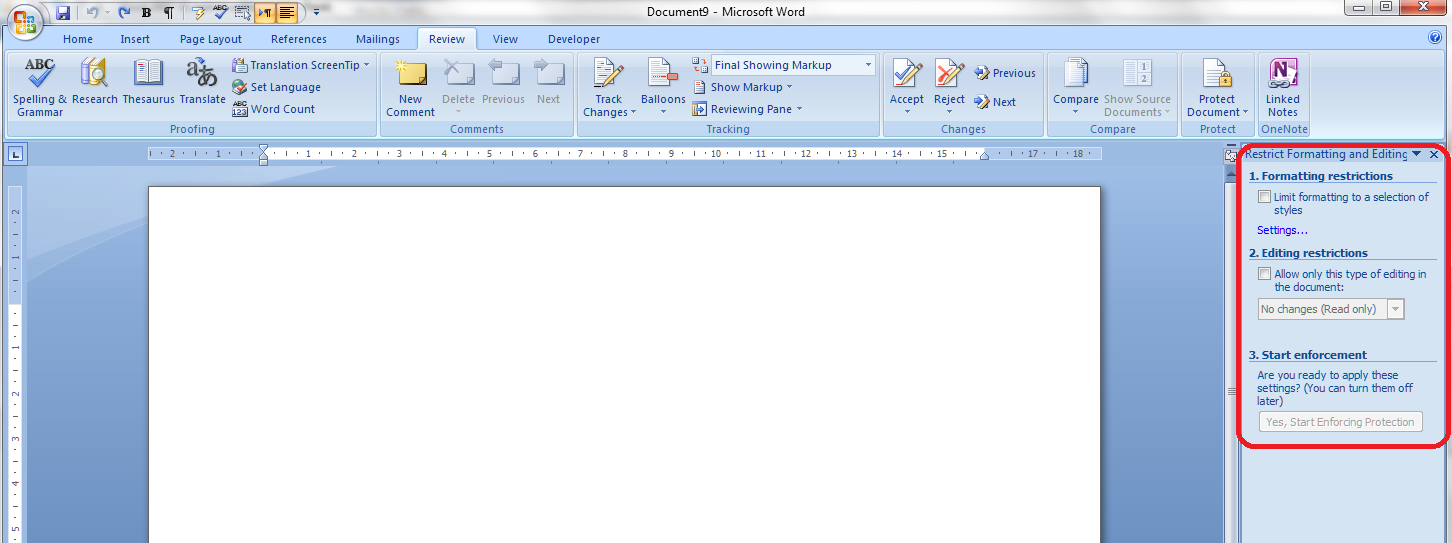
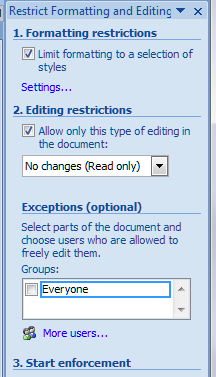
Click on Restrict Formatting and Editing to be given a list of options: Formatting restrictions, Editing restrictions and Start enforcement:

Word 2007 11 restrict editing

Formatting restrictions

This option allows you to select what formatting other people can apply to the document (you will want to do this after you have done all your own formatting to make sure that you can do what you want to do). Click on the tick box and then Settings to choose what formatting can be changed:

Word 2007 12 restrict editing

You are given a dialogue box with lots of different options. Note that you can allow the AutoFormat to override the formatting restrictions if you want to. But this is where you can choose what can be amended and what cannot be amended. This is particularly useful if you want to ensure that the Headings Styles that you’ve carefully set up will stay the same in the document.

Editing restrictions

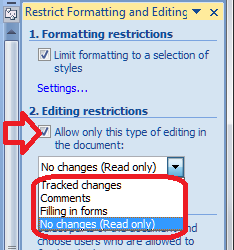
You can edit what changes other users can make to your document in terms of textual changes, too. Have a look at the Editing restrictions section, tick the tick-box, and drop down the menu to see the options:

Word 2007 13 restrict editing

Editing restrictions allow you to choose whether the document becomes Read only or will allow tracked changed editing only or adding comments or filling in forms. Some of my clients make the documents that they send me tracked changes only so they can see exactly what I change in their documents. It’s a good way to remind people to keep Track Changes on if you’re working together collaboratively. Filling in forms is useful if you want people to fill in your form but not change the actual form.

Restricting editors

It is possible to restrict the ability to make changes to certain people if you’re working in a multi-user, networked environment:

Word 2007 14 restrict editing

These permissions can be restricted to individual editors; however, see the next section for details on this option, as it needs to run alongside other network options that you may or may not be using..

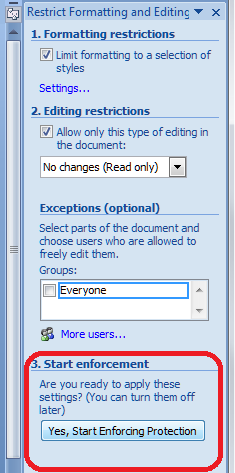
Start enforcement

When you want to put these restriction in place, click on the Start enforcement button that appeared as soon as you click or change anything:

Word 2007 15 restrict editing

How do I add individual editing permissions to a Word 2007 document?

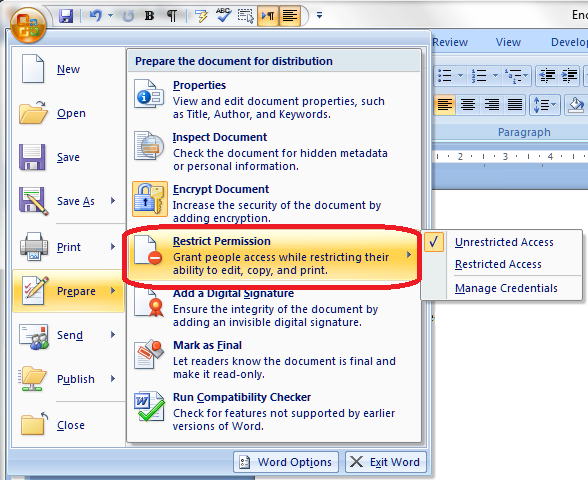
The Restrict Permission part of the original menu we’ve been talking about, under the top left button and Prepare, allows you to add individual editing permissions to your document (this can also be accessed in the Review – Protect menu as discussed in the section above):

Word 2007 3 permissions

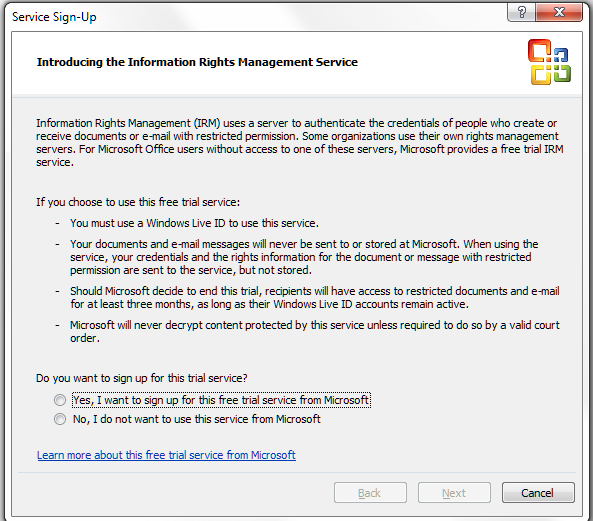
This is a Windows option that allows you to set permissions for different people, and is usually used within an organisation. You need to use Microsoft’s Information Rights Management Service alongside it and be signed up to Windows Live. The message that comes up if you click Restricted Access or Manage Credentials explains in more detail:

Word 2007 4a permissions

Most larger organisations have rights management systems that inform their procedures and file/drive setups, and these will usually allow you to set permissions and protect your document in that way. As this is outside the scope of this article: you will need to talk to your administrator or  IT support department.

But this option is here for you to use, and can be done if you have the relevant signups.

Be careful: Contact IT or your systems administrator before signing  up for something that can affect access to documents on a shared organisational system.

How do I add a digital signature to a Word 2007 document?

Adding a digital signature to a Word document can protect it to an extent and mark it as yours, plus an increasing number of companies request this if they’re signing you up to their pool of contractors, etc. Once again we’re in Start button – Prepare territory – this time we want the Add a Digital Signature section:

Word 2007 5 digital sig

In order to use this feature, you need to purchase a signature service from the Office Marketplace, as Word will tell you if you click on this option:

Word 2007 6 digital sig

Alternatively, you can sign up to a third-party digital signature service which will apply your digital signature to documents via an uploading and downloading service.

How do I print to PDF using Word 2007?

Making a Word document into a PDF is still the best way to protect it. A PDF is like an image of the document that can’t be edited, a bit like a photocopy or a picture taken of it.

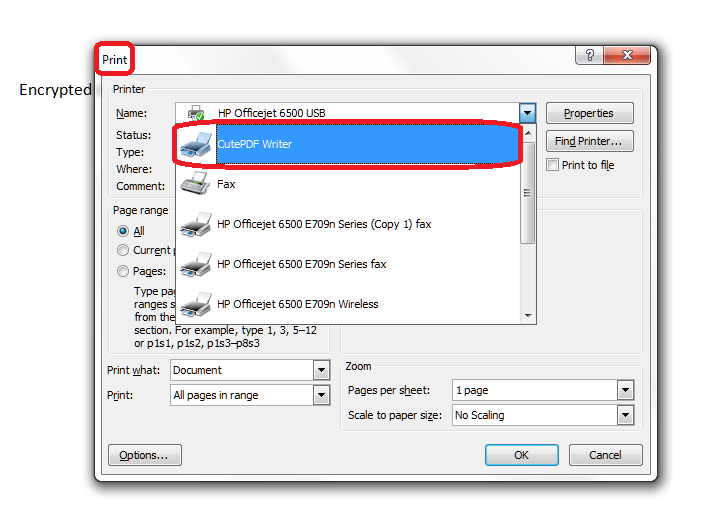
Unlike with Word 2010, you can’t actually print direct to PDF using Word 2007. If you want to turn Word 2007 document into PDFs, you will need to download a PDF printer such as Adobe or CutePDF Writer.

Once you have got a PDF writing program installed, you can “Print” to PDF by hitting the Print button as usual then selecting your PDF writer as the “printer”:

Word 2007 8 print to pdf

Once you’ve pressed OK, you will then be asked to choose a filename and a path under which to save the document:

Word 2007 9 print to pdf

Note that, as in the above picture, you can password protect your PDF at this stage. This is a good idea, as software is now available that will let people edit PDFs, something that was not previously easy to do. We’ll talk more about using PDFs to protect your document in the next article.

In this article, we’ve learnt how to use the features of Word 2007 to protect your document, using passwords, read-only status, editing restrictions, permissions and digital signatures.

———————

This is part of my series on how to avoid time-consuming “short cuts” and use Word in the right way to maximise your time and improve the look of your documents.

Related posts:

Applying Watermarks

Protecting Word 2010 Documents

(coming soon)

Protecting your document using PDF

Please note, these hints work with versions of Microsoft Word currently in use – Word 2003, Word 2007 and Word 2010, all for PC. Mac compatible versions of Word should have similar options. Always save a copy of your document before manipulating it. I bear no responsibility for any pickles you might get yourself into!

Find all the short cuts here

 
14 Comments

Posted by on July 24, 2013 in Errors, New skills, Short cuts, Word, Writing


Tags: , , , , , , , ,

Sometime or erstwhile?

I thought of this one when I was writing up my post on some time, sometime or sometimes. The word erstwhile popped into my head, and I thought that I’d better check if it officially meant something different from sometime.

Erstwhile means former as an adjective and formerly as an adverb: “Her erstwhile lover was now a senior politician”.

Sometime as an adjective means former; as an adverb it means at some unknown/unspecified time, with formerly marked as an archaic use in most dictionaries that I checked. In American English, it is also used for occasional.

I like erstwhile. It’s a nice, odd word that’s a bit hard to type. Let’s try to keep it going, even if it does essentially mean the same as sometime!

You can find more troublesome pairs here and the index to them all so far is here.


Tags: , , ,

What are these funny symbols? Paragraph marks and other marks in Word for PC and Mac

A friend got in touch recently in a bit of a panic. All sorts of odd marks had appeared in her Word document. It looked something like this:

d

What were all these funny symbols? Where had they come from and, more importantly, how could she get rid of them?

Showing paragraph marks and other hidden formatting symbols

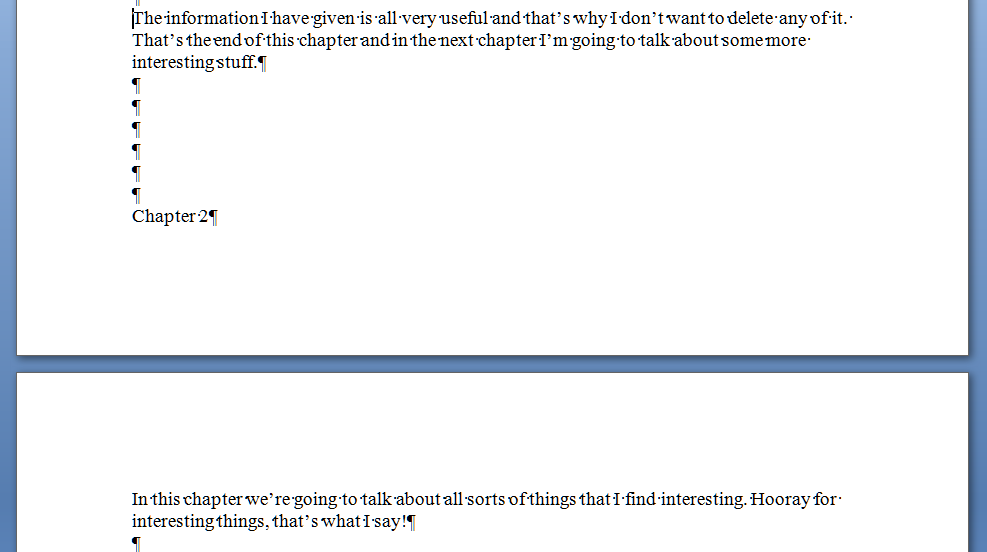
Word gives you the option to view paragraph marks and other hidden formatting symbols. Basically, this means that you can see where the author of a document has pressed the Return key or Tab or Space, or inserted a forced break or some other formatting. Why is it useful? It means that if you are editing or otherwise tidying up a document, you can see what’s been done in order to resolve it. For example, in this document, I can see that the author has used the Return key to force text to appear on a new page (instead of using Ctrl-Enter to force a page break):

bb

and when I’ve done it properly, I can see the page break marked:

cc

So, how did I get to see these funny marks? In Word for both Mac and PC, you can find a button with the paragraph mark on it which will make them display:

Show Paragraph marks in Word for PC

Go to the Home tab and you’ll find it half way along. Press the button, it will go orange, and your formatting marks will display.

c

I’ve actually put this button onto my Quick Access Toolbar (find out how to do that) as it’s a very useful button for an editor/proofreader!

Show Paragraph marks in Word for Mac

In Word for Mac, the Show Paragraph marks button is handily already in the top toolbar. Press the button and all your formatting will become visible.

on a mac

How do I hide the Paragraph marks and other formatting?

If the marks appear and you want to hide them, simply find the Paragraph Marks button and press it again. It should stop being orange, and your formatting marks will no longer be displayed.

Thanks to Linda for the inspiration and Mac screenshot!

———————

This is part of my series on how to avoid time-consuming “short cuts” and use Word in the right way to maximise your time and improve the look of your documents.

Please note, these hints work with versions of Microsoft Word currently in use – Word 2003, Word 2007 and Word 2010, all for PC. Mac compatible versions of Word should have similar options. Always save a copy of your document before manipulating it. I bear no responsibility for any pickles you might get yourself into!

Find all the short cuts here

 
33 Comments

Posted by on July 17, 2013 in Errors, New skills, Short cuts, Word, Writing


Tags: , , , , , , , ,

Some time, sometime or sometimes?

Remember my post on any more or anymore? This one came up in the same conversation, but of course, English being as it is, the answer is slightly different.

The question: is it some time or sometime?

Sometime is only used as an adjective or adverb – i.e. a word describing the attributes of a noun or one that modifies the meaning of a verb, adjective or other adverb. So “Her sometime adversary, Bettina, had moved away and was no longer part of the Scrabble club”. But do look at my post on erstwhile or sometime for more detail here.

Some time is used in all other cases – “Jerry spent some time choosing the word to place on the board”.

Sometimes is an adverb meaning occasionally. “Sometimes he went to the cinema in the city; sometimes he preferred the local one”. Compare “My sometime friend, Bettina” with “My sometimes friend, Bettina” – the former implies that they were once friends, the latter that they were friends and weren’t friends at different times.

To use them both together “Her sometime very closest friend spent some time in Arizona before she got back in touch”.

You can find more troublesome pairs here and the index to them all so far is here. And I look at sometime or ertswhile here!


Tags: , , ,

How do I protect my document in Word 2010?

In a previous article, we talked about protecting your Word document using a Watermark (watermarks can also be used to extend your corporate or other branding through your documentation). Today we’re going to look at other, stronger ways to protect your Word 2010 document and prevent people from making changes to it.

Why might I want to protect my Word 2010 document?

Protecting a Word 2010 document means that anyone apart from you can either only access the document by using a password or is unable to make certain, or any, editorial changes to the original document.

Why would I want to stop people opening a document?

  • If you are storing confidential documents on a shared drive in a company-wide network
  • If you want to send a document to someone who shares an email address with a number of other people (for example a general email address at your accountant’s office)
  • If you want to send a document to someone but need to ensure that anyone intercepting it cannot open the document

Why would I want to stop people editing a document?

  • You’ve completed a final version of a document and want to make sure no one does any more edits
  • You are sending something like an invoice or a contract and want to make sure the recipient does not change anything
  • You’ve created a procedural document to be saved on a shared drive and don’t want your colleagues to make unauthorised changes

Where is the menu for protecting documents in Word 2010?

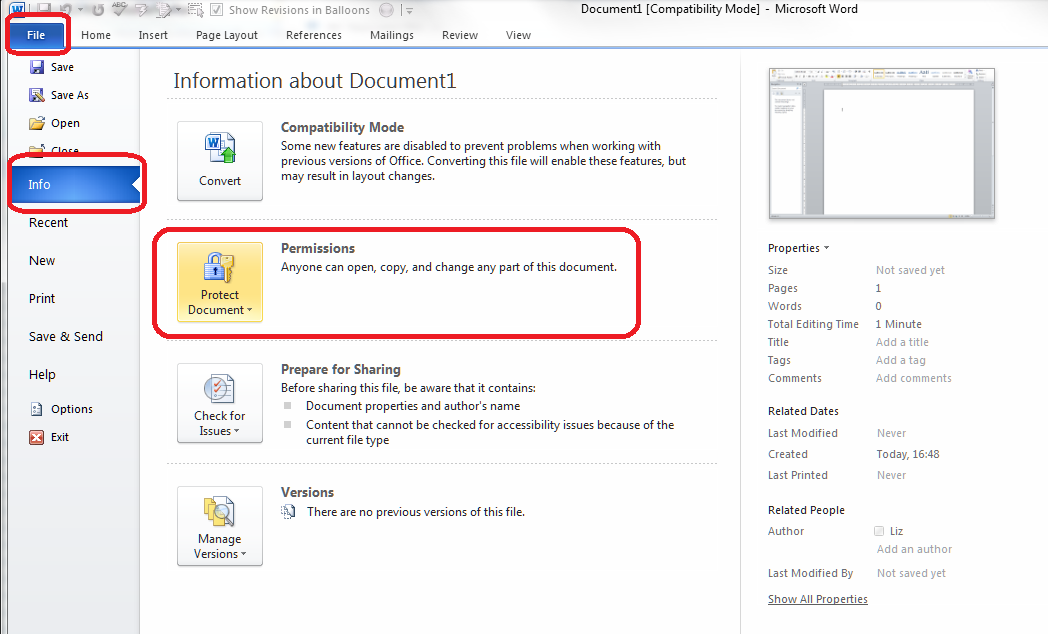
To access the menu for protecting documents, select the File tab at the extreme left of the row of tabs (remembering that it’s Home that is automatically selected), then visit the Info area, where you will find a section titled Protect Document:

Word 2010 1 menus

Click on the Protect Document button and you’ll be presented with a list of options:

Word 2010 2 permission options menu

We’ll go through these in turn. Some of them are not applicable if you’re working on your own, with only one computer on your network, but we’ll take a quick peek at them anyway.

What are my options for protecting my document?

Taking the options in turn …

Mark as Final

The Mark as Final option creates a read-only version of the document which will be marked as final and which will not let anyone make any changes. Access it via the menu we discussed above:

Word 2010 3 mark as finalClick on the button and you’re given a dialogue box to click on:

Word 2010 4 mark as final

Note: it’s a good idea to save this under a new file name.

You will then need to go and set the document to being Read-Only, which you can see how to do below in the Restrict Editing section.

Note 2: No one else can edit the read-only document, however they could possibly “save as” and then edit it (only turning a document into a PDF protects it from all changes).

Encrypt with Password

The second option allows you to apply a password to the document. This will mean that no one can open it without having the password, whether on your standalone computer, a shared network drive, or a copy of the document that you have emailed to them:

Word 2010 5 password

When you click this button, you will be asked to enter a password:

Word 2010 6 password

You will then be asked to enter the password again (the dialogue box looks the same).

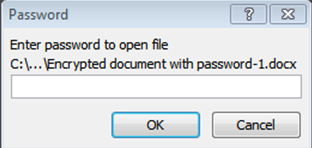
When you or anyone else tries to open the document, this box will appear:

Word 2007 2a add password

If you want anyone else to be able to access the document you will need to let them know the password. If you’re sending the document as an attachment to an email, common sense tells you not to send the password in the body of the email …

Note: Once the user has accessed the document using the password, they will be able to edit and save it freely unless you have also applied one of the other levels of protection.

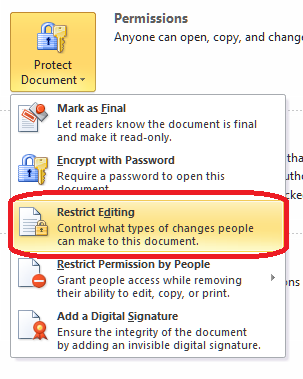
Restrict Editing

The next option, Restrict Editing, allows you to choose what parts or aspects of the document can be edited:

Word 2010 7 restrict editing

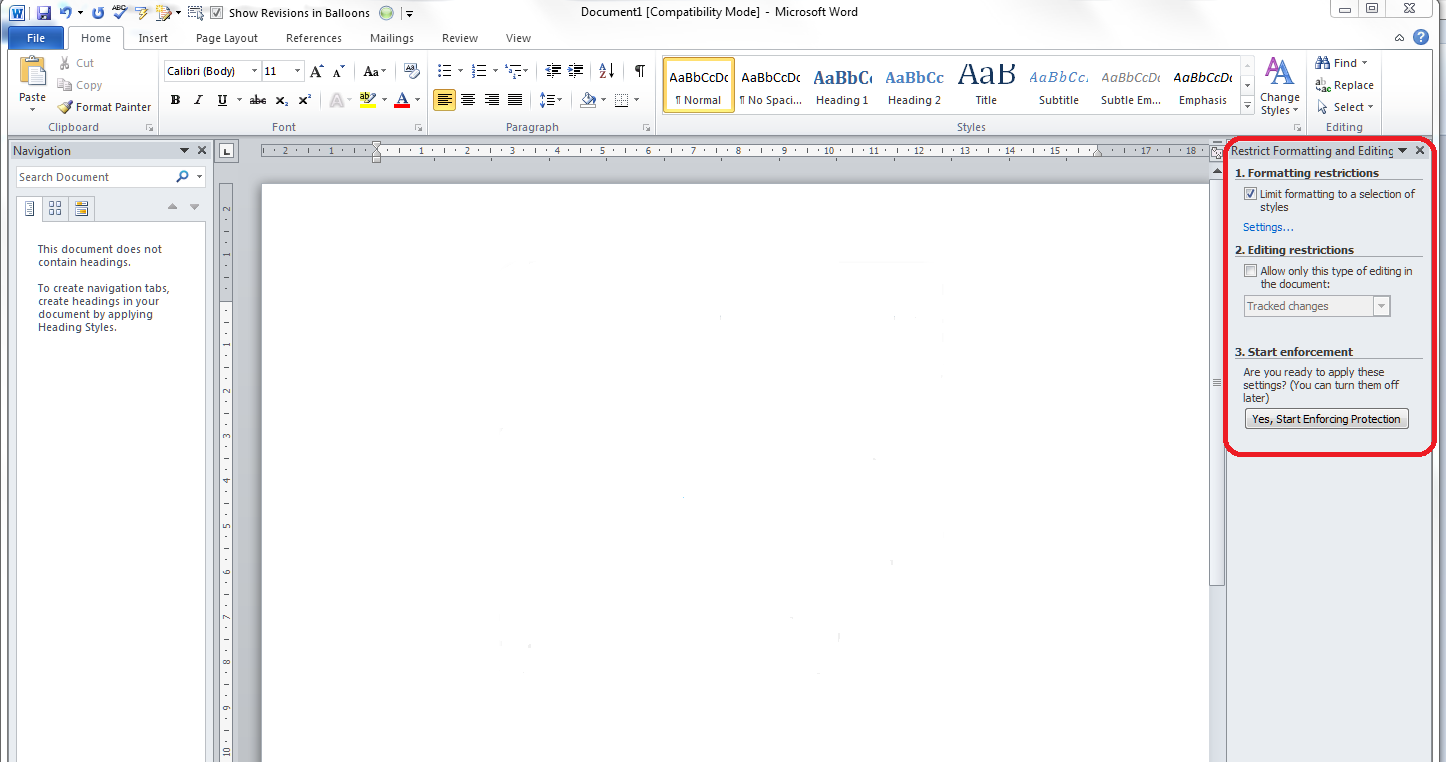
Click on this option and you are able to choose what levels of the document anyone else can edit. It will return you to your original document and give you a sidebar on the right hand side of your document:

Word 2010 8 restrict editing

Lots of options here, but looking at them in turn, you can …

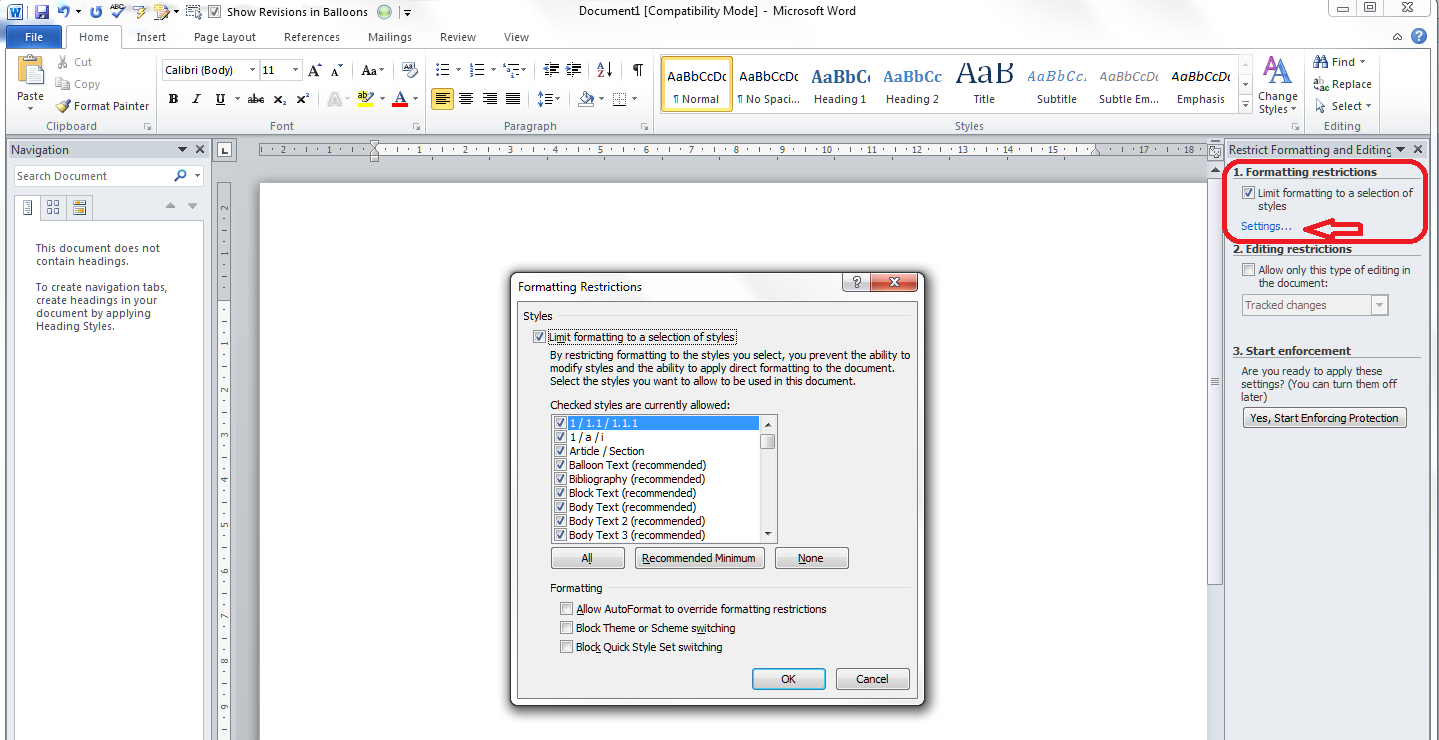
Limit which styles can be edited – you will be given a list of options. This is useful if you have carefully set lots of headings styles and don’t want them to be changed:

Word 2010 9 restrict editing

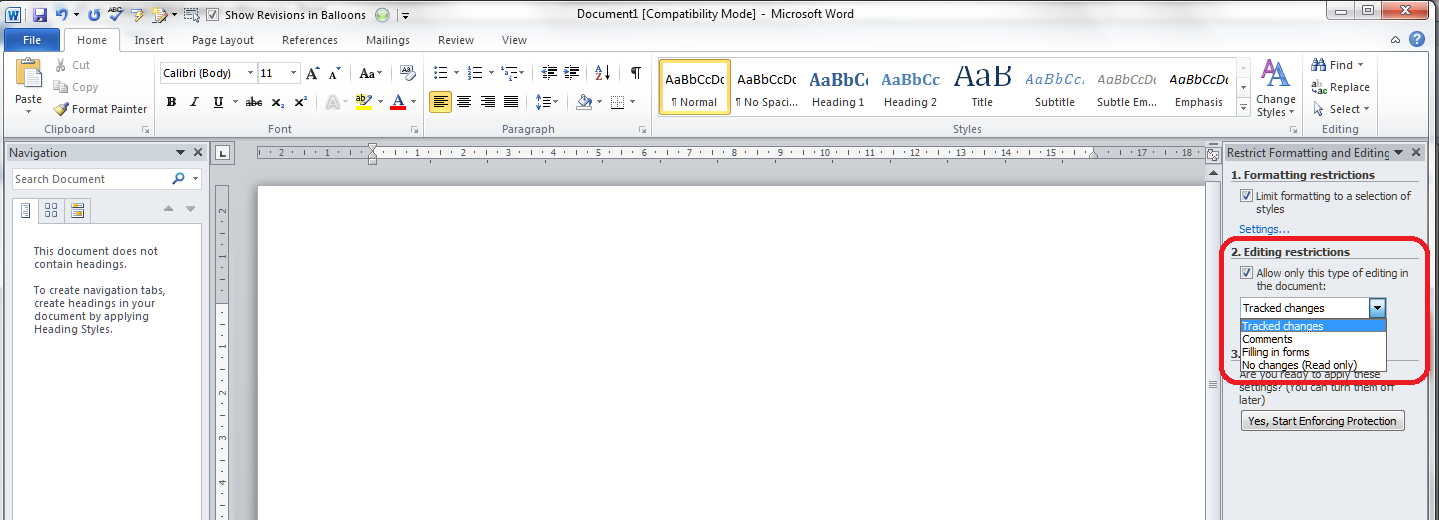
Or allow only certain types of editing to be done:

Word 2010 10 restrict editing

This is where you can make the document Read-Only, i.e. it cannot now be edited.

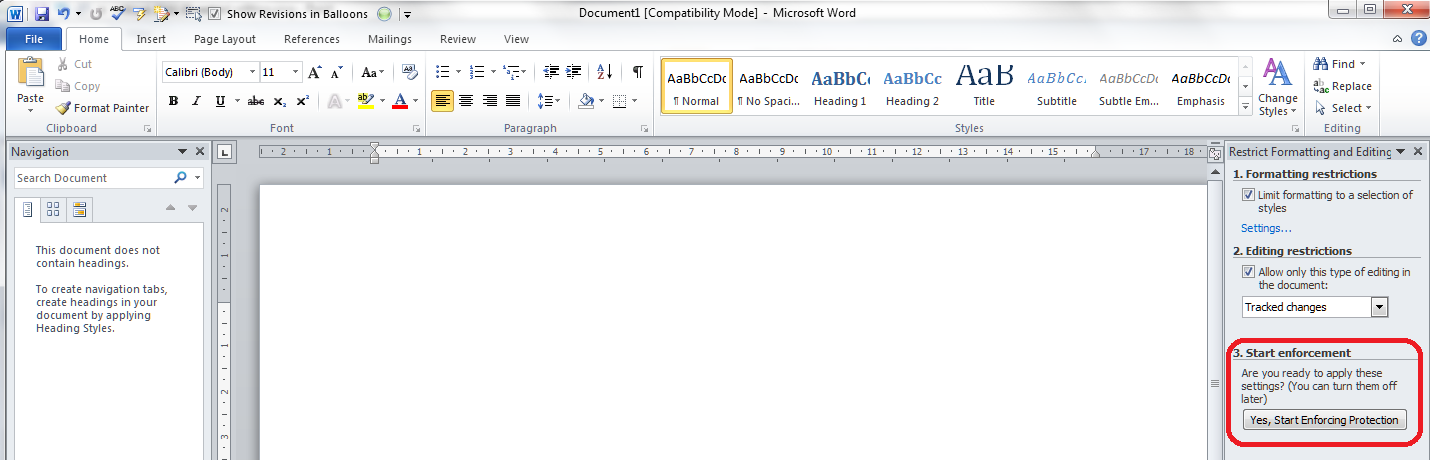
Once you’ve made your selections here, you will need to press the Start enforcement button to initiate this. I believe that you cannot then make restricted edits yourself, although clearly you can go in and change these settings on your own document.

Word 2010 11 restrict editing

I suspect that almost no one knows about these settings, by the way, so if you are setting such restrictions, it might be polite and save time in the long run to let the recipient know that you’re doing this.

Restrict editors

This is a Windows-specific option that can allow you to set permissions for various people, usually within an organisation.

Word 2010 12 restrict by people

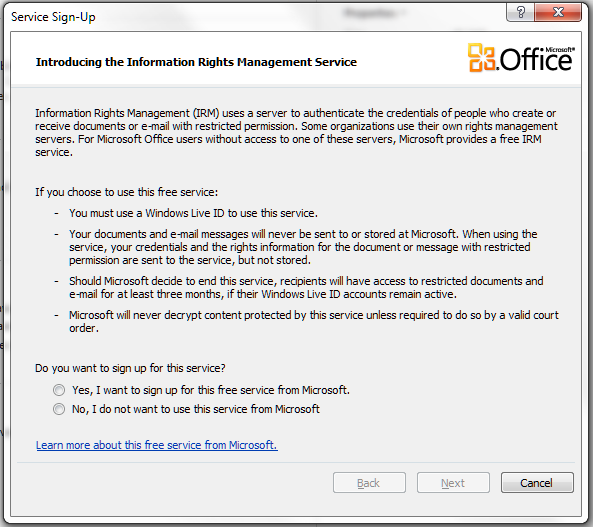
This involves using Microsoft’s Information Rights Management Service and being signed up to Windows Live. The message you get if you try to click Restricted Access or Manage Credentials explains it in more detail:

Word 2010 12.5 restrict by people

As the message says, many organisations (and all of the ones that I’ve worked in) have their own rights management systems embedded in their procedures and file/drive setups. It’s fine to set permissions and protect your document in that way, but that’s outside the scope of this article: you will need to talk to your IT support people or a knowledgeable administrator in your department. But this is there, and can be done if you have the relevant signups (again, contact IT or your systems administrator before signing yourself and others up for something that can affect access to documents on a shared organisational system).

Adding a digital signature

This last option is another one where you have to sign up for something extra …

Word 2010 13 digital signature

This is another useful way to protect your document, however, you will need to purchase a signature service from the Office Marketplace or you can sign up for a third-party service which will apply a digital signature to your document.

Word 2010 14 digital signature

I have signed up to a third-party system which applies a digital version of my signature which I have previously uploaded onto documents, which some of my clients insist on me doing when signing contracts, etc. I am not entirely sure how this would hold up legally in a court of law if you were trying to protect your document, however.

Creating a PDF using Word 2010

The best way to protect your document from being changed is still to convert it into a PDF. A PDF is a copy of a document, a bit like a photocopy, which cannot be edited and changed. Well, that’s not strictly true nowadays: the VERY best way to protect a document is to turn it into a PDF and password protect it so it can only be opened by the recipient and make it read-only so it can’t be edited. I’m going to publish an article on PDFs soon, so look out for that.

You used to have to use a separate programme to create a PDF from a Word document; however, from Word 2010 onwards, you can create a PDF directly within Word.

In the Save and Send menu under the File tab, choose Create PDF/XPS Document:

Word 2010 15 pdf

What is an XPS document? Open XML Paper Specification (also called OpenXPS) is an open specification for a page description language and a fixed-document format, developed by Microsoft. It’s kind of an equivalent standard to PDF. If you’re asked to send someone a document in this format, now you know what it is (I’ll admit here that I have never done this myself).

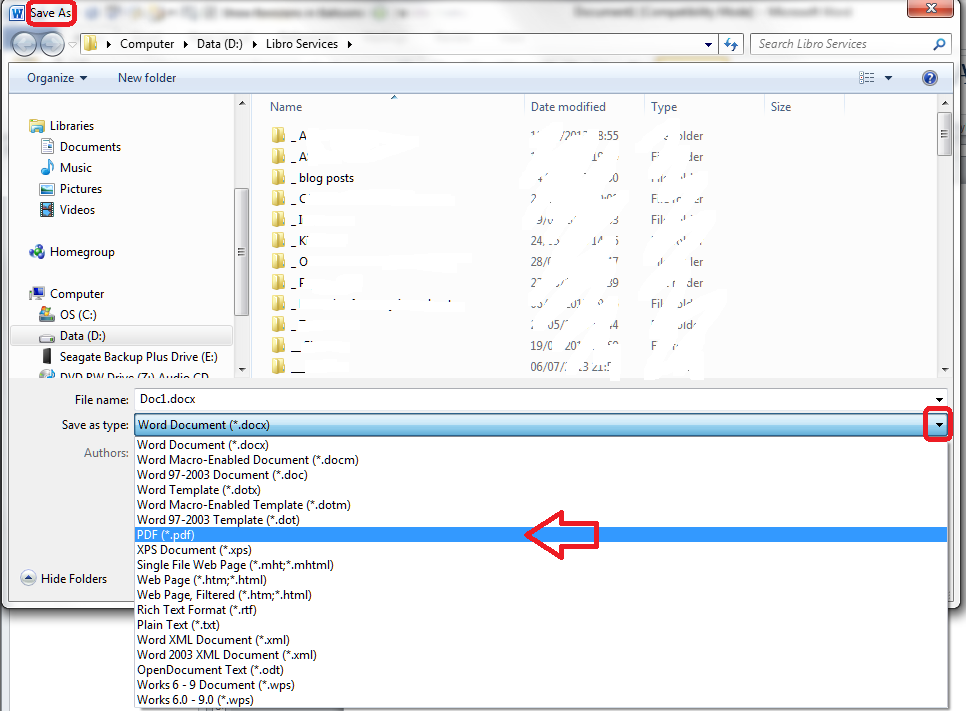
Hit the Create PDF/XPS button and you’ll be taken to the Save As screen to save your document as a PDF (note that it might well take you to a temporary file folder and you’ll need to navigate to whichever folder you’ve saved your original document in).

You can also use the Save As menu directly from the Home tab for this function:

Word 2010 16 pdf

I’ll go into more detail about how you can protect that PDF further in my article on PDFs.

For now, we’ve learned how to protect a document in Word 2010, including information on why you’d want to do that, where you can find the menus, and what you can do.

Related articles

How to Watermark your document

How to protect your document in Word 2007

(coming soon):

Protecting your document using PDFs

———————

This is part of my series on how to avoid time-consuming “short cuts” and use Word in the right way to maximise your time and improve the look of your documents.

Please note, these hints work with versions of Microsoft Word currently in use – Word 2003, Word 2007 and Word 2010, all for PC. Mac compatible versions of Word should have similar options. Always save a copy of your document before manipulating it. I bear no responsibility for any pickles you might get yourself into!

Find all the short cuts here

 
25 Comments

Posted by on July 10, 2013 in Errors, New skills, Short cuts, Word, Writing


Tags: , , , , , , , ,

Any more or anymore

A friend was asking about this on Facebook the other day and I had to (check and) wade in to help. She wasn’t sure any more how this word was supposed to be used – was it one word or two?

I did check, just to make sure, because I know I have used it … and – phew – that’s because I work in both US and UK English.

Any more is the UK English use of the word(s) – “I am not in a state of confusion over this any more”.

Anymore is the US English version – “I am not in a state of confusion over this anymore.” (Yup – felt compelled to put in American-style punctuation around the quotation marks.)

You can find more troublesome pairs here and the index to them all so far is here.


Tags: , , ,