RSS

Category Archives: New skills

My short cuts: full dialogue boxes for fonts, paragraphs etc.

This post was inspired by my partner, Matthew, suddenly asking me about this. Once again, I realised it was something that I and other people who work with Word know about as second nature, and assumed everyone else did, too. Apparently not!

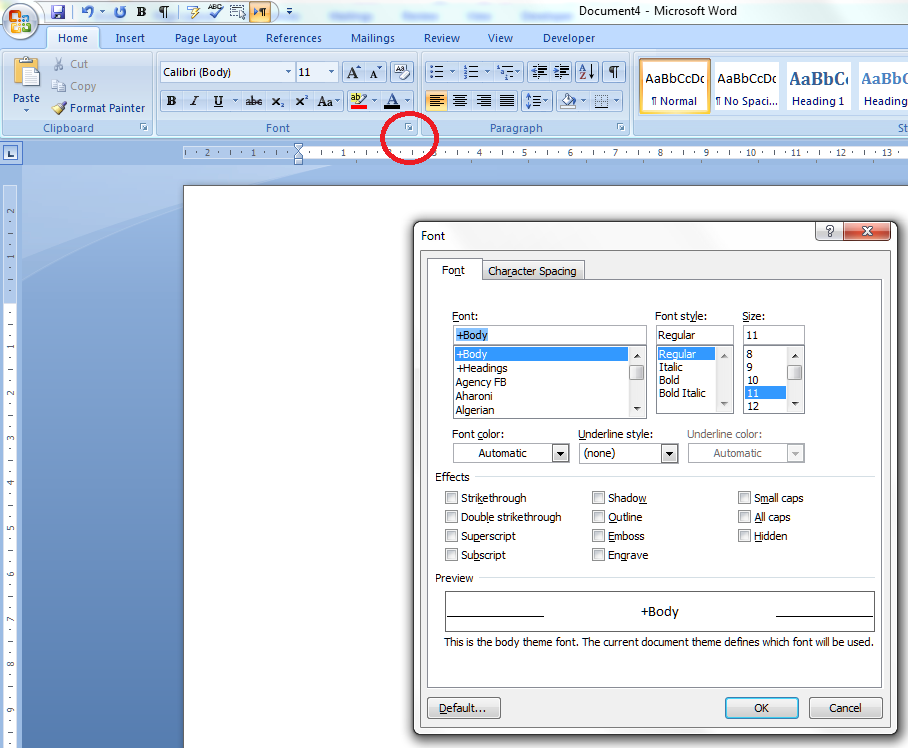
Ever wondered what the little arrow in the bottom right corner of your Word 2007 and 2010 ribbon areas was? Wonder no more – today you will find out what they do, and how to access the font, paragraph, headings (etc!) dialogue boxes with the click of a mouse button.

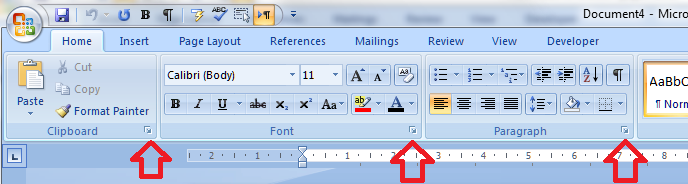
Expansion arrows in the Word Ribbon

In the Home, Page Layout and References tabs on the standard Word 2007 and Word 2010 ribbons, you may notice little arrows in the bottom right-hand corner of some of the sections, for example, Home – Paragraph, Page Layout – Page Setup or References – Footnotes. Some of them are indicated by the red arrows in the image above. What do they do? Click and find out!

Basically, there is not enough room on that pesky ribbon for all of the functionality and options that Word 2003 used to show you in nice, sensible menus (one of these days I’ll share with you how to get the classic menu view in Word 2007 and 2010).

So, if you see a little arrow in the corner, try clicking it and see what different options you have. The one you’ve always wanted to be able to do might be languishing there, waiting for your click!

Please note, these hints work with versions of Microsoft Word currently in use – Word 2003, Word 2007 and Word 2010, all for PC. Mac compatible versions of Word should have similar options. Always save a copy of your document before manipulating it. I bear no responsibility for any pickles you might get yourself into!

This is part of my series on how to avoid time-consuming “short cuts” and use Word in the right way to maximise your time and improve the look of your documents. Find all the short cuts here

 
3 Comments

Posted by on September 5, 2012 in New skills, Short cuts, Word


Tags: , , , ,

My short cuts – automatic formatting as you type (and how to get rid of it)

My short cuts – automatic formatting as you type (and how to get rid of it)

In this post we looked at AutoCorrect, and automatic formatting is really an aspect of AutoCorrect – although I find it’s more annoying than useful, I have to admit. In this post I’ll show you where to find auto formatting, what it does, and how to turn it off.

This is part of my series on how to avoid time-consuming “short cuts” and use Word in the right way to maximise your time and improve the look of your documents.

What is automatic formatting?

Automatic formatting is basically Word trying to be helpful. Instead of a Paperclip Man or cartoon dog popping up in the corner of your screen, it will try to guess what you’re doing and format it to what it thinks you want. This can be very useful, or it can drive you mad, depending on context.

Where do I find the AutoFormat menus?

AutoFormat lives on a set of tabbed menus alongside AutoCorrect. For full instructions on how to access AutoCorrect, see my article on AutoCorrect and where to find it, or if you’re confident, do this:

  • Word 2003: Tools – AutoCorrect Options
  • Word 2007: Office button – Word Options – Proofing – AutoCorrect Options
  • Word 2010: File tab – Options – Proofing – AutoCorrect Options

When you’ve done that, you should see a window that looks like this:
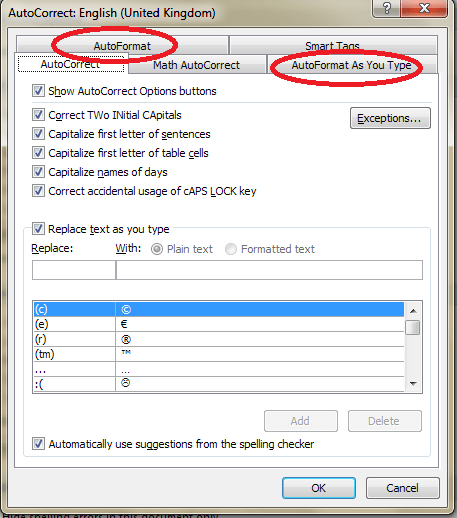
AutoFormat tabs in the Autocorrect window

The two features we’re interested in are AutoFormat and AutoFormat As You Type.

What is the AutoFormat menu for?

Let’s look at the AutoFormat menu first. Click on the relevant tab in the AutoCorrect Options window and you’ll see this:
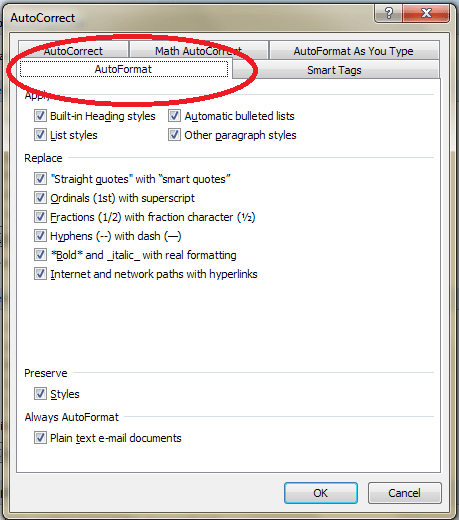
AutoFormat menu

This is how you tell Word what you want to automatically format – however, whatever you change here doesn’t affect AutoFormat as you type. In fact, if you search on Google or in Word’s own help menus, it’s hard to find out what to do with this menu. I can tell you, after exhaustive research, that this menu is used to format your document after the event, at the end, when the document has already been created.

By pressing OK, you will apply all of the automatic formats that you have ticked to the document in question. You can pick and choose which ones you apply, and they are all pretty self explanatory, and you can ask it to retain the styles already set up in the document if you want to.

What is the difference between AutoFormat and AutoFormat As You Type?

AutoFormat is used to format the document after it’s been written. This is particularly useful if you’re sent a document to use which has the “wrong” quote marks, etc. AutoFormat As You Type is used when you’re creating a new document, so you can automate the format and make it consistent as you go along.

What is the AutoFormat As You Type Menu For?

The AutoFormat As You Type menu allows you to choose what Word helpfully automatically formats for you. Let’s have a look at the menu: just click the relevant tab if you’re looking at AutoCorrect or AutoFormat.
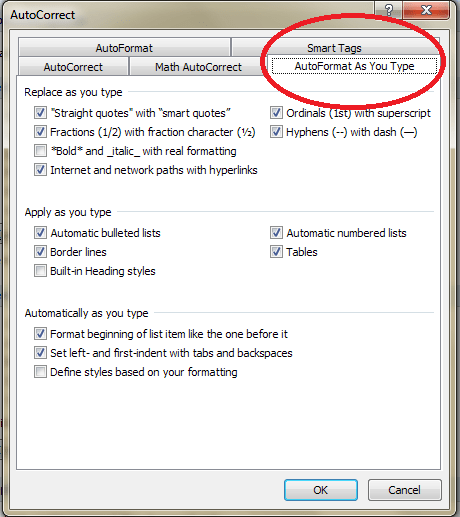
AutoFormat As You Type menu

You can see that there are lots of options here – most of them are pretty self-explanatory, especially as they give examples by each tick box. The ones that cause most issues, in my experience, are

Replace as you type: Internet and network paths with hyperlinks

Apply as you type: automatic bulleted lists / automatic numbered lists

Let’s look at what these do in your document … and then how you can stop this if you want to.

What does AutoFormat As You Type do?

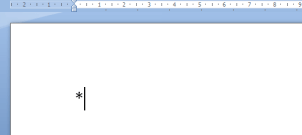
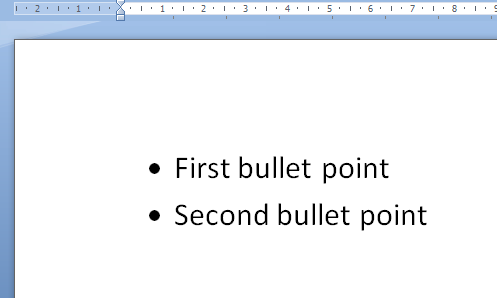
As I said before, AutoFormat As You Type tries to be helpful. It particularly likes helping you make nice neat lists. So if you start some bullet points by typing a * or

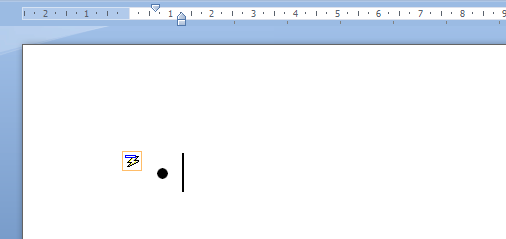
and then a space, for example, it will turn them into bullet points for you!
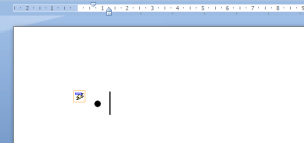
Notice the little AutoCorrect Options icon appearing to tell you what Word’s doing. When you type some text and hit Enter, you’ll automatically be given a new bullet point to start you off:
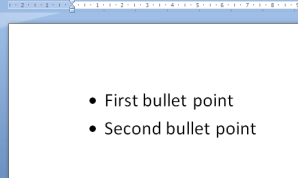
(You escape from this treadmill by hitting Enter twice at the end of your last list item.)

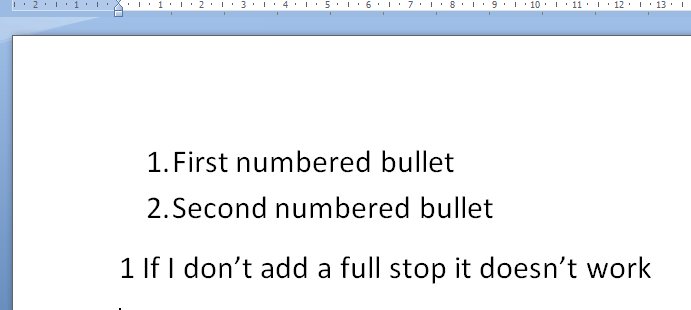
If you start typing a list by putting a 1. at the beginning of a sentence …

… when you press the space bar, it assumes you’re writing a list and helpfully indents it:

and when you press Enter at the end of that line, it helpfully numbers the next line for you:
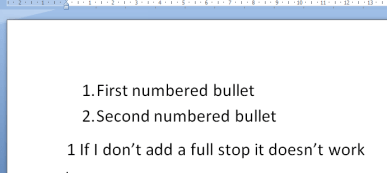
As you can see, you do need that full stop after the number, otherwise it doesn’t “realise” you’re writing a list.

It does it with letters, too, which is all well and good, until you happen to start the line with the letter A, but you don’t want to create a lettered list. What do I mean by this?

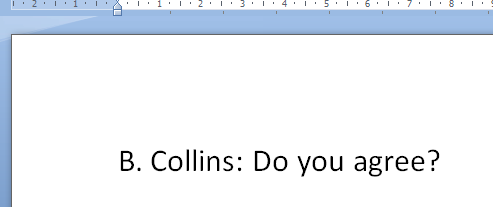
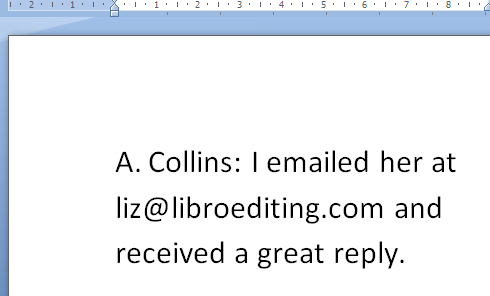
Well, in my case, I do a lot of transcription. I need to type the person’s name (usually initial and surname) followed by what they said. If it’s a name that begins with anything but A, that’s fine. I type the initial and full stop and carry on, and all is fine:
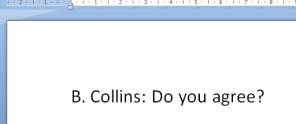
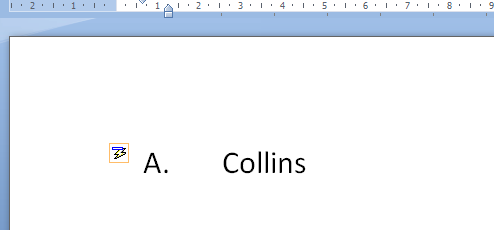
However, if their name begins with an A, I type my A.:
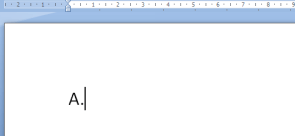
and Word springs into action, handily giving me that little icon to show that it’s making me a list.
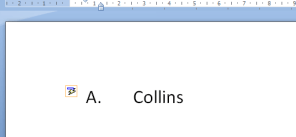
OK, I can click on the little AutoCorrect Options icon and change the settings from there …
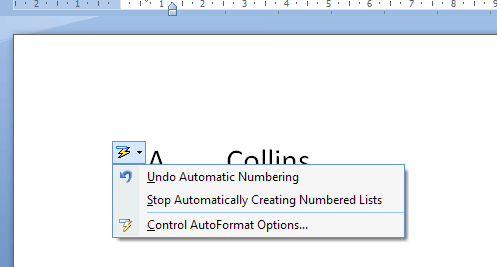
But it’s still rather annoying.

Automatic hyperlinked URLs and email addresses

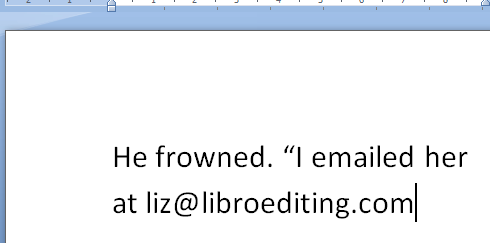
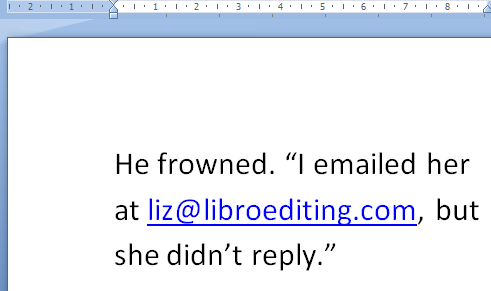
The other annoying “feature” is when Word automatically turns any URL or email address you type into a hyperlink, complete with attractive text colour change and underline. This is all well and good if you’re typing a document that will be looked at on screen and you want the reader to be able to click through, but if you’re just happening to type an email address into the dialogue in your novel …
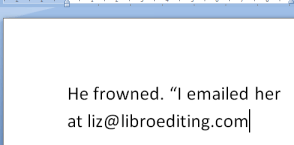
… you don’t want it to do this:
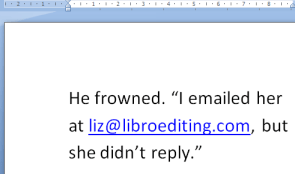
(You can tell it’s a novel: I’d never not reply to an email!)

How do I stop Word applying AutoFormatting As You Type?

It’s simple, fortunately. Go back to that menu and untick the items you don’t want Word to AutoFormat. Make sure you also click on OK before closing the window:
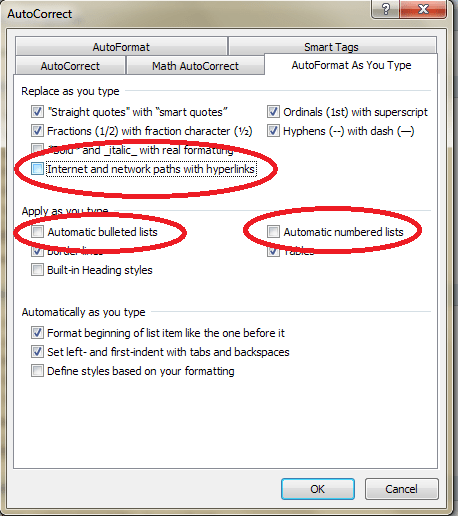
Now you can type whatever you want and Word will leave it as it is, and won’t try to “help” you.
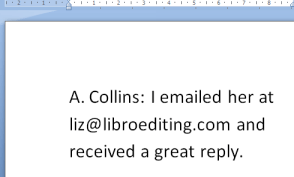
Hooray!

Please note, these hints work with versions of Microsoft Word currently in use – Word 2003, Word 2007 and Word 2010, all for PC. Mac compatible versions of Word should have similar options. Always save a copy of your document before manipulating it. I bear no responsibility for any pickles you might get yourself into!

Why don’t you take a look at my other useful short cuts here

 
4 Comments

Posted by on August 22, 2012 in Copyediting, Errors, New skills, Short cuts, Word, Writing


Tags: , , , ,

Keep an eye on your stats

Do you ever look at your blog or website statistics? If you don’t, I’m going to show you why you should. If you do, do you get all you can out of them? Do you look at them actively or passively?

Note: this post uses examples from the WordPress.com statistics pages, because that’s the blogging/website platform I use. But all of the standard blogging sites, plus Google Analytics, Statcounter and other analysis tools will offer you similar information, with similar headings.

Why should I look at my statistics?

Looking at your statistics can help you tailor your blog to match what your readers want, and will also alert you to who is talking about you and where they are doing so. You can also measure the success of your attempts to build your audience through posting on social media and other blogs and sites. Here are some of the things you can find out …

  • Which posts or pages are people looking at a lot … and which ones are they ignoring?
  • Is there a kind of post that people are particularly interested in?
  • When do people read your posts?
  • How do people find you (social media, web searches … )
  • What search terms do they use?
  • Where do your readers go next – what links do they click?
  • Are people finding your site via other sites and blogs?

How do I find and view my blog / website statistics?

Usually you’ll have some kind of button or menu option called Statistics or Analytics. On WordPress, you will find a Stats option when you go into your blog, or you can click on the bar chart at the top of the screen. Once you’ve found them, you’ll find a screen something like this:

Now we’ve located our stats, let’s look in more detail about what they can tell us.

How do I tell how many times my blog posts have been viewed?

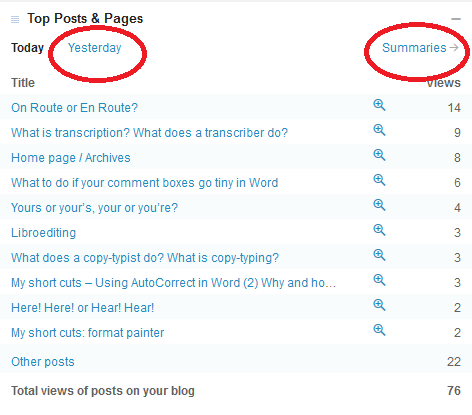
One of the important ones to look at is your most popular pages. We’re looking at one day here, and I can see that my blog post on on route or en route is, yet again, the most popular.

But I can also see what other posts and pages have been popular (and if I click on yesterday or summaries I can see previous days’ stats, while if I click on the magnifying glass next to the number, I can see all the views for that post). This is useful, as I can tell how I’m doing in the search engines, if it’s an older post, or whether my alerts are doing well, if it’s today’s post going up the ratings.

How do I tell how people have found my blog or website?

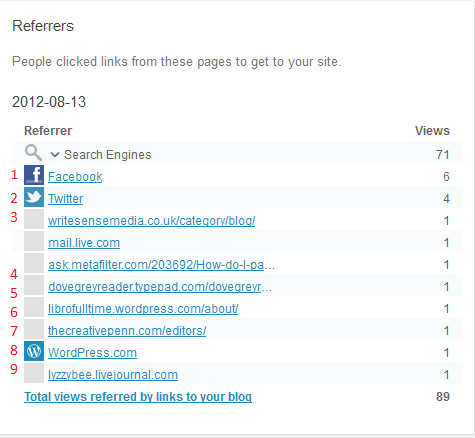
It’s very useful to know how people are finding your blog. You should have a section of statistics called something like referrers or referrals. Here are mine for a particular day.

You can glean all sorts of information from this. At the top you can see I get most of my hits from search engines (over 70 of that day’s hits so far), then Facebook (1) and Twitter (2), then a variety of websites and blogs that I’ll go through in a minute. This has changed – when you’re new to blogging, you’ll get most of your hits from Facebook and Twitter and other social media, as your friends will be looking at your posts and you will be promoting them on social media. As your blog gets indexed on the search engines, results will start showing up from them.

Looking at the pages from which your readers have come can be SO useful. Here’s what I can learn from this one:

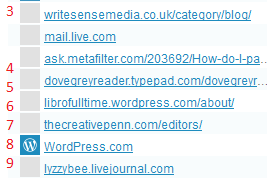
3 comes from one of the people I’ve featured on my blog blogging about my feature herself – a great link-back that Google will like indexing. 4 is from an answer I gave (with a link) on an expert site. 5 is from a comment I made on someone’s blog. 6 is from my other blog. 7 is from a list of editors a client added to her website (very valuable). 8 is from WordPress itself, probably someone surfing through tags, and 9 is from my old LiveJournal blog, where I post links to this blog/website.

All good stuff, and I can say thank you to people who have sent readers my way, or even find out when they’ve done so (all these links can be clicked, so I can see exactly what people have said). Now, what about those search engines?

How can I find out what search terms people have used to find my site?

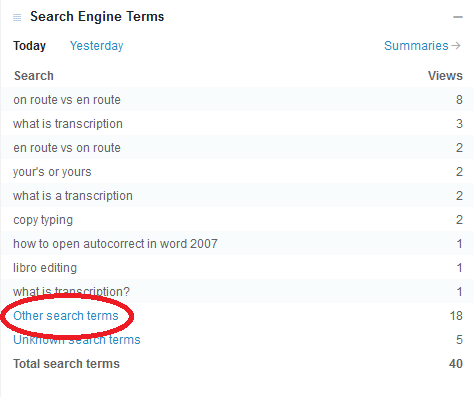
You should have a heading like Search Terms somewhere on your stats page. This offers a world of exciting information.

Clicking on Other search terms will give you the rest of the terms people have searched on – that they will only have tried once (or only one person has tried).

For a start, you can see exactly what people are searching for. It might be useful to change the wording on your blog posts to get further up the search results for a popular term. It’s also worth searching for these terms yourself and seeing where on the Google results page they appear. Another useful point is it can give you ideas for future blog posts. I noticed that someone had found me while searching for Autocorrect, which I had mentioned in a blog post. So then I wrote a post on Autocorrect itself, which has been quite popular.

It can also be quite amusing to see what people search for. Someone once came through to my blog having searched for “persuasive piece on children believing in the tooth fairy” – I think they may have been disappointed (they found me because I mention the tooth fairy in an example sentence explaining a word definition).

How can I see where my blog readers are?

On WordPress you can see a rather nifty world map with the countries from which your visitors have come from highlighted.

This is more of a fun distraction than a useful tool, to be honest, but if you discover an anomaly, for example if you’re in the UK and you get a lot of visitors from Brazil, you could consider tailoring some of your blog posts for this market. I get a lot of international visitors, so I’m going to make sure I talk about my work with non-native speakers of English soon.

Is my website traffic increasing? What did I do to make that happen?

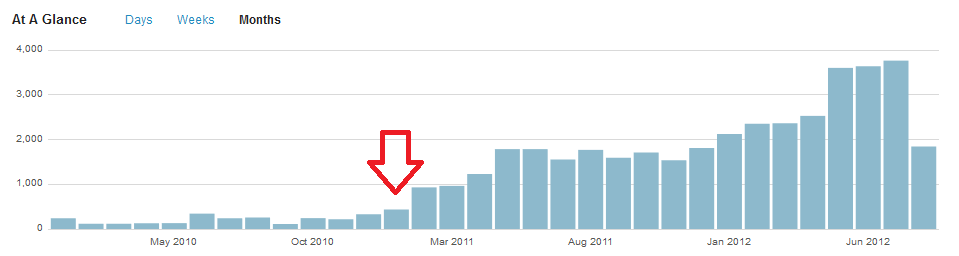
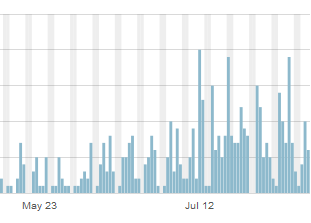
As well as today’s data, you can usually see a month or year’s worth, too. If I look at the traffic on my website and blog over time, I can see that it started increasing at the beginning of 2011.

What did I do at the time of that red arrow? Started writing this blog!

Do people read my blog more at the weekends?

Looking at your daily traffic will show peaks and troughs. If your blog is more popular at the weekends, it might be good to post new content then. If I drill down into one of my blog posts, the ever-popular “What do I do if my comment boxes go tiny in Word?”, I can see that it’s not read very often at the weekends.

This says to me that office workers are looking for and using this post, so I can make sure I post more for that kind of audience and save other new posts for the weekends.

Where do my website visitors go when they leave my site?

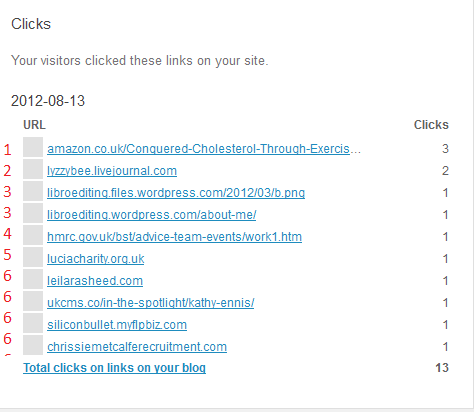
This is usually found under the heading Referrals, or maybe Click-throughs. Here’s a good representative one of mine from a few days ago:

Looking at clickthroughs from my website

You can see that the click-throughs fall into a few groups. 1 is my ebook, which I have linked to in a blog post and on the site itself. Hooray – my PR campaign is starting to work! 2 is a click to my Livejournal blog, linked to on my website. 3 is a pair of pages on this website, filed under my old url but I can see people are navigating around the site and sticking around. 4 and 5 are both links I have on blog posts; 5 is also on my references page. And all those marked 6 are websites of people I’ve featured on my blog, showing that I’m helping them get some traffic, too.

So there we go. Look at those statistics, whether you’re using WordPress or another host for your blog. And look at them actively: think about what they mean and how they can help you to find out how to tailor your blog to your audience and drive more traffic to your blog or website.

If you’ve enjoyed this post, please click on one of the share buttons below, or leave me a comment. Especially if you’ve had any amusing search terms recently!

 
5 Comments

Posted by on August 17, 2012 in Blogging, Business, New skills, Organisation, Writing


Tags: , , , ,

My short cuts: format painter

Today I’m going to introduce you to a lovely quick short cut that can save what can only be described as a lot of faffing around: format painter.

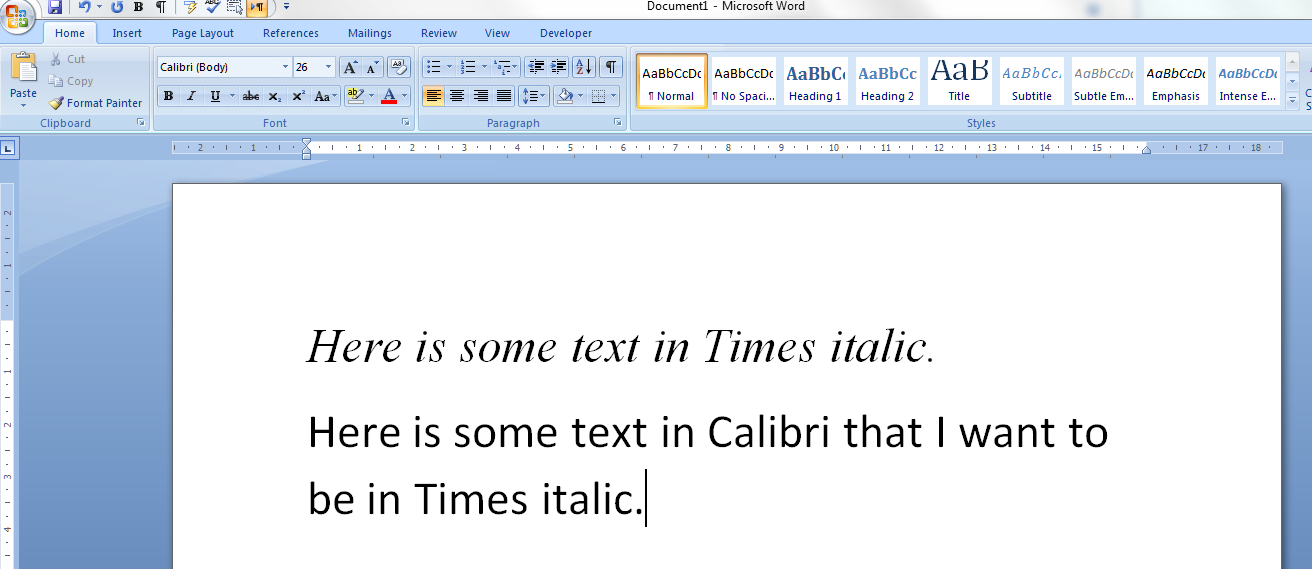
We use format painter to pick up the formatting of some text, copy it, and paste it into some other text, to make the formatting match. I’ll give you a simple example.

How do I copy the formatting of one bit of text into another?

Here we have some text in the format we want, and some text not in that format, which we want to change.

Now the trick is to use a little button you may not have even noticed before. It’s on the Home tab (in Word 2007 and Word 2010; in Word 2003 it’s in the Format menu) in the cut, copy, paste area. Handily, it has its name next to it:

Now, it’s important to get this next bit in the right order! Highlight the text which is formatted in a way you want to copy, in this case the first line of text, and, once it’s highlighted, press the Format Painter button:

It doesn’t matter how much of the original text you pick up, as long as it has the right formatting. Now you will notice that the cursor has changed into a little paintbrush. Annoyingly, this doesn’t show up on a screen print, so you will have to take my word for it. “Paint” with the paintbrush across all of the text you want to change, keeping your left mouse button down, and it will highlight it (but nothing will change … yet):
Now let go of the mouse button and hey presto …

Note: the formatting will change to exactly what you picked up from the original text. So if you have a word in bold in the middle of your text, it will change to whatever the original had.

This is quite a simplistic example, but here’s where it comes in handy:

Say you’re editing a document with a lot of different text styles, header styles, etc. Maybe there’s a table with a variety of fonts. Rather than clicking on the text that you want your text to look like, noting the font, size, etc. then highlighting your text and changing all those features manually, simply highlight, format painter, and paint away!

Please note, these hints work with versions of Microsoft Word currently in use – Word 2003, Word 2007 and Word 2010, all for PC. Mac compatible versions of Word should have similar options. Always save a copy of your document before manipulating it. I bear no responsibility for any pickles you might get yourself into!

This is part of my series on how to avoid time-consuming “short cuts” and use Word in the right way to maximise your time and improve the look of your documents. Find all the short cuts here

 
4 Comments

Posted by on July 25, 2012 in New skills, Short cuts, Word


Tags: , , , ,

A proper author – Victoria Eveleigh and her story

Victoria Everleigh I am delighted to publish this guest post by author, Victoria Eveleigh. I “met” Victoria via Twitter, through a discussion I was having about pony books with a bookseller (who I’m going to feature on the Saturday Small Business Chats soon). Victoria has an interesting story to tell, as she has become a somewhat unlikely author, and has now moved from self-publishing to being published!

You can read all about Victoria’s farm, horses and books on her website. Let’s hear her story …
How I became a Proper Author by Victoria Eveleigh

Nobody was more surprised than me (with the possible exception of my old English teacher) when I became an author.

I grew up in London, but spent as many holidays as possible on my grandmother’s farm on Exmoor. From an early age, my ambition was to marry a farmer and live on Exmoor. Remarkably, I’ve managed both: Chris and I have been farming for over twenty-five years now.

At 240 acres, our farm is fairly small, so we’ve had several other enterprises: a self-catering holiday cottage, horse-drawn tours over Exmoor with Shire horses, Land Rover tours of the farm, organic farming, cream teas, renewable energy and publishing.

Starting to write

The Foot and Mouth crisis of 2001 was partially responsible for my first book. We never got Foot and Mouth on our farm, but it came far too close for comfort. For nearly half a year we closed the self-catering cottage and horse-drawn tour businesses, and our children stayed at home for the whole of the spring term. It was a nerve-wracking year, and our cash flow became a trickle, but in some ways it was a holiday from all our usual commitments. For the first time since we were married, we had time to spare. Chris took up drawing and painting, while I sat down and wrote the book that had been forming in my head for several years: the story of a girl and an Exmoor pony growing up on an Exmoor hill farm together.

Full of optimism, I purchased a copy of The Writers’ And Artists’ Yearbook and started writing to agents. After several months, I’d received polite rejections from some and no communication from others. I felt utterly disheartened, and would have given up completely if a friend hadn’t suggested publishing the story myself. She’d published her own books in the past, and said all I needed to do was register myself as a publisher (I registered as Tortoise Publishing), get someone to design the layout of the book (I asked a good friend who’s a graphic designer), get a printer to print it (our local printer who printed our holiday cottage leaflets obliged) and some people to buy it (um…).

Learning from self-publishing

It was shocking how much space 6,000 books took up when they were delivered to our house by the printers. Too late, I realised I knew nothing about selling and, being typically British, I didn’t feel comfortable promoting myself. However, the prospect of never being able to use the sitting room again spurred me on. I loaded some books and leaflets in the back of the car and went for a drive around the Exmoor area. There weren’t many bookshops but there were gift shops, tourist attractions and tack shops, so I had more outlets than I’d realised. In fact, my best customers turned out to be places which normally didn’t stock books because there was no competition. (I’ve found that the easiest way to get depressed is to go into a large bookshop and see how many different books there are, all vying for attention!)

Probably because of Chris’ illustrations, the first book sold so well that I had to do another print run, and I was encouraged to write a sequel. Now I had stacks of boxes and a bit of money, so we converted Chris’ work shed into a farm office where I could store both the books and the ever-increasing quantity of farm records. At last I had a warm purpose-built room where I could write and deal with the paperwork for the farm and publishing businesses.

We made the Exmoor pony story into a trilogy, wrote and illustrated a colouring book about the farming year for the Exmoor Horn Sheep Breeders’ Society and then published a story set on the island of Lundy.
The amount of effort it took to promote, sell, distribute and account for the books meant I had an ever-decreasing amount of time for writing. Furthermore, while I was trying to build up my publishing business several things happened to the book industry: the economy slowed down, then went into recession; fuel and postage prices went up, squeezing margins because books are typically delivered for free; paper and printing costs increased, and large bookshops and online stores started a price war. Simultaneously, the whole book industry was going electronic, and I couldn’t really get my head around it all.

Never give up …

I’d more or less decided to quit while I was ahead when I received an email from Louise Weir, who runs a website called Lovereading4kids. She’d read my Lundy book and wanted to make it a book of the month on her website and, to cut a long story short, through her I was taken on by Orion Children’s Books just over a year ago.

Since then my life has changed quite a bit. I have to treat writing like a proper job now, and it’s a scary, serious business with deadlines to meet, schools to visit and talks to give. However, I wouldn’t turn back the clock for anything. I love writing and I’m so glad I’ve been given this fantastic opportunity to turn it from a hobby into a whole new career. I’ve re-written my existing stories (which have been published as Katy’s Wild Foal, Katy’s Champion Pony, Katy’s Pony Surprise and A Stallion Called Midnight) and I’m writing a new trilogy for publication in 2013. It will have horses and the countryside at its heart, but it will have a boy as the main character for a change. Chris is still doing the illustrations for my books – so I’m now a proper author and he’s a proper illustrator!

I wish Victoria all the best with her new trilogy, and I’m looking forward to reading the Katy books soon. I should mention that Victoria’s publisher will be sending me a copy of “A Stallion Called Midnight” to review, but I wanted to share her story to encourage my readers who are writers: never give up!

 
3 Comments

Posted by on July 18, 2012 in Guest posts, New skills, Reading, Writing


Tags: , ,

Sally Evans-Darby

Welcome to Saturday Business chat. It’s time for another new chat today, and we’re meeting Sally Evans-Darby from Write Sense Media, a very new business, which has only been going for a few months. Sally’s had some very nice things to say about this interview series: when asked if it’s OK to contact her in a year for a catch up, she said, “Absolutely – and thanks so much for this one! Great way to encourage people to reflect on their own businesses, but more importantly, to build up an information database of lots of different people’s experiences. It’s always so useful to read about others’ experiences in something you are thinking of trying out” – which is great for me to hear.

I do meet people who read all of these interviews and find them useful – if you’re one of them, do post to let me know! In the meantime, let’s find out what Sally has learned so far …

What’s your business called? When did you set it up?

Write Sense Media – launched in February 2012. The name was a suggestion from my other half and it just stuck. Write Sense Media offers proofreading, editing and writing services.

What made you decide to set up your own business?

I’ve worked both in-house and freelance as a proofreader and writer, but mostly in-house (read: full-time, 9-5 day job with ‘living for the weekend’ mentality and everything else that lifestyle comes with!). I had thought about being purely freelance before but just didn’t think I would be able to sustain it as a living. Then came a brainwave in the early part of this year where I realised that working freelance was exactly what I needed to be doing. Looking at my life and my career as a whole, I just couldn’t see myself always working in an office for an employer. There would have to come a time where I did the work I love (i.e. editing, proofing, writing) but for myself and with my own values/strategy rather than the views of my employer. So I thought, why not now? Life is short; I decided to just go for it.

What made you decide to go into this particular business area?

I’ve always been into words, whether that’s word-play, crosswords, finding out new words, learning about language. Plus, I’ve always been a mean speller! In primary school I remember the class being asked to look at what the difference was between an old map listing a village as ‘Bishop’s Lydeard’ and a new one as ‘Bishops Lydeard’. I was the only one who noticed the missing apostrophe in the new version. I guess you could say I’ve always had a knack for looking at words, the way they’re presented, and picking them apart.

I love words. As a lot of logophiles will say, I’m terrible with numbers – figures don’t make sense to my brain, but letters do.

I should mention too that I hadn’t realised until this year that there was a genuine career path budding editors/proofreaders can take. The internet is a wonderful resource in this respect. Browsing other proofreaders’ websites, including yours, Liz, made me realise there was a whole world out there of people who read, edit and write for a living – and I wanted to be part of it.

Had you run your own business before?

No – the idea of ‘running my own business’ has always been something I’m slightly sceptical about. I don’t see myself as the particularly entrepreneurial type and I worried about practical things like sustaining this in the long-term. But making the leap and deciding to have my own business was completely the right thing for me. I just had to realise that.

How did you do it? Did you launch full-time, start off with a part-time or full-time job to keep you going … ?

I still had a full-time job when I started up Write Sense Media, because I knew it was going to take time to build things up: create and add content to a website, start a blog, start networking, start making contacts with clients. I see my business as a huge round object that started off stationary, and which took a lot of effort and work to get rolling. Once it was rolling, however, its own momentum keeps it rolling. It’s just that initial struggle into being that every business must go through that means you have to keep a job at first, unless you’ve had the foresight to build up a nest egg beforehand.

What do you wish someone had told you before you started?

That it would take some time but I just had to hang in there and things would work out.

What would you go back and tell your newly entrepreneurial self?

To devote every spare hour I could to Write Sense Media. That I was on the right track and I just had to keep going.

What do you wish you’d done differently?

I wish I’d been able to devote more time to it and of course it would have been a luxury to not have to work full time at the same time.

What are you glad you did?

I’m glad I made my website one of my top priorities, and that I went to my brother, Scott Darby (http://scottdarby.com/), for his invaluable help with this. I’m not the most technical person, so him helping me with this was essential! I’m proud of the result and feel it represents me and my business well, so I’m glad I took the time to make this happen.

What’s your top business tip?

Be yourself. Don’t try to be someone you’re not – whether you’re using your ‘voice’ on the internet, phone, in person, always just be yourself. People respond to people who are human. Also never act desperate, even if you are!

How has it gone since you started? Have you grown, diversified or stayed the same?

So far, in the short time since I started Write Sense Media, my overall ‘vision’ has pretty much stayed the same. I expect things to change though in the future and am open to change. I’m ready to roll with the punches, and keep my business current and alive.

Where do you see yourself and your business in a year’s time?

I truly hope to see my business flourishing and for me to feel much more in control of my life! I hope to have a diverse client base and to have built up lots of long-lasting relationships. I hope to have been to a few SfEP (Society for Editors and Proofreaders) events and to have met other people working in the same field.

I do like “never act desperate, even if you are!” and I’m glad to have been something of an inspiration. It can indeed be frustrating starting up part time and not having all the time you want to devote to your new business, but it’s also a safer way to do it for those of us who are maybe not the traditional type of entrepreneur. Good luck, Sally, and I’ll look forward to seeing how you’re getting on in a year’s time!

Read Sally’s 2013 interview.

Oh, and for anyone who is curious about why I feature people you could see as competitors in this series; I’d rather see them as colleagues! And it’s worth remembering that much of the interest I get in my own blogs and website is generated by so-called competitors, something I talked about a few weeks ago.

You can find Sally’s website at www.writesensemedia.co.uk and, of course, email her.

If you’ve enjoyed this interview, please see more freelancer chat, the index to all the interviewees, and information on how you can have your business featured.

 
7 Comments

Posted by on July 14, 2012 in Business, New skills, Small Business Chat


Tags: , ,

What to do if my comment boxes are running right to left

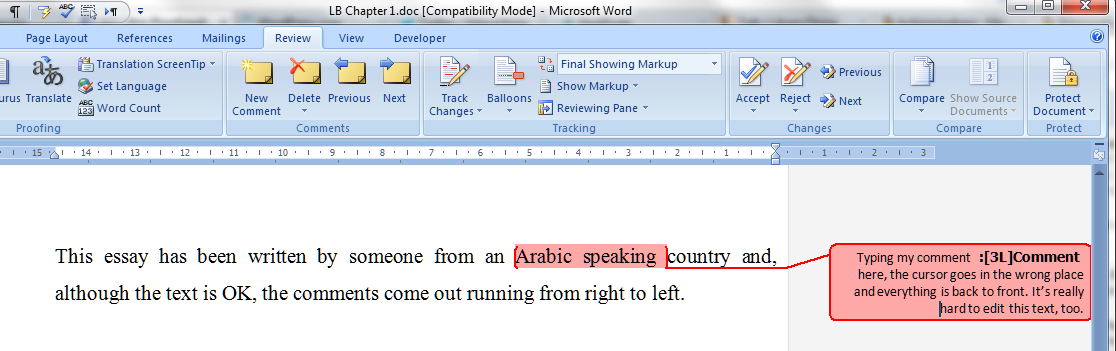
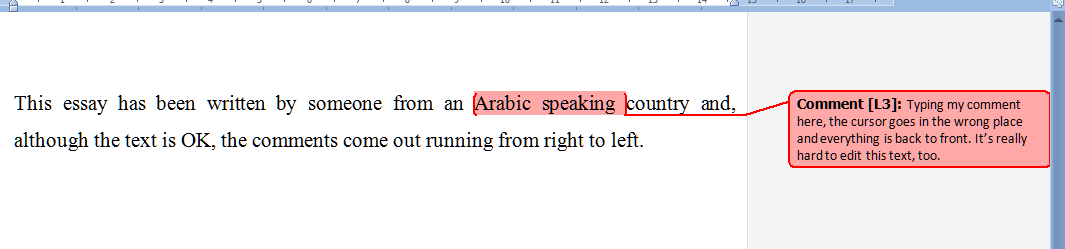
A friend of mine had this issue this week, and then I did, too. Both of us were working on documents that originated from Arabic-speaking countries, and this is where I usually see this problem. It’s hard to describe, but completely obvious if you’ve ever experienced it: you’re using Track Changes to mark changes in a document, you go to write a comment in a comment balloon / box, and the text runs from right to left instead of left to right. Sometimes even the word order is reversed. It looks something like this:

The cursor is at the wrong end of the line of text, it’s all justified to the right, it shows oddly as you type, and editing it is a nightmare. So how do we change the orientation of the comment text?

Changing the orientation of comment text in Word 2007

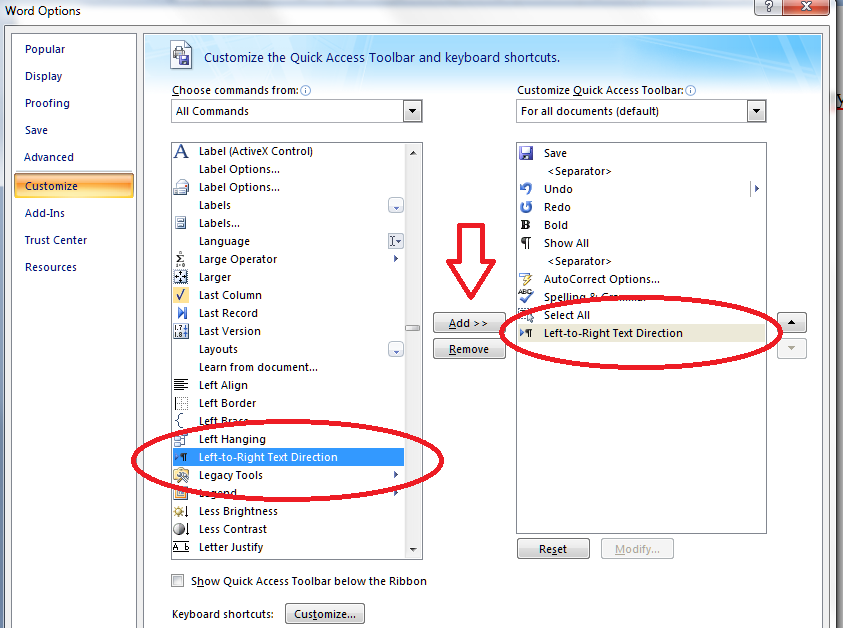
What we want to do is change the comment box text from wanting to run right to left to making it want to run left to right. And the easiest way I’ve found to do this is to add a secret little button to your Quick Access Toolbar, then use that to sort out your text. Go to my article on how to add buttons to the Quick Access Toolbar if you need a refresher (or note that you click the down arrow on the QAT at the top of your screen then choose More Commands).

When you get to the part on the Customize Screen menu where you choose the button to add, type L to get near the right place and/or scroll down until you come to Left-to-Right Text Direction and add that to the Quick Access Toolbar.

Now you will have a button on your QAT which looks like a paragraph mark with an arrow next to it. If you hover the mouse cursor over it, it will announce to you that it’s the Left-To-Right Text Direction button. Make sure your typing cursor is in the comment balloon and press this button …

And now your text in your comment balloon should be the right way round (for you):

Please note: you will have to do this for each comment box you create. But it’s only a matter of pressing one additional button, and it WORKS reliably, where fiddling around with the Styles really won’t always work (I know: I’ve been there).

Changing the orientation of comment text in Word 2010

Now, this works just the same in Word 2010, apart from the fact that the button has a different name and a different appearance! Of course!

So when you have reminded yourself how to add buttons to the Quick Access Toolbar if you need a refresher (or note that you click the down arrow on the QAT at the top of your screen then choose More Commands), you will need to start by typing an L and/or scrolling down, but this time you’re looking for Ltr Run.

And when you want to change the orientation of your text in your comment balloon from right-to-left to left-to-right, you’ll need to click on the little green blob (although, again, it will admit that it is the Ltr Run button if hovered over):

Again, please note: you will have to do this for each comment balloon you create. But it’s only a matter of pressing one additional button, and does WORK reliably, where fiddling around with the Styles really won’t always work (I know: I’ve been there in Word 2010, too).

And if you’re using a Mac? Well, apparently you can’t do it, and will need to send it to a friend with a PC. But if you know better, do let me know!

… and if that doesn’t work …

It’s always worth trying copying and pasting your text into a new document. And if that doesn’t work, here are two more methods to try.

Changing the balloons one by one using Style Inspector

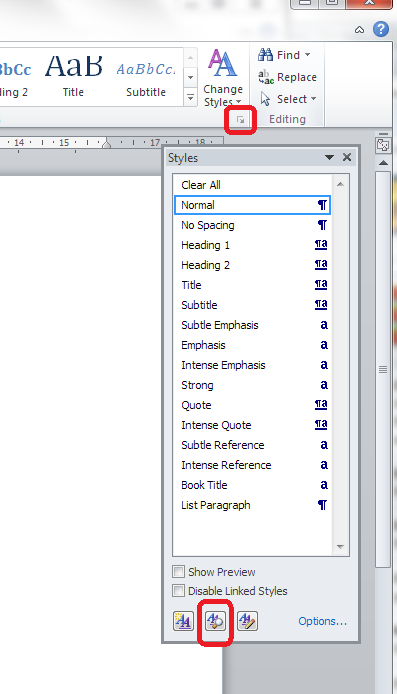
Put your cursor in the offending balloon. In the Home tab, go to Styles and click the down arrow in the bottom corner. Then, instead of Manage Styles, click the second button along, Style Inspector:

8 alternative

This will make a little dialogue box come up. Click on the top A button (marked with an arrow) and the Paragraph Formatting box should change to Normal.

9 alternative

Close the box and OK everything else until you’re back with your document, and your comment box should be the right way around! You will need to apply this per comment balloon, but it’s less drastic than this one …

Delete the styles

We also found this more drastic way. Thanks to Mr. Libro for finding this workaround.

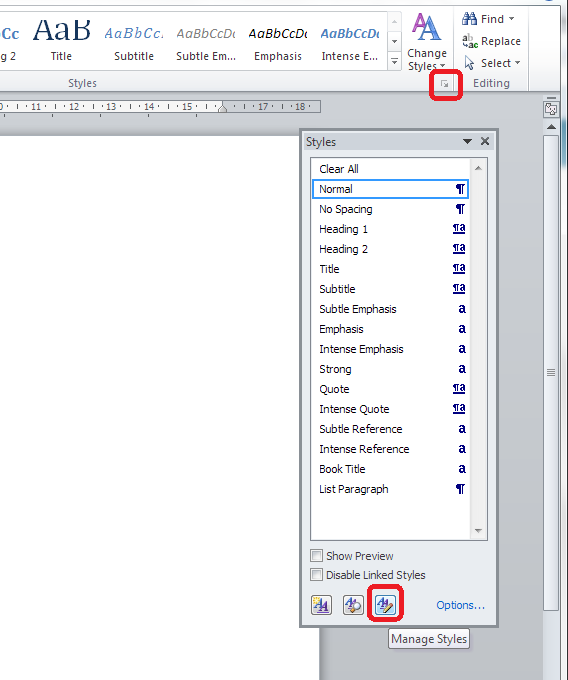
Go to the Home tab, click the Styles down arrow and select Manage Styles (the third button):

10 alt 2

Put the list of styles into alphabetical order by clicking the dropdown arrow and choosing Alphabetical:

11 alt 2

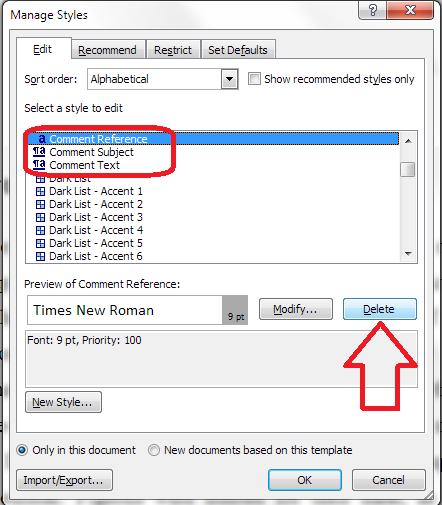
Find your three Comment styles and delete them IN THIS ORDER: Comment Reference, Comment Subject, Comment Text (otherwise Word is liable to crash):

12 alt 2

Press Delete then confirm that you’re sure:

13 alt 2

You can just go back to the list each time. Watch out – your place in the list may well jump around and you may have to scroll up or down to find your style.

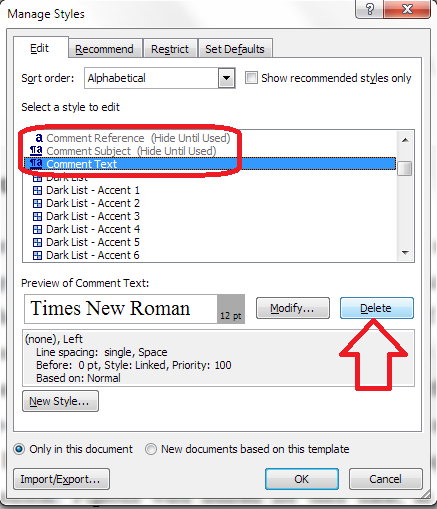
Delete Comment Text as the last one (you will see that the others grey out) …

14 alt 2

And then press OK until you’re back at your document. All of your comment boxes will now be the correct way around.

————

Want even more detail on how to customise your comment boxes? Read my article on customsing comment boxes!

Related posts: What to do if my comment boxes go tiny in Word.

Changing the language in your comment balloons

Please note, these hints work with versions of Microsoft Word currently in use – Word 2003, Word 2007 and Word 2010, all for PC. Mac compatible versions of Word should have similar options. Always save a copy of your document before manipulating it. I bear no responsibility for any pickles you might get yourself into!

This is part of my series on how to avoid time-consuming “short cuts” and use Word in the right way to maximise your time and improve the look of your documents. Find all the short cuts here

 
70 Comments

Posted by on July 11, 2012 in Copyediting, New skills, Short cuts, Word, Writing


Tags: , , , ,

My short cuts: adding shortcuts to the quick access toolbar

Do you use commands in Word that are usually buried inside a menu inside a menu inside a menu? I’m going to show you how to add these onto your Quick Access Toolbar, so you can get at them using a shortcut in just one click. And scroll to the bottom for a very quick way to do this …

The example I’m going to use is AutoCorrect Options. I have posted about how to find and work with AutoCorrect, but it is buried within some nested menus, which means you have to click and click and click whenever you want to add a new entry, wasting time to do something in order to save time. Now, I can access the menu I want with just one click!

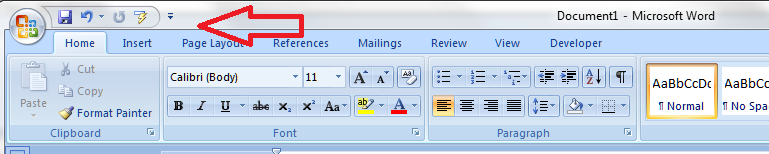
So, first of all we need to go up to the Quick Access Toolbar, right at the top of your screen in Word 2007 and Word 2010 (in Word 2003, right click on the main toolbar and customise it). Note the down arrow to the right of your standard buttons, and click it:

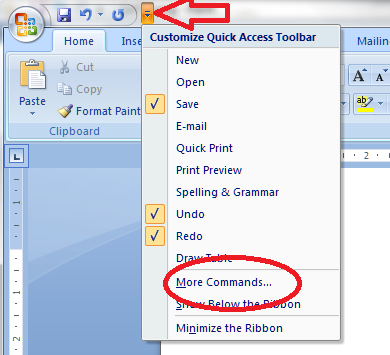
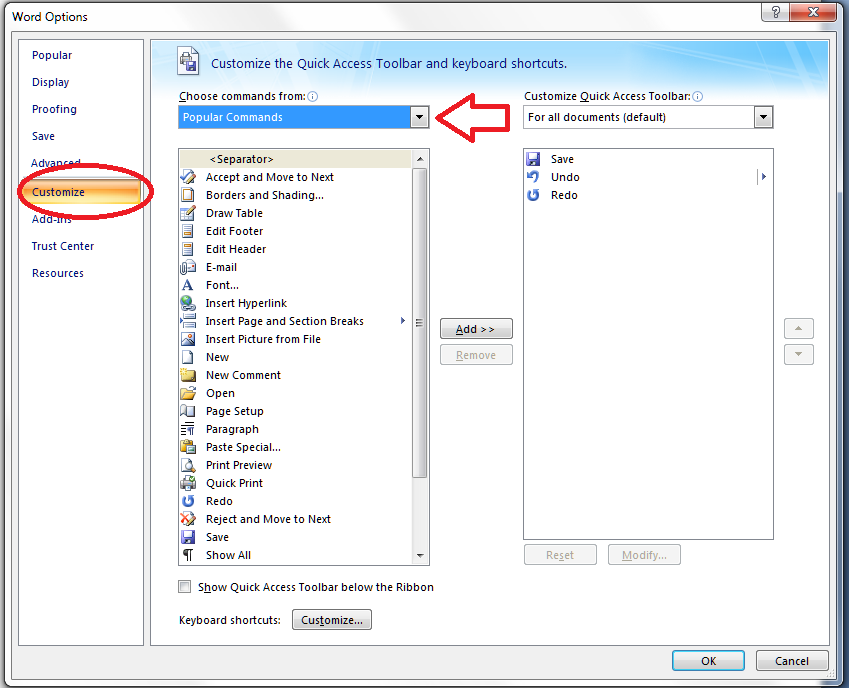
You will notice an option to choose More Commands – this is how you add more buttons to the Quick Access Toolbar. Click on that, and you’ll get a screen which allows you to customize the Quick Access Toolbar:

Note at this point that you can access this menu via Word Options – Customize, too, if you want to.

We can now see a whole load of Popular Buttons you can add on to the Quick Access Toolbar – so you can pop them on there to get at them whenever you want to. These are a few buttons that appear at the top level when you click on any of the tabs on your main ribbon.

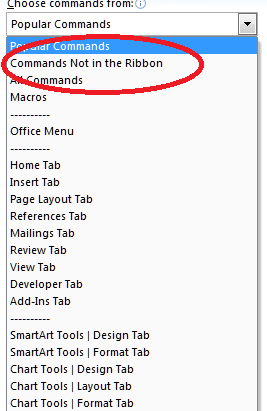
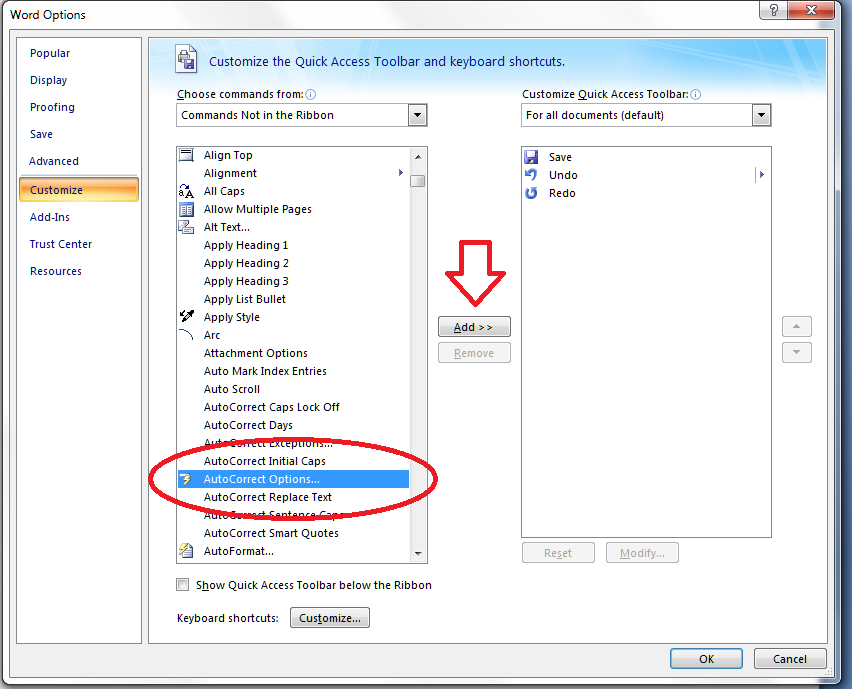
We’re going deeper, though, into buttons and commands which don’t appear on the top level of your tab menus. So click on the arrow next to Popular Commands and you’ll get a list of options:

You can choose All Commands, which will give you every command and button (with a hover-over tip to which menu they belong to so you can choose, for example, Spell Check from the Review tab rather than the Blog version, which won’t do much for you in a standard Word document. In this case, to add our deeply buried button, we want to choose Commands not on the Ribbon.

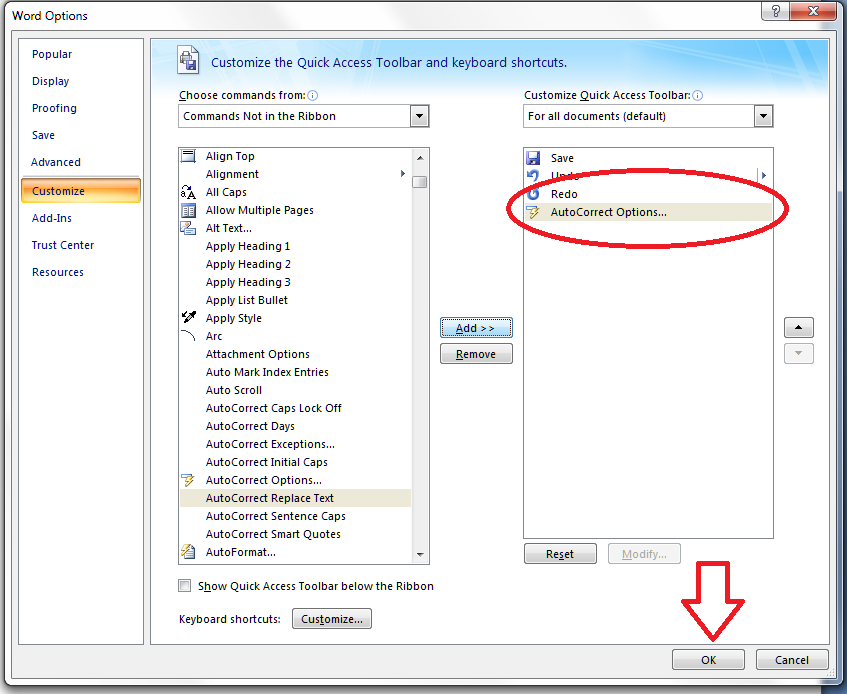
Now you have a list of every command and button that exists in Word. How handy that AutoCorrect begins with an A! Look for your button and highlight it, then click on Add >> to add it to the list on the right – which is the list of buttons that appear on your Quick Access Toolbar. At this point you can even choose when these buttons will appear, but I always leave it on All documents. When you’ve pressed Add, there it is, on the list:

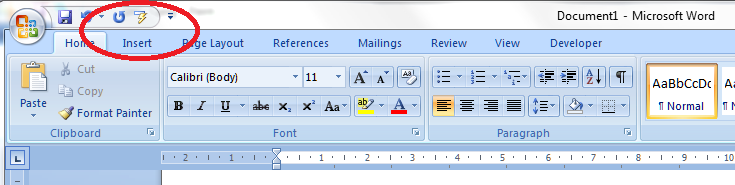
Click on OK and it will magically appear on your Quick Access Toolbar:

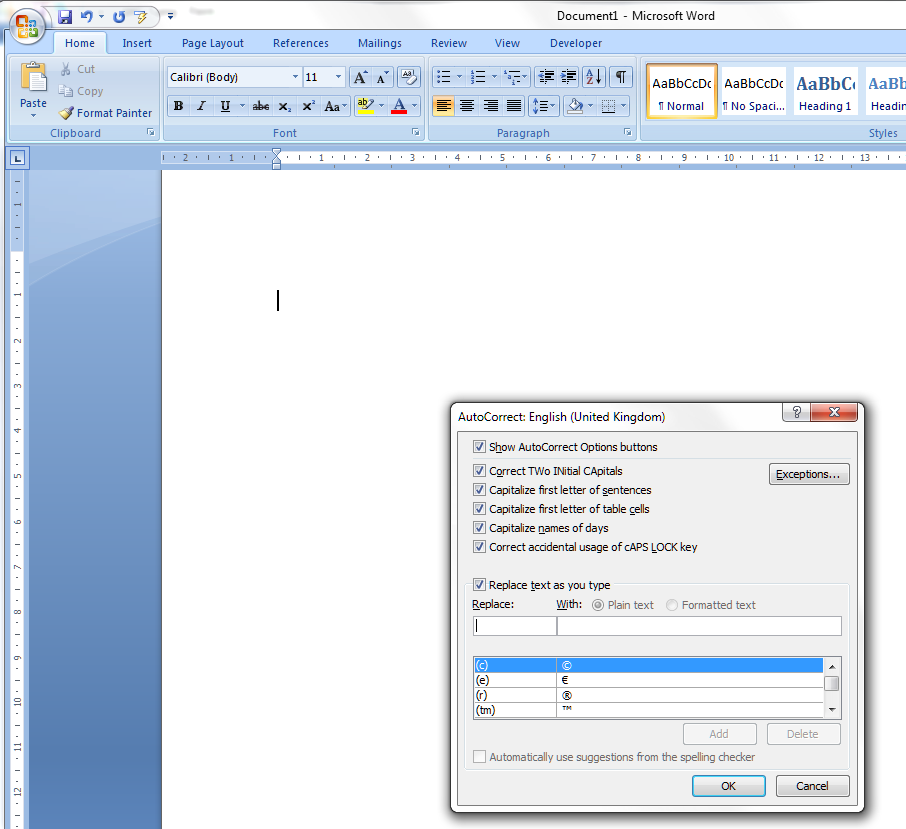
Want to check it’s true? Click on the little icon, and there’s our familiar AutoCorrect menu.

What a time saver! I’ve added all my very commonly used buttons from different menus onto my Quick Access Toolbar, from Bold to Spellcheck and all sorts of other things in between …

Adding items quickly to the QAT

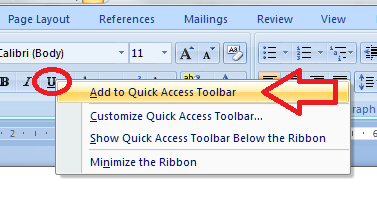
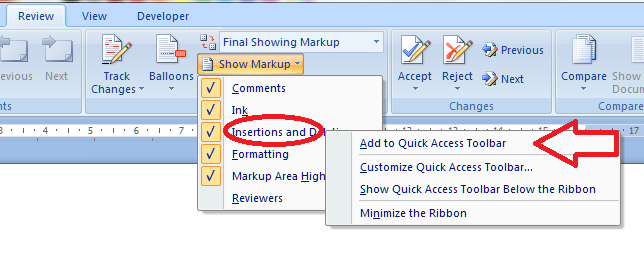
Edit to add: If you have the button you want to add to the QAT in front of you, simply right click on that button and you will get the option to add it to the quick access toolbar!

Magic! And it works however deeply buried the button is in your lists of commands – for example, you can choose something that appears in a menu within a menu:

Please note, these hints work with versions of Microsoft Word currently in use – Word 2003, Word 2007 and Word 2010, all for PC. Mac compatible versions of Word should have similar options. Always save a copy of your document before manipulating it. I bear no responsibility for any pickles you might get yourself into!

This is part of my series on how to avoid time-consuming “short cuts” and use Word in the right way to maximise your time and improve the look of your documents. Find all the short cuts here

 
24 Comments

Posted by on June 27, 2012 in Errors, New skills, Short cuts, Word


Tags: , , , , , ,

Sian Edwards

Welcome to Saturday Business chatToday I have the great pleasure of introducing Sian Edwards, a friend and fellow home-worker who lives locally to me. If you do work from home, it’s great to have local people around who you can meet for a coffee and a chat when work and time permit. Sian also told me about proz.com, which is a great resource if you’re a translator or, like me, you do localisation, as it puts you in touch with customers all over the world.

It always makes me happy to see how much my interviewees love their work, and here’s another person who does! Let’s meet Sian …

What’s your business called? When did you set it up?

I trade under my own name and have been a freelance translator since 2006. I worked in various roles at three different translation agencies before taking the plunge.

What made you decide to set up your own business?

I wanted the flexibility to fit my work around my family life.

What made you decide to go into this particular business area?

I have always enjoyed translation, ever since I was a student. I enjoy it so much that it hardly feels like work! So it was an obvious step for me.

Had you run your own business before?
No.

How did you do it? Did you launch full-time, start off with a part-time or full-time job to keep you going … ?

I jumped in at the deep end. I’ve been a full-time freelancer from the start. But I did have a lot of work from my former colleagues already lined up.

What do you wish someone had told you before you started?

Don’t rely on just one or two clients. I lost my major client after a few months and, although I was able to replace them fairly quickly, I could have done without the panic!

What would you go back and tell your newly entrepreneurial self?

Get some business cards printed, go out and network! Don’t sit in front of the computer by yourself all day. It will be good for your state of mind and you might even get some work out of it.

What do you wish you’d done differently?

I wish I’d made the effort to find out more about accounting and tax when I started. Some kind of course or workshop would have been a good idea. The transition to paying six months of income tax in advance came as a particular shock.

What are you glad you did?

I’m glad I was bold. It’s not in my nature at all, as I’m quite a shy, introverted person, so approaching people I knew in the industry in the hope that they would send me work felt a bit cheeky. But it worked and gave me a much-needed boost at the start.

What’s your top business tip?

Don’t be afraid to say no. If you don’t have the time to do a good job, it’s better that you don’t do it at all.

How has it gone since you started? Have you grown, diversified or stayed the same?

The amount of work offered to me has gone up and up. At the same time the type of work I do has become more specialised.

Where do you see yourself and your business in a year’s time?

The same, but with a tidier office!

Ah, yes: the double tax thing (which I blogged about when it hit me). I found it so helpful to do my course at the beginning of my freelance life (see my post about setting up your own business for links) and don’t know how I’d have coped without it. Good luck with that tidy office, Sian!

Sian can be contacted via her profile on www.proz.com. She does German to English translation.

If you’ve enjoyed this interview, please see more freelancer chat, the index to all the interviewees, and information on how you can have your business featured.

 
1 Comment

Posted by on June 16, 2012 in Business, New skills, Small Business Chat


Tags: , ,

My short cuts – Using AutoCorrect in Word (2) Why and how to use it

Welcome to the second article in my series on AutoCorrect. Last time, we learned what AutoCorrect does (automatically changes words you type or spell incorrectly to their correct forms, e.g. changing “teh” to “the”) and where to find it in Words 2003, 2007 and 2010, and we can also set up a shortcut button to make it more accessible.

Now we’re going to look at how you can use AutoCorrect to speed up your typing and make it more efficient, and how you actually amend the AutoCorrect entries to tailor them to your requirements.

Why would I use AutoCorrect?

Apart from correcting common typos, AutoCorrect has two very handy uses: I use it in these ways all the time, and if you, you will save yourself time and effort.

  1. If there is a word you can never remember how to spell, set up a short cut AutoCorrect, just type in the first few letters, and AutoCorrect will auto complete it for you. No more finding it in the spell checker yet again.  Type in Kaz and Word will display Kazakhstan.
  2. If there is a long word or particularly a phrase that you use over and over again – “Creative and Marketing Director”, “economic forecasting”, “qualitative and quantitative research methodologies”, set up a short cut for each one and save all that typing (and possible typos). Type cmd, ef or qq and watch the phrases type themselves!

How do I tailor AutoCorrect to my individual requirements?

The key to this is in the AutoCorrect menu we met last time.

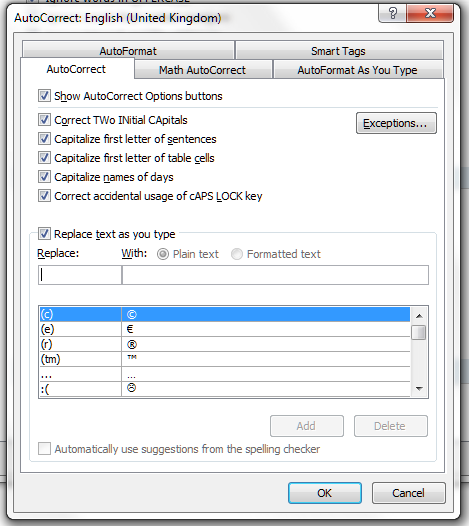
First of all, there are some useful features on the screen directly in front of you. Here’s how you turn on and off all those useful features that sort out typing errors as you go (we’ve all typed THe at the beginning of a sentence, haven’t we). You just untick the box if you don’t want it to do something. By the way, we’ll be looking at those other tabs along the top, especially AutoFormat As You Type, in another article.

So, for now, we’re working with the standard AutoCorrect. We’ve started off with a list of signs and symbols, because they come before “A” in Word’s alphabet. To see what else there is, try typing a letter into the top, blank fields. Here we have a mixture of the standard AutoCorrect entries (abouta changes to about, etc.) but the top two are my own additional entries. See how many keystrokes and how much time I save by typing aaa and getting accountability agent application inserted into my document (plus it’s typed correctly first time!).

How to add a new entry to AutoCorrect

Let’s look at how to add those new, personalised AutoCorrect entries. Well, it’s pretty simple. Type the abbreviation or mis-spelling in the left hand column (or field), the text that you want to appear in the document in the right hand field (or highlight the word you want to add an entry for in your document, then access this menu), and press Add.

You can see that your entry has now appeared on the AutoCorrect list, in its place in the alphabetical order. Now, whenever you type lb, the words Liz Broomfield will appear in your document.

How to delete an AutoCorrect entry

What if you want to delete an AutoCorrect entry? I did this recently – I had set re to AutoCorrect to recognize for a document I was working on that had no contractions (they’re, etc.). Of course, when I was then typing something more informal, I got lots of they’recognize as it tried to do what I’d asked it to do. So I wanted to get rid of that entry altogether. Here’s how you do that: Look up the entry by typing in your abbreviation – what you type as opposed to what you want to come up. When you’ve found the one you want to delete, press the Delete button.

Now you can see that the entry for lb/Liz Broomfield has disappeared and the list goes from lastyear to learnign. Note: it doesn’t ask you if you’re sure you want to delete, but it does leave that entry in the top text fields, so if you’ve made a mistake, you can just add it again.

How to change or replace an AutoCorrect entry

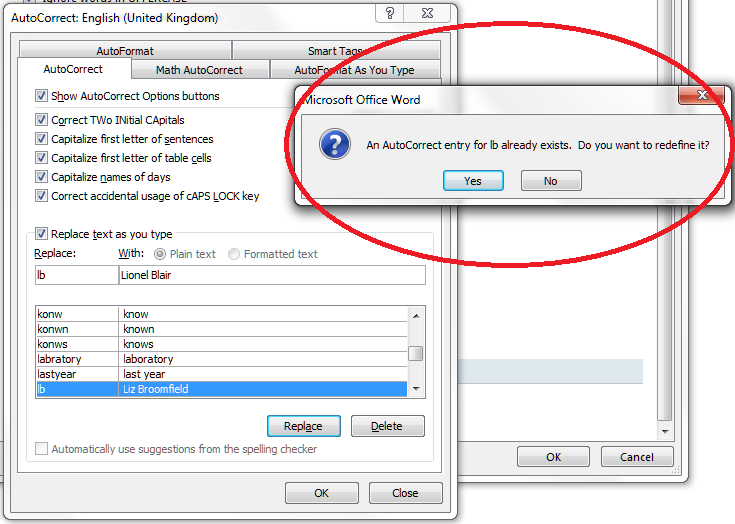
You may want to change an AutoCorrect entry – for example, you’re stopping talking about Liz Broomfield and want to refer to Lionel Blair. Type in your abbreviation and your new version of what you want Word to insert, in this case Lionel Blair. AutoCorrect will find the original entry and highlight it. The Replace button will appear – so press that.

Word does like to make sure you mean to do it when you change something, so you’ll get another little dialogue box asking if you do want to redefine this AutoCorrect entry. Press Yes (if you do).

and there you go: Liz Broomfield has changed into Lionel Blair.

Today we’ve learned why to use AutoCorrect and how to personalise it to help you type efficiently.  If you’ve found this article helpful, please leave a comment or click one of the “like” buttons below! Thank you,

Please note, these hints work with versions of Microsoft Word currently in use – Word 2003, Word 2007 and Word 2010, all for PC. Mac compatible versions of Word should have similar options. Always save a copy of your document before manipulating it. I bear no responsibility for any pickles you might get yourself into!

This is part of my series on how to avoid time-consuming “short cuts” and use Word in the right way to maximise your time and improve the look of your documents. Find all the short cuts here


Tags: , , , ,