RSS

Tag Archives: Copyediting

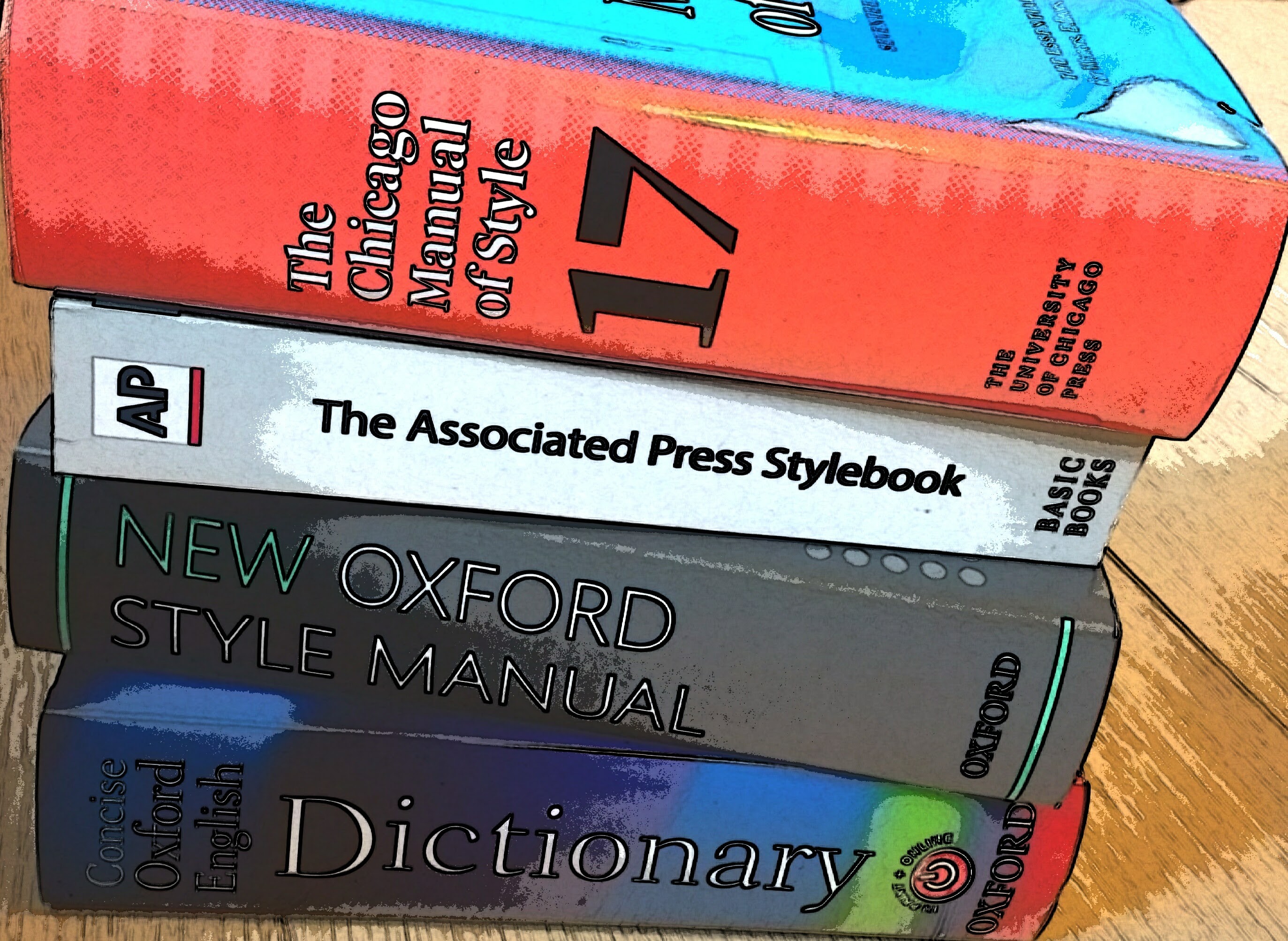
Can I still access Chicago Manual of Style 17th edition online?

Can I still access Chicago Manual of Style 17th edition online?

Writing in June 2025, I’m in the slightly odd position of having two editing jobs to hand that require Chicago Manual of Style 17th edition (CMOS 17), even though CMOS 18 has been out for almost a year (published in September 2024). I have an online subscription to CMOS 17 and, fortunately, I thought, print copies of both books.

I was busy leafing through my CMOS 17 while editing, reminding myself of the two major changes between the two that affect me here (CMOS 18 drops the requirement for a place of publication in the bibliography, and three or more authors (not four or more) are represented by first-author, et al.)

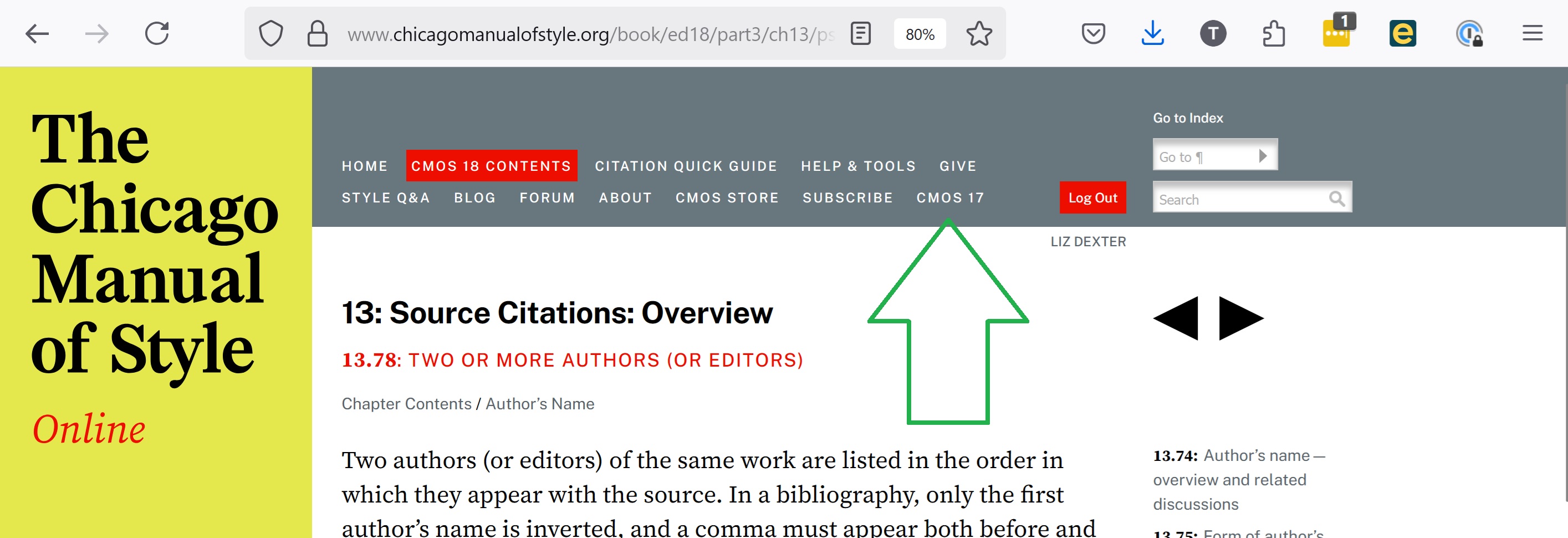
But look:

When you are in CMOS 18 online, there is a menu option for CMOS 17, and you can flip into that (or open it in a new tab), and it’s fully searchable, just like CMOS 18 online.

And I’ve written this both to remind myself and to let anyone else know who hadn’t realise. Thank you, Chicago Manual of Style people!

This post has shared that you can still access Chicago Manual of Style 17th edition online, even though the 18th edition is now the current one.

 
1 Comment

Posted by on June 28, 2025 in Copyediting, Reference materials


Tags:

Book review – Vivek Kumar (ed.) – “Discover the Editor in You”

My editing colleague Vivek Kumar shared last year that on behalf of the Indian Copyeditors Forum, he had curated a volume designed for the new editor or person considering a career in editing, so of course I rushed to buy it, and then of course it’s been over a year until I’ve got it read (but this is also fortuitous: see below).

In that time, I have to say, the development of Artificial Intelligence has leapt forward and I do worry that many of the processes of our profession are going to disappear as human processes, but for the time being you can get a good grounding in the career from this book.

Incidentally, talking about careers, I am publishing this review on the 15th anniversary of my issuing my first invoice, the basic start of my copyediting, proofreading and (slightly later) transcribing career!

Vivek Kumar (ed.) – “Discover the Editor in You: Copyediting as a Career”

(27 July 2023)

This is a great resource for new-career editors or those considering a career in the profession – or, indeed, in related professions.

In shortish articles written by a great collection of editing colleagues from India, the US and the UK, professional editors (etc.) share their lessons and recommendations, covering the skills and mind-set needed, gaining training and credentials and the nuts and bolts of editing in different niches (academic, school textbooks, fiction, newspapers and magazines and technical documents).

The Techniques and Craft section digs deep into clear writing, style guides, querying authors and fact-checking, and a fourth section on Allied Services gives a good flavour of the associated careers of proofreading, alt-text writing and indexing. Appendices offer a list of courses and a useful glossary.

There is some India-centricity, as befits a book written by the Indian Copyeditors Forum, but also has an international reach, covering associations, practices and training across the world.

A really good resource that I’m sure will help many develop the skills and confidence to work in this field professionally.


Tags: , ,

Why should editors be thinking about and using conscious language? [shared post]

Why should editors be thinking about and using conscious language? [shared post]

Today I’m sharing what is the best explanation I’ve seen of the need for editors to be aware of conscious language. I’m a non-fiction editor and Louise Harnby edits fiction but the principles remain the same.

In her article, Louise Harnby covers:

  • What is ‘conscious language’?
  • ‘But I’m not part of the “woke” brigade’
  • The foundations of editing
  • Are you part of the professional editing brigade?
  • Why conscious language is also about successful authoring
  • Why conscious language is about consideration rather than prescription
  • A case study
  • Helping our clients
  • Tools that help with conscious language

Read the rest of the article here.

This is such an important topic. I’ve been using “singular they” for a long time, and other aspects I’ve covered in my editing include not gendering people when they’re mentioned as examples in texts, working to eliminate terms in networking which are now outdated and pejorative and suggesting different terms for ones which are now considered pejorative in an ablist context.

As Louise mentions, as professional editors, we’re aiming to help our authors reach as wide an audience as possible, and if they risk alienating portions of that audience through the use of language that can be avoided, it’s our job to help them not do so.


Tags: , ,

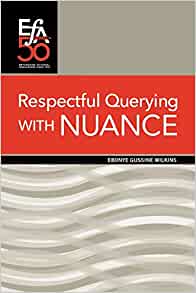
Book review – Ebonye Gussine Wilkins – “Respectful Querying with NUANCE”

Book review – Ebonye Gussine Wilkins – “Respectful Querying with NUANCE”

This book is published by the Editorial Freelancers Association, who are based in America, and I ordered it direct from them. My attention had been drawn to it by a couple of fellow-editors and I thought it would be useful to read and then share about here.

What it says on the back of the book

The blurb on the back summarises the book perfectly:

Editors working with writers of color or marginalized writers have dictated editorial changes that have misrepresented the writers’ voices for far too long. Writers receiving assistance from editors who don’t share their cultural backgrounds or experiences often don’t get the appropriate editorial support because of misunderstandings. Respectful Querying with NUANCE offers a framework that allows editors to continue to provide the necessary guidance while still respecting the author’s voice and encouraging the author to make the manuscript’s final editorial decisions.

Ebonye Gussine Wilkins herself is “a social justice writer, editor, and media activist shaping media through the lens of inclusion” (p. 29) and as such is ideally placed to guide other editors through this process.

What you get in the book

The introduction sets out the author’s stall as someone who is not a gatekeeper or rule-imposer but just wants to “help the writer put forth the best version of their manuscript” (p. v). She moves on to talk about how writers of colour or writers from marginalised communities outnumber editors of colour and from marginalised communities, so there are likely to be occasions when there’s a mismatch between the cultures of the writer and the editor. The editor in this case needs to be extra careful to let the author’s voice shine through and to not seek to suppress evidence of the author’s culture or background in their editing work – especially through their queries.

A query is where the editor puts a comment in the text because they’re not sure what the author intended to put across or needs to make a suggestion. For example, I have used queries recently to check what word someone intended to use when I suspected their voice-to-text software had inserted something a bit odd and, in a sort of backwards version of what this book is talking about, to suggest an author used singular they instead of he/she to avoid gender binary issues in the text. What Wilkins wants editors to do, entirely appropriately, is to take special care when doing this to pay attention to the author’s culture, and not to, for example, smooth out specific cultural terms into more ‘mainstream’ ones they might know and accept more readily themselves, certainly not without thinking about it. The main thing is to empower the author to make decisions on what’s in their own text, and to make sure that the editor’s culture, especially if it’s the dominant culture in the society in which they’re working, doesn’t dominate the author’s own voice.

Wilkins offers a handy framework to do this, based around NUANCE (Notice – Underscore – Accept – Narrow – Consult – Empower). I won’t go into all the details because then I’ll just be parroting the book. If you’re an established editor used to working supportively with writers of different groups to your own, you will probably do this intuitively. If you’re a new editor, or someone who’s feeling a bit challenged by working with someone’s manuscript that is different from your own more commonly held experiences, you’ll find this framework very useful.

My thoughts

I think this is a really good resource, especially for new editors or those needing to come to terms with working with texts that approach issues from or are written from other than their own cultural or personal characteristics. I’ve worked with all sorts of authors for years, and it encouraged and reassured me that I’m on the right tracks with the way I work with clients who are different to me in their backgrounds and lived experiences. The worked examples were useful, and the emphasis on looking things up and checking them with other external sources before assuming they’re incorrect was written in a way that was useful and supportive to the editor. In addition, with more lists and directories available of editors with different cultures and characteristics, I would – and have – directed authors who come to me with very specifically culturally rooted texts to approach an ‘own voices’ editor to work with them, something which may well be more comfortable for both, if they choose to. If they choose to work with me, I’m more confident after reading this short book that I will be able to support and empower them, working with them to make their text represent them and their thoughts as well as it can.


Tags:

Gendered language and language change

Today I’m sharing an excellent paper, “The State of Gendered Language“, written by experienced and highly respected editor Sarah Grey.

Gendered language is language that takes account of gender and gender-related terms in a marked way, for example using “female doctor” or “male nurse” to point out ‘deviations’ from some shared ‘norm’, using the pronoun he for unnamed examples of bosses, and she for unnamed examples of secretaries, or promoting the gender binary by using he/she or his/hers when there are plenty of folk who exist along a continuum that’s not just binary.

As writers, it’s important to be inclusive – mainly for social and ethical reasons but also, why limit our audience? This article is likely to help writers understand the background of the changes they might be asked to make by editors, agents or readers.

As editors, many of us try to introduce these concepts to authors who might not have encountered them. This article gives us a great resource to back up what we’re saying with some solid and professional facts and references.

Sarah Grey’s article “The State of Gendered Language” appears on the Chartered Institute of Editors and Proofreaders’ website. Thank you to my colleague Katherine O’Moore-Klopf for drawing my attention to it.

Other related articles on this website

Medalling, podiuming and singular they

 
Leave a comment

Posted by on December 6, 2021 in Copyediting, Ethics, Language use, Writing


Tags: , ,

Do editors make mistakes? What should you do if you find your editor has made a mistake?

I have written a little bit about errors in editing before, but this article by my colleague Erin Brenner of Right Touch Editing says everything that I would say about the issue.

Another reason editing can’t be perfect is the simple fact that editors are as human as writers and designers and every other person on our planet. Even though we’re trained and practiced at finding errors, we do miss them. And we’ll miss more of them when there are a lot of errors in the manuscript. Catching more errors might mean taking another pass through the document, which could mean more time and more expense. A good editor keeps your timeline and budget in mind when trying to make the manuscript the best it can be.

Read the full article here.

 
1 Comment

Posted by on October 25, 2021 in Copyediting, Errors, Ethics, proofreading, Writing


Tags: , , ,

What are the stages involved in writing my book?

a hand writing in a bookWhat are the stages involved in writing a book? Where do editing, proofreading and beta reading fit in?

Authors often get confused about the different stages and people involved in getting a book published. It’s not as simple as “Write a book – get it published!” but nor should it be so complicated that only the professionals understand it.

I work with a lot of people who are indie-publishing or self-publishing their book, however these stages will be roughly the same whether you’re publishing in the traditional route with a publisher, or going it alone. When the publisher gets involved can also vary.

What are the processes my book needs to go through?

Here are the basic stages for your book.

  1. Plan
  2. First draft
  3. Second draft
  4. Beta readers
  5. Third draft
  6. Edit (usually in Word)
  7. Fourth draft and preparation for publishing (layout artist, cover art, blurb)
  8. Proofread (usually in PDF or another file format from which the book will actually be produced)
  9. Publish

Note: You might have a substantive edit before or just after the beta readers; if you have one after that stage, it’s an idea to add another beta read in afterwards, which would give you this:

  1. Plan
  2. First draft
  3. Second draft
  4. Beta readers
  5. Third draft
  6. Substantive edit (usually in Word)
  7. Fourth draft
  8. More beta readers or the same ones again
  9. Fifth draft
  10. Edit (usually in Word)
  11. Sixth draft and preparation for publishing (layout artist, cover art, blurb)
  12. Proofread (usually in PDF or another file format from which the book will actually be produced)
  13. Publish

One last point: it’s better to have your edit and proofread done by different people: just as it’s hard to edit your own work, it’s hard not to miss things if you’re proofreading something you edited. See the link below for how to handle the style sheet you will need.

Other useful articles

The different kinds of editing and proofreading (it’s biased towards fiction but also works for non-fiction):

All about beta readers and what to ask them

Style sheets to pass from editor to proofreader

How to request a quotation from an editor

Negotiating and booking in your project

I hope you’ve found this very quick guide to the process of editing and proofreading useful. If you have, please share this article using the buttons below, or leave me a comment. Thank you!


Tags: , ,

Can I print a Word document to PDF and retain the tracked changes?

If you want to print or save a Word document to change it into a PDF, and you have Tracked Changes showing in the Word document, will those tracked changes still show up in the PDF?

I needed to check this myself this morning, so now I’ve confirmed what happens, I thought I’d write a quick article about it, on the grounds that if I’ve had to check, someone else will need to, too (bloggers: this is a good way to inspire blog posts if you’re lacking ideas!).

So here is the definitive answer to the question Can I save a Word document as a PDF and keep the tracked changes showing.

Why save a Word document with tracked changes into a PDF?

This came about because I was discussing plagiarism with a colleague and explaining what I do if I need to confirm from a client’s supervisor that it’s OK to make as many changes as I’m making to their text. I mentioned that sometimes I will send over a copy of the work so far, and sometimes I’ll go as far as to turn the Word document into a PDF so it can’t be altered between me and the supervisor. But will the tracked changes still show up?

Proof that tracked changes still show on the PDF

So here’s my Word document, complete with tracked changes (make sure these are showing):

A word document with tracked changes

Just a reminder that in the newer versions of Word you can save to a PDF automatically without having to go through third-party software. Choose File – Save As then drop the file type down to choose PDF:

Save Word as PDF

Then when you open it in your PDF reader (I use PDF-XChange Viewer), there are all the tracked changes!

Tracked changes showing in PDF

So, if you want to preserve your tracked changes so they can’t be, um, well, changed, printing to PDF will give you an image of them you can share.

I hope you’ve found this useful – do click the Like or Share buttons or comment if I’ve helped you out!

Please note: these tips work for Microsoft Word version 2007 and upwards. They are not guaranteed or tested for Word for Mac.

Other track changes articles on this website

Track changes 1 – why use it, where can you find it, what can you do with it?

Track changes 2 – customising Track Changes

Track changes 3 – working with a document with tracked changes

How do I accept one reviewer’s changes?

Why are my tracked changes changing colour?

How do I get rid of tool tips on tracked changes?

 
Leave a comment

Posted by on July 24, 2019 in Copyediting, proofreading, Skillset, Word


Tags: , , , , , , ,

Student at risk of plagiarism 2: What do you do when the editor risks changing too much of the text?

text with tracked changesPlagiarism involves passing someone else’s work off as your own. There are two kinds of plagiarism: there’s plagiarism done by the student when they don’t reference or credit a quotation or theory and are therefore effectively using someone else’s work without credit (which I’ve written about here). The second kind of plagiarism, which we’re talking about here, is where an editor has done so much work on a student text that they’re almost a second author, and the student is then at risk of passing the editor’s work off as their own.

I have written this series of articles for editors who are working with documents produced by students: an essay, thesis, dissertation or article, for example.

Let’s have a look at the levels of change an editor might make when working with student materials and how to tell when the editor is at risk of plagiarism from the level of work they’re doing on the text.

Usually when working on student essays, dissertations and theses, I will come across issues with the language and writing:

  • Uses capitals and hyphens inconsistently
  • Uses British and American spellings (or British s and (Oxford) z spellings) inconsistently
  • Uses inverted commas for quotations and scare quotes inconsistently
  • Uses the wrong tenses
  • Uses the wrong agreements (he have, they has)
  • Includes typos (form/from)
  • Has a sentence structure which is confused BUT I can tell they understand what they’re writing about and have made a good attempt to write that in English (English is not the first language of most of my student clients)

There’s an accompanying issue with the reference list or bibliography, so a minor issue would be:

  • Some mistakes and inconsistencies in the bibliography, where I’m not changing more than about one in ten entries in a major way (turning book titles into italics, etc.) or one in five in a minor way (full stops after initials, making spacing of initials consistent)

In these cases I will (with Track Changes turned on, of course!) and make it all consistent and amend the tense, agreement, typo or sentence.

And, if I find

  • A theory or term which is not explained
  • A sentence which can be taken in one of two ways, and it’s not clear what it means
  • A sentence or paragraph which is jumbled or confused and I can’t make it out

I will leave the sentence and add a comment explaining that the term needs to be explained, what the ambiguous sentence could mean or that I can’t understand it and the student needs to rewrite it.

And if there’s

  • A reference that’s missing publisher or place, journal volume, etc. information

I will add a note that the student needs to check and add the relevant information

It’s probably worth mentioning here that I offer to re-check up to 10% of the total word count after rewrites; this feels fair to my student clients and I’ve never had anyone ask me to re-check anything like that amount of text.

But what if it’s more major changes and the resulting risk of plagiarism?

More major issues would include

  • Confused use of terms which clearly show a lack of understanding of the subject (this sounds nebulous but jumps out in real-life examples, none of which I can obviously show you!)
  • Garbled results which don’t make sense
  • Many sentences which aren’t at all clear or, if I can guess the meaning, would need a complete rewrite to make them at all clear – and I start having to do that
  • A completely chaotic bibliography with no attempt to make it consistent or match it to the style guide which needs work on almost every entry

If any (or all) of these are present in the text, and I’m making a lot of comments on the text, plus a lot of the changes in the above sections, I will get to a certain point (usually 1,000-2,000 words in), have a look at what I’ve done, and make a judgement as to whether I’m risking changing too much.

It’s all done in Tracked Changes so surely I’m not writing it for them!

Yes, we do everything in Tracked Changes as standard, and I have standard text which asks the client to examine all changes and decide if they accept or reject them. However, there is an “Accept All Changes” button and with the best editor will in the world, some students will just press that. How much of the work then is theirs?

What do I do if I find I’m doing too much on a text?

I want to highlight here that this is often not the student’s intentional fault. This applies to referencing, too, and it’s often to do with the learning they’ve received in their home country, the pressures of having to write in their non-first language, and pressures from home around getting this UK or US degree and bringing that knowledge home. But I believe we have a duty to help the student not plagiarise. In the case of referencing, this will get caught by software used by the universities such as TurnItIn. In the case of our work, it might not be so detectable, although a supervisor presented with perfect English by a student who struggles to write in English may be suspicious. We want to help our clients and make sure they don’t get accused of something they didn’t intend to do.

Sending feedback to the student and their supervisor

It’s at this point that my articles on the two kinds of plagiarism coincide. if you’re following along with this series in real time, I’ve already written about what to feed back to the student and their supervisor and how to do it, so as to avoid making you wait for the punchline by doing it the other way round.

So to find out my good practice in contacting students and their supervisors over the risk of plagiarism, please see this article.

Related posts on this blog:

Student at risk of plagiarism 1: What do you do when a text isn’t referenced properly?

Student at risk of plagiarism 3: Sending feedback to your student client and their supervisor

Plagiarism in business texts

On plagiarism

How to quote sources without plagiarising

Referencing for academic writing

Choosing a proofreader – student edition

My terms and conditions

Why has my proofreader not edited my bibliography?

On (not) crossing the line
 

Tags: , , , , ,

Student at risk of plagiarism 1: What to do when the student hasn’t referenced their text correctly

text with tracked changesPlagiarism is the act of passing someone else’s work off as your own. There are two kinds of plagiarism in student work: one is plagiarism done directly by a student, where they fail to reference or credit a quotation or theory and are effectively using someone else’s work without credit. The second kind of plagiarism is where an editor has done so much work on a student text that they’re almost a second author, and the student is then at risk of passing the editor’s work off as their own.

This article is written for editors who are working with student texts, whether that’s essays, dissertations, theses or articles for publication.

Let’s have a look at the levels of risk of plagiarism and an example of good practice when working with student materials when the editor is at risk of plagiarism from the level of work they’re doing on the text.

Often when working on student essays, dissertations and theses, I will come across a small example of a risk of plagiarism. This could include

  • A statement such as “researchers have found that” before an assertion, without a reference to who has found this information
  • A reference not being included after a quotation, where most of the quotations are referenced correctly
  • What is clearly a direct quotation which has not been placed in inverted commas, even if it’s got a reference after it, but this is an anomaly in an otherwise well-referenced document
  • What is clearly a direct quotation which has not been placed in inverted commas AND it hasn’t got a reference after it, but this is an anomaly in an otherwise well-referenced document

I count these as minor infringements and I will just mark these up with a comment asking the student to provide the reference, add inverted commas or rewrite the sentences in their own words.

I should mention here that I offer to re-check up to 10% of the total word count after rewrites; this feels fair to my student clients and I’ve never had anyone ask me to re-check as much as that: if it happens, it’s usually about 1%.

Red flags in referencing

Unfortunately, I do come across student texts (and this is not limited to students: have encountered web text and even books lifted from other sources without reference) where the following occurs:

  • What is clearly a direct quotation which has not been placed in inverted commas, even if it’s got a reference after it, happening multiple times
  • What is clearly a direct quotation which has not been placed in inverted commas AND it hasn’t got a reference after it, and this is happening multiple times, even pages and pages worth of direct quotations from other sources
  • A section in a different colour or font where no attempt has been made to hide this has come from elsewhere
  • A section where the client has either added a comment or put it in a particular colour and asked me to rewrite what is clearly a direct quote from elsewhere (this is thankfully rare)

How do I tell when something’s a direct quote that the student hasn’t either referenced or written themselves?

  • The standard of English changes, sometimes subtly, sometimes very obviously
  • The type of English changes (US to UK, s to z spellings, and vice versa)
  • Referencing within that section is markedly different to that within the student’s own work
  • It’s in a different colour or font

How do I check if text is not written by the student?

Google is my friend here? I take a sentence, pop it in Google and see where it came from. My suspicion that it’s someone else’s text are usually correct.

Sending feedback to the student and their supervisor

I try to be kind here. The student may be under a lot of pressure, or may not have understood how to do referencing. I will guide them to ask their supervisor or any support they have in the department or their university library.

It’s at this point that my articles on the two kinds of plagiarism coincide. if you’re following along with this series in real time, I’ve already written about what to feed back to the student and their supervisor and how to do it, so as to avoid making you wait for the punchline by doing it the other way round.

So to find out my good practice in contacting students and their supervisors over the risk of plagiarism, please see this article.

Related posts on this blog:

Student at risk of plagiarism 2: What do you do when the editor is at risk of changing too much?

Student at risk of plagiarism 3: Sending feedback to your student client and their supervisor

Plagiarism in business texts

On plagiarism

How to quote sources without plagiarising

Referencing for academic writing

Choosing a proofreader – student edition

My terms and conditions

Why has my proofreader not edited my bibliography?

On (not) crossing the line
 

Tags: , , , , ,