RSS

Tag Archives: business

How do I get back to the full dashboard on WordPress.com?


I’ve been asked this question a few times recently, as WordPress has sought to make it easier for users to post a quick blog post or create a page. People who are familiar with the old, more detailed dashboard want to find it again. So here’s how.

How do I find the old dashboard on WordPress?

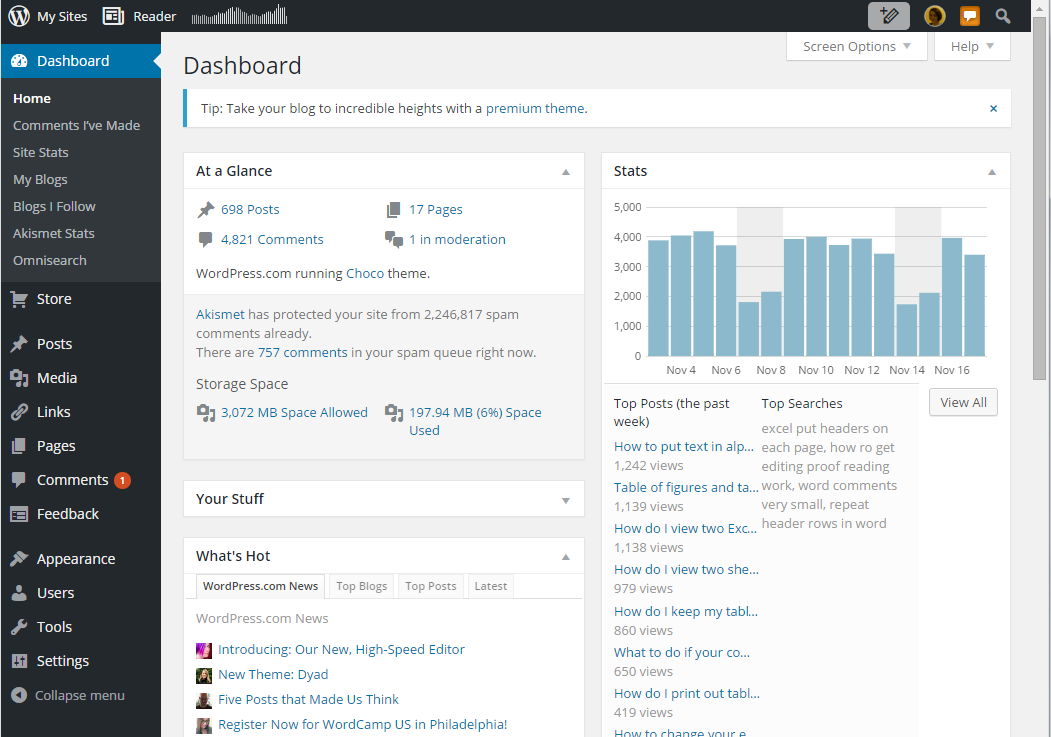
When you log on to WordPress, you will find a button marked My Sites. Click on that and you’ll get the new, simplified dashboard:

WordPress new admin page

Now click on WP Admin, circled on the above image.

This will take you to the old familiar interface:

Old WordPress dashboard

If this doesn’t work there is another tip, which is to add /wp-admin to the end of your page’s URL.

Note: this works for WordPress.com, the free version – self-hosted WordPress.org is a little different. If you’ve found this post useful, please do share it using the sharing buttons below.

Other useful posts on this site

Is it worth having a website for my business?

WordPress 1 – the basics – joining and setting up a blog (links to all the other WordPress tutorials)

Resource guide – blogging and social media

 
47 Comments

Posted by on November 18, 2015 in Blogging, Business, SEO, Social media, WordPress


Tags: , , , , , ,

Small businesses – what do you wish you’d known when you started?

Small businesses – what do you wish you’d known when you started?

I’ve interviewed 105 small business owners since June 2011 when I launched my Small Business Chat Interviews series on this blog. Some of them have just appeared once, two of them (so far) have reached their fifth interview. There’s a lot of info there, and every now and then, I pull out some useful stuff and put it all together in one post. Today, I’m looking at what people wish someone had told them before they started their business.

Of course, as expected, it falls into a few categories. Here they are – all anonymous, some edited down, but thank you to all of my interviewees again for sharing so honestly and openly! I think it’s so interesting that it doesn’t matter whether you’re a maker, a service provider or anything else – these are universal.

Money, tax and cash flow

Expect to spend several times more money and time on marketing than you plan to.

It would take time to develop, so to start with funds were stretched and there were initially a few worrying moments.

Certainly everyone wanting to be a writer should be aware that it is difficult to make a living – the average member of the Society of Authors earns less than five thousand pounds per annum from their writing.

None of your clients will pay on time!

Register for tax self-assessment in plenty of time as you can’t complete the thing before you receive their PIN number through the post, which can take up to a week!

I wish someone would have told me how much I was really worth! Perhaps it came with age, experience and maybe confidence, but I priced myself quite low compared to the rest of the market. On the other hand, I was running the business from my bedroom, so anything I earned went straight into my pocket, and this may have given me a competitive advantage while I got my feet under the table.

Don’t spend money on marketing companies which offer Google front page search results when you can do it yourself!

Not to bother with approaching banks and go for crowd funding right from the offset. The banks I’ve approached did not want to lend at all to me, which made equipment and investment in premises very difficult to fund initially.

That high street banks are not there to help you.

Sort out your prices from the start. Make sure to include everything you’ve used in your costing.

Finding Customers and Networking

That sales are harder than just rolling up and asking for the work! I really wish I’d overcome my reluctance to get out there and network much sooner than I did.

One thing would be don’t waste your money advertising in Yellow Pages and similar companies; networking and going out to meet people is by far the best way to gain new clients, although print directories are rather an old idea now with all the internet sites available.

Where the tree of clients is planted, and directions on how to get to it!

How many prospect clients are prepared to put up with a low quality or average quality of service from their existing provider and sometimes appear to be too lazy to want to make the effort to change to a new supplier.

It’s hard work and always keep in contact with clients and potential clients.

That at least half my time freelancing would be spent finding the next … project.

Don’t rely on just one or two clients. I lost my major client after a few months and, although I was able to replace them fairly quickly, I could have done without the panic!

Don’t put all your eggs in one basket, which I did … because they gave me so much work. When they closed, I was sunk. My other clients had all gone off and found other suppliers. I was really struggling to find childcare and it was all distinctly hairy for a bit.

You can’t set up a business and expect work to fall into your lap. You have to work really hard to get yourself out there and get clients. I knew this, but I was far too timid at first

The importance of contacts and networking.

Branding, marketing and differentiation

I wish someone had told me that by investing in my business I would take it more seriously – which would mean other people would take me more seriously. It was only really when I paid for a professional brand to be created that I began to treat it as a fully fledged business!

The importance of marketing. At the beginning I really expected that I would have clients kicking my door down without any effort on my part. I sat back and expected the business to come to me.

You need to understand two things to succeed – how you are different from all the other folks out there and how that translates into a value proposition for your clients.

The importance of promotion. Promotion is very important if your company and brand is to stand a chance in people’s memory retention when they’re looking for the services you provide.

That you need to work hard to market the business, not just do a few things and hope that lots of business will come your way. The first stages of a business are the most critical, and also where the most amount of marketing and advertising would be of the greatest benefit. Ironically, often new businesses scrimp on the advertising when working out a budget.

To be yourself, and not to be afraid of adopting a unique approach. When you start out its tempting to benchmark yourself with everyone else  and not to stick your head above the parapet in case you make a mistake. In fact, the market – ANY market – wants fresh original ideas and approaches rather than re-hashes of existing products and services, so I think it’s important to make your own mark as quickly as possible.

I wish I had been told to design my business stationery to meet my needs rather than adhering to a ‘normal’ format. For example: I designed my business cards with my name, job title, address, phone number, email and website because that’s what I had on my business card when I was a project manager. However, nobody that I hand these cards to will ever need to write to me. Phone me – yes. Email me – again yes. But write to me? Never.  I wish I’d saved the space I wasted on my address for showing more of the services I offer.

Don’t buy cheap business cards!

Get to grips with marketing – make a list of potential marketing strategies which can be developed as the business evolves.

Confidence, emotions and energy

That I could do it. Like everyone taking that big leap, it can be really scary at first. One year down the line, my confidence is high and the timing seems right for what I have done.

How much more of an emotional rollercoaster it would become.

That sometimes it is really difficult to get your head down and work from home – but that you are not the only one that feels like that.

Running your own business is a rollercoaster of emotions. The good days are so much better but the bad days so much worse because everything matters so much more!

That I could do it, and that I should have faith in myself. (this one is me!)

Have more confidence in yourself – take the plunge and go full-time earlier!

Just how busy I would be.

That nothing goes to plan!!

That there would be good days and bad days but that the excitement of managing your own destiny is worth it.

That it would take some time but I just had to hang in there and things would work out.

That you get out what you put in. Moving to self-employed, I thought it would be all fun and games and a walk in the park. Go to work when I want and leave when I want. This wasn’t the case.

Pace yourself.

Don’t worry. You will be fine!

How much time would need to be invested in networking to make a FB page work…

I wish someone had told me that getting a balance between work and home life is difficult.  I find that so many other businesses are run by people who have another job, that when I want to network online with them, I have to do a lot of it in the evening, meaning that there is a tendency to work all the time!  Had I been told this early on, I might have got the balance right sooner!

You can do this! I wish I had known someone who ran their own business back then, now I know loads of people! Maybe I would’ve taken the plunge sooner.

‘ITS LATER THAN YOU THINK! Sort your life out, you lazy sod!’ I would have liked them to have shouted that to me while shaking me by the lapels. I probably would have cried, but it would have been worth it.

Quite how many hours of my life it would absorb and how unfit I would become, spending so many hours at a computer. There are no nine to five hours involved when somebody wants to book, so it can be difficult to really relax and switch off from work.

Don’t panic, don’t stress!

Not to be as self-critical of what I do.

Keep going. You might think it’s too difficult, and some say it is very hard, but the emotional rewards that come from working for yourself are great.

Freelancing is a pretty slow slog to start off with, but if you keep at it, it does pick up.

That the ebb and flow that you get in business is normal. It takes a while to not panic when things slow down.

That it really is not as scary as you think it will be… quite the opposite – its exhilarating. The fear we build up in our heads, whilst it can feel very real, is really unjustified.  You have to realise and accept that things will not go to plan, and it may feel like it’s going wrong – but that is your opportunity to pick yourself up and find another way.  And every single time this has happened, I’ve always had a better result.

To keep going and remember to take time for yourself. It’s always difficult at first and each time I have progressed, it it has taken a few months to get into a comfortable work/life balance – but it always happens in the end!

That there will never be a right time to launch. It took me a long time to pluck up the courage to make the move, I was always waiting for something to get finished, or something else to fall into place. The perfect time will never come, so if you’re going to do something, you have to just make it happen

Believe in yourself and your abilities! Don’t wait until everything is perfect, just take those first few steps and before you know it things fall into place.

I guess the Guide motto is always useful – be prepared!  – and then be prepared to be surprised.

That this is a 24-hour business, both from the point of view that obviously someone could ring us in the middle of the night to ask about our services, but also more fundamentally that if it’s your own business, you can’t switch off. It even invades your dreams!

You will need to work harder than you ever thought you could. You need to forget about holidays for a few years.

How to know who to trust and when to say no

Be cautious in what you sign up for!

Learn to say no. When I quit my job, I was offered all sorts of opportunities, and as that kind of thing is very flattering, you commit to things that perhaps you shouldn’t. I have narrowed it down to four major projects now and happily they all tie in together.

Everyone has an opinion, they can’t all be right!

Not to trust everyone who offers to help you. Do your research and get to know people first.

No matter how desperate you are for work, if a prospective client makes your teeth itch, just say no. Trust your instincts, because if you engage with that person, you will regret it. I can still be conned occasionally, but I’m a lot better at qualifying customers than I was when I started out.

I wish someone had told me not to listen to the purveyors of doom and gloom. The people who draw breath through their teeth when you tell them you’re setting up a new business in the middle of a recession. This is a great time to set up: bigger companies cannot compete against SMEs on either price or quality of work. Nobody can afford the over-inflated prices of the fat cats and so they look elsewhere. Once you understand this you realise that this is the best time to start up!

From a freelance consultant’s perspective: don’t expect too much loyalty from people you know beforehand.  However positive they seem about you, they may not actually have the decision-making power to give you work!  Imagine starting out knowing ‘0 people’ and ask yourself if you think you can get complete strangers to believe in you.

That it’s OK to negotiate and that you don’t have to accept any rate proposed to you by clients or agencies. A bit of confidence in your skills goes a long way.

To never undersell yourself and realise the value of your time. I started off charging a ridiculously small fee for my work, not really taking into account the time an effort I put into each piece.

That people won’t always be happy for you . I’m a very honest and trusting person, so it shocks and upsets me when people actively try to stop you achieving your goals. I don’t understand it – it’s not in my mentality.

Stand up for yourself. For example, If you’re working for someone who has their own crazily complicated payment plan say, “No, this is how I work, this is how I invoice”, end of story.

Sometimes enough is enough and it’s OK to say no. I have been fortunate in that I’ve always had plenty of work, but that means I tend to work a lot of evenings and weekends. On the whole, I get a lot of satisfaction from doing that, but occasionally I think I could take on a little less work, and have a bit more time off.

That the value lies in the quality of the work I do, not the length of time I’ve ‘officially’ been doing it. I severely undervalued my services in the beginning, assuming that this was necessary to ‘break into the market’. In fact, that caused more problems; potential clients didn’t trust a low-priced service and consequently I had to work much harder for much longer, in terms of finding and securing clients and in terms of hours in for cash out.

Don’t be afraid to turn away clients who aren’t a perfect match.

One of the most important lessons is learning to say “No” to certain projects. When starting out, you are hungry for business and do not want to lose any potential deals, but there are some projects you need to walk away from. It is not worth winning a project at any cost, because you end up spending too much time and don’t make any money, or have clients you can never please. Being willing to walk away has provided me with the freedom to choose who I work with, and now when prospecting for clients, I want to see if the potential client is a fit for my company, as much as they are looking to see if I am a fit for them.

Contracts, legalities and business advice

It sounds cynical, but always get an agreement/contract in place with clients from the start so there is no room for misunderstandings especially when some clients try it on and try to not pay or pay late. Unfortunately there are some people like that out there.

That the customer was not always right! Well, partly due to my fault since I did not have documented ‘Terms and Conditions’ when I started. I had some challenges with customers owing money or not collecting their outfits at agreed times.

Listen to sound good business advice given from reliable sources such a Business Link.  You can’t do everything yourself, so outsource tasks to other people.

I read numerous books and watched endless programmes on other entrepreneurs and I learnt a lot from doing so.

How to price up my items correctly, I have under-quoted for so many jobs!  To have clear terms & conditions and a cancellation policy, I forgot about that bit and ended up out of pocket. ALWAYS take a deposit, even if the job is for a friend!

Knowledge and technology

Make sure you are fully up to speed on the technology side of things.

Make sure you are fully up to speed with the technology. We have to learn as we go.

How to run a business! It sounds so stupid to me now, but when I started I thought that running a business meant money coming in, money going out and paying an accountant once a year to submit my tax return.

I wish I had known how many resources were available to help get me started, such as classes and training, list-serves and discussion groups, online invoicing, etc. I did not need to reinvent so many things—it was all out there but I didn’t know where to look for it.

I wish I could have sat down with real entrepreneurs and just sounded them out before I started in business. I would have liked to have shared their wisdom.

I had really great advice from a successful friend before I started who shared so much of her knowledge. I wish I had listened and constructed a proper business plan, as I left that on the back burner and became a bit chaotic.

[For makers] photography is key. It seems obvious, but it’s really not when you start out.

I had the artistic skills, but I hadn’t appreciated how much time and effort all the other aspects of running a business – admin, marketing and so on – would take up.

I hope this huge wodge of learning points have helped you. If you have others to offer, or you think this article is great and would help other people you know, please add a comment or click the sharing buttons below!

If you’ve enjoyed this article and want to know more about the Small Business Chat interviews, please see more small business chat, the index to all the interviewees, and information on how you can have your business featured (I have a full roster of interviewees now so am only taking on a very few new ones). If you’re considering setting up a new business or have recently done so, why not take a look at my books, all available now, in print and e-book formats, from a variety of sources. 

 
10 Comments

Posted by on November 11, 2015 in Business, Small Business Chat


Tags: ,

Six things that you can do to increase your website or blog’s SEO (search engine optimisation)

Graphic showing an increasing numberSEO or Search Engine Optimisation is one of those mysterious areas of knowledge – like setting up a website – that people like to keep to themselves. If you’ve been involved at all with a website or blog, you will know that people tend to almost prey on newbies, offering to increase their SEO if they work with this or that company.

The impetus for this post came from offering some help to a community organisation I’m helping out with. They don’t have the money to spend on expensive consultancy, so I’ve put together this guide for them – and you – to help clarify the myths and provide you with some advice to help you build good SEO.

What is SEO / search engine optimisation?

SEO means making sure that search engines like Google and Bing find your content and present it to people who are searching near the top of the results (just below the adverts).

Although they obviously work for a profit and want to make people advertise with them, the search engines do want to get reliable, decent and useful information to their users – otherwise those users will go elsewhere. They go to a lot of trouble to weed out spammy and dodgy sites that will put users off and don’t provide useful and relevant information (if every search you did on Google only gave you results on how to improve your SEO, when you wanted to know about Halloween outfits for dogs, you’d soon get bored and use a different search engine).

Therefore, we need to make sure our blogs and websites have the right information and content that will prove to Google that we’re legitimate sites full of useful content that it’s good to show their users.

There are various technical and writing related ways to do this and I’m going to cover the simple ones that you can do with, for example, a free WordPress.com website or blog and no coding skills.

I’ll note here that there are more detailed and technical things that you can do, to do with the coding of the actual site – this will however give you some simple tools that I’ve used to get good viewing figures and good SEO.

My blog post referrersWhy do I need SEO?

You want people to read your stuff, right? Well, although many people will find your content, services, products, etc. through social media, recommendations, blog readers, etc., the majority will find you through search engines.

Have a look at the statistics pictured. This was on a day when I published an article that was shared quite a lot on social media. Where did I get all my hits from? Search engines. So it’s really important to make sure that when people search for keywords to do with my blogs in the search engines, they find my blogs and find their way to me, so they can buy my services / be helped by my informative posts / buy my books.

How do I improve and maintain my SEO?

1. Publish useful, relevant, original and “natural” content

This is my number one top tip. The search engines are always looking for ways to stop people gaming the system and this is a clear example – we’ve all found websites which just have lists of keywords, etc.

I’ve got good results from the fact that the text on this site is useful, it’s relevant, as in it fits in to various categories and has information on those categories (Word, business, social media, etc.), it’s original (all written by me) and it’s written in natural language that looks like it’s been written by a human, not a robot or machine translator or spammer. This will always outweigh everything else.

2. Publish content regularly

Search engines like material that’s updated regularly, as it’s indicative that the site is still live and up to date. Try to post at least once, if not twice a week – it doesn’t have to be massive long articles, but something twice a week is better than five posts in one week then none for a month.

3. Use keywords wisely

There are some “rules” about the keywords that you want to use to attract readers. Here are the ones that have worked well for me, as far as I can tell:

  • Place the keyword / phrase in the title of the piece – so, here I have used “Increase your blog or website’s SEO” in the title.This automatically adds is to the “metadata”, in this case the URL of the piece. There is more you can do with metadata which is outside the range of this article.
  • Place it in an H1 or H2 level heading – here, I’ve used it in top-level headings.
  • Use it in the description of an image – the image above has the words “increase SEO” in the description field.
  • Use it early on in the text and in the final paragraph.
  • Scatter it throughout the text – but NATURALLY. A good aim is to have the keyword / phrase represent no more or less than 5% of the whole of the text (so if your text is 100 words long, you need the keyword to appear around five times.

4. Use questions in the title and headings

Many people search using questions these days – have a look at your statistics if you can and see how many question phrases appear.

So, use questions in your title (this one doesn’t have a question, but many of my blog posts do), and in your headings. These may well echo the exact phrases that people use to search, boosting you higher in the results.

5. Use categories and tags or whatever your blogging platform offers

Categories, tags, whatever your blogging platform calls them, will be searched by search engines, increase the validity of your site and improve your SEO. Use them wisely, using general (reading, writing) and specific (WordPress, copyediting) ones to help your visibility and to help your readers navigate around your site and stay on the site for a longer time.

6. Make judicious and careful use of backlinks

Search engines like to know that a site is reputable and well-respected by peers. Therefore, they put a high premium on the sites that link into your website or blog (i.e. they include your URL / website address on their own site). Of course, a good way to build these is to reference other well-known and well-respected blogs and websites on yours.

However, this is a tricky area that is used very heavily by spammers, too. So here are some dos and don’ts:

Do:

  • Place guest posts on other people’s blogs that are relevant and useful to both your audiences. You should be given the opportunity to include a link back to your website.
  • Offer people in your industry guest posts on your blog (or run interviews with them, etc.) and ask them to link back to the piece on their social media and website.
  • Get yourself in well-renowned and useful / appropriate listings – for example I’m in a Find a Proofreader listing and one for a professional discussion list I belong to.
  • Carefully comment on relevant articles and blog posts, with a relevant and useful comment. As an example of another blog, I comment on book bloggers’ review posts if I’ve read the book or have something to say about the book they’ve read, and include the URL of my own book review blog in the URL field. That way, a network of links builds up.
  • Use whatever reblogging facility you have on your platform (WordPress has a reblog button) to share interesting and relevant content on your blog (I don’t do this myself, but I’ve been reblogged a lot). This will publish a snippet of your blog and a link on the reblogger’s own page and direct readers to you and reassure the search engines that your content is useful.
  • Publicise your blog posts on social media (you can do this automatically) to increase the number of places your web address will appear.

Don’t:

  • Randomly ask to place guest posts on unconnected blogs – you might well get accepted but it’s not going to do you much good long-term.
  • Accept random and unconnected pieces to place on your blog, even if they say they’ll pay you – it’s not worth it long-term, as your readership will suspect it and anyone visiting your website for Dallas real estate and finding the rest of your articles are about crocheting will not stick around.
  • Put random comments full of your own links on people’s blogs that are not in any way connected with yours. Again, some might let these through (I delete any comments like this on my blogs) but it’s not going to look great, as many people will spot what you’re doing and it’s artificial, not natural, so may well harm you in the future.
  • Copy other people’s blog posts wholesale and paste them onto your site – search engines take a dim view of exactly duplicated content and will tend to push both examples right down the results screen. If you want to share something, share a snippet and a link to the rest of the content on the site where it was originally posted
  • Sign up with a company that offers to increase your SEO without checking very carefully whether they do this kind of thing – many of the rogue random comments and links I get on here obviously come from third parties unscrupulously throwing their customer’s URL all over the Internet

These dos and don’ts are to do with being decent, honourable and ethical. I’ve done it this way, and my blog is pretty successful. I will probably write about this in greater depth, but this should help as a handy guide.

————————–

OK, that’s six things that you can do with your next blog post to help improve your website or blog’s SEO or search engine optimisation. This article itself has been optimised following my rules, and I hope you can pick out what I’ve done now. Do let me know if you have questions or comments using the comments option below, and please share using the share buttons if you’ve found this post useful.

Other useful posts on this site

Reciprocity and Social Media – how to negotiate social media kindly and politely

10 reasons to start a blog – why you should do it now!

Is it worth having a website for my business?

WordPress 1 – the basics – joining and setting up a blog (links to all the other WordPress tutorials)

Resource guide – blogging and social media

 
7 Comments

Posted by on October 29, 2015 in Blogging, Business, SEO, Social media, WordPress


Tags: , , , , , ,

What is prosopagnosia and how does it affect the self-employed person?

Cartoon expressing the experience of prosopagnosiaI read an interesting article in the Guardian newspaper this week about prosopagnosia (or “face blindness”).This is a condition I suffer from (not in the most severe way, but it does affect my life – and my business life), and I haven’t found much else about prosopagnosia and the businessperson. So, I thought it might be useful to share some information about what it is, how it affects me, as an example, and some coping strategies I’ve worked out for it. I would love other prosopagnosics to share their experiences and solutions, too, and I have added links to some useful resources at the end.

I know this is a long piece, but I didn’t want to be all teaser-ish and leave the coping strategies to another blog post. Feel free to jump down to those, though, if you want to!

What is prosopagnosia?

Prosopagnosia is also known as face-blindness, and this key term really explains what it is. Someone with the condition can see another person’s face OK: they can usually identify it as a face. What they can’t do is recognise who it is, tell the difference between similar-looking people, recognise familiar people in a different context, etc. In severe cases, people can even be unable to recognise their own family members, in whatever context, apart from knowing “If it’s a man in my house, it’s likely to be my husband”. Many prosopagnosics have complicated workarounds to help them to recognise people – their gait, glasses, common items of clothing – but this isn’t always fail-safe.

A side-effect of this can be an inability to distinguish expressions and emotions on people’s faces.

Where does it come from? You can pick up prosopagnosia from a brain injury or stroke, but most people acquire it as what the experts call a ‘developmental disorder’, i.e. it’s a connection that doesn’t get made at the right time when your brain is developing in early childhood.

It can be really distressing to be like this. I’m a reasonably friendly and warm person who likes to help other people. I have a horror of offending people or being rude. How horrendous to find out that you’ve repeatedly blanked someone in the street or to ask someone what they do, only to see a shocked expression and realise that they told you all about their business last time you met.

There’s lots of information and the scientific stuff on a handy University of Bournemouth website.

My experience with prosopagnosia

I didn’t know I was prosopagnosic for years – but I discovered the term in my 30s and breathed a HUGE sigh of relief. It was “A Thing”. I wasn’t just weird (well, not in that way, anyway). Other people had it!

I don’t have the most severe form of the condition. I can usually recognise family members and close friends. But it’s not like that thing where you know you know someone but can’t remember their name. I will see someone I spoke to last week – yesterday, even – and if they’ve not “taken” in my mind, I will not have any idea that I’ve ever met them before. Until they walk up to me, know my name, and know things about me, that is.

experience of prosopagnosiaSo, I have trouble recognising people or knowing that I’ve ever seen them before. I will walk past people I know quite well. I have developed coping strategies – I joke that I got together with my husband because he had a distinctive hairline (he had a widow’s peak, not some weird curlicue business) and a goatee and has a distinctive gait. This is only partly true. But I do get very discombobulated when he changes his beard, and I am well-known among my friends at parkrun for having real trouble picking him out in a crowd of runners – even if he has his special hat on.

I’m also not good when watching new TV programmes with lots of people (Strictly Come Dancing can be difficult in the early weeks), such as soaps and reality shows. This sounds funny, but it can REALLY annoy the person you’re watching with. I am known for mixing up pairs of people who I genuinely think are the same person (Matthew Broderick and John Cusack for example). They may not look identical to you, but if they have similar coloured hair and body shape, they’re the same person to me.

I don’t THINK I pick friends based on them having very definite looks or features, but I wouldn’t put it past me. I know I recognised one friend from her shoes rather than her face or hair when I saw her on the high street once (phew, got away with it).

Two things that I find particularly difficult are:

  • Changes in context. Give me someone from running club in running kit on club night or, within reason, in normal clothes and a similar hairstyle, volunteering at parkrun and I’m fine. Present them to me on the high street, in town, on a train, at the airport – not so much. I met someone in the gym the other day who recognised me from one meeting, when I scanned her barcode at parkrun a few weeks before. She knew she knew me from somewhere – not something that I’d manage to achieve!
  • Changes in look. I am constantly amazed that someone I know from said running club can recognise me not in flourescent gear and with my hair down rather than in bunches. To me, that’s a different person, someone I don’t know. How do they do that?

I’ve actually reached a point where I just explain it to new people I meet who I might meet again. I didn’t do this when I started networking for business, and I really wish I had. I certainly remember asking a “new woman I’d never met before” her name and being horrified to realise I’d met her twice before, and had quite long conversations with her. I wish I’d explained my condition then, and I will be sharing this post with her!

The good news: I do eventually get used to people and recognise them pretty well immediately – but it takes more meetings than it will for the average person. I’m also quite good at telling identical twins apart, maybe because I’m used to doing the checking of extra details that non-prosopagnosics don’t have to worry about.

Prosopagnosia and business / self-employment

Business revolves around recognising people. Even if you craftily have a job where you don’t have to deal with your clients face to face (hello, editing and transcription!), you tend to end up doing events, going to networking, etc. All of that can be a minefield. It’s all about who you know, and meeting, liking and trusting people – difficult if the person you’re speaking to seems to think they’ve never met you before when you had an in-depth conversation about widgets last time you met.

If you’re an introvert, by the way, this can make business encounters and networking even more exhausting than they already are!

I’m going to share some coping strategies that I’ve used in my business life (or should have used sooner). If you have this issue, too, I would LOVE you to share your experiences and coping strategies in the comments below!

Coping strategies for the business owner or businessperson with prosopagnosia

Tip 1: Be honest about it

I really wish I’d always done this. When I meet new people who I might meet again, I now pretty well always say, “Just to let you know, I have a condition called prosopagnosia, or face-blindness, which means that I have trouble recognising people. If you see me out and about, please come and say hello and remind me who you are!” It breaks the ice a bit, and I’ve not found anyone so far who’s reacted badly to this (why would they? Would you want to meet someone who did react badly again?)

Tip 2: Use the features of networking to your advantage

Networking events often feature badges and usually feature business cards. Hooray! You can at least make a note of people’s names and check their badges next time. I am good at recognising words and so I’ll commonly collect business cards from people I’ve met, then look out for those names next time. If you can’t read the badge from a distance, make a conversation about it: “Oops, my badge is peeling off,” “Where did you get your name badge from?” (this one only works at the beginning, obviously). Moving around the event and re-meeting people, a quick glance at the badge will reassure you as to whether you’ve met them before.

Tip 3: For one-off events with a lot of circulating, concentrate on a non-facial feature

If you’re at a one-day conference or training day, people aren’t likely to change too much. If you know you’re not good with faces, concentrate on earrings, unusual shoes, an e-watch – any clue that you can pick up that will help you to match the person to someone you know when they come around again (you probably already do this, but just in case).

Tip 4: Try to have a role at events

Weirdly, having a role that means lots of people talk to you can make it easier. They probably won’t expect you to recognise them, so if someone’s chasing up their gluten-free lunch, they’re likely to say so, meaning you can context-match and have the appropriate conversation.

Tip 5: When you’re having a meeting, turn up first

If you’re already in the meeting place, perhaps sitting down in an open and friendly position but looking at your phone or gazing calmly around you, it’s much more likely that the other person will come to you. If a different person you know, nothing to do with the meeting, just happens to come in, you’re just going to have to hope they have very different attributes (different gender, age, etc.) to the person you’re meeting – but I’ve never had a mix-up.

This one works for dates and meeting up with a new friend, too.

Tip 6: Be super-friendly

If you can manage to be super-friendly and approachable with a “Hi, how are you?” you can often pick up hints as to whether the other person already knows you from their answer.

Tip 7: Have a friend with you

If you know you’re going to be doing a regular event, volunteering session etc. there’s no shame in enlisting the help of a friend. I try to take my husband when I’m meeting people at the railway station (so many faces!) and pal up with a known person who can give me clues and cues when I can.

Tip 8: Do a job where you can hide the prosopagnosia

My job, as I mentioned above, doesn’t involve me being face to face with clients. I really do not know how I’d do that, actually. If you do have that kind of role and this condition, I really would like to know how you manage, as it will help other people (pop a comment below or get in touch if you’d rather be anonymous). You can use the tips above to work out who people are, and if you have regular customers, you will start to recognise them in time. How do waiters and teachers manage it, I wonder?

Dealing with prosopagnosics

If you meet one of us and you know (because we’ve told you) or suspect that we are prosopagnosic, please bear with us! We do not mean to be rude! Of course, I’m better at recognising (ha ha) this in other people, and I have managed to reassure and inform a couple of people that it’s not them, it is A Thing, but if someone fails to recognise you a few times, reintroduces themselves to you when you think they know who you are, or has to ask your name when they’re ticking you off a list and they’ve met you a few times before, chances are they’ll have a touch of prosopagnosia.

Top tips for dealing with someone with prosopagnosia:

  • Don’t take it personally.
  • Do introduce yourself, just “Hi, it’s Liz the slow runner, we met at the back of the pack at last week’s run” will work wonders.
  • Don’t think they’re stupid, it’s just one aspect of them. We all have blind spots. I’m really good at recognising voices, for example.
  • Don’t suddenly grow a beard or dye your hair without warning them (that’s a bit of a joke of course, but if you’re close to a prosopagnosic, it’s best to warn them of any major changes in appearance coming up, and remind them afterwards).
  • If they ask you who someone is, or to help them spot their husband in a crowd – again – don’t sigh with exasperation, just try to help.

Resources

I hope this has helped anyone with prosopagnosia feel less alone. If you want to get in touch with me about it, feel free to do so via my contact form.

The Guardian article explains things very clearly and easily, with good examples.

If you think you have prosopagnosia, the Cambridge Face Recognition Test (CFRT) is the one to take.

Face Blind UK is an organisation dedicated to raising awareness and providing support

The prosopagnosia website is a bit more formal but ever so useful, and there’s a discussion forum, too!

And as I said, if you have anything to add or any help you can give or stories to share, please comment below. And if you know anyone this article might help, please share it using the sharing buttons below. Thank you!

PS: This was quite a difficult article and image that I wanted to get right. Thank you to the people who helped me out!

 
23 Comments

Posted by on October 8, 2015 in Business, Prosopagnosia, Skillset


Tags: , ,

2 top tips on dealing with the endless pitches for guest posts or reviews

handshakeLast week, I wrote down the 10 top tips for pitching guest posts and asking bloggers to review your product (you can read the article here). I wrote that from the point of view of somebody who receives requests to host guest posts and review stuff All The Time.

It can be time-consuming replying to these emails and messages, but if you’re anything like me, you welcome genuine and relevant content (and interesting book review requests) and don’t like to be rude, unless something’s obviously spammy (in which case, I’m only rude enough to ignore the message!). So, in this article I’m sharing the two methods I use to allow me to respond to pitches quickly, easily and politely, which also have the effect of weeding out the time-wasters.

1. Have a policy for guest posts and reviews

I’ve got a guest post and review policy on both this website (visit it here) and my book review blog (visit it here).

It’s standard practice to have a policy – it sets things out and allows you to filter out approaches you don’t want. Of course, I don’t know how many people this filters out before they contact me, but it must get rid of a few.

This is also hugely useful for when you respond to pitches. When I send my automated email (see point 2 below), I include a link to my policy in my email. This means …

a) The pitcher has to go and look at a web page before they respond (filtering out people who were blanket-bombing blogs and probably won’t be relevant to you)

b) I can change my policy once, on this page, without having to remember to update my standard pitch response email.

c) If a pitcher replies to my email and clearly hasn’t looked at the guidelines, that’s a clear indication that it’s time to terminate the conversation.

2. Create a standard automated pitch response email

Most email providers allow you to create standard replies which you can select and send out without having to type out a new email every time. In Gmail, you can set up something called Canned Responses (and you can find my instructions on how to set them up here).

This saves you loads of time responding individually to pitches for guest posts or product reviews. I tend to get more of the first category for this blog, and this is what my email says:

Thank you for your enquiry about posting your content on my blog.

Before we go any further, please read my Terms and Conditions on Guest Blog Posts and Sponsored Posts, make sure that you can answer the questions posed there, and then get back to me with your suggestions. Best wishes,

Liz

This really does cover most eventualities (and for the few that it doesn’t cover, I can easily add a bit to the email). It takes about three clicks of the mouse button to reply and send, and, to be honest, it usually puts people off! But then, that’s the idea …

—-

Using both of these methods has speeded up my response time to pitches and allowed me to sift out the wheat from the chaff, the genuine opportunities for cooperation from the spammers trying to insert their link onto every website and blog going.

I hope you’ve found this article enjoyable and useful. If you have, please take a moment to share it using the sharing buttons below, and I always appreciate relevant comments!

Relevant posts on this blog

Guest blogging 1: how to be the host with the most

Guest blogging 2: how to be the perfect guest

10 top tips for pitching your guest post or asking a blogger to review your product

 
Leave a comment

Posted by on August 5, 2015 in Blogging, Business, Marketing, Writing


Tags: , , , , ,

10 Top Tips for Pitching a Guest Post or Getting a Blogger to Review your Product

handshakeI get lots and lots of requests every day, via my contact form or email, to accept a guest blog post from somebody. I also get requests to accept books for review on my personal book review blog. Although I’ve written in more depth about being a good guest blogger, I think it’s worth putting down a few points here to help people get the most out of their pitch to get a genuine and useful guest post or review on a blogger’s website.

Because … I reject about 98% of requests for a guest post after the first email.

So, here are my Top 10 tips for pitching a guest post or getting a blogger to review your product

1. Before you even start, think about the relevance of the website you’re contacting.

I get so many queries that have nothing to do with my website in the slightest. Things like, “I love your [editing] website, would you accept an article on real estate in Texas?”

Now, on rejecting one of these a while ago, I had a back-and-forth with the pitcher. She was determined that I would benefit from having her totally non-relevant content, full of dodgy links, on my website. I ended up saying to her “No reputable website would take this as a guest post”. Her reply, “You’d be surprised, LOL”.

The thing is, Google is adjusting its search algorithms all the time. It already specifically works against backlinks (a link to your content on someone reputable’s website which ups your credibility in the “eyes” of the search engines) which are in lists of random links and content which is full of keywords but no useful content. In time, your link to your bead firm on a blog about wind farms will impress the search engines less and less.

You’ll get far more hits as a genuine person seeking to place guest posts on a website if you target appropriate and relevant hosts.

2. Give detail.

If I get a generic, one-line email asking for a guest post or review that doesn’t give me any other info, that’s going straight in the reject pile. You might get my standard email response if you’re lucky.

If’s fine to keep it short, but make sure there is some information in there.

3. Show you’re familiar with the target blog / review site

I am looking for you to  have actually read my blog and know a little bit about what I do. Just a mention of the URL isn’t enough: you can cut and paste that. I want to  know that you know what I do, who my readers are, what topics I cover.

4. Watch out for mail merges / cut and paste carefully.

I’m putting this here because without fail, emails requesting guest posts start with “I have been reading URL INSERTED for some time and love your content”. This doesn’t work so well as a hook if you re-use an email and include the incorrect blog title or URL!

5. State what you want to do.

The target will want to know what you want to do – send in a blog post, pitch some ideas, post them a sample. Put this clearly early on.

6. State what you want out of it.

If you want a book review, say so. If you want your website address included in a guest post you’ve written, say so. If you want to include links that you’ve promised your customer to get onto several reputable websites, also say so – because your target is likely to notice this further down the line and get a bit cross with you.

7. State what the target will get out of it.

State clearly the benefit for the target. Yes, they might be desperate for content – if you see they haven’t posted for a while, this is OK to mention. Will you be helping their readers, bringing a new but related audience to their blog? Tell them. One useful offer is to do a reciprocal guest post – i.e. you will host a post from your target on your website on a similar or related matter.

8. Show you know who your target’s audience is.

I want to know that you’ve thought about who this will reach. An example when pitching to me might be, “I would guess given your writing on dissertations that your audience includes students. This product helps students to bind their dissertations so might be useful to that part of your readership”.

9. Give links and reviews.

If you’ve got examples of your work or product on other websites or you can showcase your own writing on your own website, include links. If your product, book, etc. has been reviewed on other websites, include links.

10. Keep it simple, keep it correct.

If you’re pitching a guest post, make sure to write clearly and grammatically – a reputable blogger will not want to either edit your text for hours or hosts something of lower quality than the content they usually post up. If you’re pitching a product, make sure you are clear and knowledgeable and point to a well-designed and informative website. Will your target want to embarrass themselves pointing their readers to a terrible website?

A good example

This post was triggered  by two things – one, another request but with another company’s URL in the message – d’oh! The other was an excellent pitch from an author asking me to review her book. I’m going to go into specifics another day, but she included …

  • A greeting using my name and a farewell using hers
  • A note confirming that she had read my blog, mentioning something I’d talked about on it recently
  • Details of her book title and the fact she was asking me to review it
  • A few sentences about the book
  • A link to its sales page and a review by a reputable reviewer
  • A polite request to consider taking a review copy

And do you know what? I’ve got a review copy of that book sitting in my To Be Read pile right now.

In summary

If you’re serious about pitching your content or product to reputable websites where their presence can do you some good, make sure that you give your target blogger information about both what your pitching and your own credibility. I’m not saying that you will succeed every time, but your target blogger is more likely to read your email and consider your pitch if you do.

I hope you’ve found this article enjoyable and useful. If you have, please take a moment to share it using the sharing buttons below, and I always appreciate relevant comments!

Relevant posts on this blog

Guest blogging 1: how to be the host with the most

Guest blogging 2: how to be the perfect guest

 
4 Comments

Posted by on July 29, 2015 in Blogging, Business, Marketing, Writing


Tags: , , , , ,

How do I delete a Facebook group?

In this post we’re going to learn how to delete a Facebook Group. It’s the only way, and seems a bit weird to me – I spent ages looking for buttons to press and options to choose before finding out! So hopefully you will have found this article easily and I can help you do it more quickly!

For more basic information about using Facebook, see my article on Facebook for business.

Why might I want to delete a Facebook group?

The reason I wanted to do this is that I had a group based around a general election that there was no point keeping up with now. There are lots of reasons why you might want to delete a group, though – it might have got out of hand, you might not have time to run it, it might be time-dependent and out of date, like my one was.

If it’s a matter of not having enough time, consider making someone else the Admin for the group – you can see how to do that later on in this post, as well.

Note, you do have to be the owner or administrator of the group to delete it.

How do I delete a Facebook group?

To delete a Facebook group, you need to remove all of the members, then yourself. This makes the group go away.

In your group, locate its Members area:

Facebook group members area

Click on the Members link and here you are with your list of members:

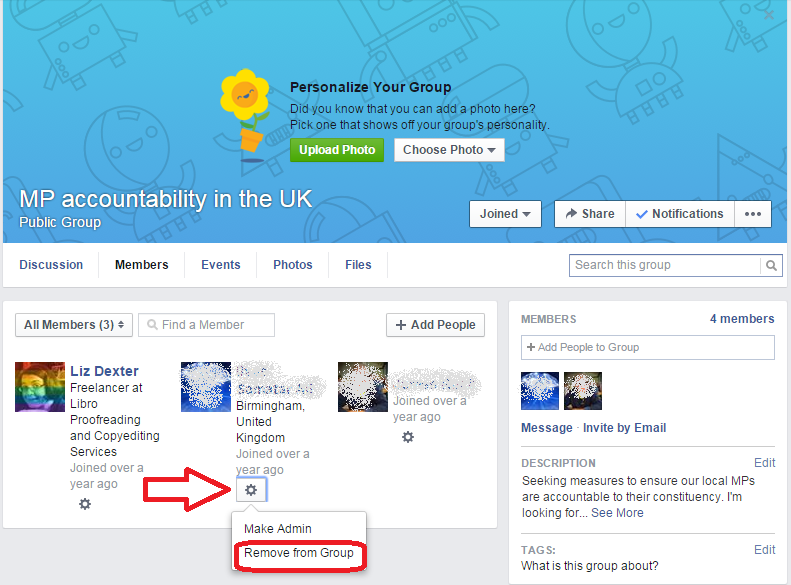
remove member of facebook group

For each member, click on the cog under the member’s name and click Remove from Group. Note that this is where you can make them an Admin instead.

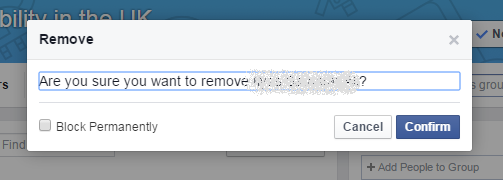
Facebook will ask you to confirm.

remove member from facebook group check

Do this for each member of the group.

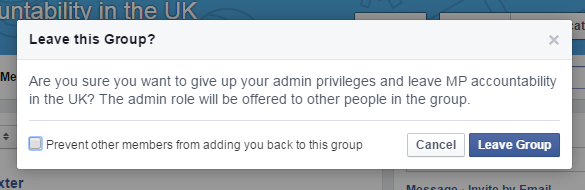
Lastly, remove yourself from the group in the same way. You will get this confirmation message:

Facebook delete group

This is the same error message whether you’re just leaving the group or you’re the last to leave – just choose Leave Group.

The group should now disappear. If it doesn’t, your best bet is to contact Facebook. Click on the arrow marked here:

4 report a problem

… and select Report a Problem from the dropdown.

If you’ve enjoyed this post and found it useful, please share it using the buttons below! Thank you!

You can find more resources on social media in my blog resource guide (link takes you to the social media section) and read about using social media for your business in my book on growing your business.

Related posts on this blog:

Facebook for business

How to delete posts and block users from your Facebook page

How to add an administrator to your Facebook page

 
6 Comments

Posted by on July 8, 2015 in Business, Facebook, Social media


Tags: , ,

How do I remove a member from a Facebook group?

In this post we’re going to learn how to remove a member from a Facebook Group. For more basic information about using Facebook, see my article on Facebook for business.

Why might I want to remove someone from my Facebook group?

The most common reason is that they have been spamming your group or behaving in another way that’s not acceptable.

Sometimes, a group member might not be sure how to leave a group and might ask you to remove them.

How do I remove someone from my Facebook group?

Go into your group and look for the Members area:

Facebook group members area

Click on the Members link to get into the Members area:

remove member of facebook group

Click on the cog under the member’s name and choose Remove from Group.

Facebook will ask you to confirm. At this point, as you can see, you can also block them from joining or posting to the group again:

remove member from facebook group check

And they’ve gone!

If you’ve enjoyed this post and found it useful, please share it using the buttons below! Thank you!

You can find more resources on social media in my blog resource guide (link takes you to the social media section) and read about using social media for your business in my book on growing your business.

Related posts on this blog:

Facebook for business

How to delete posts and block users from your Facebook page

How to add an administrator to your Facebook page

 
2 Comments

Posted by on July 2, 2015 in Business, Facebook, Social media


Tags: , ,

What to do in 6 common freelance crisis situations

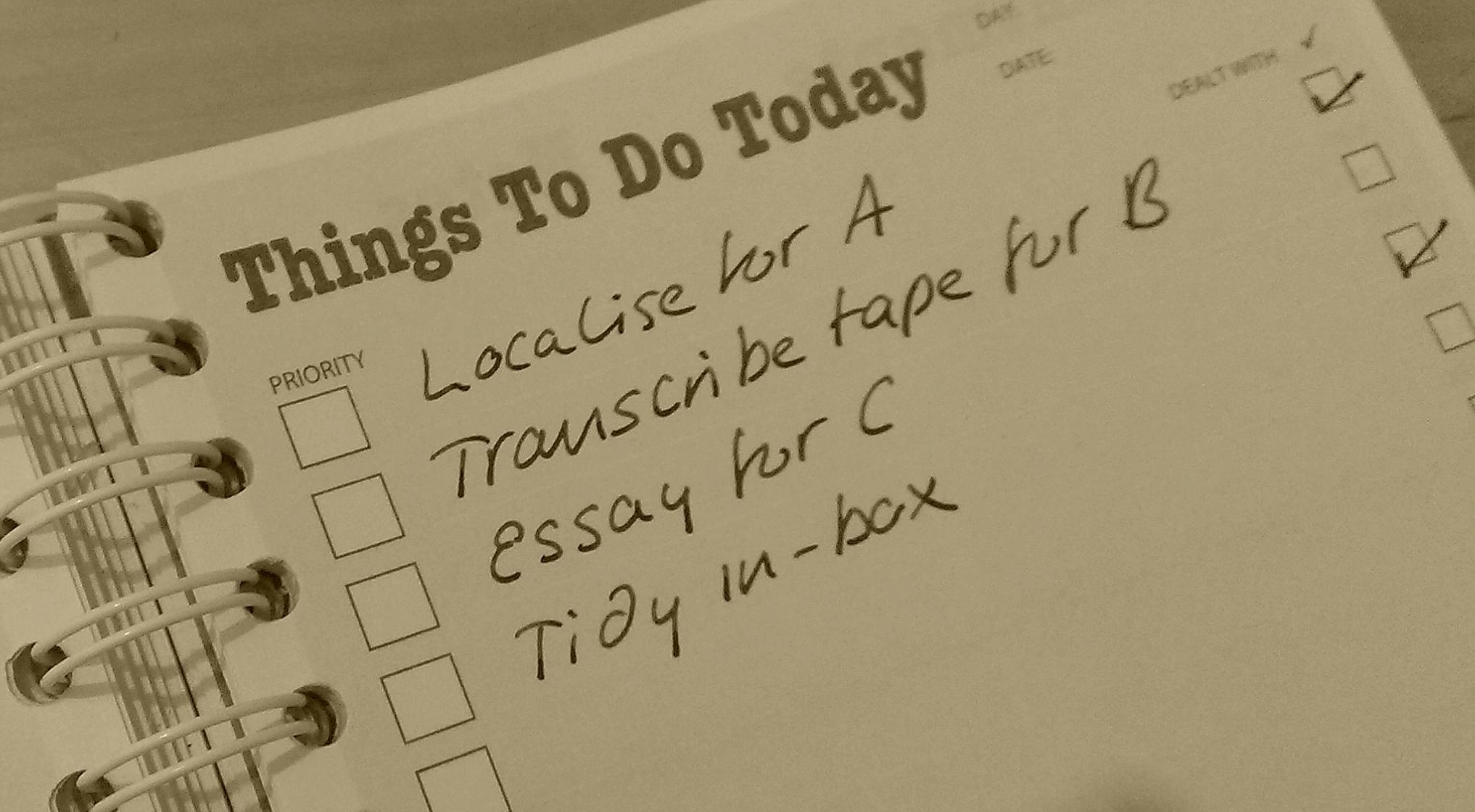
To do listsOh, the freelance life is one that’s full of peaks and troughs, feasts and famines. I’ve already written about how to avoid running out of work and how to avoid overwhelm, and in this article I’m going to run through some common crises and my top tips on how best to cope with them.

I’ve been through all of these in my time … I’d love to know if you have more coping ideas, so please pop a comment at the end if you’ve got something to add!

Notehere are a few links in this article – all of them are to other content that I’ve posted on this blog, so you can click through safely and happily for more information.

What do I do when I’ve got no work to do?

If you’ve got no work to do – don’t panic! It will probably be temporary

What can I do now?

  • Take a deep breath and embrace the fact that you’ve got some down time
  • Make a list of admin tasks you’ve always meant to do
  • Do some brainstorming on some job searching you can do, whether that’s networking, looking for some jobs on Twitter or joining some free sites (see more on how to find freelance jobs in this article)
  • Spend a third of your time doing admin, a third marketing yourself and a third taking a little time to do some things for yourself

What can I do to stop this happening?

  • Consider new avenues of work – diversify
  • Let people know you’re available – including customers you’ve worked with before
  • Keep a note of the ups and downs in your business – if they follow a nice predictable yearly cycle, you can plan holidays and downtime for the low points and hard work for the high points

Tips to avoid running out of work can be found in this article.

What do I do when I’ve got too much work?

Having too much work can be a bit scary. Again, don’t panic. Make lists, be super-organised – you CAN do it!

What can I do now?

  • Don’t panic – take a deep breath and plan instead of panicking
  • Write a list of the tasks you have, their due dates and how long you think they’ll take (better, draw them out on a Gantt chart or calendar)
  • Make a priority list – what must be done first?
  • If you really CANNOT do it all …
    • See if you can rearrange any deadlines
    • See if you can get a colleague to take on any of the tasks
  • Work through your jobs in priority order

Tips on what to do when you’ve got too much work can be found in this article.

What can I do to stop this happening?

  • Find a colleague to work with and make an arrangement to cover each other’s work
  • Look through your client list and see if there are any clients who make your schedule difficult – then see if you can work things out or pass them on to someone else
  • Learn to say no!

What do I do when I’ve made a mistake?

We all make mistakes. All of us. Just the other day, I didn’t pick up on a duplicated word in a text. Most clients should understand that little mistakes come with the territory. Big mistakes need a big apology.

What can I do now?

  • Own up and accept responsibility – don’t fudge or blame other people or things
  • If there IS a reason (e.g. your sewing machine broke or you ran out of thread; your computer crashed and you lost a chunk of the spreadsheet) explain it briefly
  • Offer to make it right – whether that’s doing the work again or reimbursing / not charging your client (see the section below, though)
  • Explain concisely how you will prevent that mistake happening again
  • Forgive yourself and try to move on – better to admit a mistake, redress it and move on and give that customer a chance to forgive you than to hide it all, dwell on it and get in a state

What can I do to stop this happening?

  • If you know what caused the mistake, make a wholehearted attempt to remove that cause from your work life
  • If it was human error down to tiredness / lack of a cuppa / bringing a bad mood from your home life to your work, make a wholehearted attempt to recognise that and work to avoid it in future
  • Accept that everyone does make mistakes sometimes, and move on

What can I do when the customer doesn’t like what I’ve done?

This usually happens with the more creative industries like writing or making craft items for people. It’s a tricky one, but these points might help.

What can I do now?

  • Ask the client for as many details as you can – it might be a minor point that they don’t like
  • Offer to redress the issues – if it’s something I’ve written, I will do a rewrite (although see below, this is included in my Terms and Conditions)
  • If the client has already paid, offer a refund unless this is discussed in your terms and conditions
  • Personally, I’d say the client is always right and apologise / refund / replace graciously as this gives a much better impression than messing them around

What can I do to stop this happening?

  • Make sure that your Terms and Conditions cover this eventuality
  • Firm up the way you do the initial discussion with the client – can you use a tick-sheet or prepare a sketch that they agree on before you start working?
  • You could include x number of rewrites / alterations in your Ts and Cs if you offer graphic design or writing, for example
  • If you make craft items, you could send a photograph of the completed item before sending it off and taking payment
  • Build up a library of items that you’ve made or created so your customer has more to work from when telling you what they want

What do I do when I’m going to miss a deadline?

Everyone misses a deadline every now and again. It’s horrible and sick-feeling inducing, but sometimes things are beyond our control. If there is a genuine emergency, your clients will understand. If it’s down to too much work, also have a look at the section above on that topic.

What can I do now?

  • Be honest and contact your client as soon as possible – this is easier if it’s a sudden emergency than if you’ve got behind
  • Offer an alternative deadline or colleague who can do the work (don’t just send the work to a colleague – do it openly and keep the client informed)
  • Apologise and explain how it won’t happen again very briefly – allow your client time to reschedule the work

What can I do to stop this happening?

  • If it’s down to overwork, review the section on how to cope with too much work above – if you’re missing deadlines and nothing’s actually wrong with you, that’s too much work
  • Cultivate good and honest relationships with regular clients – that way, they’ll stand by you if you have a sudden illness or emergency
  • Enlist a colleague to cover your work if you’re taken ill or otherwise occupied (this is good practice anyway)

You can read more about what happens when you have to cancel a job in this article, which I wrote just after I experienced a sudden and temporarily debilitating bout of flu.

What can I do when it’s All Too Much?

You know what? Sometimes it is just All Too Much running your own business, being freelance. Sometimes you’re in a bad mood, there’s a fly in the room, all your customers seem to loathe you or have impossible demands and you’re finding it all boring. You’ve probably got a cold, too. Is that you?

What can I do now?

  • Stop – if you can possibly stop – stop
  • Even if it’s for half an hour or ten minutes, do one of these things:
    • Go outside and walk around
    • Do some brisk walking or vigorous exercise
    • Read your book
    • Have a bath
    • Phone a friend
    • Rant and rave IN PRIVATE for example with a friend on Facebook messenger or in a private group you might have set up for that purpose
    • Another thing that you like to do that centres and calms you
  • If you only have 10 minutes to deal with hating your life right now, step away from your desk / workbench / stall and do some calm, deep breathing, imagine your happy place, centre yourself and relax
  • Give yourself a little treat
  • Try not to discuss this in public or anywhere where your customers might be – you never know who might be looking, and who might have been just about to book your services

What can I do to stop this happening?

  • Learn to say no so you don’t get overwhelmed
  • Take regular breaks during the day AND regular days off
  • Don’t work late into every evening and over every weekend
  • Have a serious think about how you can redress your work-life balance, because that’s what this is all about – then do it
  • Cultivate a group of like-minded business people or people in your area of work or geographical area and talk to them – you’d be surprised to find that everyone feels like this sometimes

I hope these ideas will help you when you have one of these common crises. Why not bookmark this article or select your most common crisis, print it out and pop it on your noticeboard!

If you’ve enjoyed this post, please use the sharing buttons below to share it on your social media platforms. Thank you!

Related posts on this blog

How do I cope with the ups and downs of the freelance life 1: when the work dries up

How do I cope with the ups and downs of the freelance life 2: when there’s too much work

Top ten tips for freelancers

How do I get freelance work?

How to decide who to work with

How to turn a new customer into a regular customer

What’s the best mix of customers to have?

How to make more money in your freelance business

When should I say no?

 
8 Comments

Posted by on June 25, 2015 in Business, Organisation, Skillset


Tags: ,

How do I cope with the ups and downs of the freelance life? 2 – when there’s too much work

To do listsIt can be a bit scary being a freelancer / self-employed. One minute you’ve got no work at all, the next you’ve got all the work in the world, deadlines coming out of your ears, and you’re drowning in a sea of … stuff. To accompany my article on what to do if the work seems to have dried up, here are my top tips on coping with overwhelm – those times when all the work has come in and you don’t know what to do first. Maybe we can even work out a way to avoid that happening in the first place!

How do I cope when I’ve got too much work?

Yes, it’s the other side of the coin, which it doesn’t do to complain about as such, but can be a scary prospect. If you’ve got a lot of work but it’s not physically or mentally too much for you to complete in the deadline, that’s OK for short periods of time. We all get that. I’ve just booked in a large job  which will involve doing just one job for just one client, 9 hours a day for 4-5 days. However, you can bet I’ll be taking plenty of rest and cancelling everything else while that’s happening.

But what happens when you just have Too Much Work, too much to do in the time, too much to do without exhausting yourself mentally or physically?

It’s harder to organise yourself into not having too much work. Work does just tend to all come in at the same time: it’s a fact of life.

Here are some ideas for preventing overwhelm building up:

  • If you have a client who regularly overwhelms you, for example sending in orders for too many products in too short a timeframe or sending you work with no notice, reguarly, it’s worth talking to them and seeing how you can make the situation more predictable. If it’s really becoming a problem, consider offering to share their work with a colleague or tell them that you can’t fulful their requirements and they will need to find someone else to work with (yes, I know it’s really hard to do this, and you will probably want to have another prospective client lined up before you do this).
  • If you have a kind of work which regularly overwhelms you, consider how you can work to make that situation easier. I used to spend a lot of time with a particular kind of customer who tended to involve lots of emails and discussion and handholding. I now work mainly with an agency which specialises in this kind of customer – they do all the emailing, I do the work. It’s a lower rate of pay, but I am pretty sure I make that back in the time saved.
  • If you create trouble for yourself by scheduling too many jobs at the same time, keep some kind of record / calendar of what you’ve booked in. I do it on a Gantt chart with a line for each client, with the days I’ve got to do a piece of work or the dates they have booked me for coloured in. In this way, you can avoid scheduling All The Work for the same week.
  • If you have trouble with moving deadlines, put terms and conditions in place. This is a notorious problem for editors, as writers’ deadlines often slip back. Make sure you’re covered in your Ts and Cs for saying “No” if a job comes in later than planned and you’re already busy.

There are also three ways to cope with work overwhelm that involve other people …

  1. Contract out work. This involves having someone who you can book to delegate the work to. In this case, you will end up charging the cliient and paying the contractor. You may need to disclose that you’re using a contractor, i.e. someone other than you is doing the work, and I personally don’t use this method as my service revolves around me, to a great extent. Typically, the primary worker (you) will charge the client a little more than you pay the contractor, to give yourself a small profit on the job.
  2. Have at least one cover person who can take on work for your clients but act as an individual with their own relationship to the client. This is usually arranged in advance, but can be very helpful in this sort of situation (as well as when you want to take a holiday). If I am booked out and one of my clients with whom I have arranged this contacts me, I say, “I’m really busy at the moment, can you send this over to Laura, please?” They send the work to my colleague, then she will do the work and invoice them accordingly. Yes, I can’t make a little money on the fee, as you can with contracting, but my clients stay happy and the admin is minimal.
  3. Outsource work to someone else – for example, my journalist clients might usually transcribe their interviews themselves, but if they’re in a rush, they will send me the tape to transcribe while they get on with something else. You could either outsource the work itself or aspects of running your business that take up time – your social media updating, your filing, your invoicing … You may or may not have to disclose that you’ve done this (a journalist wouldn’t disclose that I’d typed out their interview) but you will generally pay the person you’ve outsourced the work to.

As with dealing with having too little work, there are two principles involved here:

  • Try to run your business such that it’s less easy for you to get overwhelmed
  • Have plans for what to do when overwhelm hits, and put them into action appropriately

With these tips and the ones on how to cope when the work dries up, I hope that I’ve given you some useful tools for smoothing out the ups and downs of the freelancer’s life. Good luck – let me know which ones work for you, or if you have other suggestions!

If you’ve enjoyed this post, please use the sharing buttons below to share it on your social media platforms. Thank you!

Related posts on this blog

How do I cope with the ups and downs of the freelance life 1: when the work goes away

Top ten tips for freelancers

How to decide who to work with

How to turn a new customer into a regular customer

What’s the best mix of customers to have?

How to make more money in your freelance business

When should I say no?

 
4 Comments

Posted by on June 17, 2015 in Business, Organisation, Skillset


Tags: ,