RSS

Category Archives: Writing

How do I include quotations in my document? Should I change their language and spelling?

How do I include quotations in my document? Should I change their language and spelling?

Thank you to Vedrana Vojkvić for suggesting this topic to me via Twitter. She asked me for my input on a question she was discussing: what do we do if we are following UK spelling conventions and there’s a direct quotation that follows US spelling conventions? She also introduced the idea of [sic], asking to clarify that that is used only for actual errors in quotations, not just to highlight use of a different variety of English.

How do I include quotations in American English in my British English document?

This, of course, works both ways. If you are following US spelling and grammar conventions in your document and you need to quote something from a British English source, or you’re writing UK English and want to quote from an American source, should you change the spelling in your quotation to match the standard you are using in your main text?

Short answer: no.

Quotations are quotations from the original text. They should be quoted as they are, in the original.

When can I change a quotation?

There are a few occasions when you can and should change a quotation.

Note: every change you make to a quotation should be placed in [square brackets] to make sure it is clear that you have made the change.

  1. To make the grammar match the sentence in which the quotation is included. For example, you might write this: “Smith (2013) instructs the runner to ‘[go] with the flow, not setting off too fast’ (33), which is good advice,” where the original quotation ran, “A good runner goes with the flow, not setting off too fast”.
  2. When you need to explain something: “Smith (2013: 43) further states, ‘Those people [the running club members] can be very supportive’ in her seminal work.”
  3. When you need to cut text from the original quotation: “In this long passage, Smith (2012: 33) tells us to, ‘Watch out for your own over-excitement […] you must rein things in’.”
  4. If the quotations are in very archaic English and you have updated them into modern English OR the person you are quoting had a very individual use of punctuation or spelling and you have regularised it – in this case, you MUST state that you have done this in your introduction or a “Note about the quotations” at the beginning of your document. I would prefer to add modern English versions after the original in the first example and leave the quotations in the original in the second example.
  5. If you have translated the quotations out of their original language yourself – in this case, make sure to make a note of this in your introduction or a “Note about the quotations,” and if you have only translated some of the quotations, put a note [translated by the researcher] after those you have translated.

If you choose to emphasise something in the quotation that was not emphasised in the original, you must say that you have done this: “Smith says, ‘Everyone can run at their own speed and should not be pushed too far’ [emphasis added by the researcher].” (If the emphasis appears in the original, it’s good practice to add [emphasis in the original] after the quotation instead, to make that clear.)

When can I use [sic] in a quotation?

Almost never! I think that’s one for another article … However, to answer the original question, you would not need to use [sic] when quoting in one language (variety) in a text that is in another language (variety).

The golden rule of including quotations in your text

Always, always, always reference them fully so the reader can go and find them in the original!

This article has discussed how to insert quotations into a text, including what to do if they are in a different variety of English, whether you should change the spellings of quotations and when it is acceptable to change a quotation.

If you have enjoyed this article and/or found it useful, please do add a comment and/or share using the buttons below. Thank you!


Tags: , , ,

Why are my tracked changes altering their colour when I save in Word 2010, 2013 and 2016

We’ve already learned what Track Changes is, why we use it and where to find it, and how to customise Track Changes to suit our own preferences and learned how to work with a document that has Tracked Changes.

This article explains what to do when your tracked changes alter their colour when you press the Save button. It’s weird, it can be annoying, and your initials might disappear, too, which can be confusing if more than one person is commenting on the text.

Screen shots are from Word 2013.

Has your track changes markup ever changed colour?

This has only happened to me when working with a document that has originated from someone else.

You have made lots of changes in a document, and they show up in red, as normal (or whatever colour you have set for your corrections), but when you save, yours go into blue and your initials disappear. This might also happen if you’re working on a document which already includes someone else’s tracked changes: yours show in a different colour to theirs until you press Save. Then they’re all blue (or whatever colour the first person’s were).

What is happening here?

The original owner of the document has specified that the personal information of whoever is working on the document will be removed when they Save the document.

How to check whether your personal information is being removed upon Saving the document

To check whether this is the reason for your tracked changes changing colour, follow these steps.

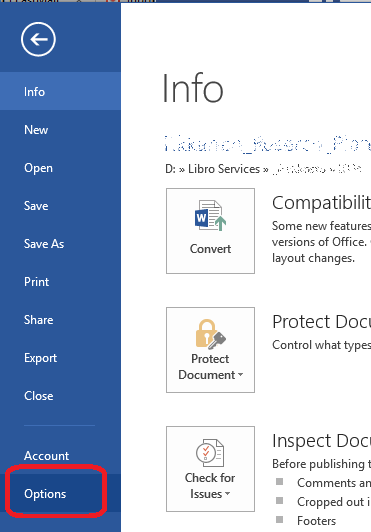
Go to File (the extreme left tab in Word) and Options:

word options for checking trust center

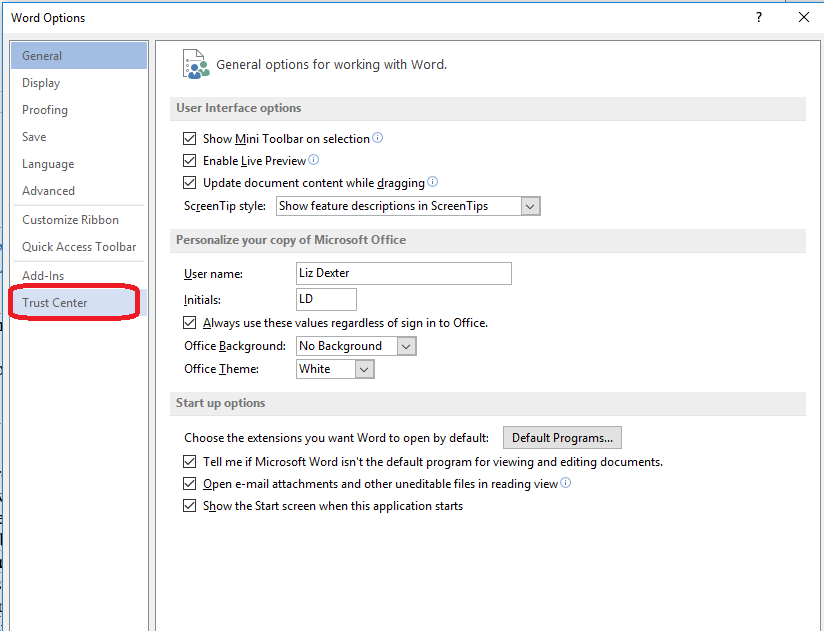
Clicking on Options will give you this Word Options menu; choose Trust Center:

accessing the trust center in word

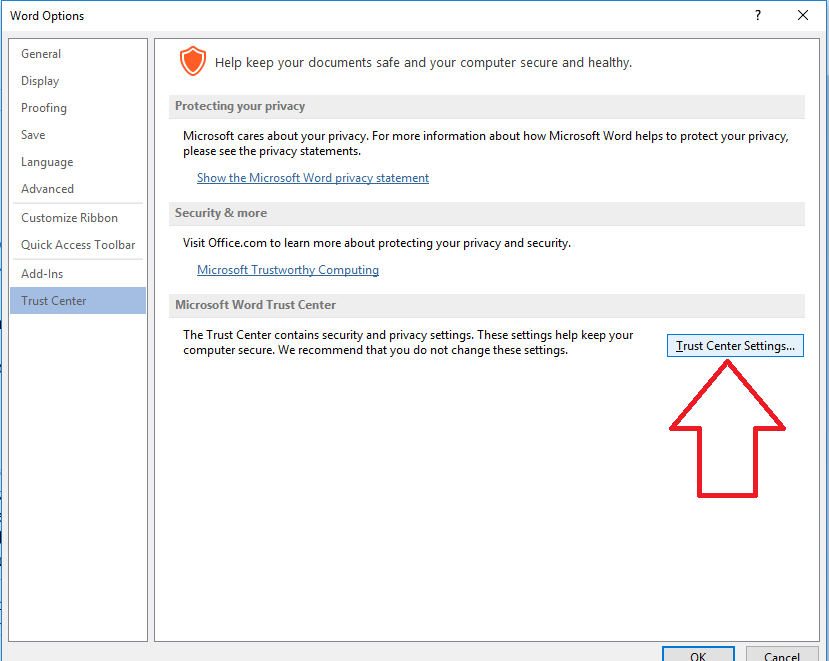
Click on Trust Center and then go into Trust Center Settings by clicking the button at the bottom right:

Trust Center in word

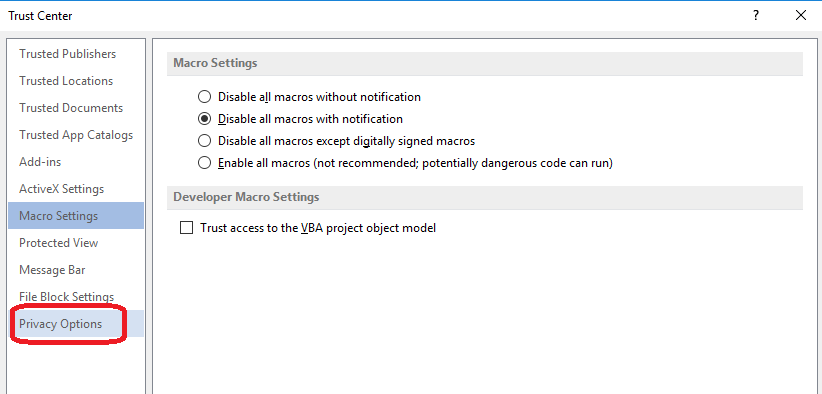
Once in the Trust Center Settings, you need to go into Privacy Options (it will default to Macro Settings):

Privacy settings in trust center in word

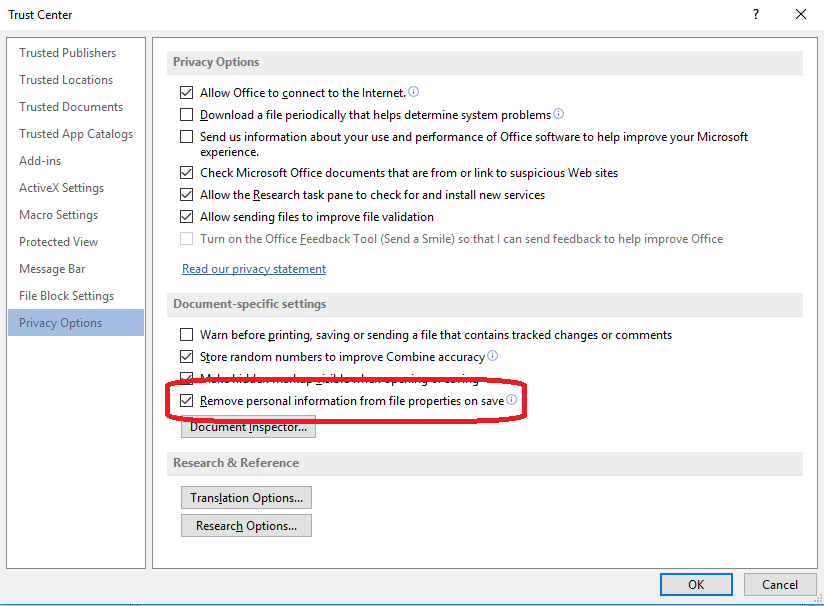
…. and once you have accessed Privacy Options, you will see that Remove personal information from file properties on save is ticked, which means that when you save, all references to your name are removed from both track changes and the properties of the file itself:

remove personal identification on save in word

Now, at this point, this can be “unticked” so that your changes stay in your colour (in your own view, only, of course) and with your initials (everywhere). But do stop to think: did the person who created the document do this on purpose? It’s quite a lot of clicks to make by accident, so I do tend to check this, see why it’s happening and then leave it as it is. I might change it so I can see my own changes then make a note to change it back before my final save, but in general, I leave it.

Why might someone choose to remove personal information in a document?

I’m not entirely sure that I have an answer to this. Maybe they have edited the document and don’t want their end client to be confused by lots of different names on the file. Maybe they’re a student who wants to make sure no one else’s name is on the file. I do tend to assume they have a reason, and respect that.

But this is how and why the tracked changes colour sometimes changes when you save your document.


This article has taught you how to work with a document that has been marked up using Track Changes where the colour of the track changes alters. You can read more about what Track Changes is and why we use it, how to work with a document including tracked changes and how to customise Track Changes.

If you have found this article useful, please share or “like” it using the buttons below, or leave me a comment to tell me what you think. Thank you!

This is part of my series on how to avoid time-consuming “short cuts” and use Word in the right way to maximise your time and improve the look of your documents.

Please note, these hints work with versions of Microsoft Word currently in use – Word 2010, 2013 and 2016 all for PC. Mac compatible versions of Word should have similar options. Always save a copy of your document before manipulating it. I bear no responsibility for any pickles you might get yourself into!

Relevant articles on this website

Track changes 1 – why use it, where can you find it, what can you do with it?

Track changes 2 – customising Track Changes

Track changes 3 – working with a document with tracked changes

How do I accept one reviewer’s changes?


9 Comments

Posted by on October 5, 2016 in Copyediting, Errors, New skills, Short cuts, Word, Writing


Tags: , , , ,

How do I highlight the text related to my comment balloon in Word 2013 and 2016?

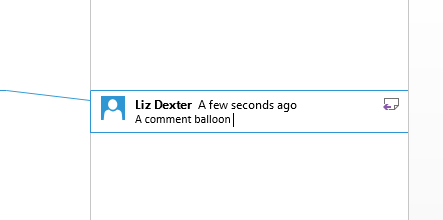
I have already published a range of posts on issues with comment boxes or comment balloons, including ones on comment boxes suddenly going tiny, or comment box text running in the wrong direction, changing the language in your comment balloons. This article covers how to highlight the text that a comment balloon relates to.

Why can’t I see which bit of text this comment balloon is about?

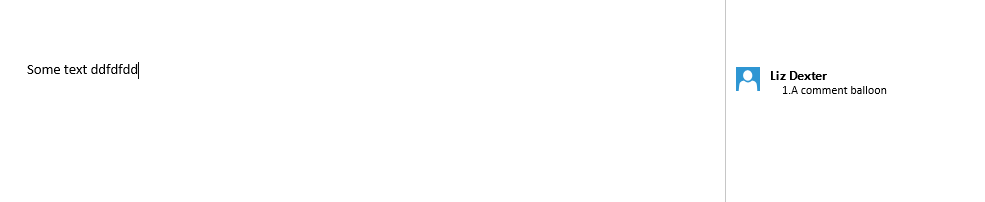
As a default in Word 2013 and Word 2016, you can see your text and you can see your comments, but you can’t see which bit of text the comment refers to. Why? I have no idea. Microsoft tends to try to make things look simpler, but personally, I don’t find it helpful. It looks like this …

1-default

… and what we want to see is this:

3-result

How do I highlight the text that’s being commented on?

You can change the settings to do this by going to the Review Tab and the Track Changes area. You will see a box marked Simple Markup. Click on the down arrow to the left to access the dropdown menu:

2-comments

Select All Markup.

Now the text that the comment is about will be highlighted when you’re looking at the document:

3-result

Don’t forget …

This only applies to your individual view of the document on your particular computer / screen. If your editor, client or co-writer wants to change this view, they’ll have to change it themselves. Send them here to see how it’s done!

If you have found this article helpful, please add a comment and/or share it using the buttons below. Thank you!

Other related posts on this blog

What to do if your comment boxes go tiny in Word

What to do if your comment boxes start running from right to left

Changing the language in your comment balloons

Customising your comment boxes – everything you need to know

Customising Track Changes

 
1 Comment

Posted by on September 28, 2016 in proofreading, Short cuts, Word, Writing


Tags: , , ,

How do I add comment balloon numbering in Word 2013 and Word 2016?

I have already published a range of posts on issues with comment boxes or comment balloons, including ones on comment boxes suddenly going tiny, or comment box text running in the wrong direction, changing the language in your comment balloons. This article covers what to do to add comment balloon numbering back in Word 2013 and 2016. Incidentally, this also signposts you to how to change the style of your comment balloon in general.

Where have the comment balloon numbers gone in Word?

In Word 2013 and 2016, the default setting is for comment balloons not to have numbers. Why? I honestly don’t know. Microsoft does have a habit of “simplifying” its Office interfaces, and the numbers do change with context (if you remove Comment 2, Comment 3 will be labelled Comment 2, etc.) but I have always found it useful to have numbers in my comment balloons.

Here’s what the default looks like:

comment balloon Word 2013 no number

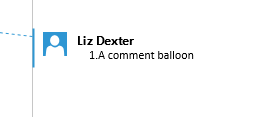
and this is what I’m aiming for:

Word 2013 2016 comment balloon with number

How do I change the comment balloon style and numbering?

We need to change the style of the comment balloons in order to add a number.

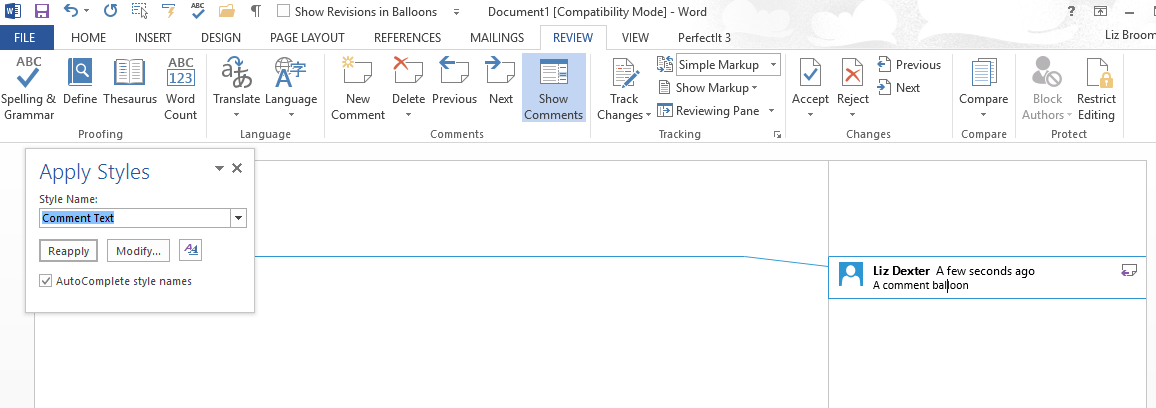
Click inside a comment balloon and press Ctrl+Shift+S (all at the same time, in that order) to display the Apply Styles pane:

Word 2013 2016 balloon style

This should be context-specific, but just check the style name is “Comment Text”.

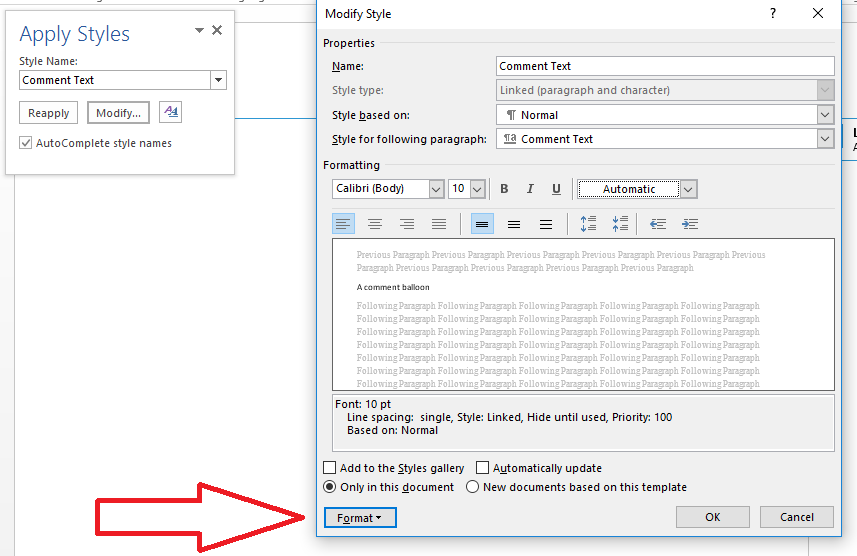
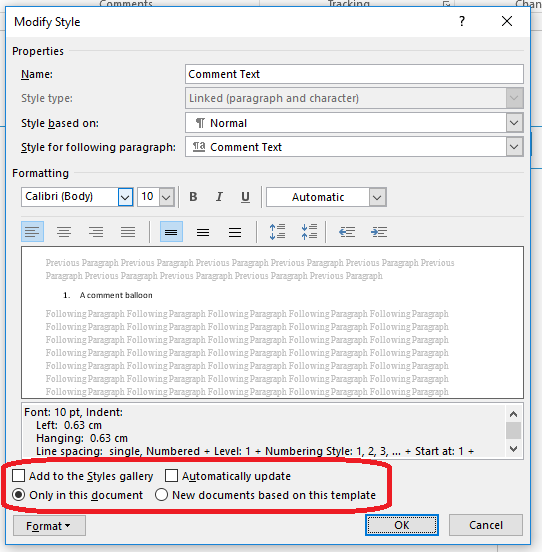
Click the Modify button  to access the Modify Style pane:

Word 2013 2016 modify style
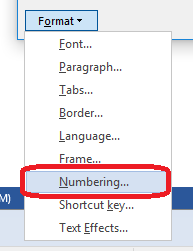
Look at the bottom of the dialogue box and click the Format button, which will give you a dropdown menu:

Word 2013 2016 numbering comments boxes

Click Numbering, which will allow you to select a numbering scheme:

Word 2013 2016 choose numbering scheme for comments

Click on the numbering scheme you want to use so that it’s highlighted with a line, and then click OK.

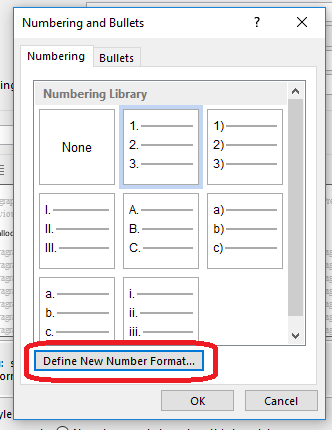
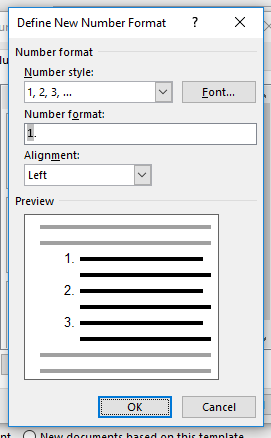
If you want to use a numbering scheme that’s not on this screen, click on Define New Number Format instead:

Word 2013 2016 define new numbering format

Once you’ve clicked this, you will see some new options:

7-format-choose-new-numbering

Click on OK here, which will take you back to the previous screen, OR click OK on the number format screen, then choose if you want Word to update this document (Automatically update) and to apply this default to all new documents from now on (New documents based on this template):

Word 2013 2016 apply new style

Click OK and your comment boxes will have numbers!

Word 2013 2016 comment balloon with number

This article has shown you how to add numbers to your comment balloons / boxes / text in MS Word 2013 and 2016 for PC. You can use it to modify this setting in earlier versions of Word, but they will default to having numbers.

If you have found this article helpful, please add a comment and/or share it using the buttons below. Thank you!

Other related posts on this blog

What to do if your comment boxes go tiny in Word

What to do if your comment boxes start running from right to left

Changing the language in your comment balloons

Customising your comment boxes – everything you need to know

Customising Track Changes


33 Comments

Posted by on September 21, 2016 in Copyediting, New skills, Students, Word, Writing


Tags: , , , ,

Checking your grammar and writing style using Word 2007, 2010, 2013, 2016

As well as checking your spelling, Word can check your grammar. This is an automated option, so it’s not for everyone, and can be a bit of a blunt instrument, but if you know you have a weakness in a particular area, it can be really helpful.

Why does Word check grammar?

One of the options Word offers is to check your spelling for you, and lots of people are familiar with that option. However, you can also ask Word to check your grammar. Here’s how.

How do I tell Word what grammar options to check?

We can set up different options for the Grammar checker to check in the Options menu:

1 options

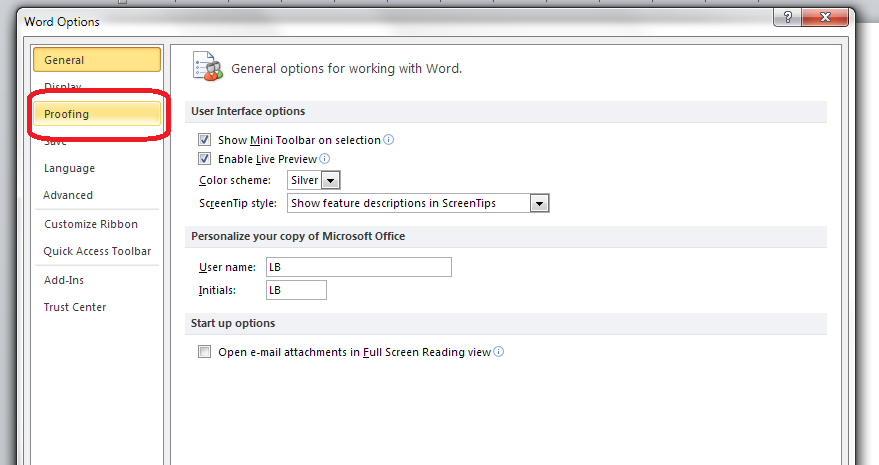
Once you are in the Options menus, choose Proofing:

2 proofing

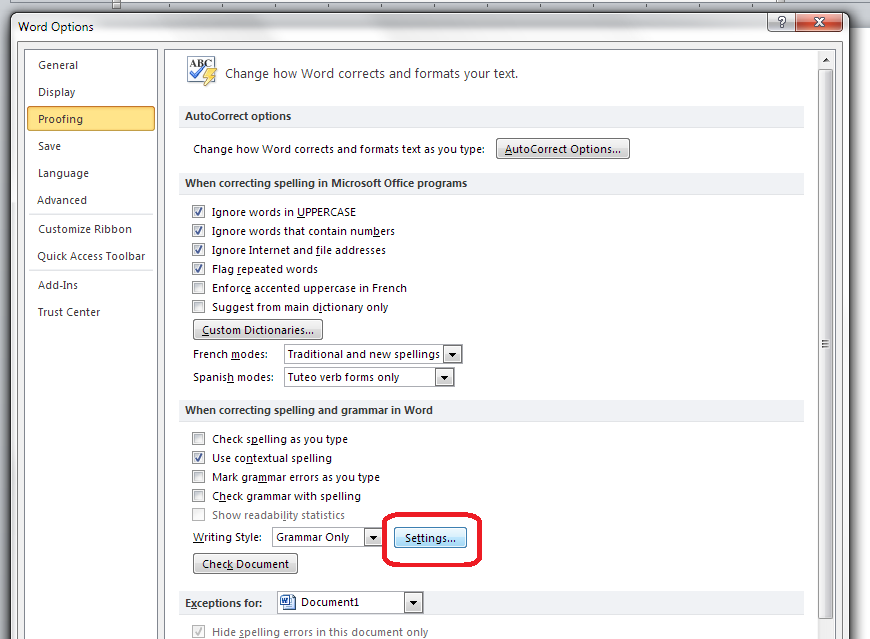
The Proofing menu is quite long, so look half-way down to the section When correcting spelling and grammar in Word and then, to get the options, click the Settings button:

3 style settings

What grammar and style issues can Word check for me?

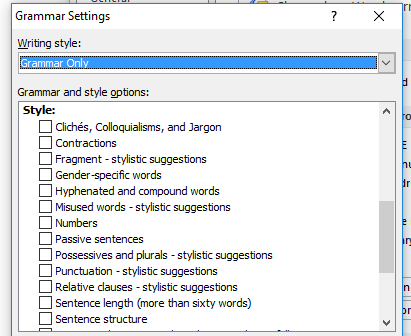
And now you can see the whole range of options that Word can check for you:

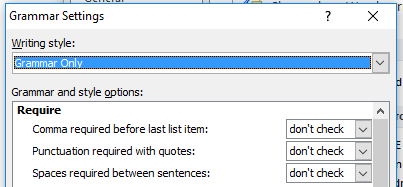
At the top of the list, you can ask Word to make sure that you include or don’t allow Oxford Commas, put the punctuation inside or outside quotations (American or British style, vaguely) or make sure there are one (now preferred) or two (now not preferred) spaces after a full stop:

word grammar checker

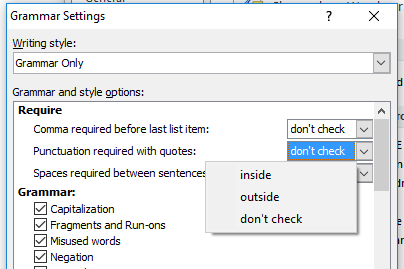
Each of those don’t check dropdowns offers the relevant options, for example, for the punctuation one:

word grammar punctuation quotes

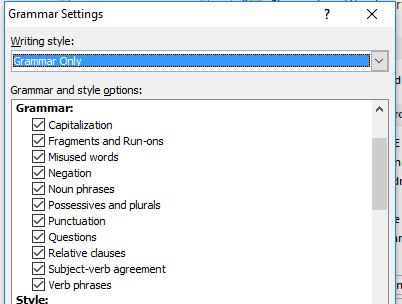
Moving down the list, we then have the Grammar options that you can ask Word to check. Do remember that this is a program and thus it will highlight every instance, even if you know the rules and you’re trying to be creative, but it can be useful for catching things:

word grammar check

If you have Grammar only clicked, these will all automatically be ticked, and you can untick individual ones if you want to (note that it won’t check anything until you ask it to – see the next section).

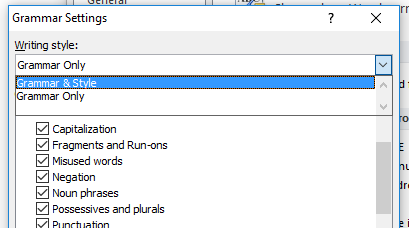
Word will also check style issues; you can ask it to check everything in your Grammar & Style automatically by changing the top box to using the drop-down arrow to the right, or you can leave it on Grammar Only and tick just the areas you want Word to check:

word check grammar and style

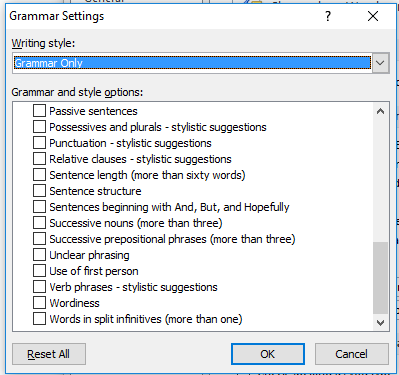
In terms of style, here are the options Word can look out for and alert you to (again, remembering that this is only what it’s been told are clichés, etc.):

4-style-1… and scrolling down:

word check grammar and style

Once you’ve decided what you want Word to check in your grammar and style, press the OK button.

How do I ask Word to check my grammar (and style)?

In order for Word to check which areas you have asked it to check, make sure that Check grammar with spelling is ticked:

5.5 checkingClick OK until you are back at the original screen.

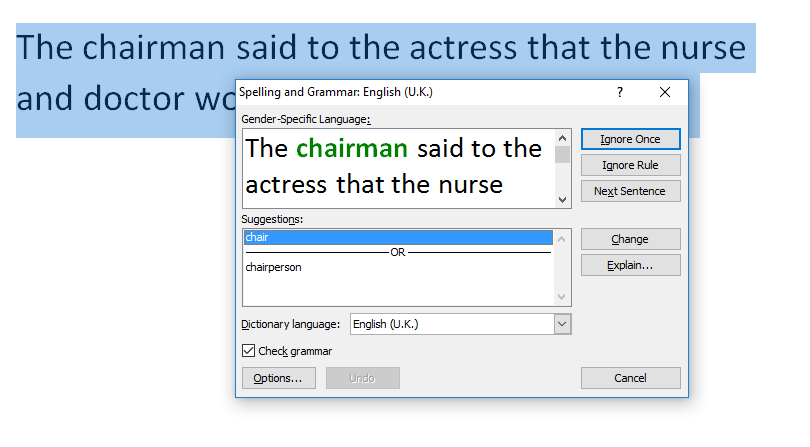
Back in your Word document, Word will highlight in GREEN (as opposed to the red that it uses for spelling issues) any grammar mistakes it thinks you’ve made. Here’s an example where it has checked for gender-related language:

6 checking

This article has described how to ask Word 2007, 2010, 2013 or 2016 to check the grammar and style in your documents.

If you have found this article useful, please share using one of the buttons below. I always welcome comments, too!

Related posts on this blog

Medalling, podiuming and singular they

Asking Word to check for gender-specific language

Using Spell Check in Word 2013

 
8 Comments

Posted by on September 14, 2016 in Word, Writing


Tags: , , , ,

Medalling, podiuming and singular they

Of course this isn't exactly what "medalling" means

Of course this isn’t exactly what “medalling” means

Languages change. If languages didn’t change, we’d be speaking like Chaucer, British and American English would be identical, or we’d still be using words like “chairman”, “crippled”, “omnibus” and all sorts. We also wouldn’t have a way to describe “selfies”, “Brexit” or “omnishambles”.

The verbs formed from nouns, “medalling” and “podiuming” have been heard again recently, as they are every four years in an event whose name is controlled so closely you’re not supposed to go around mentioning it in blog posts. Lots of people have been complaining about these, saying it’s an erosion of the English language, etc., etc.

Now, I’m one for making sure we retain two words with a close but not identical meaning in order to be able to distinguish between different concepts or things. But in this case, it’s not taking away the distinction between two different things, it’s just adding another word to say the same thing. And we form words in all sorts of ways – by blending, shortening, lengthening them and shifting the part of speech they belong to. Once, we weren’t even allowed to start sentences with and or but …

The other wordy thing I wanted to mention briefly was singular they. This is something editors and other wordy people are still arguing – quite bitterly – about. “They” used to be used just as a plural. But, just as we’ve removed words like chairman and dustman from the language to cover the fact that different genders of people do different jobs, over recent years there’s been an acceptance that binary genders – the idea that everyone is either “he” or “she”, has joined up with a common dislike of the clumsiness of using “he” and “she” in alternate chapters or “he/she”, “s/he”, etc. to promote the use of singular “they”, i.e. the use of “they” to refer to one person in the singular. An example would be, “When someone gets to the front of the queue, they should go to the first available window”.

Now, some people rail against this change, but I think that it can be made to work grammatically, it gets rid of clumsiness and it doesn’t exclude people to whom, for whatever reason, it’s not appropriate to refer using binary gender wording. This is standard in my editing, although I’d never make this kind of change without consultation if it appeared more than very sporadically.

I’m not expecting to change anyone’s mind here; I’m just setting out my stall. These are my personal opinions, but these are interesting topics to think about and they’ve been at the front of my mind recently. Thank you for reading!

I generally talk about word stuff in my Troublesome Pairs posts which do distinguish meanings between pairs or triplets of words. Have a look at the index here!

 
19 Comments

Posted by on August 17, 2016 in Be careful, Errors, Ethics, Writing


Tags:

How do I count the number of times a word appears in my document?

I was asked this question during the week, so here’s how to count how many times a particular word appears in a document (or spreadsheet or anything).

The easiest way to count the number of instances of a word is to use the Find function.

Access Find using Control-F (press the control key and F at the same time).

Type in the word you want to search for.

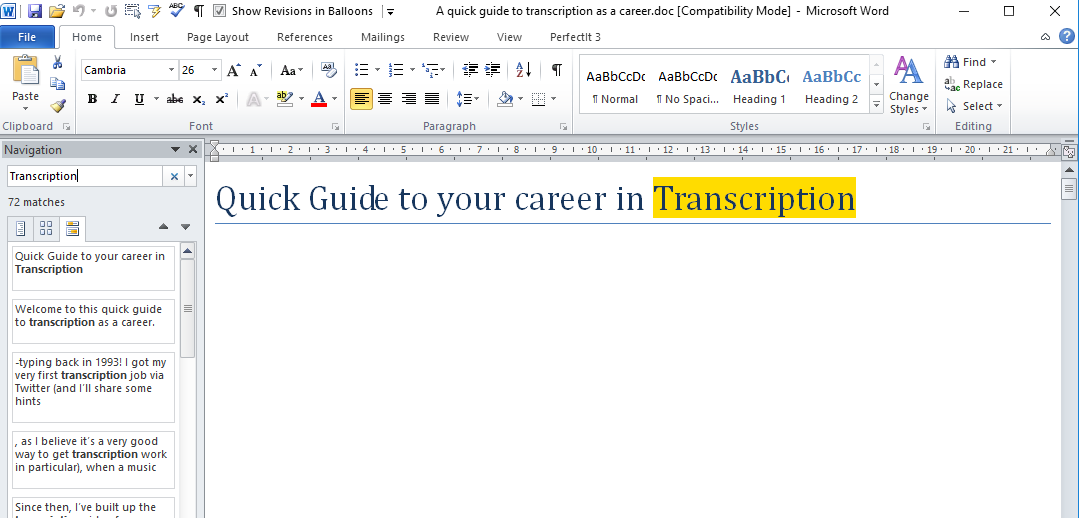
Word will find and highlight all instances of the word and highlight them for you – and will tell you how many times it appears!

Count instances of a word

Note: this search for transcription will find that word buried in other words, too – so TRANSCRIPTIONs and TRANSCRIPTIONist.

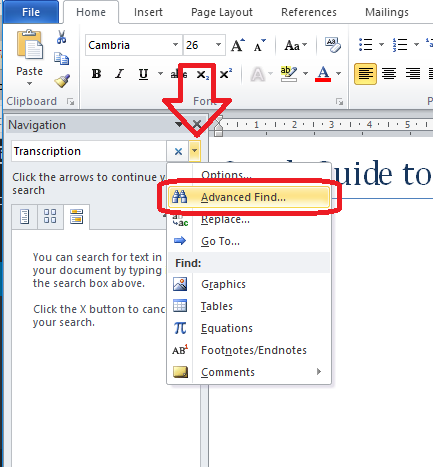
To find just the single word transcription, you need to use Advanced Find.

Click on the down arrow next to the search box and then choose Advanced Find:

2 Count instances of a word

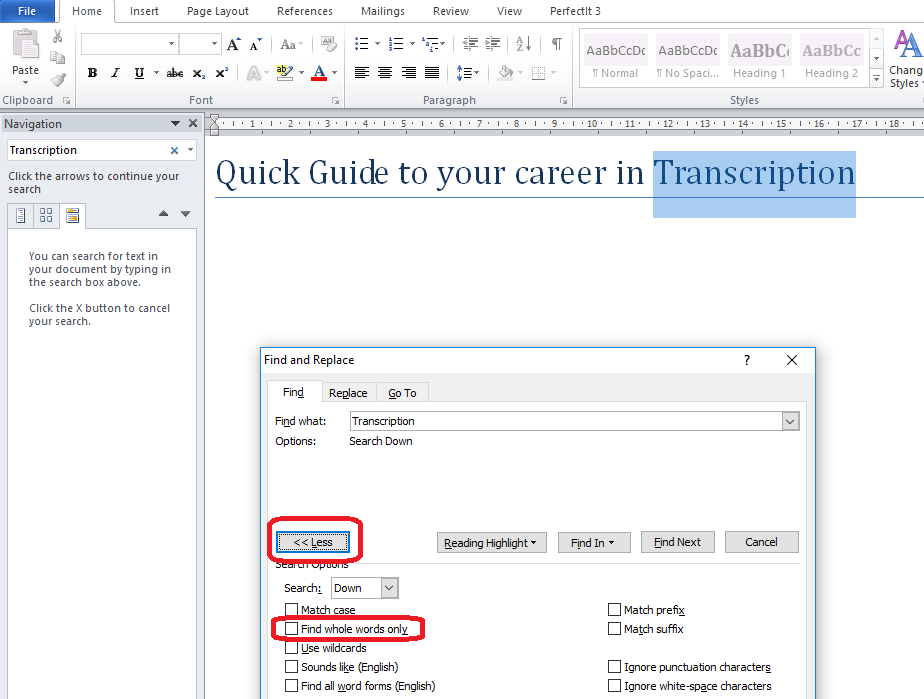
Click the More button (which appears where Less is showing here) and then tick the box marked Find Whole Words Only:

3 Count instances of a word

Now Word will count and highlight just the instances of this exact word.

This article has taught you how to count how many times a particular word appears in your document. You can use this method in Excel and PowerPoint, etc. too.

If you’ve found it useful, please click like and share it. Thank you!

Other useful posts on this blog

How to search for anything using Control-F

How to count the words in your Word document

How to count the words in your PowerPoint presentation

Find and Replace

Advanced Find and Replace

 
2 Comments

Posted by on August 3, 2016 in Excel, PowerPoint, Word, Writing


Tags: , , , , ,

Adapt or adopt? Adaptation or adoption?

This is a Troublesome Pair that I find very commonly in academic writing, across a whole range of writers. It would be expected in people whose native language doesn’t use vowels (I had a very interesting conversation about Arabic-speakers having trouble with vowels in English) but I also find it in native English-speakers (it’s actually fairly uncommon to find both groups making the same errors)

To adopt something means to take it on as it is. For example, Laura might adopt my process of editing a text, then doing a spell check, then using software to check consistency. If the UN adopts a resolution, it means it takes it into its procedures as it is, with no changes. If you adopt a dog from a shelter, you take it as it is.

To adapt something means to change it according to specific circumstances. For example, Laura might adapt my process by choosing to edit the text, then run the consistency software, then run a spell check. The UN might adapt a resolution to take into account a new world order or the creation of a new country. You might try to adapt your adopted dog’s behaviour if you don’t want it to sit on the sofa.

Adoption therefore means the act of taking on something as it is, while adaptation involves you changing, or you changing something else, to fit the circumstances.

In academic writing, a researcher might well adopt a questionnaire method, but they might adapt someone else’s questionnaire if it needs more questions on widgets and fewer on bath mats, for example.

You can find more troublesome pairs here, and here’s the index to them all!


Tags: , , ,

Using a style sheet – for editors and proofreaders

DictionariesA little while ago, I wrote an article explaining what a style sheet was, mainly for my own clients, so I could send them a link when I sent their completed work and style sheet to them.

It struck me, though, that it might be useful to write about style sheets from the perspective of the editor / proofreader as well (I’m going to use “editor” to refer to both here, for simplicity, unless I’m distinguishing between the two).

I assume this will primarily be useful for people new to editing who are picking up tips from those of us who have been in the game a little longer. But whoever you are and however long you’ve been editing, do pop a comment below if you have anything to contribute!

What is a style sheet?

A style sheet is a list which spells out how things are to be done when writing and/or editing a text, including information on spellings, hyphenation and capitalisation, referencing and special information. Its aim is to keep texts consistent.

When you’re an editor, you will encounter three types of style sheet:

  1. Style sheets you receive from someone earlier in the process or general ones prepared by particular publishers, journals, etc.
  2. Style sheets you create yourself as you work on a project
  3. Style sheets created by the previous editor when you’re taking over a job or doing the proofreading for something that’s previously been edited (this is unfortunately rare, in my experience)

All three types serve the same purpose: to record the style decisions (more on this later) that have been made in order to keep the look, feel and detail of the text or texts consistent.

When you’re creating a style sheet, it might only be for a single use, for a single client (e.g. a PhD student). When one is created by a journal or publisher, it’s usually so that their “house style” will be consistent across publications and journal issues. But the idea is the same: it’s a tool that’s used to keep things consistent.

What do you mean by “style decisions”?

English is a funny old language. Even if you’re adhering strictly to one of the major style guides, (Chicago Manual of Style, Oxford Style, etc.), you will find there is still room for choice in some aspect of your text.

An example where even Oxford didn’t tell me what to do: I was editing a set of articles which included lots and lots of words and phrases in a different language to English. Each then had the English translation in some form before or after the foreign word. Of course, the articles were all written by different people who had used different ways to express this (word in italics / non-italics / double or single quotation marks and English in parentheses or not, italics or not, quotation marks or not). I was looking to make this consistent … but after some rules on what to do, Oxford told me to choose a way I did this as long as it was consistent!

There will also often be individual names, phrases, etc. in the text you’re editing which will need to be set out in a consistent way, which might not have rules.

An example where there can’t be any rules: your client has lots of interviewees and they’ve referred to them with a code to ensure anonymity. Do they put Respondent OH1, just OH1, OH-1, (OH1), [OH1], etc., etc.?

Although a client a while ago said that his first editor “kept it all in his head”, I prefer to note all of this down so I have it to refer to and keep things consistent.

What does a style sheet look like?

I’m sharing here an example of one of my own style sheets. Note that I have a little explanatory note at the top to explain what it is.

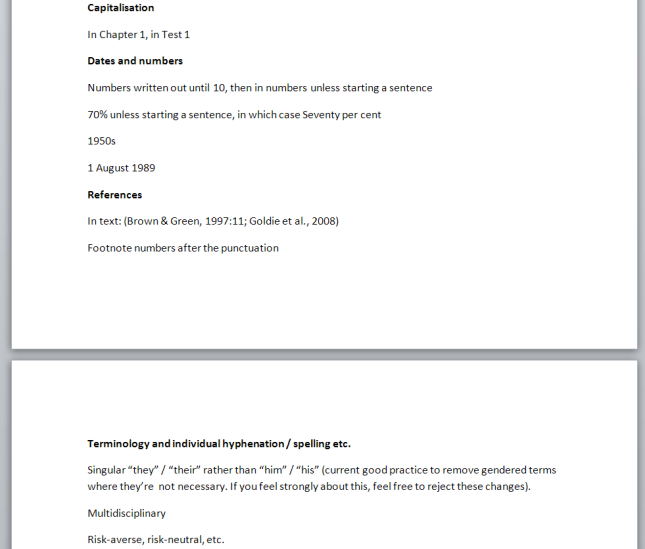
You can see that I set out the most common things that can differ (in my experience) and need noting down – s or z spellings, how the paragraphs are set out, how the headings and figure / table titles are set out, etc.
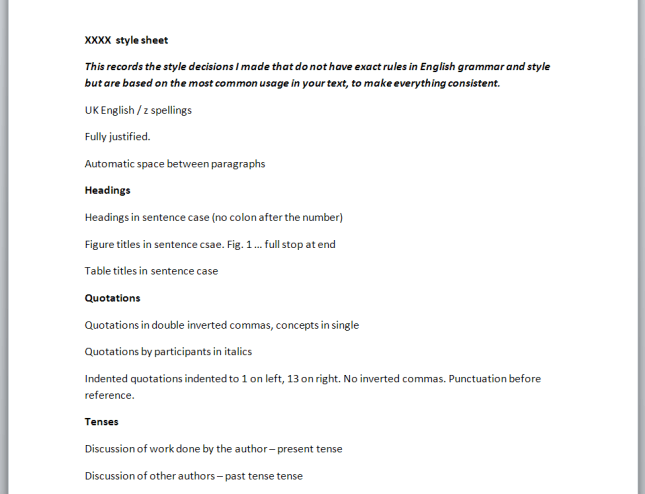
style sheet 1

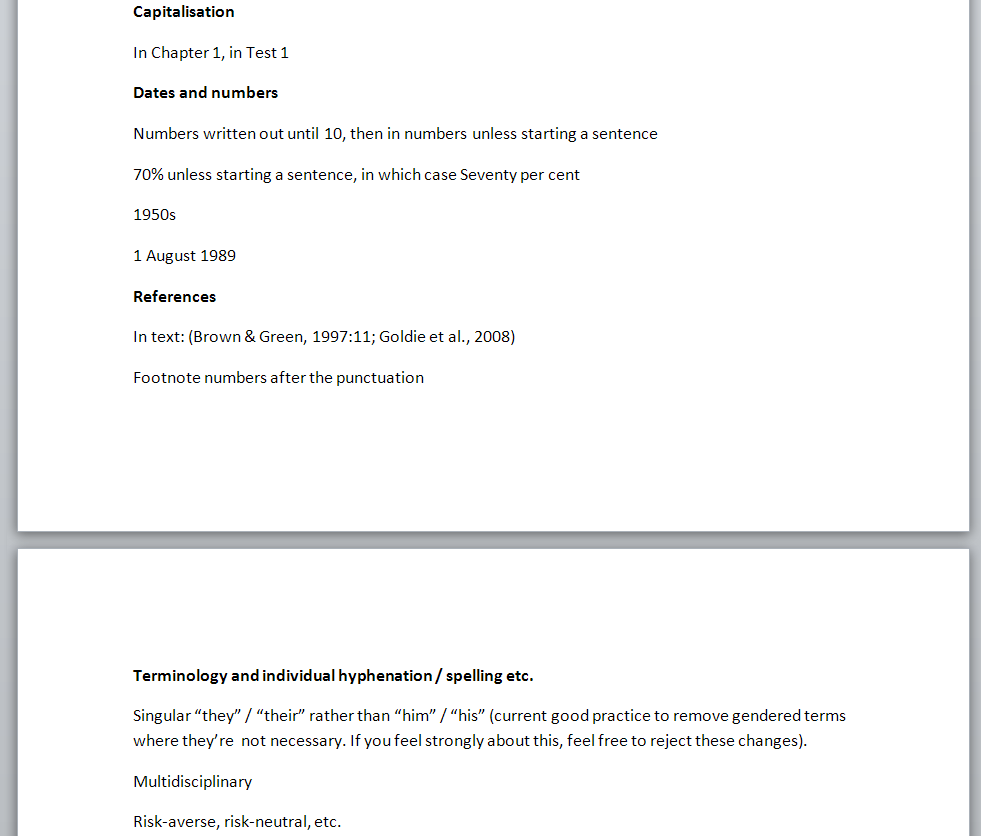
In the second half, I go on to dates and numbers, how references are laid out, and some specific things to do with the particular text I’m working on.
style sheet 2

I find that a publisher’s style sheet is set out in the same way, although it might sometimes be online or a pdf with links.

If I’m working on a text destined for a particular publisher or journal article, if their own style sheet is very long and my text is quite simple and doesn’t need all that detail, I’ll often summarise the parts I need on my sheet anyway.

When should I set up a style sheet?

I set up one of these for any text that …

  • Isn’t for a publisher or journal that has its own style sheet
  • Is for a publisher or journal that has its own style sheet but that sheet is very long and complex and I can use a summary
  • Is more than a few pages long
  • Is being sent to me chapter by chapter (this happens with PhDs I work on)
  • Is going to form part of a larger body of work or a series (e.g. the regular publications of an organisation
  • Is being worked on with a colleague – this is quite rare but does happen

When and why should I send a style sheet to my client?

I pretty well always send the style sheet to my client along with my completed work.

I typically send it with a note in the email directing the client to my explanatory article, as I’ve found that most of my clients haven’t come across this before (I happen to work with a lot of students and self-publishers, as well as translation agencies; your experience may differ if you mainly work with publishers).

I will send the style sheet to my client if …

  • They’ve asked me a lot of questions about grammar and wording issues before we start (I will probably pop down the standard hyphenation and capitalisation rules on it if that’s the case)
  • They are likely to add to the text (for example if I’ve pointed out gaps or missing references)
  • They are sending me their work chapter by chapter – sending the style sheet with the first chapter can often nip certain issues in the bud, the client learns from it and they’ll be more consistent in the next chapter (I’m always so happy when this happens!)
  • They plan to send me regular publications, etc. – if they didn’t have a style sheet I provide one for their writers to use, making my work easier and less time-consuming and meaning they have less to correct
  • It’s a substantial document (more than a few pages)

Hopefully, having a style sheet from me will mean that the client will keep things more consistent in the future.

I do also mention that they should send this on to their proofreader if they’re planning to use one in the next stage of publication. This saves their proofreader from busily changing all the Chapter Ones to chapter 1 (or at least it explains that it was an active, considered choice on my part, and not an error).

Making changes to a style sheet

If I send my style sheet to my client mid-way through a project, for example with their first PhD chapter, I ask them to look through it carefully and let me know if there’s anything they’d like to change or they’re not happy with. Sometimes in this case I ask them questions (e.g. “You’ve used ‘Interviewee RD1’ and ‘RD1’ in equal numbers in your text; which one would you prefer to use throughout it?”). If they give me feedback, I record that, or if they ask to change something and their change does actually defy a stated grammar rule I will explain why I can’t.

Working with an established style sheet

If the text I’m working on is destined for a publisher or journal that has a full style sheet, I will of course obey that to the letter, to make things as easy as possible for the in-house editor or designer. Even if that means leaving footnote numbers before the punctuation, something I don’t like to do (but some publishers prefer).

If I’m proofreading a text that someone else has already edited, or I’m working on for example corrections in a PhD that someone else has worked on, I will use their style sheet to guide the changes I make. Even if I don’t approve of their decisions personally, as long as they don’t defy a rule of grammar, I’ll keep it consistent (even if I have to move a footnote number to before the punctuation!). I aim to make as few changes as I can at the proofreading stage, in order to keep corrections (and the chance of new mistakes creeping in) to a minimum.

—-

I hope this post has been helpful and given you some more information about why we use style sheets, where they come from, setting up your own one and working with your style sheet with your clients. Do pop a comment at the bottom or like and share this article if you’ve found it useful and interesting!

Related posts on this blog

What is a style sheet? For people working with editors

 
9 Comments

Posted by on February 4, 2016 in Copyediting, Organisation, Word, Writing


Tags: , , , , ,

What is a style sheet? For people using editors
DictionariesIf you work with a proofreader or editor on any project, either for a publisher or working independently or as a student, you might receive a Style Sheet from them with your corrected work. This article explains what a style sheet is, the purpose of a style sheet, and what might be included on it. I’ve also written this article to send to my clients so they understand what the document I’ve sent them is – so if you’re one of my clients, hello!

To make this article easier to read, I will refer to the person who has worked on your document as your “editor” – although I might refer to proofreaders in some places, too.

If you’re an editor or proofreader who wants to find out more about style sheets, I’ve written an article just for you, too.

What is a style sheet?

A style sheet is a list setting out the decisions that your editor has made on aspects of the layout and language of your document, in order to keep the document consistent.

It might include notes on what font is used, whether the text is left or fully justified, how particular words are capitalised or hyphenated, how much indent your indented quotations have, what is put in italics, etc. We’ll have a look at an example later on, but that’s a very short summary.

Why use a style sheet?

Especially if you’ve learned English as a second or other language, you will know that the English language is not consistent, and it doesn’t even have proper rules for some things! This can be really frustrating, as two people might do things in two different ways, BOTH of which are correct.

For example, in English …

  • we can use -s- spellings or -z- spellings in words like “organisation”
  • we can capitalise or not capitalise words like Chapter 1 or experiment 2
  • we can use orient or orientate
  • we can hyphenate or not hyphenate pairs of words like policy-maker

And that’s before you get to decisions like …

  • are you going to use 20%, 20 per cent or twenty per cent?
  • are you going to describe America as America, the United States, the US, the USA, the U.S. etc. etc.?
  • are you going to use double inverted commas for quotations and single inverted commas for concepts, or vice versa?
  • are you going to refer to other research as (Brown, 2003; Green and Jones, 2005, p. 23) or (Brown 2003, Green & Jones 2005:23) or any other variant

Now, the important thing with all of these is to keep it consistent.

Some of these rules might be set down in a style guide or referencing guide (see below). But whether you and your editor are working to a style guide or not, it’s useful to have these decisions written down in one place for you both to refer to.

What’s the difference between a style guide, a referencing guide and a style sheet?

A style guide is a specific guide to how to deal with things like the above decisions – famous ones include Oxford Style in the UK, APA Style and Chicago Manual of Style and AP Stylebook in the US.

A referencing guide is a specific way of writing out references to work you are talking about in your dissertation or book – an example is Harvard referencing.

Some universities and many publishers and marketing agencies etc. will have their own guides which documents published under their name or submitted to them will have to have.

In this case, I could do without a style sheet and just refer my client to … well, a massive website or a giant book. Maybe not. In that case, I’ll note which style guide or referencing system I’ve used and still write out any important points which will impact the document in question.

Please note that I (and I imagine most editors) have favourite style decisions – I prefer orientate to orient, for example, and where there is no clear preference in the text, I will go for my preferred option. If, however, the text itself has 33 orients and 2 orientates, I will go with the majority.

This also means that some parts of the following examples might jar with any editors reading this – they are only examples!
What does a style sheet look like?

Here’s an example style sheet with some of the decisions I might make …

style sheet 1

This is a standard style sheet – I tend to go from the general (the whole layout, all quotations, the tenses used) down to the particular …

style sheet 2

What should I do with the style sheet my editor has sent to me?

Good question – now you understand why your editor has sent you a style sheet and what it’s for … well, why does it matter and what should you do with it?

Here are some important uses of the style sheet:

  1. It will help you to understand some of the changes your editor has made.
  2. If your editor has just edited one chapter, they might send you the style sheet with that chapter and ask you to look through it and check you agree with everything on it. They might even send over some queries – if it’s not clear which option my client prefers, I will highlight the choice and ask them to look at it. If you don’t agree, let them know straight away, then they might change it if it’s not a rule of grammar that can’t be flexible.
  3. If your work is going to be edited by more than one person, they will share a style sheet to make sure it is edited consistently.
  4. If you are planning to add to the document, you can make sure that any additional text you write is consistent with the text that your editor has already checked.
  5. If you have been through edits and your document is going to be proofread, send the style sheet to your proofreader, then they will know what choices the editor has made, and will be able to look out for any errors much more easily.

——-

In this article, we’ve learned what a style sheet is, why it’s used, how a style sheet is different from a style guide and referencing guide, but backs them up, and what to do with a style sheet when you’ve been sent one, as well as seeing an example of one. I hope this helps you: do comment and/or share this article using the sharing buttons below if you’ve found it useful!

Other relevant posts on this blog

Style sheets for editors and proofreaders
 
24 Comments

Posted by on January 14, 2016 in Copyediting, proofreading, Students, Writing


Tags: , , , ,